

























![Kingdom Hearts Collection [I-III] Review](https://gazettely.com/wp-content/uploads/2026/10/Kingdom-Hearts-Collection-I-III-1-360x180.webp "Kingdom Hearts Collection [I-III] Review: KHII Holds Steady as Newer Entries Fluctuate 37")



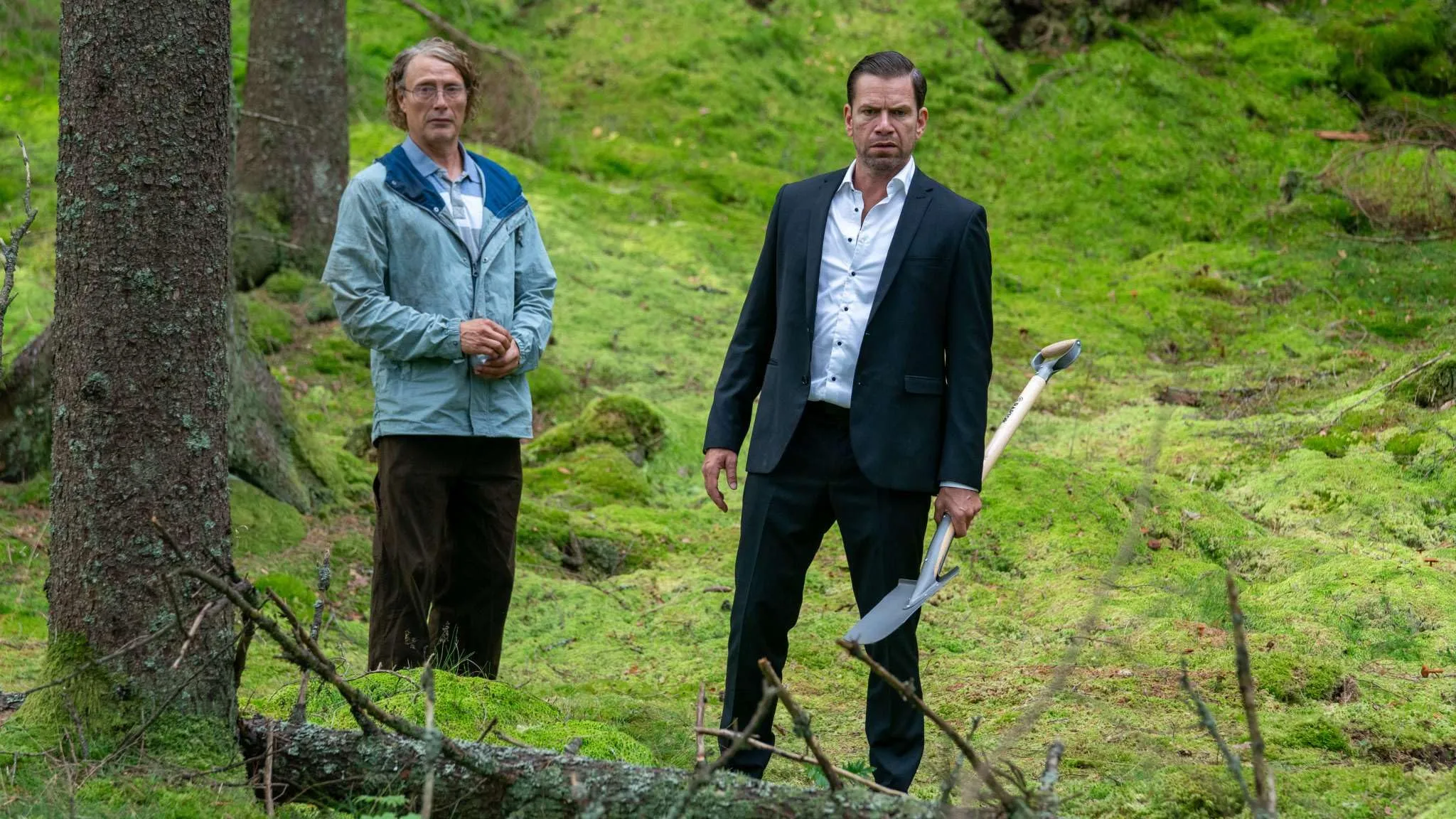

Some stories feel perfectly designed, like a well-paced RPG where the main quest is immediately clear. Then there are films from Anders Thomas Jensen, which feel more like starting a game where the objective screen is glitching beautifully. The Last Viking presents a simple setup: Anker, a thief played by Nikolaj Lie Kaas, gets out of prison after 15 years.
He wants the millions he stole, which his brother Manfred was supposed to hide. The narrative twist arrives with the force of a comedic sledgehammer. Manfred, played with a delicate touch by Mads Mikkelsen, now insists his name is John. He believes he is John Lennon, and he has no idea where some criminal named Manfred would have buried a fortune.
This premise is the engine for a story that is part heist film, part family drama, and entirely its own strange creation. It is a tale where the emotional stakes quickly and hilariously overshadow the financial ones, setting a clear tone of violent, absurd, and surprisingly warm Danish humor. Jensen’s work often feels like a cult favorite in the making, and this film is a prime example.
The Strangest Support Cast
The film’s central location, the brothers’ childhood home, functions like a hub world in a game, attracting a roster of unforgettable NPCs who complicate Anker’s straightforward goal. The house is now a chaotic Airbnb run by Margrethe and Werner, a couple whose marriage hangs by a thread.
She is a former hand model who persists in thinking Anker is attracted to her, creating supremely awkward encounters. He is a would-be children’s book author who has been stuck on the concept phase for seven years, offering unsolicited and unhelpful advice. Their constant bickering provides a tense, funny backdrop to Anker’s increasingly desperate search for the money.
The story’s absurdity level spikes with the arrival of Lothar, a psychiatrist with a wild therapeutic theory. He plans to cure Manfred by surrounding him with other patients who believe they are members of The Beatles, hoping the experience of a cover band will reset his identity. This introduces another patient who believes he is both Paul McCartney and George Harrison, a logistical nightmare that is played completely straight.
The film never mocks its characters’ conditions. It presents their realities as fixed points, forcing the “sane” characters like Anker to navigate a world governed by their broken logic. This approach feels similar to the empathetic design of games like Psychonauts, where one must operate within the mental worlds of others to make progress.
An Unbreakable Character Bond
Beneath the layers of dark comedy and crime, the film’s emotional weight rests entirely on the relationship between Anker and Manfred. The performances from Kaas and Mikkelsen are a masterclass in shared history. Kaas portrays Anker with a hardened exterior, a man whose face is a mask of frustration.
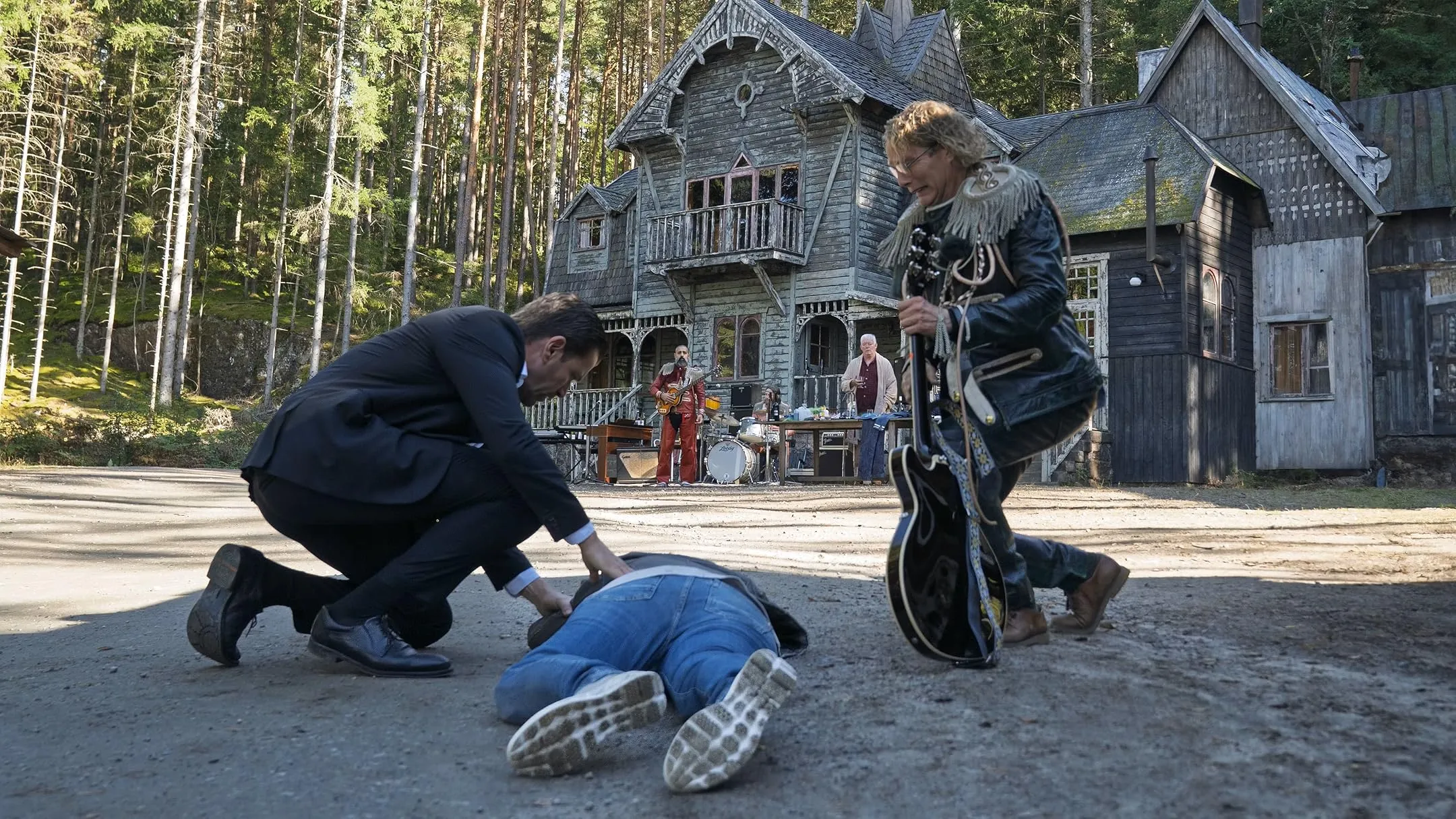
Yet, through small gestures and weary glances, we see his deep, abiding protectiveness. He cannot separate his desire for the money from his responsibility to his brother. Mikkelsen gives Manfred a profound, unsentimental dignity. His John Lennon persona is not a caricature; it is a shield built by a traumatized mind, expressed through a stiff posture and a deadpan gaze that hides deep hurt.
When someone calls him Manfred, he instinctively dives out a window or jumps from a moving car, a physical manifestation of his psychological pain. The film effectively uses flashbacks, like cinematic cutscenes revealing crucial backstory, to show us their painful childhood.
These brief scenes reveal Manfred’s early belief that he was a Viking, a fantasy that got him bullied, and how Anker always acted as his fierce defender against both classmates and their disapproving father. This history re-contextualizes the entire narrative. The mission to find the stolen money slowly transforms into a desperate attempt for Anker to heal a fractured bond and rescue the brother he feels he abandoned.
Designing a Coherent Chaos
Anders Thomas Jensen directs with the confidence of someone who knows how to make disparate systems work together. He expertly balances the film’s mechanics, shifting between brutal violence, quiet character moments, and outright slapstick without ever losing control of the tone.
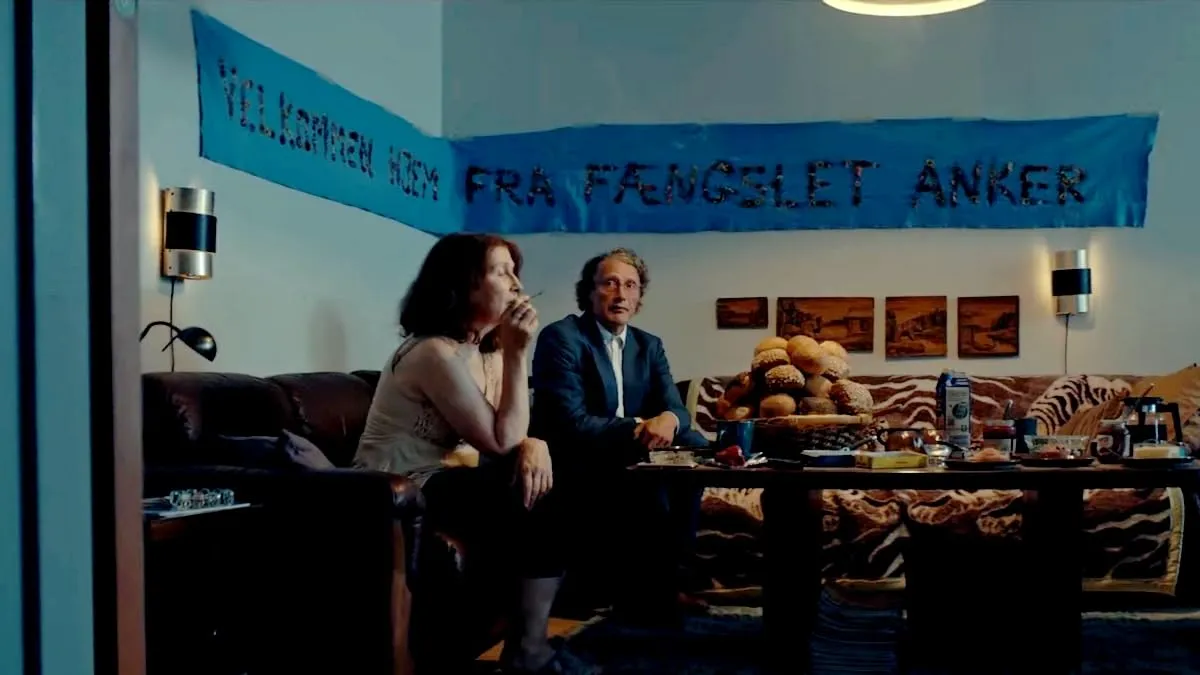
A scene of a man being viciously beaten can be followed by a quiet, poignant conversation or a ridiculous argument about musical arrangements. The serene, lush look of the Danish countryside, captured through crisp cinematography, provides a beautiful counterpoint to the escalating human pandemonium.
The production design of the old house gives it a Gothic, lived-in feel, making it a believable stage for the drama where every creaky floorboard feels earned. The film’s structure is reinforced by a brilliant framing device: an animated fable of a one-armed Viking prince whose father orders all men in the kingdom to sever an arm in solidarity.
This storybook opening initially seems like a strange non-sequitur. It is almost forgotten during the film’s chaotic middle section, but its return at the end provides a powerful thematic key. It retroactively explains the film’s title and clarifies its core ideas of loyalty and the profound, sometimes misguided, sacrifices we make for family. It is a potent piece of narrative design that elevates the entire experience.
The Last Viking premiered at the Venice Film Festival on August 29, 2025, and will also screen at the Toronto International Film Festival starting September 5, 2025. The dark comedy is scheduled for a Danish theatrical release on October 9, 2025.
Full Credits
Director: Anders Thomas Jensen
Writers: Anders Thomas Jensen
Producers and Executive Producers: Sisse Graum Jørgensen, Sidsel Hybschmann, Lizette Jonjic, Anne Falkesgaard Hansen (Producers); Zentropa Entertainments (Production Company)
Cast: Mads Mikkelsen, Nikolaj Lie Kaas, Sofie Gråbøl, Bodil Jørgensen, Lars Brygmann, Nicolas Bro, Søren Malling, Kardo Razzazi, Lars Ranthe
Director of Photography (Cinematographer): Sebastian Blenkov
Editors: Anders Albjerg Kristiansen, Nicolaj Monberg
Composer: Jeppe Kaas
The Review
The Last Viking
The Last Viking is a brilliantly executed dark comedy that succeeds through its perfect tonal control and two outstanding lead performances. It uses a bizarre heist-gone-wrong premise as a vehicle for a surprisingly touching story about brotherly sacrifice and the strange logic of trauma. While its humor is certainly an acquired taste, the film’s emotional sincerity and clever narrative framing make it a deeply rewarding experience for viewers who appreciate stories that defy easy categorization.
PROS
- Exceptional performances from Mads Mikkelsen and Nikolaj Lie Kaas, who anchor the film with genuine chemistry.
- A masterful balance of violent action, absurd humor, and heartfelt drama.
- A memorable ensemble of quirky, well-developed supporting characters.
- A creative story that uses its strange setup to explore deep themes of family and loyalty.
CONS
- The deadpan and often dark humor might not connect with every audience.
- The plot's chaotic nature could feel disjointed to those who prefer a more linear narrative.
- Using mental health conditions as a source of comedy could be off-putting for some viewers.







