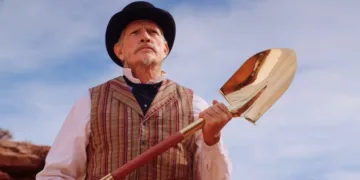























A man strikes the earth with a golden shovel. This solitary act in a vast, indifferent desert landscape becomes a genesis myth, the first verse in a century-long hymn of toil. We find ourselves transported 105 years forward, where the initial scar has yawned into a chasm.
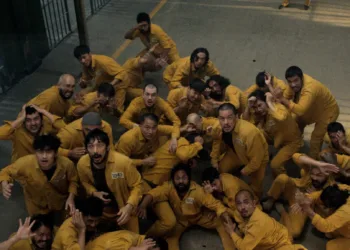
Here, a legion of men, managed by the founder’s descendant, the placid Mr. Goose, digs with a beatific fervor. Their cheerfulness is a constant, humming frequency, a state of grace found in the rhythmic scrape of metal on stone. Among them is Joe, a man whose contentment seems as deep as the pit itself, his life a simple architecture of work and family.
This fragile peace is broken not by a catastrophe, but by a whisper. An old digger, his face a map of his labor, dares to voice the unspoken, to ask about the reason for it all. The question is a contagion. It lodges in Joe’s mind like a shard of glass, beginning a fissure in the smooth facade of his world and threatening the very foundation of his community’s consecrated purpose.
The Tyranny of Blue Skies
The world of the happy worker is sealed under a sky of relentless, punishing blue, a dome of infinite, cheerful emptiness. Duwayne Dunham’s camera offers a sun-bleached diorama, a version of reality so over-lit and saturated it becomes a dream on the verge of turning sour. Every surface seems lacquered, every vista perfected into a postcard from a place that never was.
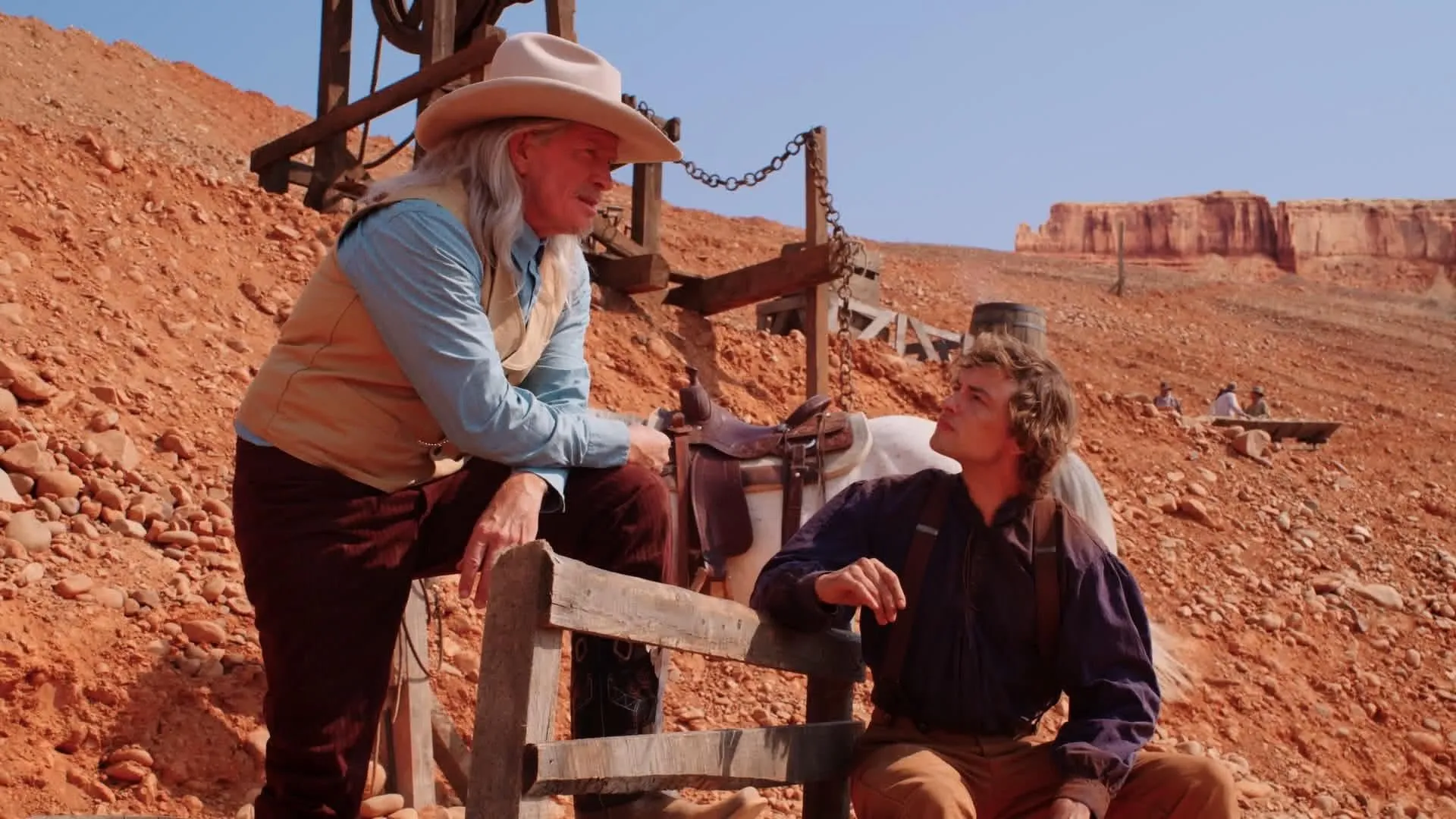
This is a fable’s landscape, where the Utah desert is rendered as a stage for a play about itself, its natural beauty made uncanny through hyper-real treatment. Intentional anachronisms disrupt any sense of historical grounding; men wield pickaxes from a bygone era while cars rust near homes built like cardboard sets, and broken televisions flicker with forgotten shows from a future they shouldn’t know. The effect is profoundly placeless, a temporal quarantine where past and present bleed into one another.
A spirit of operatic optimism infuses every scene, a gee-whizz theatricality that feels both earnest and deeply unsettling. The workers smile with the unwavering intensity of zealots. This carefully constructed artifice, this uncanny veneer of joy, is the film’s most potent statement. The aesthetic is a warning, a constant signal that the cheerful surface conceals a profound vacuum. We are shown a beautiful lie, a charm so aggressive it feels like a form of control, preparing us to question the very nature of the light.
Masks in the Wasteland
The figures populating this desert are not people but ideas given flesh, archetypes walking a symbolic earth where psychology is subordinate to purpose. Their simple names are their definitions, stripping them of identity to better serve their allegorical function.
Joe is the film’s site of consciousness, the quintessential Everyman whose soul becomes the battleground for the story’s existential war. Josh Whitehouse imbues him with a guileless energy that slowly erodes into a ragged, searching vulnerability; we witness the quiet agony of a mind awakening to its own prison, a fall from a state of manufactured grace. He is the anchor, yet he is adrift.
Presiding over this strange system is Goose, the benevolent patriarch played by Thomas Haden Church with a terrifying sincerity. He is not a simple villain but the high priest of a hollow gospel, his oft-repeated refrain of “damn fine” a mantra that calcifies the collective delusion. His authority comes from his absolute conviction, not from overt cruelty, which makes the ideology he represents more insidious.
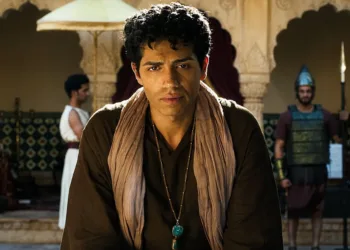
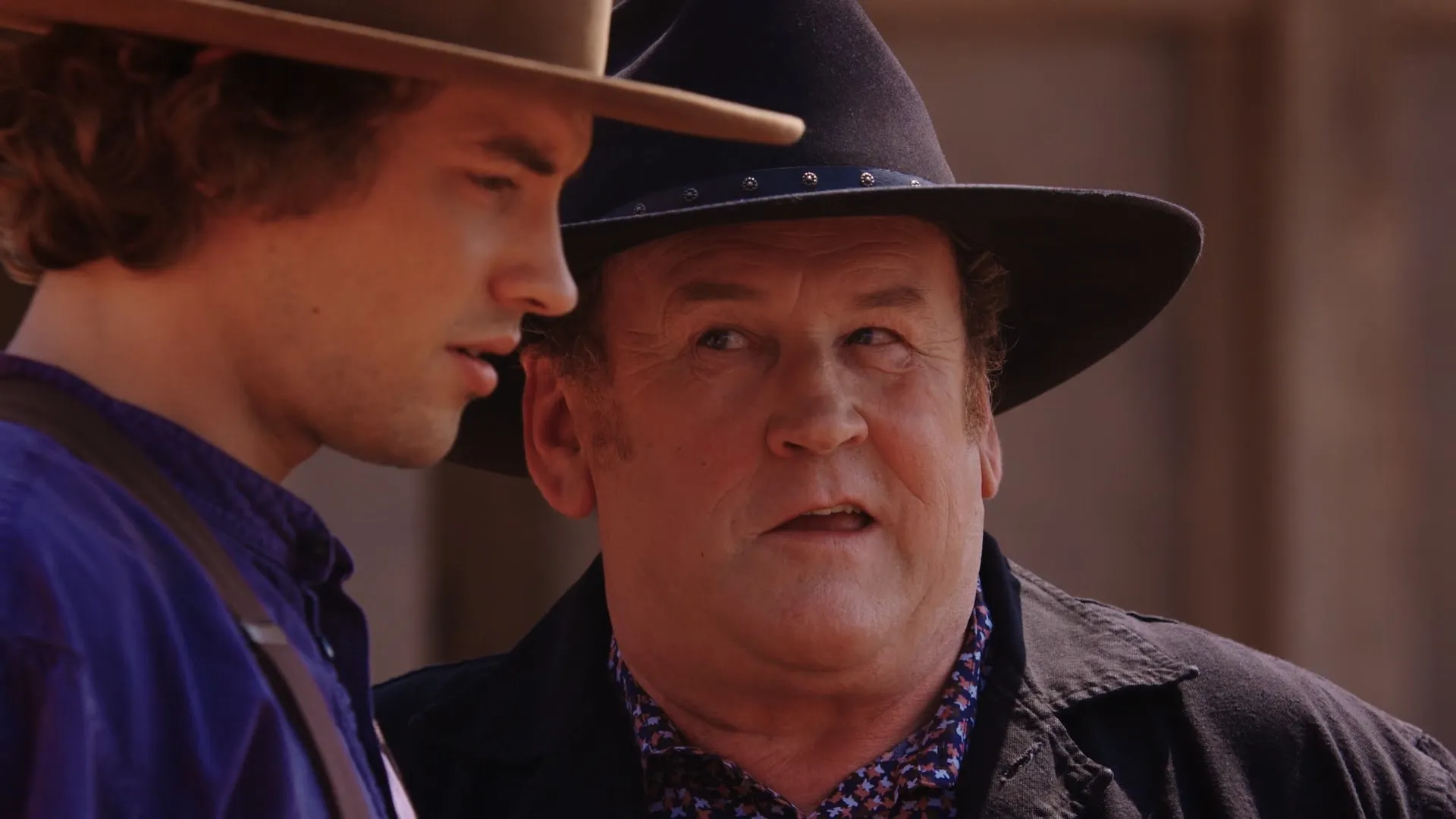
In stark opposition stands Clete, a serpent in this desert garden. Colm Meaney plays him as a manifestation of pure appetite, a man whose black attire announces him as an emissary from a world of cynical, grasping modernity. He is the catalyst who offers not knowledge, but a different, more naked form of exploitation. They are two prophets of the void, one selling faith and the other selling greed.
The Metaphysics of the Shovel
The hole is the film’s silent, ever-present protagonist. It is a physical manifestation of an existential condition, the void created by labor devoid of intrinsic meaning. It is a grave the community digs for itself, a monument to wasted effort, the American Dream inverted into a promise of advancement that only leads deeper into the earth.
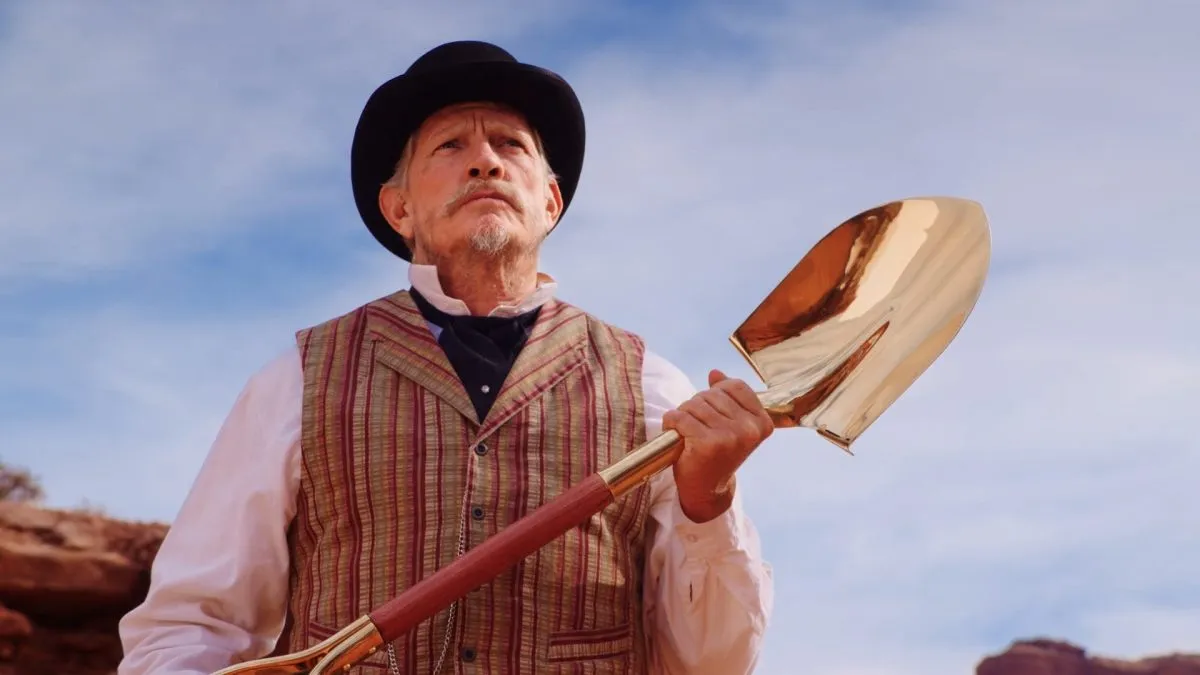
The narrative critiques a system where the reward for work is merely more work, a closed loop of effort and exhaustion that benefits a detached overseer. The conflict between Goose’s tradition-bound, faith-based work ethic and Clete’s openly exploitative capitalism reveals them to be two faces of the same coin; one masks the emptiness with cheerful ritual, the other with the promise of material gain.
The film’s philosophical weight rests on a single, recurring question that hangs in the dry desert air: “Why?” This query is the essential human cry against the absurd, the sound of a soul confronting its own reflection in a meaningless task. The film offers no solace or easy answers. It is a strange and unnerving satire that holds up a warped mirror to our own unquestioned labors and the systems of belief we build to give them shape, leaving us to stare into the abyss of our own making.
The film, The Legend of the Happy Worker, premiered at the Locarno Film Festival in Switzerland on August 7, 2025. While the official US and UK release dates are yet to be announced, it is known that the film has a runtime of approximately 1 hour and 40 minutes.
Full Credits
Director: Duwayne Dunham
Writers: S.E. Feinberg, Duwayne Dunham, Jerold Pearson
Producers: Bill Borden
Executive Producers: David Lynch, Leo Matchett
Cast: Josh Whitehouse, Thomas Haden Church, Colm Meaney, Meagan Holder, Amy Shiels, Rhys Mitchell, Nathan Stevens, Diane D. Griffith, Althea Sam, Jason K. Wixom, Cory Dangerfield, J.R. Starr, Musa Aden, Antonio Lexerot, Vaughn Travis
Director of Photography (Cinematographer): Reed Smoot
Editors: Mathias Hilger, Duwayne Dunham, Joel Plotch
Composers: Edward B. Kessel, Jan A.P. Kaczmarek
The Review
The Legend Of The Happy Worker
A strange, sun-scorched parable that digs into the absurdity of labor and the hollow promises of belief. The Legend of the Happy Worker is a visually distinctive and philosophically unsettling film. It functions better as a haunting question than a narrative, a hypnotic and sometimes frustrating meditation on the void we fill with work. Its ideas linger long after its slight story fades, leaving a residue of beautiful unease.
PROS
- A striking and surreal visual aesthetic.
- A deeply allegorical and thought-provoking central premise.
- Strong, archetypal performances from the cast.
- Successfully creates a unique and unsettling atmosphere.
CONS
- The narrative is intentionally thin and may feel underdeveloped.
- Its slow, languid pace can be frustrating for some viewers.
- The philosophical ideas sometimes overshadow the plot.
- Some quirky elements feel more like affectations than organic parts of the story.