





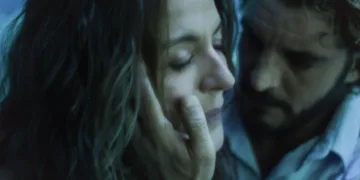
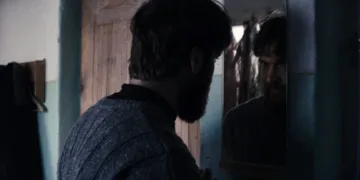







Stories about returning home always have a certain pull. They promise a confrontation with the past and a chance to see how we have been shaped by the places we leave behind. Brian Cox’s directorial debut, Glenrothan, wades into these familiar waters, setting its stage against the misty, rolling hills of the Scottish Highlands.
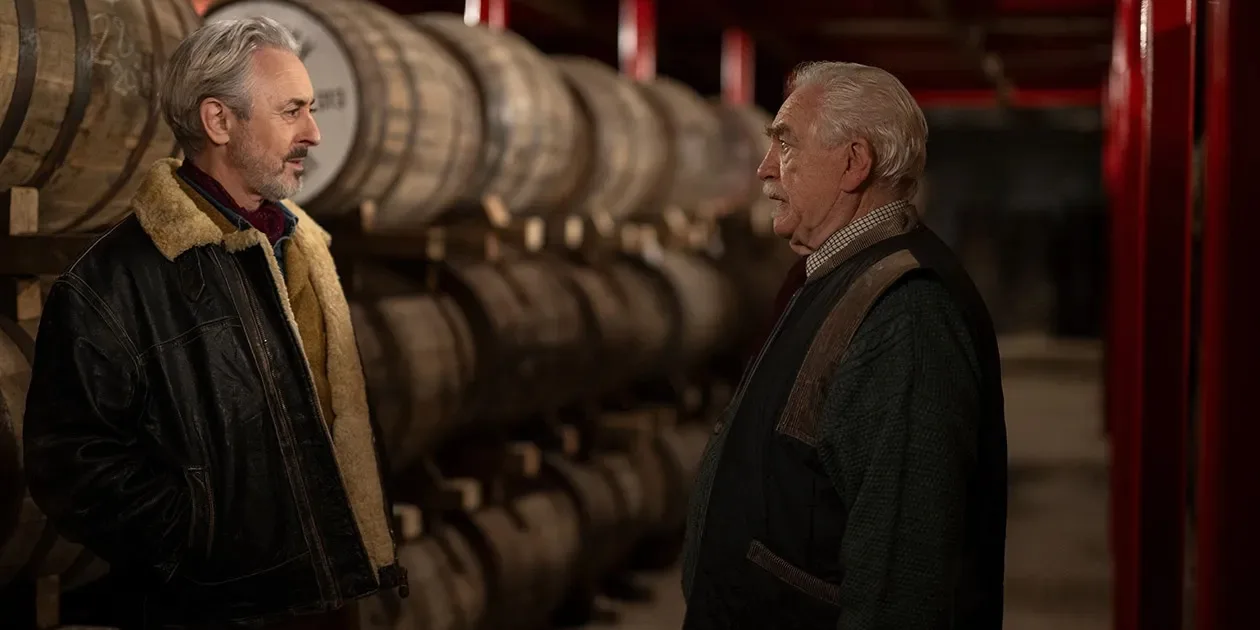
Cox also stars as Sandy, the ailing owner of his family’s historic whisky distillery. He sends a letter to his estranged younger brother, Donal (Alan Cumming), who fled for America decades ago and now runs a blues club in Chicago.
After a fire conveniently upends his life, Donal, along with his daughter Amy (Alexandra Shipp), agrees to return. This setup primes us for a potent drama about old wounds, sibling rivalry, and the weight of legacy. The film presents itself as a personal project for Cox, one that seeks to find warmth and reconciliation in a fractured family.
A Familiar, Faltering Tune
A story built on such a classic foundation needs a strong voice to feel new, yet Glenrothan’s narrative follows a well-worn path. It adheres strictly to the “city dweller returns to their rustic roots” formula without ever attempting to examine or subvert it. In an age where audiences are accustomed to more complex storytelling, this dedication to convention feels less like a comforting choice and more like a missed opportunity.
The plot’s reliance on convenience is apparent from the start; the fire that destroys Donal’s club feels less like an organic development and more like a screenwriter’s shortcut to get him on a plane. This lack of narrative rigor extends to the dialogue, which is so direct it leaves no room for subtext.
Characters announce their feelings plainly, pulling the viewer out of the experience by making it impossible to forget they are watching actors recite lines. The script’s most significant misstep is its use of flashbacks. Good flashbacks should re-contextualize the present, but these sequences simply offer information with a heavy-handed echo filter.
They flatten the story, answering questions we haven’t yet asked and robbing the brothers’ conflict of any mystery. The great pain that fueled a 40-year estrangement is revealed to be surprisingly thin, making Donal’s deep-seated grudge feel almost petulant. Ultimately, the film’s tidy resolution feels emotionally dishonest, wrapping up decades of resentment with a simplicity that disrespects the genuine messiness of family.
Performances Muted by the Material
An assembly of talent like this promises rich, textured performances, but the cast is largely stranded by the underdeveloped script. Brian Cox, known for his formidable screen presence, chooses a gentler, more subdued role in Sandy. The choice is interesting, yet the performance itself feels disengaged. The script gives his character no compelling internal conflict, so he simply becomes a nice, vaguely sad man, a passive figure in his own story.
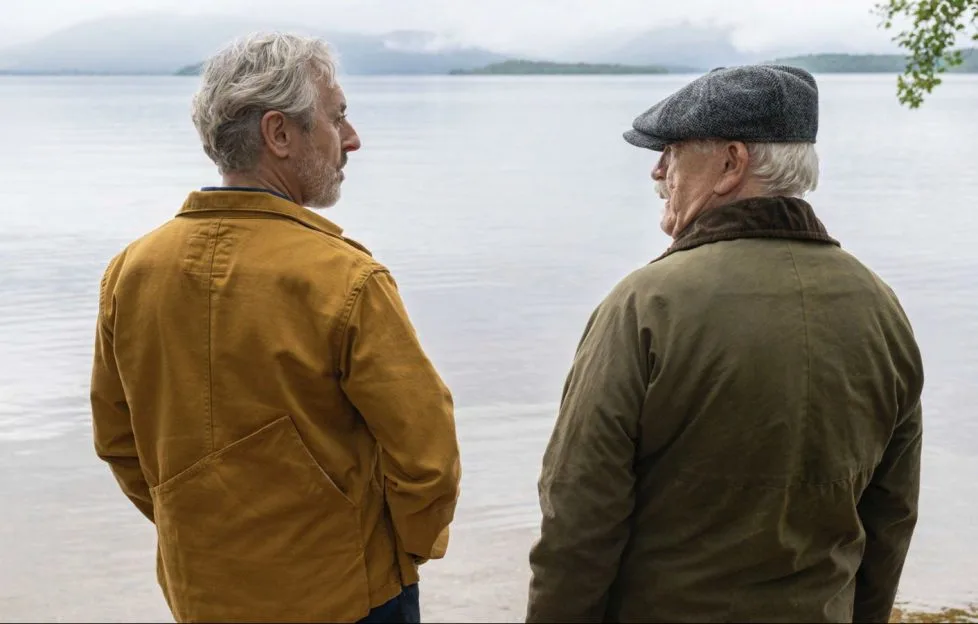
Alan Cumming fares little better as the prodigal brother Donal. A performer of immense charisma, Cumming is most alive when his character is singing. Outside of these musical moments, he is burdened with a script that forces him to verbalize his inner turmoil. I grew up listening to my father’s blues records, where a whole life’s worth of pain and resilience could be communicated in a single bent note.
Donal, a supposed blues aficionado, expresses his history in the most surface-level ways, making the performance feel ungrounded. The supporting cast is similarly underserved. Alexandra Shipp’s Amy is a functional character, a walking plot device whose unwavering affection for an uncle she barely knows is never explained.
The wonderful Shirley Henderson, as Donal’s old flame, is reduced to brief outbursts of feisty energy, a shadow of the complex character she could have been. There are glimpses of believable brotherly connection, but they are fleeting, lost in a sea of polite, expositional conversations.
A Polished Surface on an Empty Cask
The film’s technical execution mirrors the shortcomings of its script, favoring a safe, polished aesthetic over a distinct artistic vision. As a director, Cox’s approach feels static and televisual, more concerned with capturing the actors than with using the frame to tell the story. In a scene where Donal joins a band in a local pub, the camera cuts frantically between instruments and faces, a choice that generates anxiety instead of the intended joy of musical discovery.
It reveals a lack of confidence in letting a moment breathe. The cinematography captures Scotland’s beauty, but it is a generic, postcard prettiness. The lighting is perfect, the mist is artful, yet there is no grit or sense of a lived-in space. It is Scotland as an idea, not a real place, an idealized fantasy that matches the script’s emotional simplicity.
This visual blandness is paired with an overbearing musical score full of fiddles and folk tunes that constantly instructs the audience on what to feel, creating a jarring tonal dissonance. The sound design is equally sterile, lacking the ambient, natural sounds that would make the distillery or the village feel authentic. The filmmaking feels entirely conventional, a collection of standard choices that result in a movie without a clear identity.
Glenrothan is a 2025 British drama film that serves as the directorial debut for actor Brian Cox. The film premiered at the 50th Toronto International Film Festival on September 11, 2025. It tells the story of two estranged brothers, Donal (Alan Cumming) and Sandy (Brian Cox), who are reunited after 35 years in the Scottish Highlands. Their reunion forces them to confront their troubled past as they decide the fate of their family’s whisky distillery. As of now, the film does not have a confirmed U.S. distribution or streaming platform.
Full Credits
Director: Brian Cox
Writers: David Ashton, Jeff Murphy
Producers: Brian Cox, Neil Zeiger, Crystine Zhang, Phin Glynn, Nic Crum, James Cabourne, Vladimir Zemtsov
Executive Producers: Barth Brosseau, James Cabourne, Sheryl Crown, Lota Dascioraite, Phil Hunt, Axel Kuschevatzky, Matthew Lesher, Compton Ross, Cindy Teperman
Cast: Brian Cox, Alan Cumming, Shirley Henderson, Alexandra Shipp, Siobhan Redmond, Nicole Ansari-Cox, Jess Douglas-Welsh, Aidan Redmond
Director of Photography: Jaime Ackroyd
Editors: David Arthur, Tania Reddin
Composers: Roddy Hart, Tommy Reilly
The Review
Glenrothan
Despite the promise of its setting and a cast led by Brian Cox and Alan Cumming, Glenrothan is a disappointingly hollow drama. A clichéd script and flat direction prevent the story from ever finding a genuine emotional pulse, leaving its talented actors with little to do. What should have been a poignant story of family reconciliation ends up as a predictable and forgettable exercise in formula.
PROS
- Features beautiful, scenic cinematography of the Scottish Highlands.
- The cast is filled with respected and talented actors.
- Alan Cumming’s musical performance scenes are brief highlights.
CONS
- A formulaic and predictable script with weak, on-the-nose dialogue.
- Characters are underdeveloped, with thin and unconvincing motivations.
- The direction is static, uninspired, and visually uninteresting.
- An overbearing musical score telegraphs every emotion.