























![Kingdom Hearts Collection [I-III] Review](https://gazettely.com/wp-content/uploads/2026/10/Kingdom-Hearts-Collection-I-III-1-360x180.webp "Kingdom Hearts Collection [I-III] Review: KHII Holds Steady as Newer Entries Fluctuate 37")





A Norwegian princess claims to speak with angels. A Los Angeles shaman, who once worked with Gwyneth Paltrow, claims to be a sixth-generation spiritual guide. Rebel Royals: An Unlikely Love Story opens on this improbable pairing, framing itself as a modern fairytale of love triumphing over public scorn.
The documentary charts the turbulent romance between Princess Märtha Louise and Durek Verrett as they navigate a firestorm of media scrutiny on their way to the altar. Yet, what is presented as an intimate look at an unconventional couple quickly reveals itself to be a carefully polished piece of personal branding. The film feels less like an exploration of a relationship and more like a 90-minute exercise in narrative control, a flattering self-portrait commissioned by its own subjects.
The Metaphysics of a Modern Union
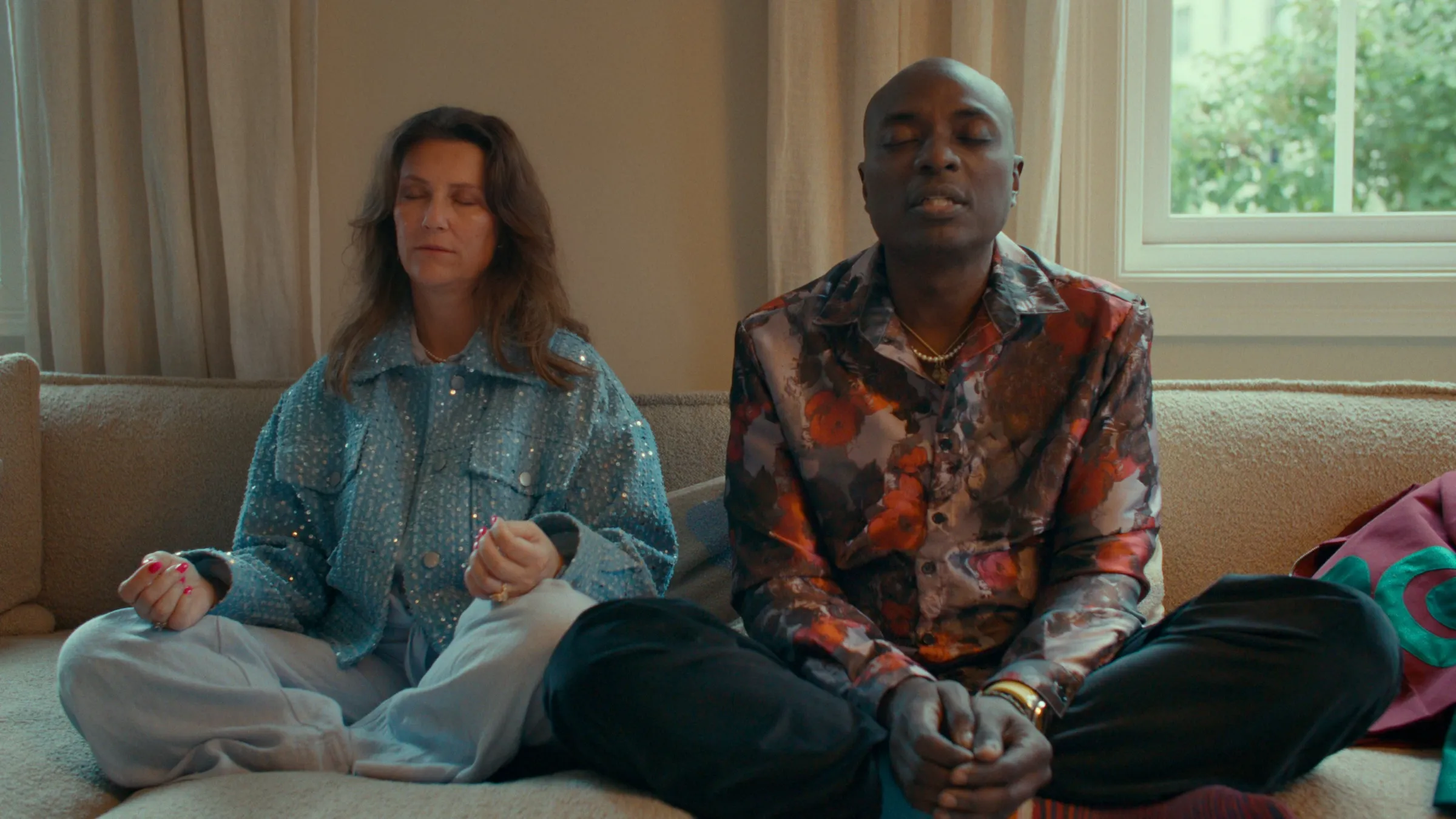
The film posits that the union between Märtha Louise and Verrett is built on a shared metaphysical foundation. The princess is shown not as a newcomer to esoteric ideas but as a long-time practitioner of alternative spirituality, with an established history of exploring psychic abilities and energy healing.
This background frames her as a knowing participant in Verrett’s world, not an unsuspecting royal lured by a charlatan. Verrett himself is a study in 21st-century spiritual branding. He is charismatic and flamboyant, and his self-identification as “soul-sexual” functions as a modern, fluid label that conveniently deflects simple questions about his past. His persona is pure Los Angeles celebrity culture, a stark contrast to the staid traditions of the Norwegian monarchy.
The documentary leans heavily into this cultural friction, treating Verrett’s arrival in Norway as a classic “fish out of water” scenario, best exemplified by his choice of a kimono and cowboy boots for his first meeting with the king and queen.
This clash is presented as the source of external conflict, while their private language of astrology, past lives, and “energy” is offered as proof of their deep, internal connection. This dynamic effectively creates a reality-TV narrative, transforming their romance and wedding planning into a spectacle of outsider charm against institutional rigidity.
Manufacturing an Adversary
Every curated narrative requires a villain, and Rebel Royals designates the Norwegian press for this role. The film’s structure methodically builds a case against the media, using a barrage of unflattering tabloid headlines and clips of aggressive journalists to construct a singular, hostile antagonist.

The documentary’s primary rhetorical strategy is to conflate two distinct forms of public reaction. It rightfully highlights the abhorrent and indefensible racist abuse Verrett received, particularly online. These moments are genuinely disturbing. The film then cleverly juxtaposes this genuine prejudice with legitimate journalistic skepticism about Verrett’s career and financial practices, where he is questioned as a potential “scam artist.”
By placing these two critiques side-by-side, the film implies they are one and the same, suggesting that any question aimed at Verrett is inherently rooted in a racist agenda. This technique is a familiar playbook in the age of celebrity-controlled narratives, echoing the defense strategies seen in the public battles of figures like Prince Harry and Meghan Markle.
The tragic story of Märtha’s ex-husband, Ari Behn, and his own difficult history with the press is deployed instrumentally, used less to explore his life and more to add another layer to the film’s central thesis: that the media is a destructive force from which the couple must be defended.
The Silence of the Film
As a piece of journalism, the documentary is most notable for its profound silence on key issues. It operates with a baffling lack of curiosity, introducing serious controversies only to let them evaporate. The film acknowledges that Verrett sold $222 medallions that he claimed could heal COVID-19, and it even includes a leaked voice note in which he appears to admit to sexual misconduct with a client.
These are significant, character-defining events, yet they are presented without any follow-up questions, functioning as fleeting moments of drama that are quickly neutralized and forgotten. The most glaring omission is the film’s failure to address the central paradox of Verrett’s life: a man who has built a lucrative career on the promise of alternative healing is simultaneously dependent on modern medicine for his survival, requiring regular dialysis as he awaits a second kidney transplant.
The film documents his health struggles but never asks him to reconcile this reality with his professional claims. This deferential approach characterizes the entire project. The interviews are not interrogations; they are friendly, uncritical platforms. By avoiding any real scrutiny, the film abandons its journalistic responsibility and becomes a tool for its subjects. It uses their real pain—illness, grief, and the sting of racism—as a shield, creating a sympathetic portrait that is ultimately hollow and deeply misleading.
Rebel Royals: An Unlikely Love Story is a documentary that gives viewers an intimate look into the controversial love story between Princess Märtha Louise of Norway, the Norwegian king’s eldest child, and her partner, American spiritual guide Durek Verrett (often referred to as Shaman Durek). The film chronicles the couple as they prepare for their wedding, seek spiritual guidance, and navigate the intense media storm and public scrutiny surrounding their unconventional union. This feature documentary premiered globally on Netflix around September 16, 2025, and is available to stream there.
Full Credits
The Review
Rebel Royals: An Unlikely Love Story
Rebel Royals is a frustratingly hollow affair. It presents a fascinating cultural collision and introduces serious, complex issues, from racism to the ethics of alternative medicine. Yet, it steadfastly refuses to engage with any of them in a meaningful way. The film is not a documentary; it is a feature-length press release, a carefully controlled narrative that serves its subjects at the expense of the truth. It is a polished, watchable, and ultimately empty piece of public relations that mistakes access for insight and endorsement for exploration.
PROS
- Provides a highly polished, intimate view of the couple’s perspective.
- Effectively highlights the real and abhorrent racist abuse directed at Durek Verrett.
- Visually slick with the high production values typical of a Netflix feature.
CONS
- Complete lack of journalistic integrity and critical inquiry.
- Functions as a one-sided public relations piece rather than a documentary.
- Raises serious controversies about its subjects but fails to investigate them.
- Manipulatively conflates valid criticism with prejudice to deflect scrutiny.