





























From his small Tokyo apartment, Philip Vandarploeg watches the warm light of other people’s lives. He sees families sharing meals, their movements a silent pantomime of belonging that feels worlds away from his own. Philip, played by Brendan Fraser, is a struggling American actor, a man whose physical size makes him conspicuous in a city he cannot quite call home.
His seven years in Japan have yielded little beyond a fading memory of a toothpaste commercial and a collection of auditions for roles like “sad American” or “a tree.” His profound loneliness hangs in the air, a quiet ache for connection. Into this void steps a peculiar opportunity: a job at a “rental family” agency.
These unique Japanese businesses offer actors for hire to fill any personal role a client might need. The film presents this service not as a gimmick, but as a response to a deep societal isolation, asking a potent question about the nature of a feeling. What happens when an emotion, paid for by the hour, starts to feel indistinguishable from the real thing?
The Business of Emotion
Philip’s entry into this world is through a staged funeral, a piece of surrealist theater for an audience of one. He is hired to be a mourner for a man who lies in an open casket, very much alive, soaking in the eulogies of paid performers. The scene is a strange tableau of transactional grief, a commercialization of sorrow that feels both absurd and deeply human.
When Philip briefly lies down in the empty coffin himself, it becomes a moment of stark self-appraisal, a quiet contemplation of a life lacking an audience. At the Rental Family agency, the work is managed by the pragmatic owner, Shinji, whose business model is built on the simple truth that loneliness is a powerful market force.
Philip’s presence is initially met with a guarded skepticism by his coworker, Aiko, a professional who understands the delicate cultural dance her job requires. Their friction highlights the chasm between an insider’s nuanced approach and an outsider’s raw emotionality.
The assignments raise immediate ethical questions for Philip, whose earnestness makes him a poor candidate for emotional detachment. When he plays a Canadian groom in a sham wedding designed to help a young woman hide her same-sex partner from her family, he worries about the architecture of the deceit.
His boss offers a different perspective: the agency does not sell lies, it sells emotions. The performances, however artificial, provide a necessary service. They offer companionship, validation, or simply a temporary shield from social judgment, fulfilling a genuine human need in a world where direct connection has become a scarce commodity.
Attachments of Artifice
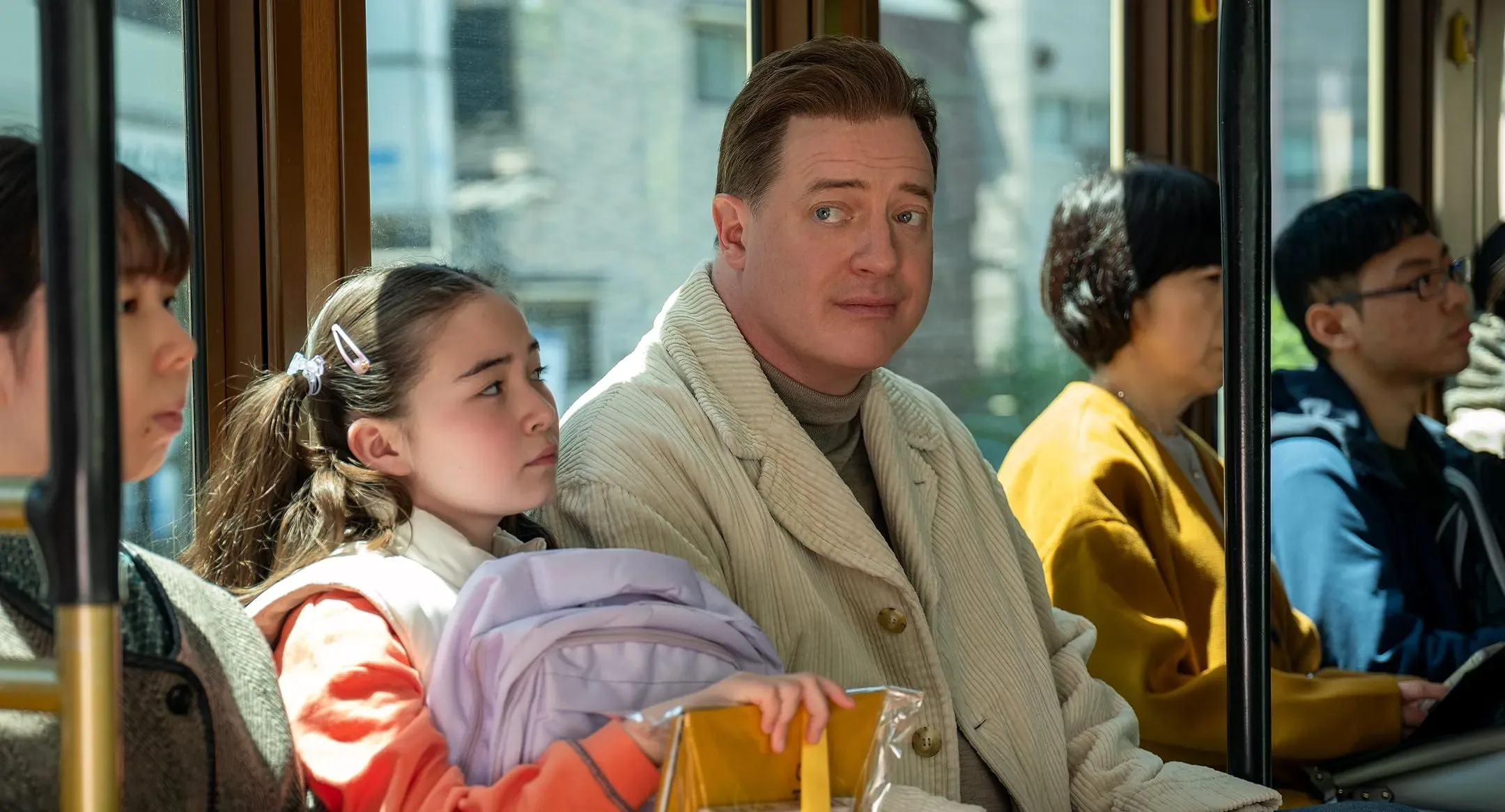
The film finds its emotional weight in two of Philip’s assignments, where the line between performance and reality dissolves completely. He is hired by a single mother to pose as the long-absent American father of her eleven-year-old daughter, Mia. The pretense is meant to present a stable family unit for Mia’s interview at a prestigious private school.

What begins as a professional arrangement, full of awkward silences and scripted pleasantries, slowly transforms. Through shared meals and quiet conversations, Mia’s initial suspicion gives way to a genuine father-daughter bond, one that feels more real than the circumstances that created it.
The role forces Philip to confront the vacancy left by his own fatherless childhood, awakening a paternal instinct he never knew he possessed. The ethics of the situation are thorny; the mother’s choice is a high-stakes gamble with her daughter’s heart, yet the film treats it with a gentle, non-judgmental eye.
In a separate assignment, he plays a film journalist interviewing Kikuo, a forgotten Japanese acting legend whose memory is beginning to fail. The job is to provide Kikuo with an audience, a final affirmation of his life’s work before it fades from his own mind. This professional duty also deepens into a sincere friendship.
Philip becomes Kikuo’s confidant, listening to stories of a life on screen and eventually helping the old man “jailbreak” from his quiet home to fulfill a final wish. The act is a compassionate rebellion against the rules of his job. In these two relationships, Philip is forced to reckon with the past and the future. Mia represents a life of paternal responsibility he never had, while Kikuo represents the legacy and dignity one hopes to leave behind.
The Sincerity of Sadness
At the film’s center is Brendan Fraser’s soulful, unadorned performance. He uses his large frame not for comedy, but to convey a gentle awkwardness and a profound emotional weight. His smile is a wince; his wince is an open wound. It is a performance of quiet, internal suffering, a stark contrast to the physical transformation of his work in The Whale.

Here, the pain feels closer to the bone, drawing from a well of authentic vulnerability that his public history makes all the more resonant. Director Hikari guides the story with a humane and gentle hand, refusing cynicism where it would be easy to find it. Her vision is apparent in small details, like the dignified portrayal of Philip’s sex worker friend, a character treated with respect even as her narrative thread is left unresolved.
The filmmaking itself supports the film’s quiet mood. The cinematography frequently frames Philip against the vast, indifferent Tokyo cityscape, visually reinforcing his solitude within the sprawling metropolis. A soul-stirring score enhances the pervasive sense of longing that gives way to fragile moments of connection.
The film maintains a curious ambivalence toward the industry it portrays, suggesting that while the service may be a symptom of a fractured society, the human connections it facilitates can be pure. The story’s final message is a quiet one. It suggests that the roles we adopt and the bonds we form can lead to an authentic emotional truth, even when their origins are artificial. It is a soft-spoken statement on the power of empathy and the simple, universal need to be seen.
“Rental Family” had its world premiere at the Toronto International Film Festival on September 6, 2025. It will then have a limited theatrical release in the United States on November 21, 2025. Information on streaming availability has not yet been announced.
Full Credits
Director: Hikari
Writers: Hikari, Stephen Blahut
Producers: Eddie Vaisman, Julia Lebedev, Hikari, Shin Yamaguchi
Executive Producers: Jennifer Semler, Tomo Koizumi, Stephen Blahut, Leonid Lebedev, Brendan Fraser, Oren Moverman
Cast: Brendan Fraser, Takehiro Hira, Mari Yamamoto, Shannon Mahina Gorman, Akira Emoto, Nihi, Shino Shinozaki
Director of Photography: Takurô Ishizaka
Editors: Alan Baumgarten, Thomas A. Krueger
Composer: Jónsi, Alex Somers
The Review
Rental Family
Rental Family is a gentle, humane film anchored by a deeply affecting performance from Brendan Fraser. While its sentimentality sometimes verges on being too neat, the story's exploration of loneliness and connection offers a quiet, thoughtful statement on the nature of emotion. It successfully finds authentic feeling within its artificial premise, making for a worthwhile cinematic experience.
PROS
- Brendan Fraser delivers a soulful and sincere lead performance.
- The film maintains a gentle, compassionate tone throughout.
- It thoughtfully explores themes of modern loneliness and the need for connection.
- The cinematography and score effectively build a mood of quiet longing.
CONS
- The narrative can feel overly sentimental and resolves some conflicts too neatly.
- Certain subplots and supporting characters feel underdeveloped.
- Its moral questions are sometimes softened in favor of emotional warmth.
- The slow, deliberate pace may not engage all audiences.