
























![Kingdom Hearts Collection [I-III] Review](https://gazettely.com/wp-content/uploads/2026/10/Kingdom-Hearts-Collection-I-III-1-360x180.webp "Kingdom Hearts Collection [I-III] Review: KHII Holds Steady as Newer Entries Fluctuate 37")



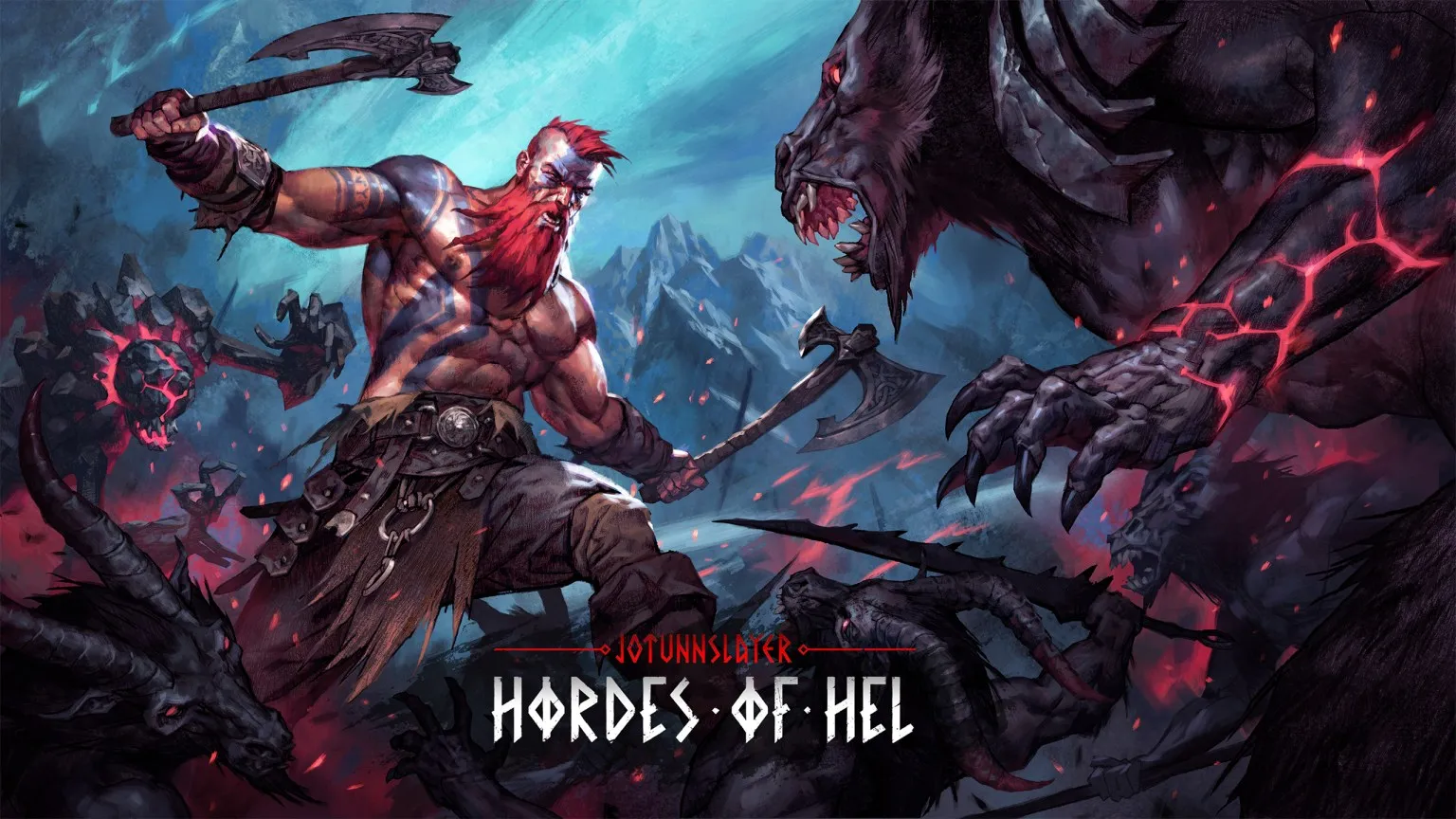

The auto-battler genre, often called “Survivors-like,” has seen a flood of new titles, each attempting to capture the magic of its namesake. Jotunnslayer: Hordes of Hel enters this crowded arena, distinguishing itself with a grim fantasy aesthetic rooted in Norse mythology.
The premise is straightforward yet effective: as a formidable warrior, you are the last line of defense against the monstrous legions pouring from the underworld. You must stand against impossible odds to protect the nine worlds from being consumed by darkness. What first catches the eye is the game’s presentation.
Forsaking the common pixel-art style, Jotunnslayer opts for a polished, 3D visual approach that feels closer to an action RPG like Diablo. This commitment to high-quality graphics and a dark, serious tone creates an immediate sense of an intense and substantial experience.
The Core Loop: A Dance with Death
Each attempt to push back the darkness in Jotunnslayer takes the form of a timed run, typically lasting between 15 and 20 minutes. Your character attacks automatically, freeing you to focus on the essential tasks of movement and survival. The screen quickly fills with enemies, turning every moment into a careful dance of positioning and dodging.
The player’s primary role is spatial awareness, weaving through hundreds of foes while your character unleashes a constant barrage of attacks. While an option for manual aiming exists, the sheer density of the hordes makes it an impractical choice; success is found in fluid motion, not precise targeting.
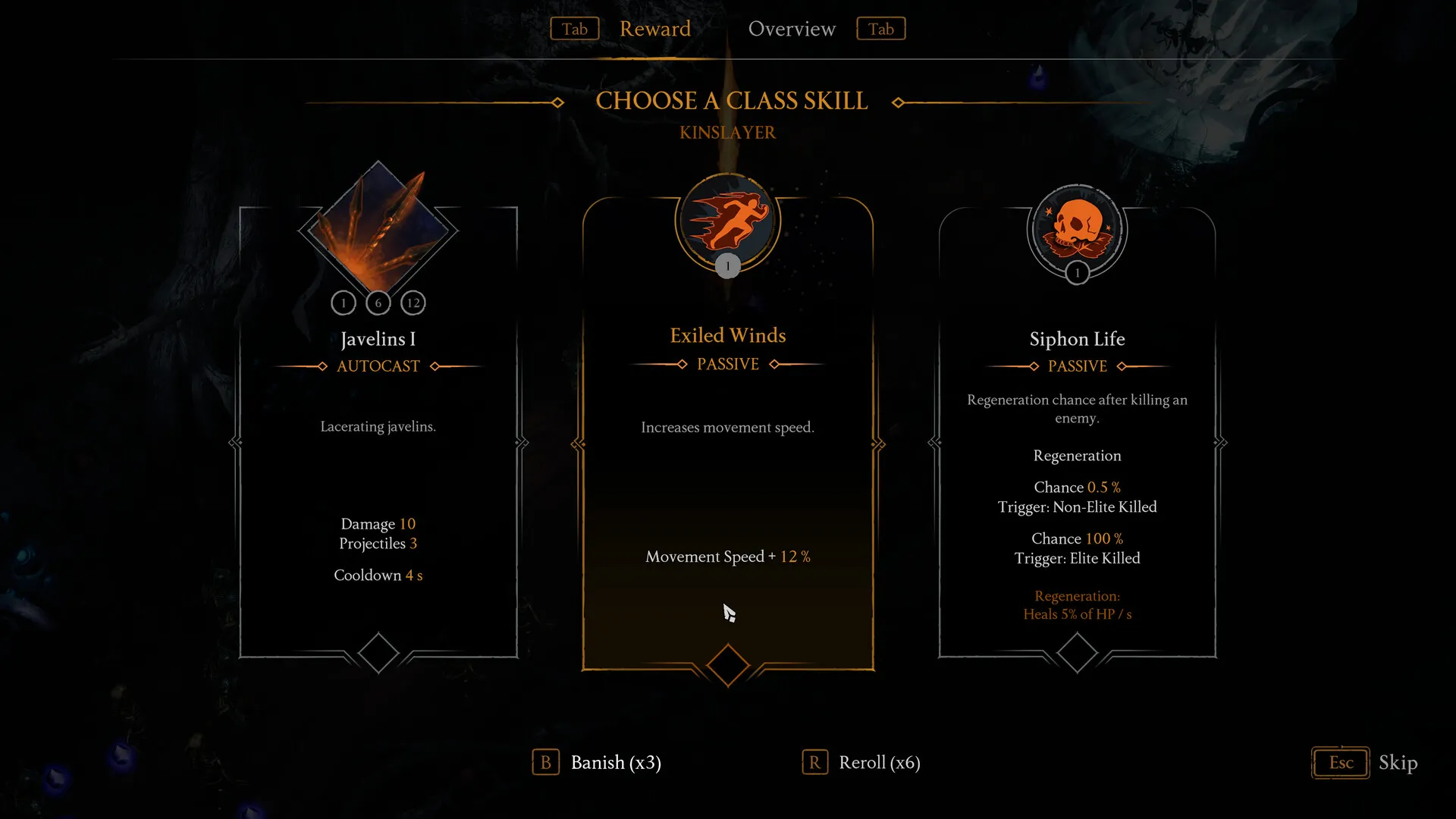
Defeated foes drop experience crystals, and collecting enough of these results in a level-up. This is where the on-the-fly strategy begins, as you are presented with a choice of three or more ability cards to augment your power for the remainder of that run.
This core mechanic is standard for the genre, but the game adds a welcome layer of structure with its quest system. Instead of merely surviving by finding a defensible spot, you must complete a series of mandatory objectives that force you to traverse the entire map.
These tasks provide welcome variety, ranging from simple collection missions, like gathering mushrooms or drinking horns, to more dangerous assignments. You might be asked to stand your ground and activate ancient portals while fending off the powerful creatures that emerge, or to destroy a stationary demonic totem, leaving you highly vulnerable as you do so. These objectives alter the genre’s typical rhythm, pushing you to take calculated risks.
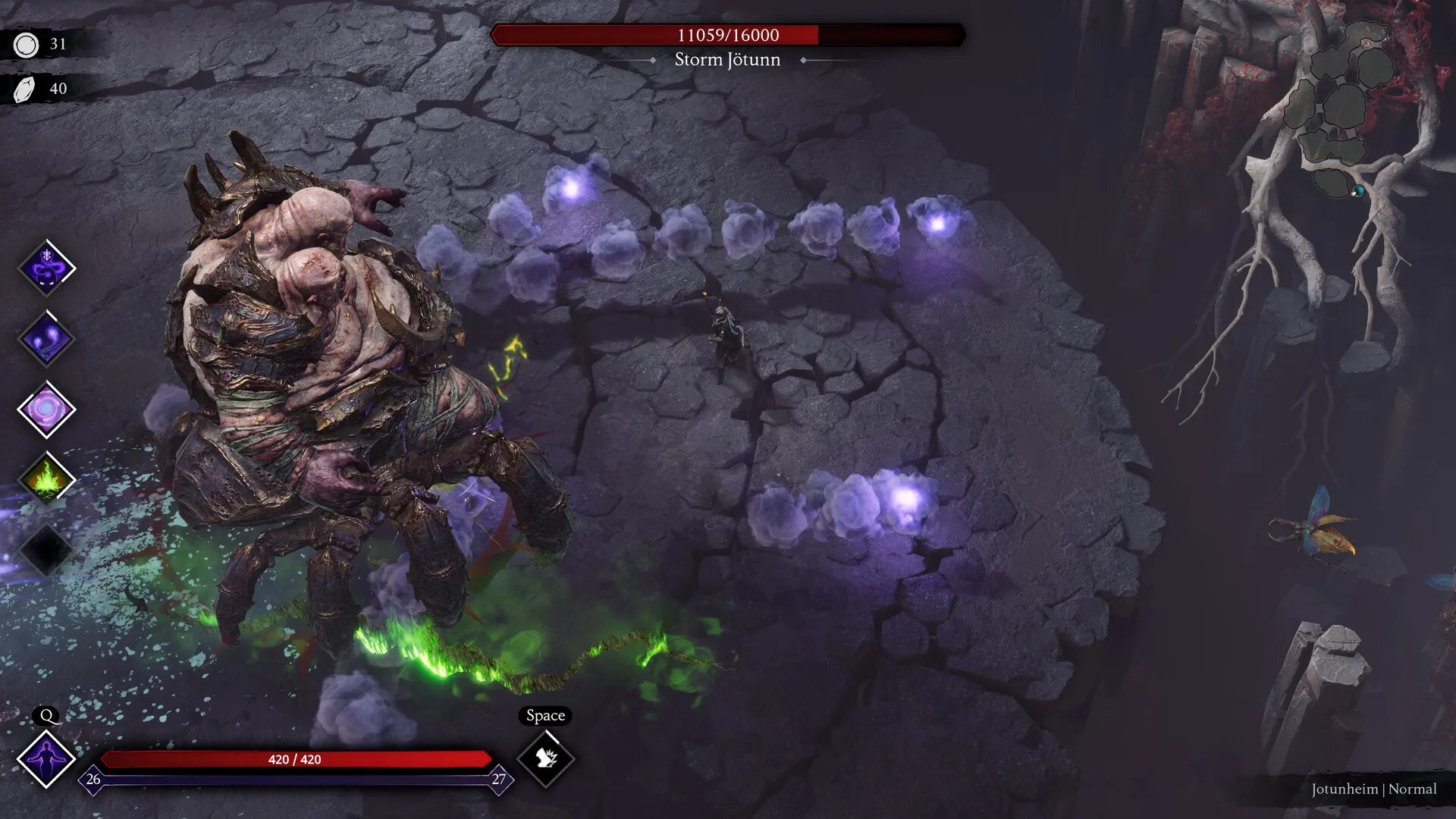
The reward for completion is often a health refill and a cache of coins, but their main purpose is to enable the summoning of the level’s final boss, a massive Jotunn. These climactic encounters, against titans like the skeletal Bone Jotunn or the mechanical Construct Jotunn with its fire launcher and saw blade, serve as a true test of the build you have assembled, pitting your screen-clearing power against a single, formidable opponent with dangerous attack patterns.
An Arsenal Forged by Gods: Wielding the Might of Asgard
The heart of Jotunnslayer lies in its extensive character and build variety. The game features six playable classes, beginning with the accessible melee Berserker and ranged Seeress. As you progress, you unlock more specialized warriors with distinct mechanics. The Revenant is a skilled archer who can pepper the screen with a volley of arrows, launch explosive skulls, and is accompanied by a spirit wolf.
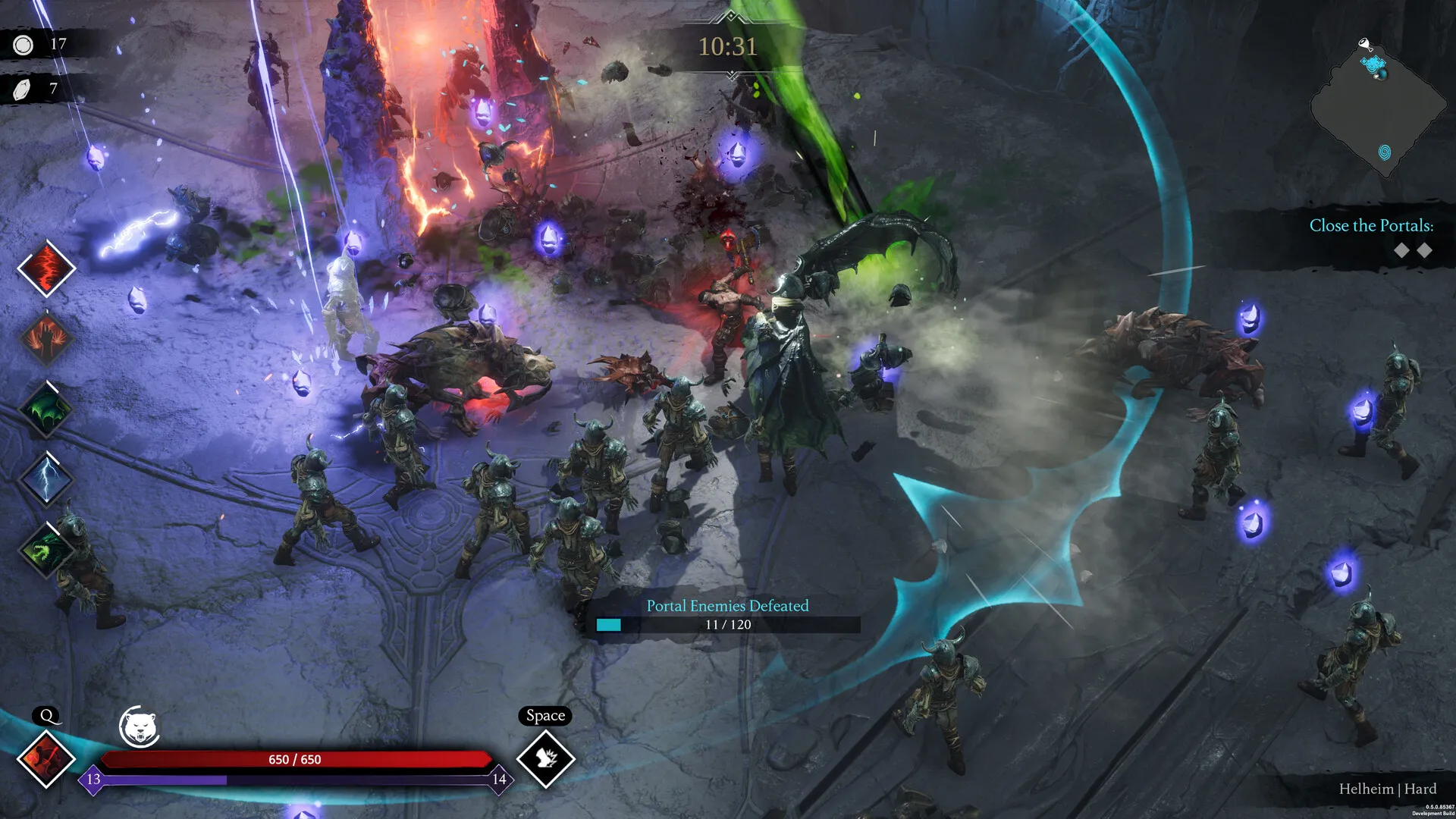
The Flame Sister unleashes destructive fire magic, while the Kinslayer, a fallen Valkyrie, can summon phantasms that explode among enemy ranks. Perhaps most unique is the Warden, a durable dwarf who cannot dodge. Instead, he thumps the ground with his shield for an area-of-effect attack, forcing a completely different, more deliberate playstyle focused on tanking hits. Each class is further refined by a subclass system that provides specific passive bonuses, allowing you to lean into a particular strength.
Your warrior’s power comes from two sources: their innate class skills and boons granted by the Norse gods. You can mix and match abilities from eight different deities, creating a huge spectrum of potential builds. Thor offers his iconic hammer blow and chain lightning strikes. Loki provides trickster abilities and perks that increase your dodge frequency.
Njord brings the power of the sea, letting you call forth a spectral ship to ram through enemies or summon kraken tentacles from the earth. The dwarven smiths Brokk and Sindri offer a different strategic path; they provide no active attacks but grant some of the strongest passive upgrades to your health, damage, and skills. This dual system allows for complex synergies.
A typical build consists of five active, auto-firing abilities and a potentially huge number of passive upgrades. You might pair the Revenant’s ranged attacks with Loki’s mobility perks to become an untouchable kiting machine, or combine the Warden’s inherent toughness with Brokk and Sindri’s defensive buffs to become an unstoppable juggernaut.
The game gives you a degree of control over the random nature of leveling through options to banish unwanted abilities from the pool for that run or re-roll your choices, allowing you to guide your character toward a specific and powerful design.
The Endless War: Spoils of Battle
Progress in Jotunnslayer extends far beyond a single successful run. The coins you collect from fallen enemies and completed quests are converted into permanent skill points at the end of a match. The conversion rate becomes less generous over time, making early upgrades feel fast and impactful while later ones require more dedicated grinding.
These points are invested in several extensive upgrade trees back in the main menu. You can purchase global upgrades that increase health, damage, or movement speed for every character. You can also spend points to enhance the abilities offered by each god or to strengthen the specific skills of your favorite classes, perhaps increasing the number of projectiles an attack fires or reducing its cooldown.
A key early upgrade to seek from the goddess Freya is an extra revive, a crucial lifeline for difficult runs. A player-friendly feature is the ability to reset these skill points at no cost, which encourages you to experiment with different builds and characters without penalty.
The game offers five distinct worlds to fight through, each presenting a different layout and challenge. Niflheim is a vast, open tundra perfect for learning the basics. Later levels introduce more complex terrain, such as Jotunheim, which requires you to activate bridges to cross between islands, or the minecart-filled corridors of Svartalfheim.
Every map includes multiple difficulty settings and an unlockable Endless Mode, providing considerable replay value for those who master the mechanics. An additional layer of meta-progression comes from the Trophy system, which acts as a set of in-game achievements. Completing these challenges, such as killing a certain number of special golden imps, rewards you with Soulstones.
This special currency is used to purchase new, powerful weapons for each hero, adding another long-term goal. One point of friction for dedicated players may be the game’s lack of detailed progress tracking. Unlike some of its peers, it does not record which character has completed which map on which difficulty, a small omission that can reduce the motivation for absolute completion.
A Realm of Ice and Fire: A Saga in Sight and Sound
The presentation in Jotunnslayer is one of its strongest assets. The game’s detailed 3D models and dark, atmospheric environments give it a visual weight that helps it stand apart from many of its genre peers. The polished graphics and grim aesthetic, viewed from a classic isometric perspective, create a world that feels dangerous and epic.
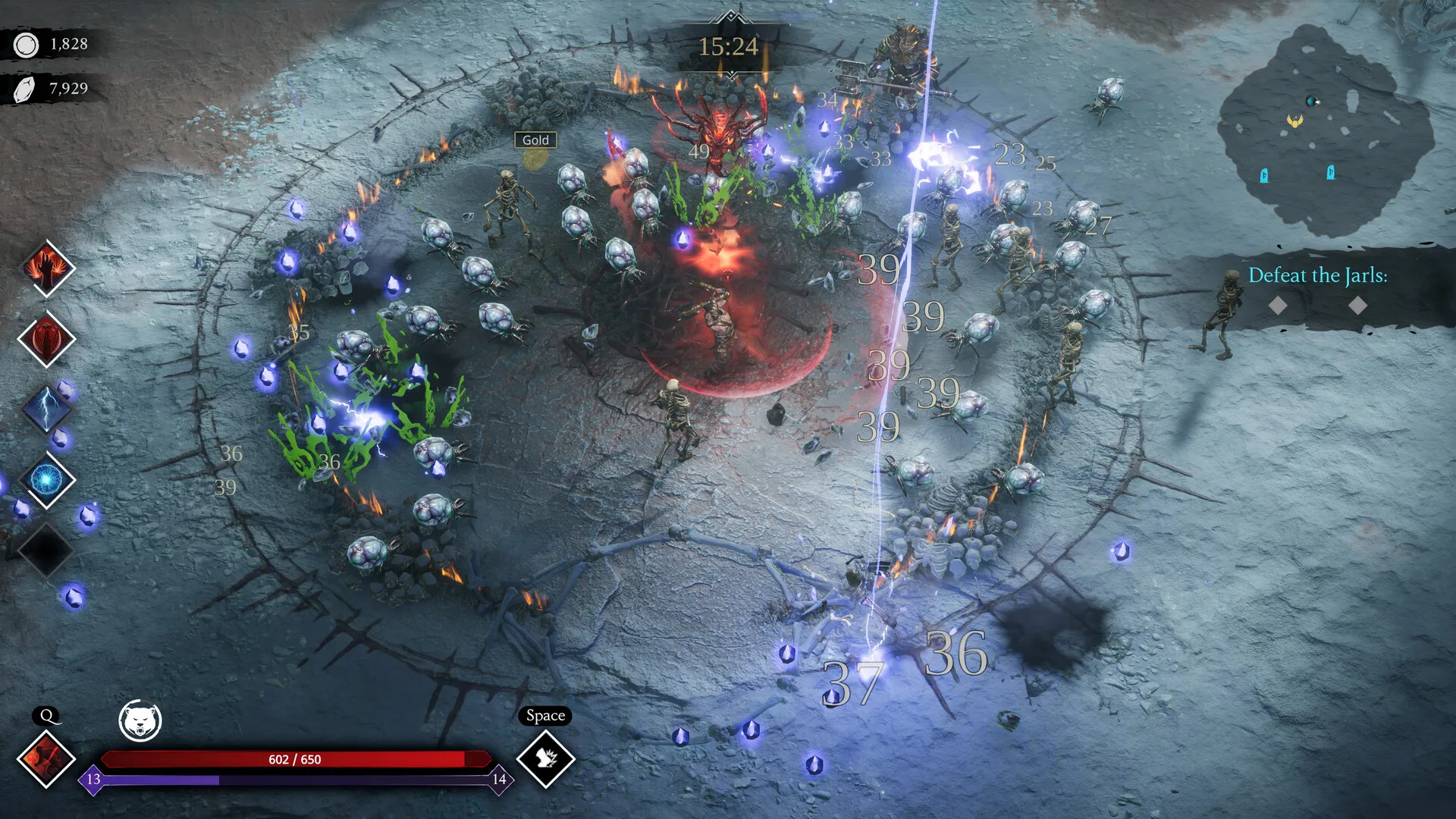
Each of the five realms is visually distinct, with the later levels like the multi-tiered Helheim showing more complex and interesting design than the initial open fields of Niflheim. Enemy and boss designs are particularly impressive, with each Jotunn appearing as a massive, intimidating threat.
This strong visual direction is complemented by an equally strong audio experience. The sound effects of spells and impacts are satisfying, and the heroic orchestral soundtrack perfectly matches the on-screen chaos of battling mythological hordes.
The experience is hampered on some platforms by technical issues. While the visual polish is high, some enemy animations can feel slightly choppy, a minor blemish on the otherwise solid presentation. More troubling are the performance problems reported on the console version, which include frequent framerate drops during intense combat.
This can interfere with the precise movement needed for survival. Other reported issues include a glitchy character selection screen that forces a complete game reboot between runs. The most critical problem, however, is a severe bug that could completely wipe all save data. For a game built entirely around long-term progression, such a flaw is devastating and represents a significant risk for players on affected platforms.
Verdict
Jotunnslayer: Hordes of Hel is a well-crafted and visually impressive entry in the auto-battler genre. Its core strengths are its excellent visual presentation, deeply satisfying build-crafting system, and the chaotic power fantasy it delivers. The variety of classes and godly abilities provides ample room for experimentation, and the meta-progression system offers solid incentives for repeated play.
The game’s primary weakness is its conservative design; it executes the established formula skillfully but does little to innovate. Its content, while good, feels somewhat limited when compared to the sprawling rosters and modes of competitors like Soulstone Survivors.
This is compounded by serious technical issues on certain platforms that can disrupt or even erase player progress. The game is an easy recommendation for fans of the genre who value high-quality graphics and enjoy a dark Norse theme. Players should simply be aware that they are getting a refined, if familiar, experience that may come with significant technical risks.
The Review
Jotunnslayer: Hordes of Hel
Jotunnslayer: Hordes of Hel is a visually stunning and deeply satisfying auto-battler that executes the genre formula with impressive polish. Its main draw is the extensive build variety, which makes mowing down hordes of monsters a chaotic delight. Its strengths are undermined by a conservative design that fails to innovate and, more critically, by severe technical issues on some platforms that can destroy progress. It is a strong yet flawed warrior in a crowded field.
PROS
- Excellent 3D graphics and a polished, dark fantasy presentation.
- Deep and engaging build-crafting with varied classes and gods.
- Satisfying core gameplay loop that creates a strong power fantasy.
- Quest system adds welcome structure to the standard survival formula.
CONS
- Lacks significant innovation within the Survivors-like genre.
- Content feels limited compared to some competitors.
- Plagued by serious technical issues on console, including a save-wiping bug.
- Limited long-term progress tracking for completionists.







