
























![Kingdom Hearts Collection [I-III] Review](https://gazettely.com/wp-content/uploads/2026/10/Kingdom-Hearts-Collection-I-III-1-360x180.webp "Kingdom Hearts Collection [I-III] Review: KHII Holds Steady as Newer Entries Fluctuate 37")




Picture this: you’re flipping through cable channels on a lazy afternoon, remote in hand, searching for anything remotely watchable. Now imagine those signals are beaming from another planet entirely, complete with cooking shows featuring vegetables that don’t exist and news anchors discussing the disturbing fact that thousands of aliens across the universe are suddenly watching their broadcasts. Welcome to Blippo+, an experience that defies every conventional gaming category.
Developed by YACHT, Telefantasy Studios, and Nobel Robot and published by Panic, Blippo+ began life on the quirky PlayDate handheld before making its way to PC and Nintendo Switch. This live-action FMV experience challenges what we consider a video game, functioning more like an interactive art installation than traditional entertainment software.
The premise centers on a subspace anomaly near Planet Blip, allowing their television signals to reach Earth through devices called PDs. What emerges is a window into an alien civilization whose broadcast technology mirrors our own 1980s-90s era, complete with authentic static, grainy footage, and that unmistakable pre-digital aesthetic achieved through genuine vintage equipment rather than modern filters.
This experience serves as both nostalgic time capsule and alien anthropology study, inviting players to become cultural voyeurs peering into another world’s living rooms.
The Art of Channel Surfing
Blippo+ strips interaction down to its most fundamental level: pointing and clicking through an Electronic Program Guide. Players navigate between 10+ channels using an interface that perfectly replicates the clunky cable boxes of yesteryear, complete with the satisfying ritual of scanning for available channels during initial setup. The experience mirrors those endless afternoons spent hunting for something decent to watch, except every channel offers genuinely bizarre content from Planet Blip.
The genius lies in its real-time programming schedule. Unlike modern streaming services, Blippo+ operates on broadcast logic where missing something means actually missing it until the cycle repeats. Programs run for just a few minutes each, making comprehensive viewing feasible while maintaining that authentic “what’s on right now” tension. The FemtoFax messaging system functions as Blip’s equivalent to teletext, providing additional context through viewer comments and cultural insights that feel like intercepted social media from another world.
New content arrives through “Packettes” every 30-40 minutes of viewing, simulating the way broadcast schedules expand and evolve. On Switch, the single Joy-Con mode transforms one controller into a convincing TV remote simulation, adding tactile authenticity to the channel-surfing ritual. A Low Data mode toggles the original PlayDate aesthetic, reducing resolution and color depth for those seeking the complete handheld experience on larger screens.
The progression system abandons traditional gaming rewards, instead offering the simple satisfaction of discovery and the gradual unraveling of Blipian culture through sustained observation.
Broadcasting from Another Dimension
Blippo+ presents 50 distinct programs spanning every conceivable television genre, each filtered through an alien cultural lens that makes the familiar deeply strange. News broadcasts feature anchors discussing the alarming discovery that beings from a “blue and white planet” are intercepting their signals, creating a meta-narrative where players become part of the story simply by watching. Weather reports cover atmospheric conditions using measurement systems that sound plausible yet alien, while cooking shows demonstrate preparation techniques for vegetables that exist nowhere on Earth.
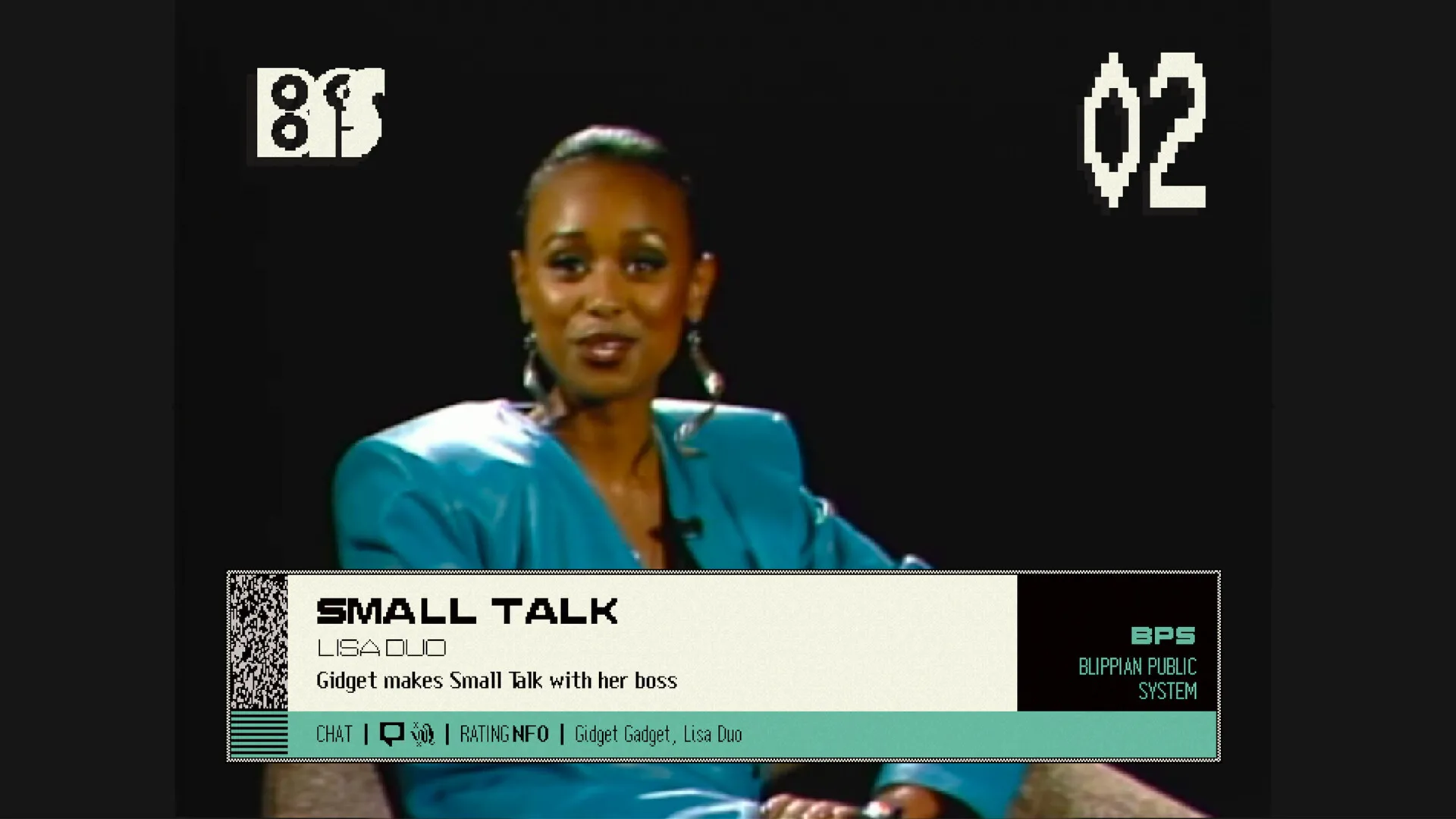
The standout programs reveal careful attention to world-building through absurdist details. Bushwalker presents a first-person perspective of someone walking through wilderness carrying weapons, building tension through simple cinematography and ambient sound. Confetti Cowboys transplants western tropes into space, complete with the genre’s archetypal characters navigating cosmic frontier towns. Tantric Computing pushes boundaries with its suggestive computer interaction segments, featuring hands caressing vintage peripherals while sensual music plays, creating something simultaneously ridiculous and oddly mesmerizing.
Educational programming like Bliptionary attempts to teach Blipian vocabulary through a host whose appearance and mannerisms feel deliberately unsettling, while Quizzards presents game show formats that follow familiar patterns with alien participants and incomprehensible categories. The adult entertainment channel Zest recreates that quintessential 1990s experience of scrambled premium content, complete with tantalizing glimpses through static interference and saxophone-heavy soundtracks.
Production values maintain remarkable consistency across all content. The commitment to authentic vintage broadcast equipment creates genuine artifacts like signal interference, color bleeding, and audio distortion that modern digital filters can’t replicate convincingly. Blipian fashion sense combines Clinton-era clothing with otherworldly makeup and hairstyles, while cultural elements like third-eyed hosts and unfamiliar social customs build a coherent alien society that feels lived-in rather than constructed.
The FemtoFax system provides additional cultural texture through features like Trash Type, where viewers submit complaints and confessions (“It’s called a talent parade for a reason, Alan”). These brief interactions offer glimpses into Blipian social dynamics and humor, suggesting a civilization with recognizable concerns expressed through alien perspectives.
A Signal for Select Receivers
Blippo+ succeeds magnificently within its narrow scope while acknowledging that scope severely limits its audience. This experience demands appreciation for experimental media and patience with deliberately passive entertainment. Those nostalgic for 1990s channel-surfing will find themselves transported back to that specific boredom-driven ritual, while art installation enthusiasts will appreciate the project’s conceptual ambition and execution.

The theatrical tone pervading most content requires comfort with dry humor and performance art sensibilities. Unlike visual novels that allow readers to control pacing, Blippo+ locks viewers into broadcast schedules, recreating both the charm and frustration of appointment television. Some accessibility concerns emerge around contrast issues in menu systems and text-heavy FemtoFax sections, though these rarely impact the core viewing experience.
Players seeking traditional game mechanics, progressive challenges, or active participation will find little satisfaction here. The experience offers minimal replay value once all content has been viewed, though the authentic recreation of broadcast television culture provides significant value for its intended audience. The project works best when approached as interactive archaeology, allowing viewers to piece together alien society through careful observation and cultural interpretation.
Blippo+ represents a remarkable creative achievement that transforms nostalgia into alien ethnography. Its success lies in recognizing that the most compelling aspects of television often exist in the spaces between programs, in the cultural assumptions embedded within seemingly mundane content, and in the peculiar intimacy of witnessing another civilization’s mundane moments through broadcast media.
The Review
Blippo+
Blippo+ succeeds brilliantly as interactive art while failing as traditional entertainment. Its authentic recreation of 1990s broadcast culture through an alien lens creates something genuinely unprecedented in gaming. The commitment to vintage production values and world-building through television programming demonstrates remarkable creative vision. However, its passive nature and niche appeal severely limit mainstream accessibility. This ambitious experiment rewards patient viewers with a singular cultural experience.
PROS
- Authentic vintage broadcast aesthetic using real equipment
- Creative alien world-building through television programming
- Perfectly captures 1990s channel-surfing nostalgia
- Genuinely unprecedented gaming experience
- Strong attention to cultural detail and consistency
CONS
- Extremely passive with minimal interactivity
- Very niche appeal limits audience
- Limited replay value after viewing all content
- Accessibility issues with menu contrast
- May frustrate players seeking traditional gameplay