
























![Kingdom Hearts Collection [I-III] Review](https://gazettely.com/wp-content/uploads/2026/10/Kingdom-Hearts-Collection-I-III-1-360x180.webp "Kingdom Hearts Collection [I-III] Review: KHII Holds Steady as Newer Entries Fluctuate 37")



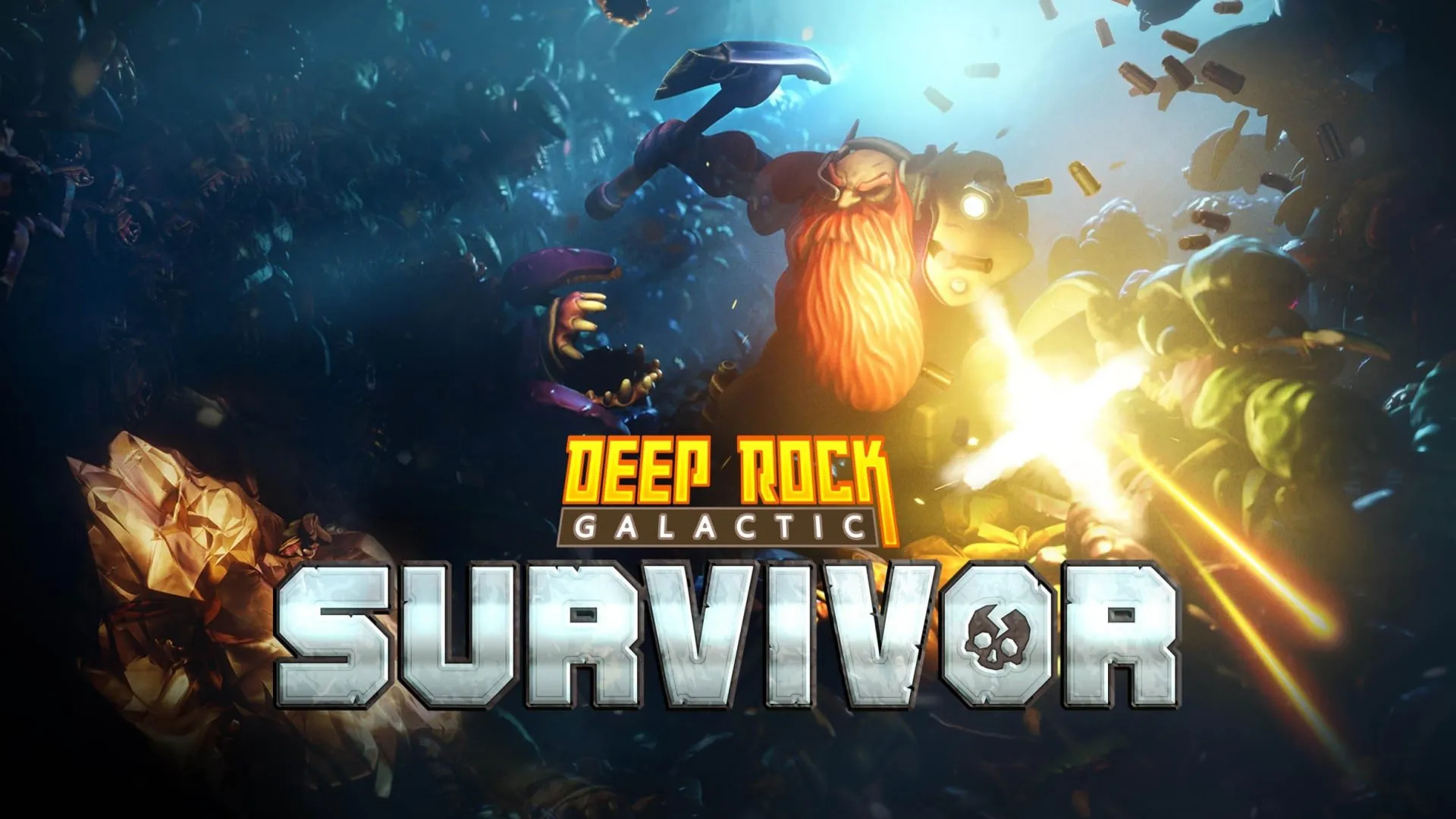

Deep Rock Galactic: Survivor represents a calculated pivot for the beloved co-op mining franchise. Where the original 2018 FPS thrived on four-player teamwork and first-person drilling chaos, this spinoff strips away the multiplayer component and reframes the dwarven mining experience through the lens of the bullet heaven genre. The result feels both familiar and refreshingly different, taking the established universe of bug-infested caverns and corporate mining contracts and translating them into a top-down auto-shooter that emphasizes solo survival and resource management.
The core appeal remains intact: you’re still a gruff dwarf descending into hostile underground territories, wielding an arsenal of mining tools and firearms against waves of alien creatures. However, the shift to automatic combat fundamentally changes how you engage with these threats. Instead of manually aiming and coordinating with teammates, your focus shifts to positioning, resource prioritization, and tactical movement through destructible environments. This genre transition works surprisingly well, preserving the industrial atmosphere and sardonic humor while offering a completely different tactical experience that stands on its own merits.
The Rhythm of Automated Destruction
The combat system builds around a familiar bullet heaven foundation while adding layers that distinguish it from genre stalwarts. Your dwarf automatically fires weapons in all directions, with your primary control being movement and positioning. Starting with a single weapon, you unlock additional armaments at levels 5, 15, and 25, creating a structured progression that forces you to master each tool before expanding your arsenal.
The overclock system elevates weapon customization beyond simple damage increases. These milestone upgrades can dramatically alter how weapons function, such as transforming a grenade into three weaker projectiles or adding entirely new firing patterns. This creates meaningful decisions about specialization versus versatility, as each overclock can push a weapon toward different tactical roles. The variety keeps repeated runs feeling distinct even when using similar weapon combinations.
Mining integration proves to be the game’s most successful innovation. Unlike other bullet heaven titles where environmental interaction is minimal, here you’re constantly making tactical decisions about when to mine through walls for resources or escape routes. Gold and Nitra gathering between stages provides meaningful upgrade choices that can shift your entire approach for subsequent levels. The risk-reward calculation of spending time mining versus maintaining safe distance from enemies adds a strategic layer that feels organic to the franchise’s mining theme.
The five-stage sector structure maintains excellent pacing through its escape pod mechanic. Having thirty seconds to reach extraction after each boss fight creates genuine tension, forcing you to balance thorough exploration with timely evacuation. Secondary objectives like collecting specific materials add optional complexity without feeling mandatory, though some materials disappear after each sector rather than contributing to permanent progression, which feels like missed potential for deeper resource management.
Dwarven Specialization and Long-Term Growth
The four-class system provides meaningful starting differences while maintaining the franchise’s established roles. Scout, Gunner, Engineer, and Driller each bring distinct starting weapons and passive bonuses that influence early game strategy. The Gunner’s health advantages suit aggressive playstyles, while the Scout’s mobility bonuses reward careful positioning and resource collection. These differences become more pronounced through sub-class modifications, offering dozens of variants that keep character progression interesting across extended play sessions.
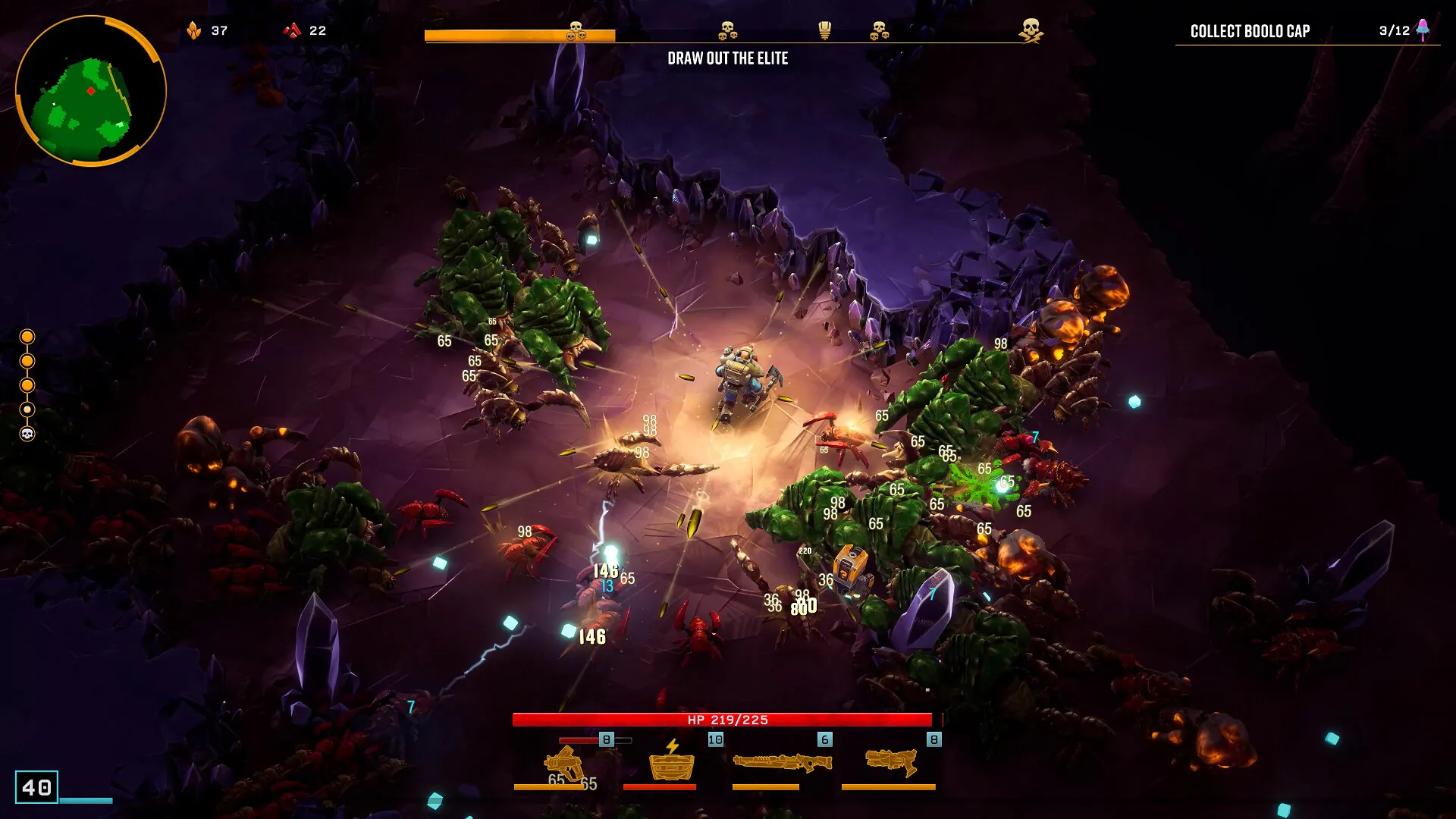
Progression operates on multiple layers with varying degrees of success. The run-based card selection system works well, offering meaningful choices between weapon upgrades and passive improvements with appropriate rarity scaling. Legendary upgrades can dramatically change your capabilities, creating those satisfying power spikes that define successful bullet heaven experiences. The gear system, however, feels less impactful. Equipment drops provide minor statistical benefits that rarely influence tactical decisions, making the smart equip feature a welcome convenience rather than an engaged choice.
The permanent upgrade system suffers from currency complexity that creates unnecessary friction. Multiple mineral types are required for different upgrade categories, requiring you to track various resources for specific improvements. While this encourages thorough mining, the system would benefit from consolidation or clearer resource conversion options. Early game progression feels particularly slow, with limited weapon and class options creating repetitive initial experiences until you unlock more variety.
Expanding the Underground Experience
Elimination mode forms the core experience, taking you through five distinct biomes across multiple difficulty tiers. Each environment introduces unique challenges, from environmental hazards to terrain variations that affect movement and mining strategies. The gate system between sectors artificially extends progression by recycling content at higher difficulties, which can feel redundant after mastering the base mechanics.
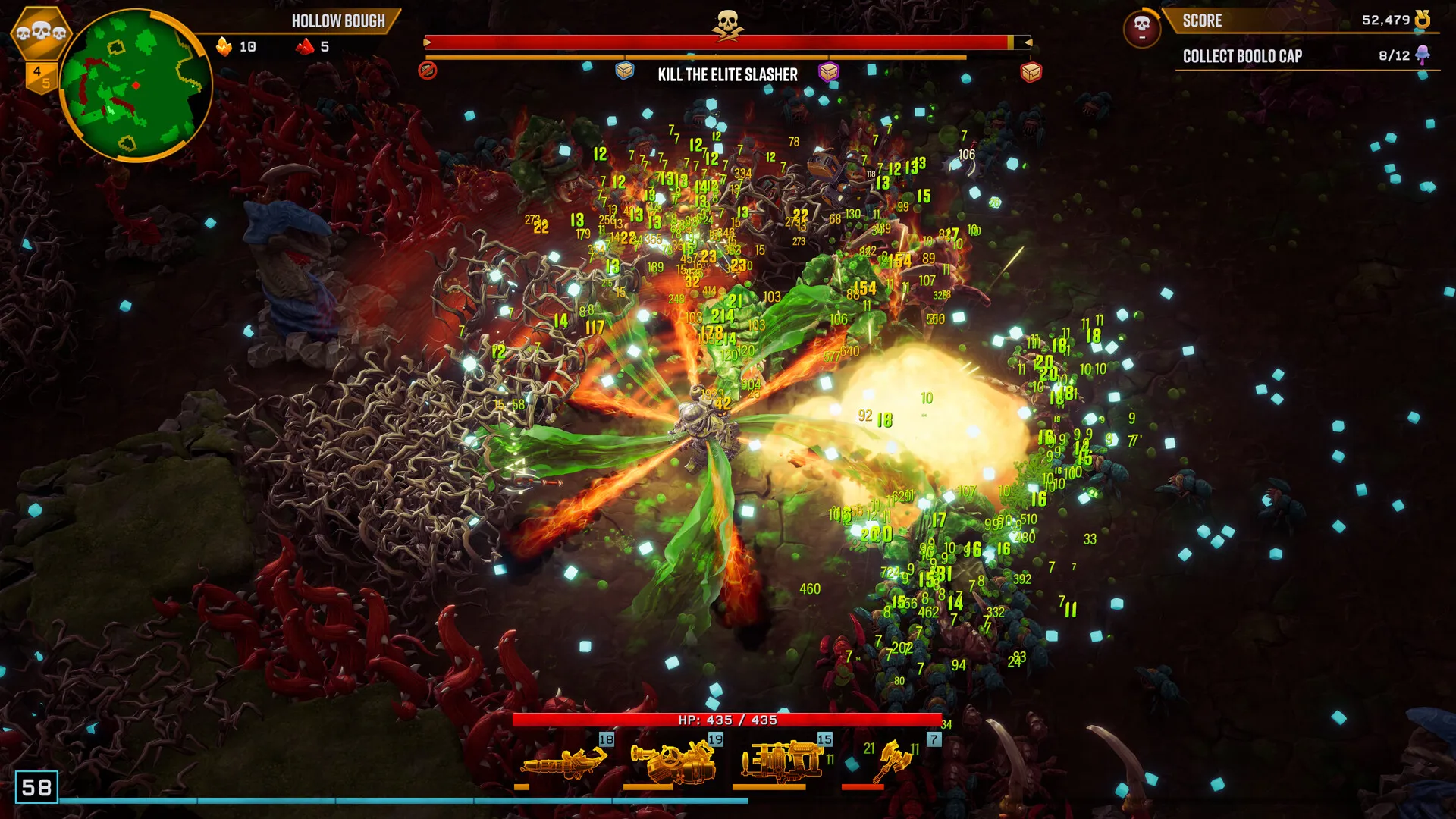
Escort Duty provides the strongest alternative mode, shifting focus from pure survival to objective protection. Keeping the Drilldozer fueled and operational while defending against increasingly aggressive swarms creates more dynamic tactical situations. The mode’s faster experience gain and varied pacing make it a welcome break from standard elimination runs.
Advanced content caters to experienced players seeking greater challenges. Vanguard Contracts rotate daily with positive and negative modifiers that can drastically alter gameplay approaches, though their time-limited nature means you might wait for interesting combinations. Lethal Operations push difficulty to extreme levels with multiple challenging modifiers active simultaneously, creating genuine endgame content for dedicated players.
The achievement system deserves recognition for its scope and variety. With over 300 objectives covering everything from specific weapon mastery to resource collection milestones, completionists will find substantial long-term goals. These achievements often encourage experimenting with different playstyles and weapon combinations, extending the game’s replay value significantly.
Polish in Presentation and Atmosphere
The visual transition to top-down perspective succeeds in maintaining the franchise’s distinctive industrial aesthetic. Environmental destruction feels satisfying as you carve through rock formations, creating pathways and tactical advantages through deliberate mining.
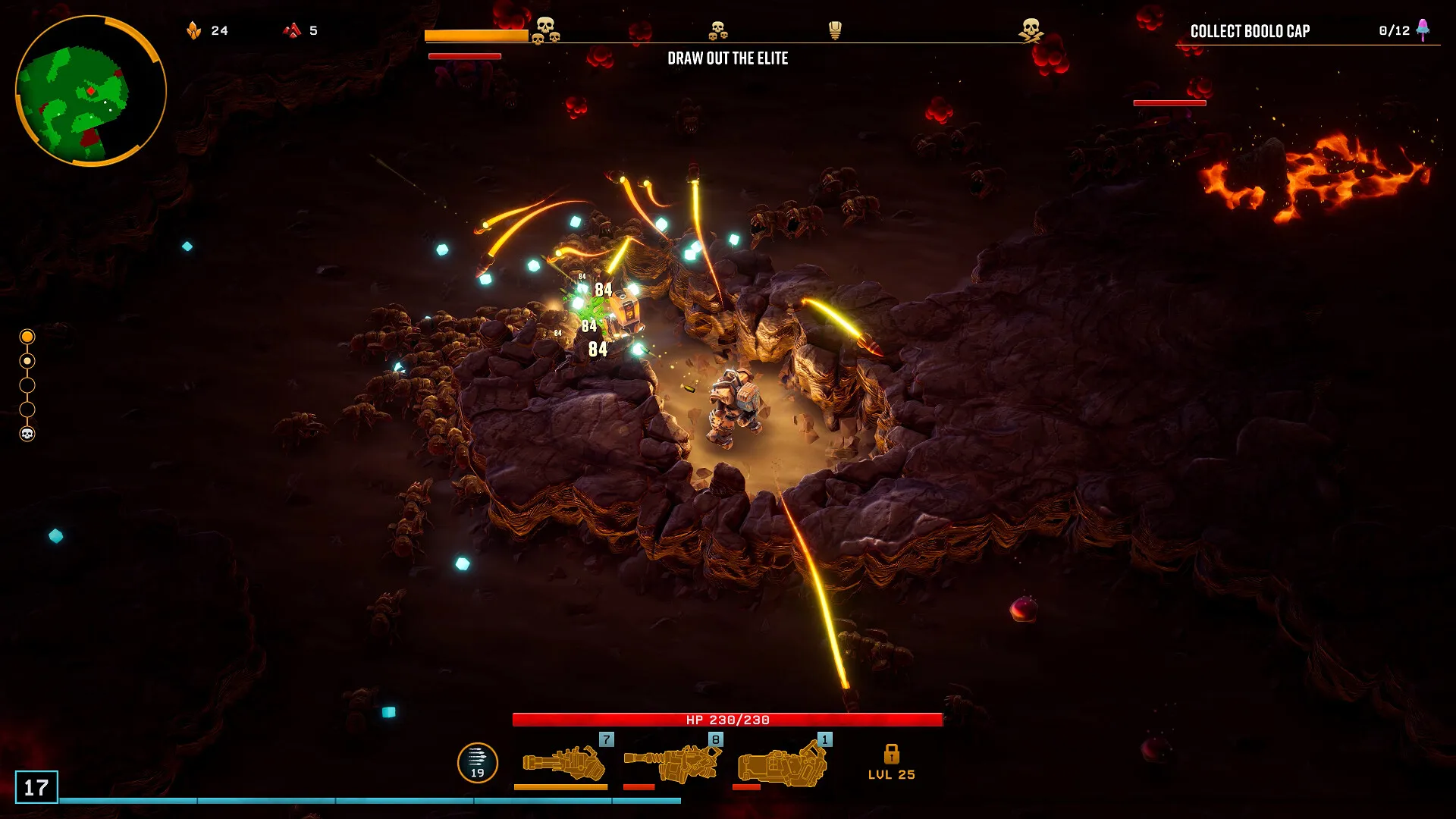
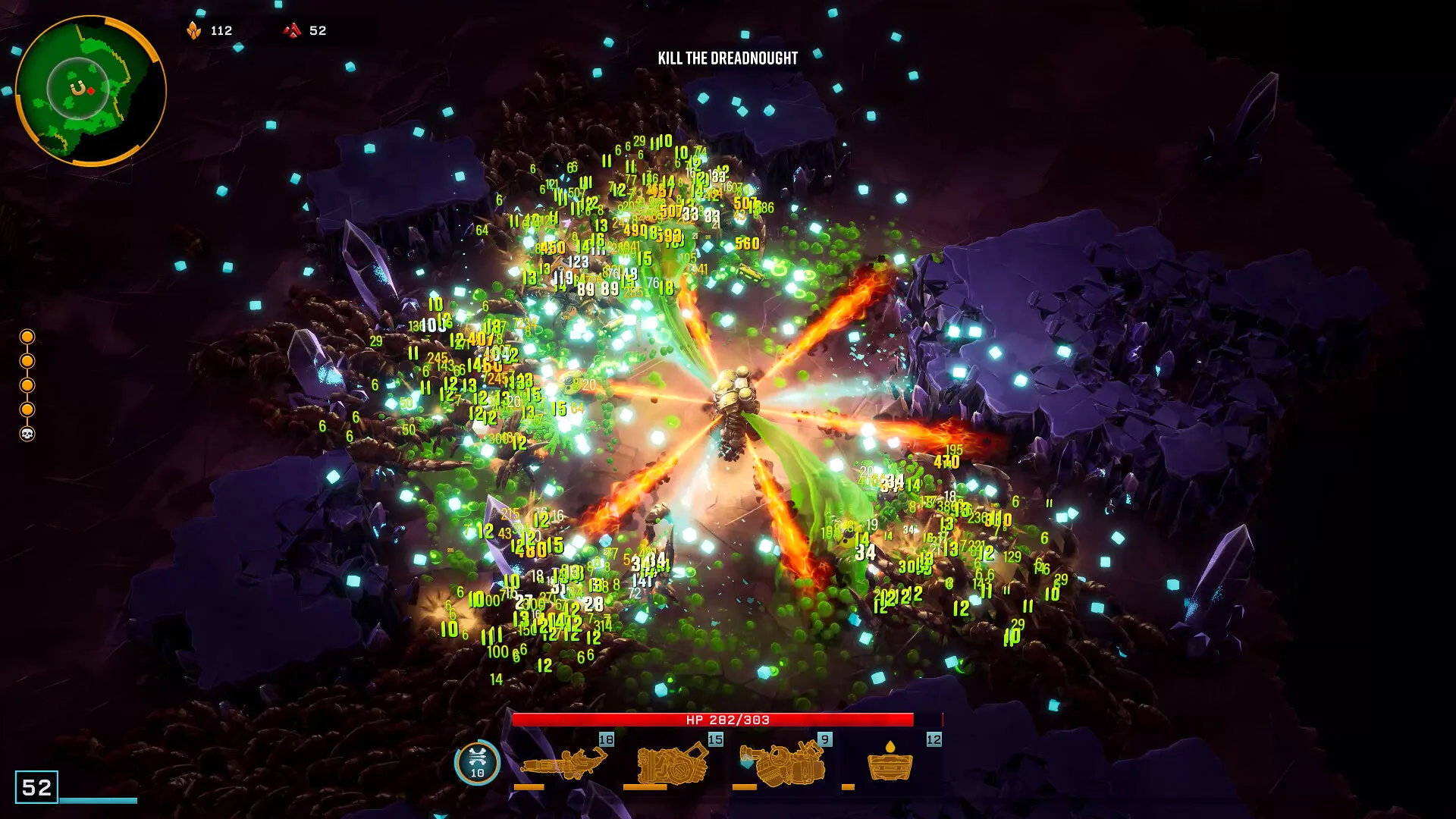
The five biomes provide visual variety without sacrificing clarity during chaotic combat situations, with color coding and lighting effects that help distinguish threats and resources even when the screen fills with enemies and projectiles.
Audio design carries much of the franchise’s personality through voiced dwarf commentary and environmental audio cues. The familiar warnings about incoming swarms and supply pod landings maintain continuity with the original game while serving important gameplay functions. Weapon audio feels appropriately weighty, with each tool producing distinct sounds that help you track your arsenal’s effectiveness without looking at interface elements.
Where Innovation Meets Iteration
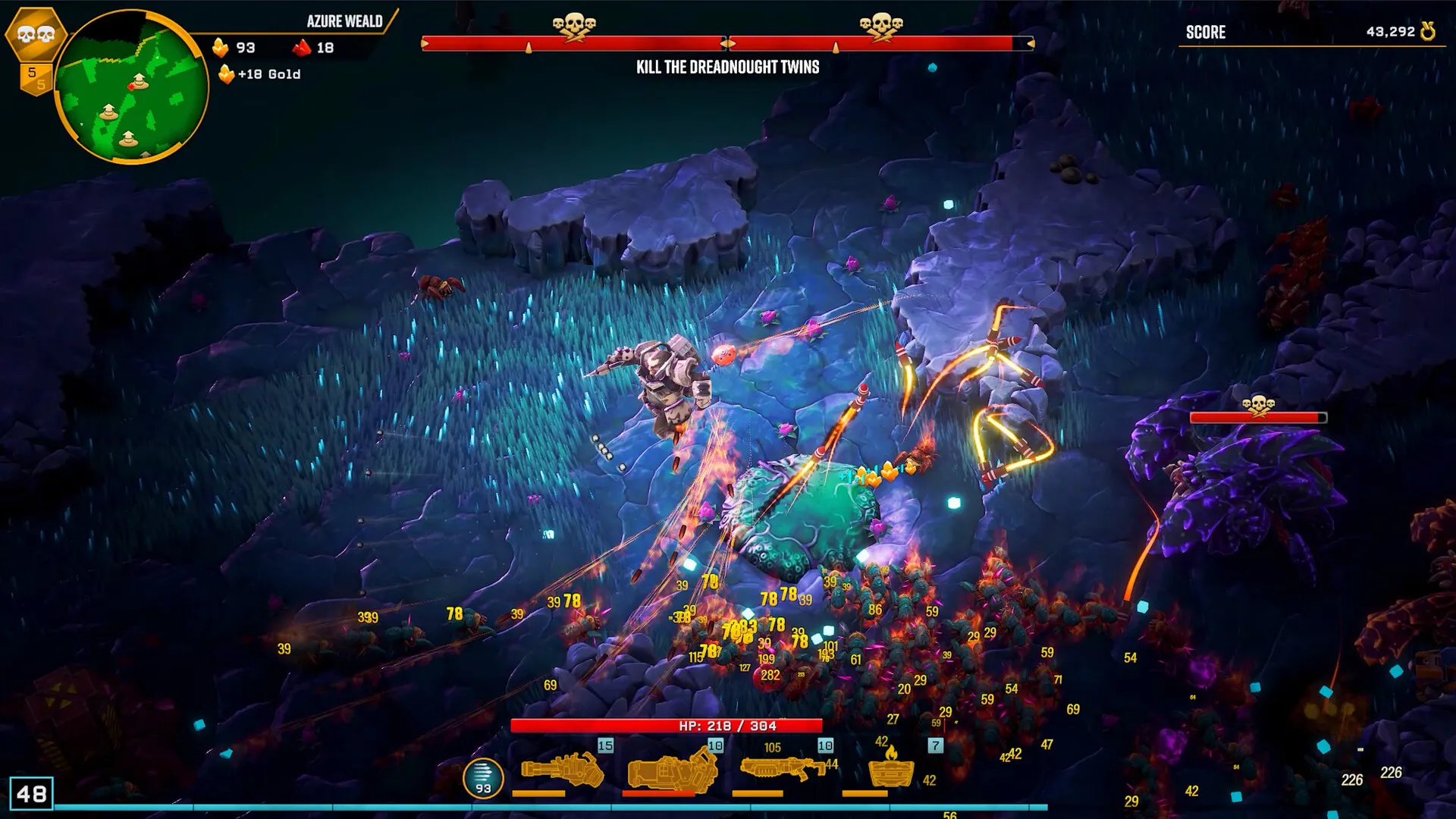
Deep Rock Galactic: Survivor’s greatest strength lies in successfully adapting a beloved franchise to a saturated genre while maintaining its distinctive identity. The mining mechanics create genuine tactical depth that extends beyond typical bullet heaven positioning decisions. Environmental manipulation through destructible terrain provides strategic options rarely seen in auto-shooters, making each arena feel dynamic rather than static.
The personality injection through voice work and familiar universe elements helps differentiate the experience from more generic entries in the genre. The “one more run” compulsion hits strongly here, with meaningful progression systems and varied upgrade paths providing clear incentives for repeated attempts. Content volume is impressive, with multiple game modes, extensive achievement systems, and substantial unlock progression that rewards dedicated play.
The franchise adaptation succeeds in translating core themes while embracing genre conventions. Mining feels essential rather than tacked-on, resource management creates meaningful decisions, and the underground setting provides rich environmental variety. For players seeking a bullet heaven experience with more strategic depth than typical entries provide, this delivers consistently engaging tactical decisions.
Balancing Excavation and Expectation
The gear system represents the most significant missed opportunity. Equipment drops provide minimal impact compared to other progression systems, reducing what could be meaningful tactical choices to minor statistical adjustments. The smart equip feature acknowledges this weakness by automating decisions that should be engaging player choices.
Multiple currency requirements for permanent upgrades create unnecessary complexity that obscures progression clarity. While encouraging thorough resource gathering, the system would benefit from streamlined currency conversion or clearer upgrade paths. The early game suffers from limited options that can make initial sessions feel restrictive until you unlock sufficient variety.
Content recycling in higher difficulty tiers extends playtime artificially rather than providing genuinely new challenges. The gate system between sectors essentially requires replaying the same content at increased difficulty levels, which can feel tedious for players seeking fresh experiences. Missing multiplayer functionality stands out particularly given the franchise’s cooperative foundation, though the single-player focus allows for more personal progression pacing.
Deep Rock Galactic: Survivor successfully carves out its own space within both the bullet heaven genre and the broader franchise. The mining integration provides tactical depth rarely seen in auto-shooters, while maintaining the personality and atmosphere that made the original appealing.
Despite progression system complexity and some missed opportunities with gear systems, the core experience delivers satisfying tactical gameplay with substantial content variety. For franchise fans curious about the genre shift or bullet heaven enthusiasts seeking something with more strategic depth, this represents a solid entry that respects both its source material and genre conventions while finding room for meaningful innovation.
The Review
Deep Rock Galactic: Survivor
Deep Rock Galactic: Survivor transforms a beloved co-op franchise into a compelling solo experience through innovative mining mechanics and tactical environmental destruction. While currency complexity and gear systems hold it back from excellence, the core gameplay loop remains addictive with substantial content variety. The successful genre adaptation maintains franchise personality while offering genuine strategic depth within the crowded bullet heaven market.
PROS
- Mining mechanics add genuine tactical depth to bullet heaven formula
- Environmental destruction creates dynamic strategic options
- Strong franchise personality through voice work and atmosphere
- Substantial content variety across multiple game modes
- Excellent weapon progression with meaningful overclock modifications
- Over 300 achievements provide extensive completionist goals
- Satisfying "one more run" addiction factor
CONS
- Gear system feels underdeveloped and minimally impactful
- Multiple currency system creates unnecessary complexity
- Early game progression feels slow and restrictive
- Content recycling in higher difficulty tiers
- Missing multiplayer component from original franchise
- Some secondary objective materials lack purpose







