





























The Everybody’s Golf series, known as Hot Shots Golf in North America, has long been a cultural touchstone in the world of arcade sports games. It represents a distinctly Japanese approach to design: mechanically precise, aesthetically cheerful, and accessible to all. After a long hiatus, the franchise returns, but its stewardship has passed from Sony’s in-house collaborators to the developer Hyde.
This transition makes Everybody’s Golf Hot Shots more than a simple sequel; it is a test of cultural and creative inheritance. The game lands on multiple platforms, moving a historically console-specific artifact into the global marketplace.
It retains the signature cartoonish style and simple controls that hide a deeper strategic layer. The question is whether this new iteration can successfully translate the series’ beloved formula for a modern, worldwide audience, or if something essential was lost in the transfer.
The Universal Language of the Three-Click Swing
At the mechanical center of the game is the three-press swing system, a piece of design so intuitive it feels universal. Its simple rhythm—press to start, press to set power, press for accuracy—transcends language, offering an immediate point of entry for any player.
This mechanic is a direct descendant of a specific school of Japanese game design from the 1980s and 90s, one that prioritized tactile feel and immediate comprehension. It shares a design philosophy with the block-stacking of Tetris or the directional inputs of a fighting game; the rules are understood almost instantly through action, not explanation.
The game does offer alternative control schemes, including a more timing-focused “advanced” swing, which can be seen as a small concession to a segment of the audience that prefers a higher execution barrier. Yet, the classic three-click method remains the default, a testament to its elegant and enduring design.
Also Read






Beneath this simplicity lie the familiar strategic considerations of golf. This is where the game asks for more than just rhythm. Players must read the wind, a variable that can turn a straight shot into a wild slice. They must analyze the slope of the green, where subtle undulations can divert a seemingly perfect putt. The game provides tools to apply heavy topspin to chase a few extra yards or backspin to stop a ball dead on a fast green.
Imagine a difficult Par 4, a dogleg left with a bunker guarding the corner and a strong wind blowing right-to-left. The conservative play is a 5-iron to the middle of the fairway, leaving a long approach shot. The game, with its arcade physics, encourages a more creative solution: aiming far left of the fairway, applying a dramatic slice, and letting the wind carry the ball back toward the hole, potentially cutting the corner for an eagle opportunity.
It is in these moments of calculated risk that the game’s strategic depth reveals itself. The simple mechanic becomes a tool for creative problem-solving. This interplay is where the game’s design should shine, but its execution feels unrefined.
The ball physics are sluggish, lacking the crisp and predictable response of the series’ past entries. The connection between timing a shot and the result often feels inconsistent, which introduces an element of randomness that works against a system built on precision. This lack of polish disrupts the satisfying loop of learning and mastery.
Narrative Dissonance and Systemic Repetition
The game’s content is split between familiar structures that pull in different directions. Challenge Mode offers a direct, purely mechanical progression: a ladder of tournaments with increasing difficulty and specific rule sets. It is a straightforward test of skill that serves as the primary gateway to unlocking new courses. This mode is the game in its most honest form.
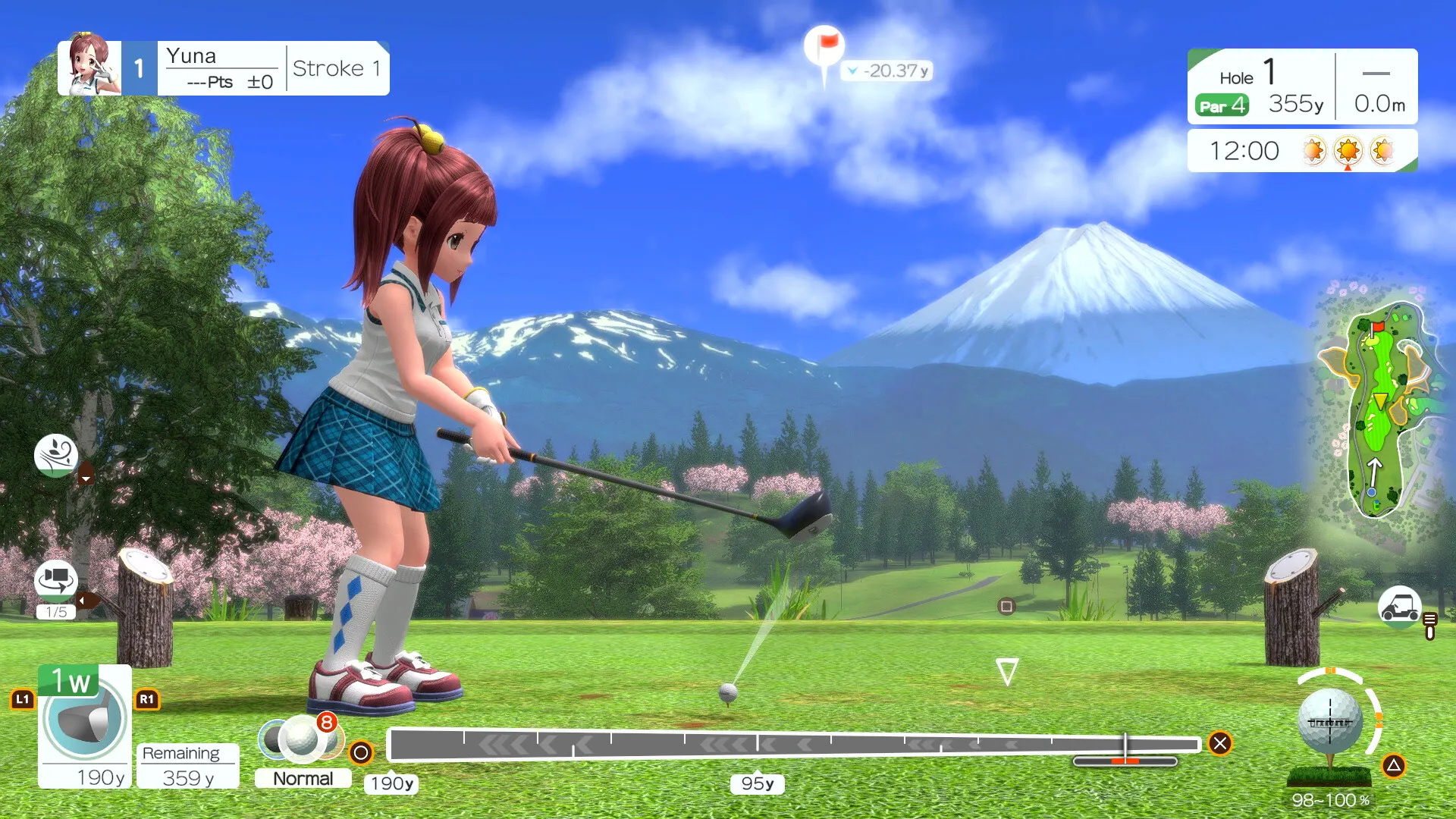
World Tour, conversely, attempts to graft light narratives onto each character’s journey through the golfing world. These story vignettes, presented in a static visual novel style, feel like a cultural artifact from a different kind of Japanese game. The lighthearted tales of friendly rivalries and personal goals are reminiscent of the character-focused side stories in many Japanese RPGs.
In that context, they serve to flesh out a world and build attachment. Here, they feel divorced from the core activity. The narrative and the gameplay run on parallel tracks, never intersecting to create a more meaningful experience. The stories are flimsy and easily skipped, existing as a perfunctory framing device for what are essentially one-on-one matches.
The game also introduces Wacky Golf, a mode that fully embraces a chaotic, almost variety-show energy. This is where the design sheds any pretense of realism and leans into the absurd. In “Boom Golf,” the course is a minefield where a poorly placed shot can send your ball flying in a random direction. In “Colourful Mode,” the fairway is dotted with panels that trigger unpredictable effects, from enlarging the cup to summoning severe weather.
This mode feels culturally specific, an expression of the batsu gemu (penalty game) spirit seen in Japanese television, where established rules are subverted by comical and often punishing twists. It is a fleeting, enjoyable diversion best suited for local multiplayer. All these modes feed into a progression system built around unlocking a roster of 25 golfers.
Unlocking each one, along with their special abilities, requires significant repetition. Players must build loyalty by using a character repeatedly, a system that values long-term dedication. This design choice stands at a cultural crossroads. For some, this methodical progression is a rewarding representation of commitment. For an international audience accustomed to more immediate access to content in a premium title, it can feel like a laborious and artificial barrier.
A Loss in Translation: Aesthetics and Audio
Visually, the game struggles to carry its aesthetic legacy into the modern era. The signature cartoon style, once a charming hallmark of the series, now appears dated because of its poor technical execution. Character animations are stiff and limited, lacking the expressive fluidity that defines contemporary stylized art in games. Environmental textures are conspicuously low-quality and flat, with aggressive pop-in of objects like trees and course-side details.
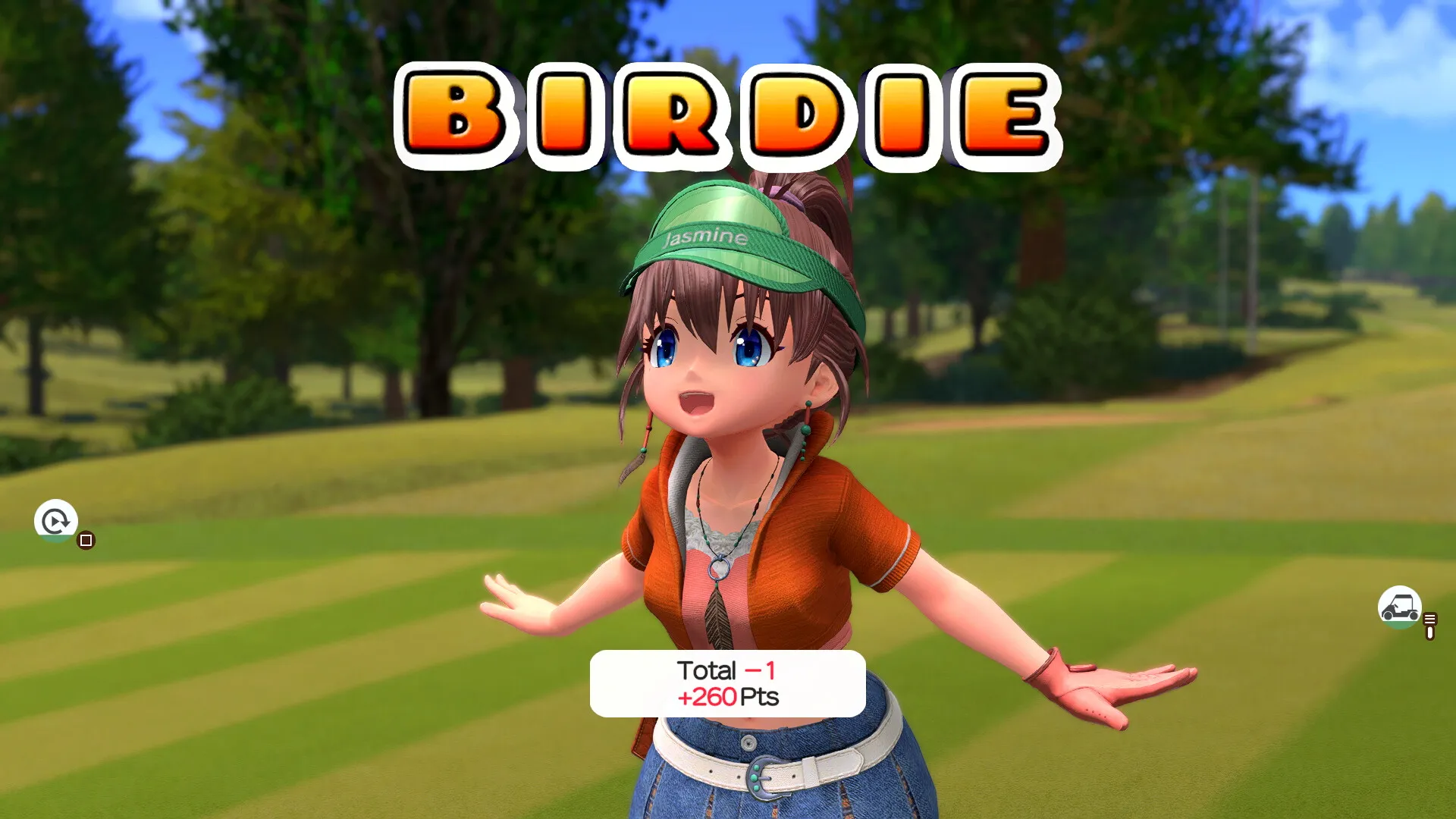
The issue is not the art style itself, but its flawed implementation. The presentation falls short of a standard set by other non-realistic games that use their aesthetic to create vibrant, cohesive worlds. This visual weakness is compounded by an unsteady frame rate, a critical flaw in a game built entirely on rhythm and timing.
A single dropped frame during the swing meter’s rapid ascent can disrupt the player’s internal timing, causing a mishit that feels entirely outside their control. It is a technical issue that directly attacks the game’s mechanical foundation. Some of the foliage textures were reportedly created using generative AI, a detail that may explain their generic and somewhat lifeless quality, symptomatic of a production that sought efficiency over artistry.
The audio design presents an even sharper cultural dissonance. The soundscape is a relentless cacophony. The upbeat, jingle-like music competes with a constant stream of commentary from the high-pitched player character, the encouraging but repetitive caddie, and ambient crowd noises. Multiple lines of dialogue frequently overlap, creating a disorienting wall of sound rather than a clear set of auditory cues.
This maximalist approach, where silence is avoided and every action is met with exuberant feedback, can be understood as a holdover from Japanese arcade design philosophy. In that environment, sound is used to grab and hold the player’s attention amidst the noise of other machines. For a player at home, this constant stimulation can be overwhelming and intensely irritating.
It contrasts sharply with Western sound design, which often prioritizes clarity, atmospheric realism, and dynamic range. While the game mercifully allows individual volume sliders to manage the noise, the default audio mix is a clear instance where a culturally specific presentation style fails to translate effectively.
An Unsteady Re-entry into the Global Market
The core of Everybody’s Golf Hot Shots remains fundamentally enjoyable. The central concept of accessible, arcade-style golf is a powerful one, and the series was instrumental in popularizing it. There is an undeniable satisfaction in executing a perfect shot: the crisp sound of the strike, the sight of the ball soaring against a blue sky, and the final, definitive rattle as it drops into the cup.
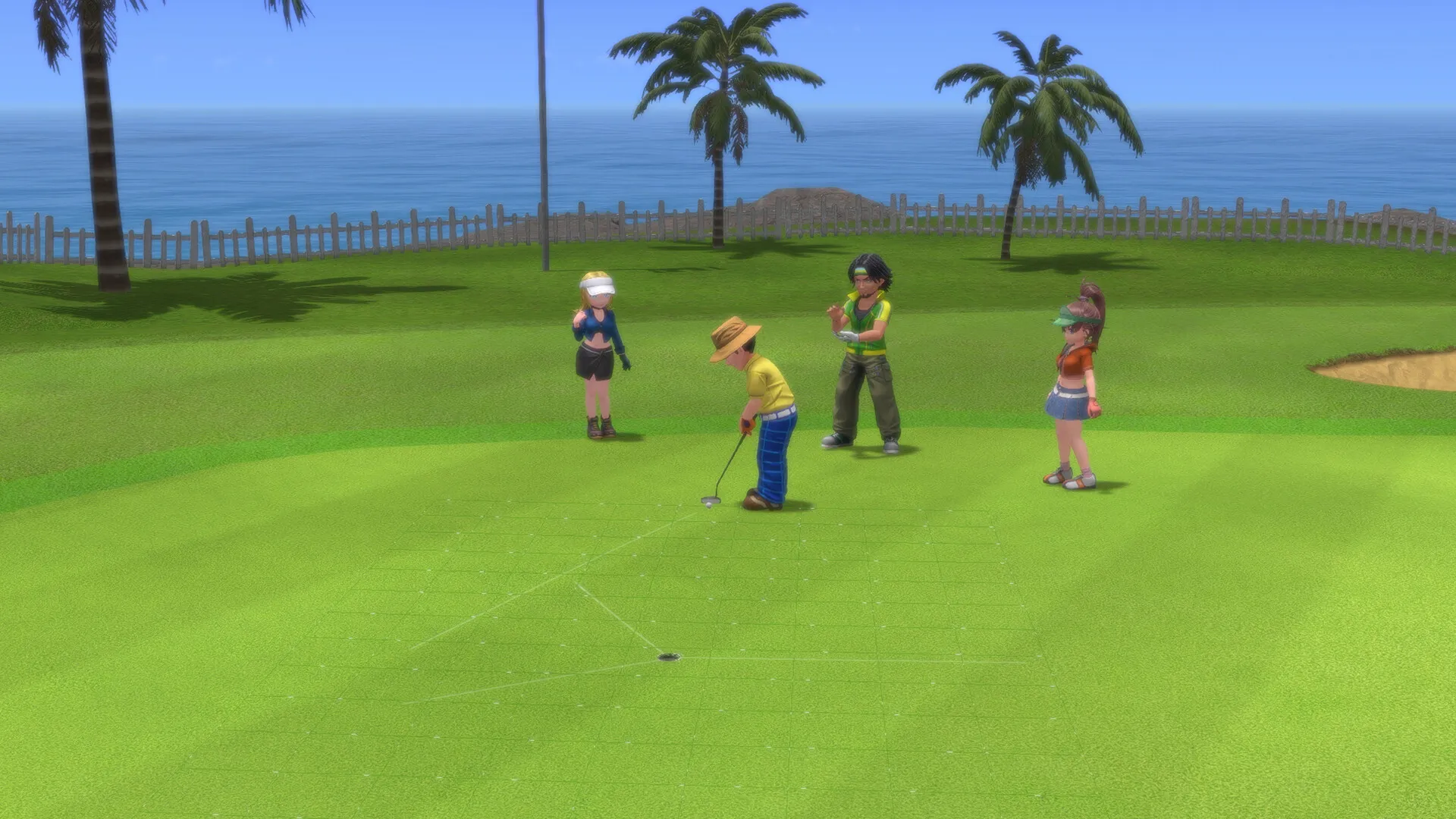
This satisfying loop is the game’s greatest strength and its most enduring legacy. The Wacky Golf mode, with its chaotic rule sets, captures a different kind of joy. It transforms the thoughtful game of golf into a hilarious party game, where randomness and laughter supplant skill as the primary objective. It provides some of the game’s best moments, especially when played with friends in the same room. These strengths, however, are consistently held back by the game’s pervasive technical shortcomings.
The unpolished feel is not just a minor blemish; it is a fundamental problem that undermines the game’s own design. The unsteady performance actively fights against the timing-based mechanics. The dated visuals fail to give the world the charm its art style promises. The jarring sound design can make playing the game an actively unpleasant experience.
A sense of creative dissonance permeates the project, as if the cheerful, welcoming spirit of the original concept is trapped inside a flawed and neglected technical container. Ultimately, Everybody’s Golf Hot Shots is a paradox. It is built upon a universally appealing and brilliantly simple mechanical idea, yet it is marred by a culturally specific and poorly executed presentation.
The game represents a difficult and unsteady transition, a beloved series moving from its protected, single-platform home into the more demanding and diverse global ecosystem of modern gaming. It stands as a fascinating case study in the challenges of creative succession and cultural translation. It is a title that is perhaps more interesting to analyze than it is consistently enjoyable to play.
The Review
Everybody's Golf Hot Shots
Everybody's Golf Hot Shots attempts to recapture the series' arcade magic, but this return lands squarely in the rough. While the core three-click golf mechanic remains fundamentally sound and accessible, the experience is severely undermined by a lack of polish. Dated visuals, an inconsistent frame rate that directly impacts the timing-based gameplay, and a chaotic audio mix make this a frustrating and disappointing outing. A charming concept is trapped within a flawed technical body.
PROS
- Accessible and satisfying core swing mechanic.
- Wacky Golf mode offers chaotic multiplayer fun.
- Strategic depth with spin, wind, and course management.
CONS
- Unsteady performance and frame rate issues.
- Dated graphics and poor-quality textures.
- Overwhelming and repetitive sound design.
- Progression can feel slow and repetitive.