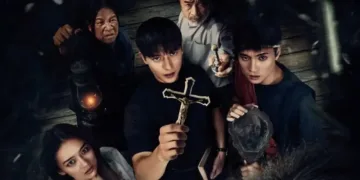

















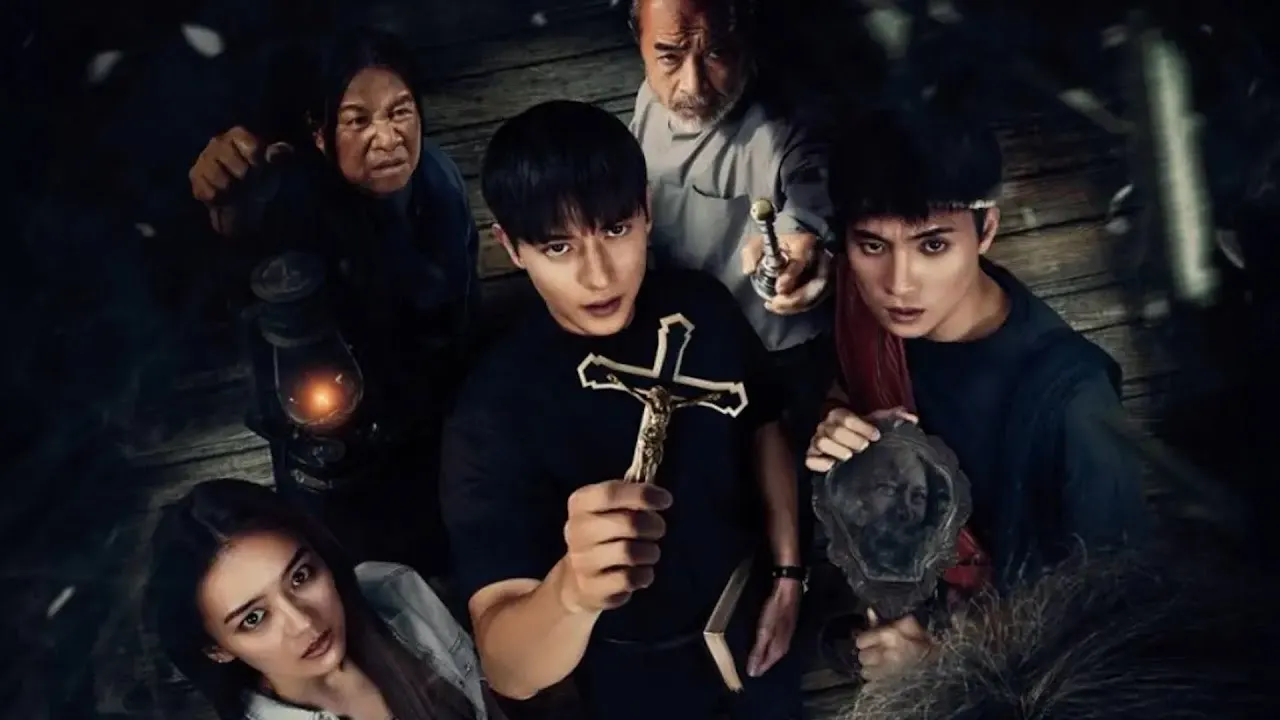

A priest helps a mother end her child’s life. This act, presented not as a sin but as a desperate, holy necessity to prevent a demon from finding a new host, opens the film. It is a startling act of mercy that immediately throws conventional morality into question and establishes the brutal stakes of faith in a world besieged by evil. Forty years later, this unresolved spiritual wound festers in the remote Thai village of Tharae, a unique community where Catholic spires rise amid homes that still honor animist traditions.
The disgraced priest from that prologue, Old Ming, is now a raving outcast, and the demon has returned to claim him. His estranged daughter Malee is pulled back into the nightmare, forced to find help in a place where old spirits and a new God coexist uneasily. Director Taweewat Wantha uses this charged setting to stage a frantic, aggressive horror story. The film is less a quiet meditation on doubt and more a loud, bloody interrogation of what belief costs and what remains when it is put to an impossible test.
The Cross and the Ancestors
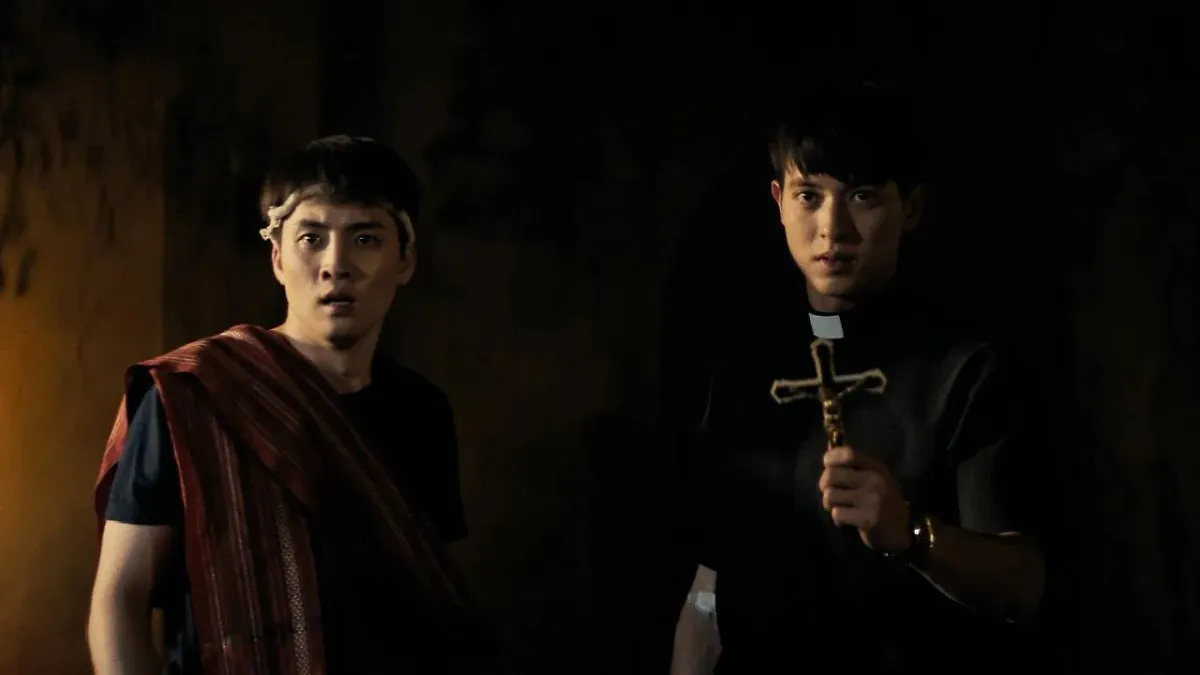
The film’s soul is found in the collision of its two exorcists. Their dynamic provides a fascinating study in contrasts. Father Paolo arrives as an agent of the archdiocese, a by-the-book priest whose faith is structured by ritual, Latin text, and the rigid hierarchy of the Church. He is dour and burdened, carrying his own history with failure. His spiritual tools are prayer and doctrine.
He is met by Sopha, a showman shaman of the Yao tradition whose power is vibrant, physical, and rooted in the earth. Sopha’s practice is not one of quiet contemplation but of loud, rhythmic engagement. He summons ancestral spirits through percussive music and ecstatic dance, his movements a direct challenge to the demonic force. Initially, their methods are irreconcilable. Paolo’s solemnity clashes with Sopha’s theatricality, creating a tension that mirrors the larger cultural divide of Tharae.
The escalating demonic violence, however, renders their differences a dangerous luxury. They are forced into a reluctant partnership, a necessity that becomes the film’s most profound statement. Their collaboration is the narrative’s heart, a visual representation of religious syncretism born from desperation. In the film’s strongest sequences, their practices intertwine.
The soundscape fills with Catholic chants laid over the pulse of Thai instruments, creating a singular, powerful form of spiritual warfare. The film accords both traditions a deep respect, suggesting that in the face of true evil, dogma is less important than the shared goal of preserving life.
A Barrage of Gore and Spectacle
This is a horror film that prioritizes sensation over suspense. Its aesthetic is loud and aggressive, defined by a rapid-fire pace that lurches from one violent set piece to the next. The director seems intent on ensuring there are no quiet moments, no lulls for dread to accumulate. This relentless forward motion has its benefits. The sequences of practical gore are imaginative and unflinching.
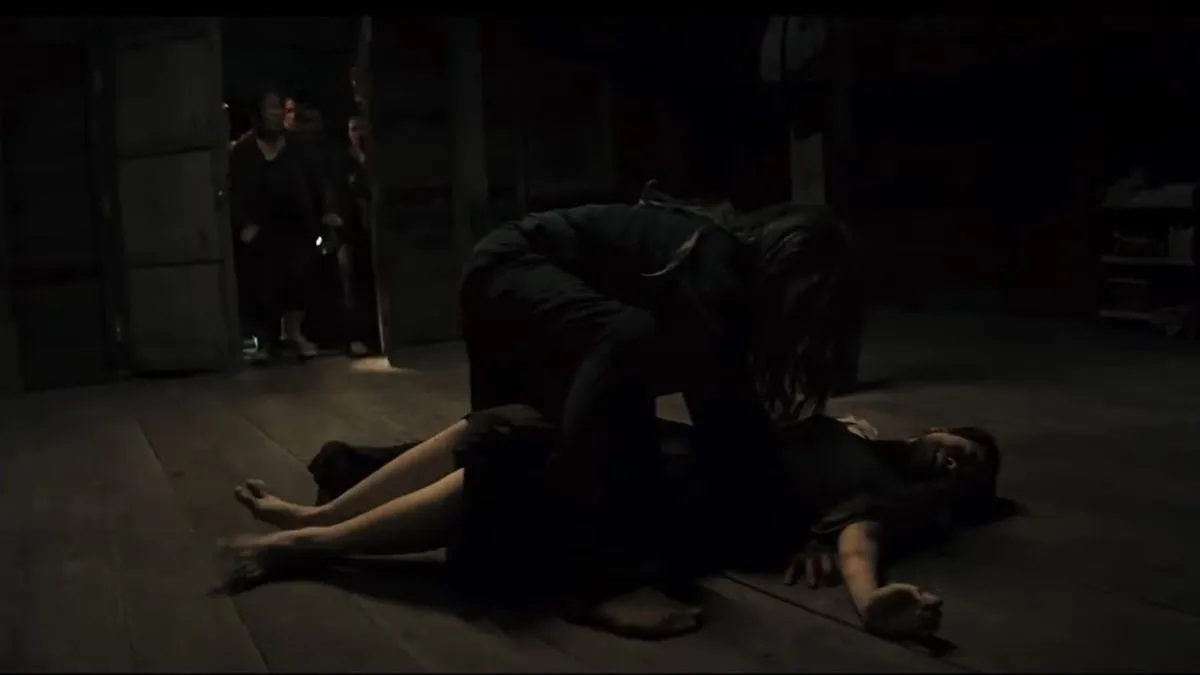
The body horror is genuinely unsettling, with scenes of bodily contortion and violation that are designed to provoke a physical reaction from the audience. The demon’s attacks are brutal and chaotic, captured with a raw energy that is often thrilling. Yet, this approach comes at a cost. The film almost completely abandons atmospheric tension. There is no slow, creeping unease that works its way under the skin. Instead, the horror relies on a constant succession of jarring shocks and sudden noises. The narrative itself suffers from this frantic pacing.
Character development is minimal; the figures on screen are archetypes meant to serve the plot’s immediate needs rather than exist as fully realized individuals. The story’s central mystery is revealed with little finesse, with key information back-loaded into the final act instead of being carefully seeded throughout. This makes the resolution feel rushed and unearned. The actors, however, commit fully to the material. They deliver energetic and convincing performances that anchor the mayhem, projecting a sense of real panic and determination even when the script offers them little to build upon.
Faith Tested, Culture Celebrated
The film’s most significant achievement is its rich depiction of a multicultural society under siege. The fusion of Catholic and Isan folklore within a horror narrative gives the story a powerful and distinct identity. This cultural specificity is what elevates the work above a simple genre exercise.
The film’s flaws are nevertheless clear. The underdeveloped characters and a plot that often values spectacle above coherence keep it from being a truly great piece of cinema. The narrative feels disjointed at times, and its thematic questions are raised more often than they are explored with depth. Despite these shortcomings, the film succeeds on the strength of its core concept and its sheer, unbridled energy.
The final exorcism is a chaotic and exciting culmination of all its cultural and spiritual threads, a powerful climax that delivers on the promise of its central partnership. The story circles a profound philosophical challenge: how does one maintain faith in a power that seems absent or, worse, tainted by the very evil it is meant to oppose? Tharae: The Exorcist is an imperfect but vital horror film. It offers a fascinating, culturally specific vision, presenting a world where goodness is a collaborative act and belief is a weapon forged in the fires of doubt and desperation.
Tharae: The Exorcist is a 2025 Thai supernatural horror film directed by Taweewat Wantha, the filmmaker behind the successful Death Whisperer franchise. Released in Thailand on August 7, 2025, the movie is noted for being the first Thai film to incorporate a Western-style exorcism, blending Catholic beliefs with traditional Thai ghost folklore and Yao folk religion within a Catholic village setting. While it had a theatrical release, the film is anticipated to be available on major streaming platforms internationally.
Full Credits
The Review
Tharae: The Exorcist
While its relentless pace sacrifices suspense for spectacle, Tharae: The Exorcist is a vital and aggressive horror film. Its greatest strength is the thoughtful and thrilling fusion of Catholic dogma and Thai folklore, creating a unique spiritual battlefield. Though flawed by thin characters and a chaotic narrative, the film's raw energy, creative gore, and culturally rich identity make it a compelling and memorable entry in the possession genre. It is a loud, bloody, and fascinating exploration of faith in crisis.
PROS
- A fascinating and respectful blend of Catholic and traditional Yao belief systems.
- High-energy direction and intense pacing.
- Creative and effective practical gore and body horror sequences.
- The central partnership between the priest and the shaman is a compelling narrative core.
CONS
- Lacks atmospheric tension and relies on jump scares over sustained dread.
- Underdeveloped characters who primarily serve the plot.
- The narrative can feel disjointed and rushed, especially in the middle section.
- Favors spectacle and action above coherent storytelling.