































Tracker keeps its place as a rare broadcast standout by leaning into confident, tightly cut procedural thrills and a star turn from Justin Hartley as Colter Shaw, a hyper-capable rewardist with a flair for measured risk. Prestige serials may own much of the critical chatter, yet this CBS series secures attention through performance, clarity of form, and a willingness to recalibrate.
The third season opens with a two-part arc that lands three weeks after the Season 2 shock, and it moves straight into Colter’s psychic bruising. The premiere signals a shift toward interiority, pairing the show’s field competence with a study of how a public problem solver contends with private history. The frame is action, the subject is secrecy, and the throughline is what buried family truths do to a man’s choices.
Shattered History: The Shaw Family and the Burden of Masculinity
The premiere confronts the revelation about Mary Dove Shaw (Wendy Crewson) and her implied role in Ashton Shaw’s death without delay. The cliffhanger becomes a live wire rather than a paused file, and the story acknowledges the shock that leaves Colter adrift and pulling back. Emotional fallout is treated as story material, not an afterthought.
Jensen Ackles returns as Russell Shaw, and his arrival, arranged by Reenie Greene, charges the episode’s emotional core. Their conversation about their father, the years apart, and the weight of family lies feels frank and wounded. The scene argues for cultural relevance through a study of how men learn to carry pain.
Russell favors a quick call and forward motion, a familiar social script that rewards suppression. Colter insists on facing what happened, even if that requires exposure and discomfort. The chemistry between Hartley and Ackles frames two templates of masculinity in conflict and dialogue. One template prioritizes control and momentum. The other seeks clarity, even at a cost.
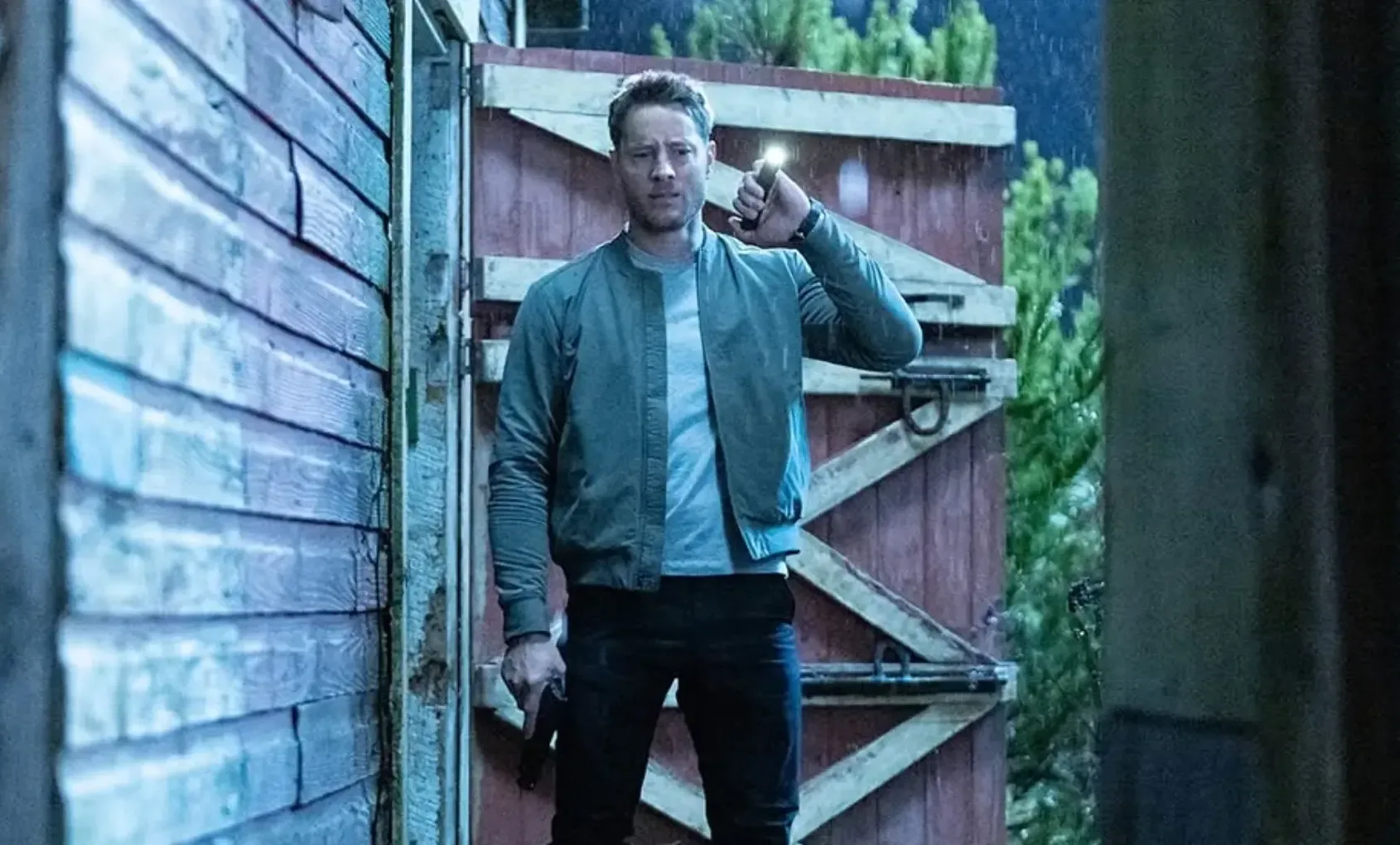
Hartley plays Colter with new psychological detail. He is capable and steady in the field, but he also carries the freight of inherited deceit while trying to relieve other people of theirs. The writing makes space to air the toxins of the Shaw story. By returning Ashton Shaw’s death to the foreground, the series asks how memory bends inside a damaged household and how narratives harden to protect power.
The suggestion that Mary Dove may be unreliable presses the show toward a study of generational secrecy. A network action format becomes a forum for examining how families manage truth, and by extension, how cultures train men to absorb harm quietly. The critique lands in the small choices: who calls the shots in a crisis, who names the wound, who keeps the ledger of lies.
“The Process”: Innovation in Case-of-the-Week Structure
Colter’s reentry into work arrives through a gentle nudge from Reenie and Russell, who frame the hunt for rewards as a way to interrupt his doom spiral. Russell stepping in as a short-term partner adds new texture to fieldwork. The two-part case, “The Process” and “Leverage,” signals expanded ambition and a format that breathes.

A routine missing-person call tilts into spy-thriller territory, with paranoia compounding by the minute. The case unveils The Process, a coercive system that forces ordinary people into violent acts through threats of exposing personal secrets.
The plot taps present-day anxieties around surveillance, privacy violations, and data weaponization. The fear is simple and familiar: a life turned into leverage by unseen operators. The show uses a conspiracy frame to mirror the jitters of a connected age, where a phone can store both a map to safety and a dossier that detonates a life.
Colter and Russell read the same puzzle with different toolkits. Colter moves like a trained instrument, methodical and contained. Russell improvises, reads rooms, and lets charm do a piece of the work. The pairing supplies energy to interviews and chases while clarifying personality. The choice to stretch the mystery across two episodes grants time for misdirection, evidence, and pressure.
The series stays procedural, yet the multi-part shape refines the tempo of discovery. The cliffhanger that follows raises personal risk as The Process turns its aim toward Colter and Russell, folding the brothers into the same coercive logic that ensnared the case’s victims. The device doubles as commentary: systems that monetize secrets do not care how skilled you are, only how exposed.
A Streamlined Infrastructure and Evolving Relationships
Season 3 trims the ensemble. The exits of Eric Graise (Bobby Exley) and Abby McEnany (Velma Bruin) concentrate the narrative around the lead and bring cleaner lines to case setup and payoff. The machine feels tidier and easier to read, with fewer side currents pulling attention from Colter’s arc.
Reenie Greene (Fiona Rene) shifts into a more hands-on role, feeding Colter leads from her Denver law practice and showing up beyond the usual phone check-ins. Chris Lee returns as Randy, handling the technology backbone for Colter and Reenie. The Reenie–Randy pairing has value for logistics and tone, and the show hints at a plan to move them closer to the action so the operation does not feel split between field and desk.
A small time-jump also resets the friction between Colter and Reenie. The series flirts with a “will-they/won’t-they” beat while keeping priority on Colter’s independence and his layered interior life. Romance remains a possibility, not a new spine. The launchpad for all this is Jensen Ackles’ two-episode presence, which plugs directly into the family storyline and fuels both plot and character work.
His fit with Hartley suggests a recurring space that strengthens the show’s thematic interests: truth, loyalty, and the cost of silence. The casework stays brisk. The cultural read sharpens. The message is clear enough to carry through the chases and interrogations. Secrets govern behavior, and television that understands that fact can speak to more than a puzzle of the week while still delivering the chase.
The American action drama television series Tracker is based on the novel The Never Game by Jeffery Deaver. The show’s third season premiered on Sunday, October 19, 2025, airing on CBS, with next-day streaming available on Paramount+. The series follows Colter Shaw, a highly skilled lone-wolf survivalist who travels the country solving mysteries and finding missing persons in exchange for reward money, often intertwining his professional cases with the ongoing secrets and trauma of his own fractured family.
Credits
Director: Ken Olin
Writers: Ben H. Winters, Elwood Reid, Sharon Lee Watson, Alex Katsnelson
Producers and Executive Producers: Justin Hartley, Ken Olin, Elwood Reid, Connie Dolphin, Sharon Lee Watson, Alex Katsnelson, Jeffrey Deaver
Cast: Justin Hartley, Fiona Rene, Jensen Ackles, Chris Lee, Wendy Crewson, Lee Tergesen, Robin Weigert, Abby McEnany
Director of Photography (Cinematographer): Yasu Tanida, Brian Pearson, Ronald Paul Richard
Editors: Nancy Morrison, Tim Mirkovich, Jeff Asher, Pietro Cecchini, Amanda Bliss Taylor
Composer: Tyler Bates, Joanne Higginbottom
The Review
Tracker Season 3
The season three premiere successfully pivots the procedural format by prioritizing Colter Shaw's profound personal trauma. The strong emotional chemistry between Justin Hartley and Jensen Ackles anchors the dramatic family mythology, offering a thoughtful exploration of inherited deceit. By streamlining its supporting cast and adopting a multi-part structure for the central case, the series achieves a necessary focus, elevating the stakes and tapping into contemporary anxieties about surveillance and privacy. This is a sharp, engaging return that promises a season defined by deep character work and procedural innovation.
PROS
- Immediate and in-depth focus on Colter Shaw's psychological trauma and the ongoing family mythology.
- Strong, emotionally complex dynamic between Colter and Russell Shaw, facilitated by the excellent chemistry between Hartley and Ackles.
- Streamlined supporting cast infrastructure allows for tighter, more character-focused storytelling.
- The "The Process" case introduces a complex, multi-part mystery that effectively modernizes the procedural format.
- Engages with contemporary anxieties surrounding privacy, surveillance, and external manipulation.
CONS
- Randy's expanded "hacker" role, while necessary for the plot, leans heavily on familiar procedural tropes.
- The necessity of having key supporting characters (Bobby and Velma) exit the series off-screen is abrupt.
- The potential re-ignition of the Colter/Reenie romantic tension could distract from the season's core dramatic focus on family trauma.
- The show's network origins inherently limit its ability to fully embrace the serialized, large-scale mystery potential introduced by "The Process."