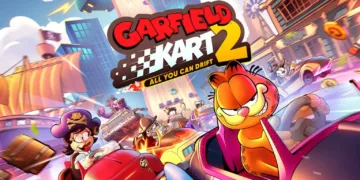




















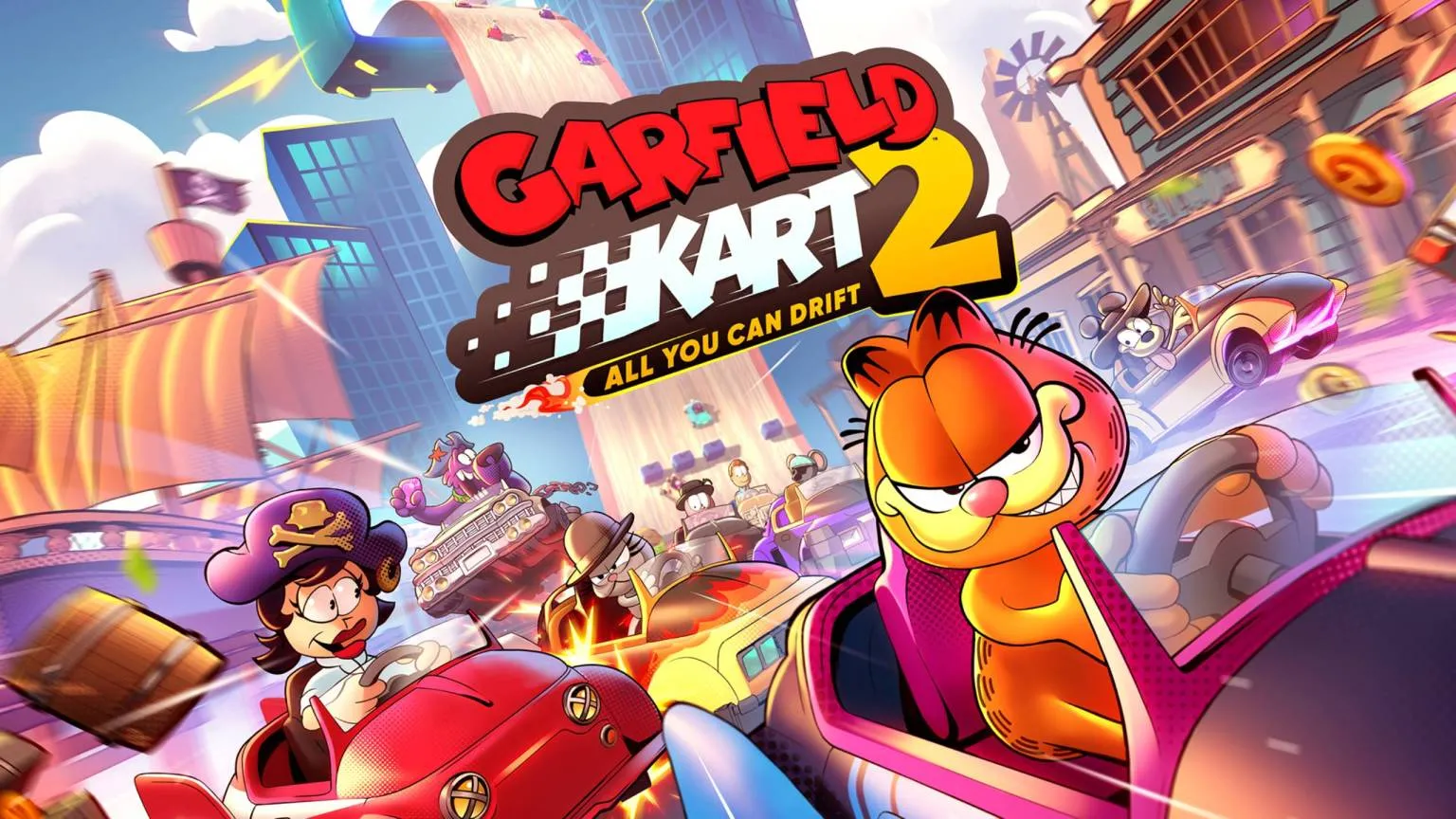

Eden Games brings Garfield and his comic strip companions back to the racing circuit with Garfield Kart 2: All You Can Drift, the follow-up to 2019’s Garfield Kart: Furious Racing. Available across Nintendo Switch, PlayStation 5, Windows PC, and Xbox Series X at $29.99, this kart racer attempts to translate Jim Davis’s lazy orange tabby into high-speed competition.
The setup remains straightforward: players select from eight characters and race through 12 tracks spread across three Grand Prix cups, each containing four courses. Customization options allow players to modify their karts with different chassis parts, wheels, and cosmetic additions like hats, all affecting performance stats such as acceleration and speed.
The game supports three speed classes (100cc, 150cc, and mirrored mode) and offers both local play for four racers and online competition for up to eight players with cross-play functionality. A comic book visual filter coats the entire experience, while certain tracks embrace a vaporwave aesthetic.
Mechanics That Mirror Mario
The racing mechanics adhere strictly to established kart racing conventions. Players accelerate their vehicles, execute drifts during corners to build boost meters, and gain momentum through slipstreaming behind opponents. Mini-jumps triggered with RB can chain into drift sequences, while aerial tricks performed off ramps grant small speed advantages.
The control scheme maps identically to Mario Kart 8 Deluxe, with RB handling jumps and drifts while LB activates power-ups. Driving assists like auto-acceleration and steering help make the game approachable for less experienced players.
Power-ups arrive via floating TV boxes scattered throughout tracks, occasionally appearing as double-stacked pickups. The item roster functions as thinly veiled analogs: lasagna serves as speed boosts, soap bars create slippery hazards, and dog food bowls replace the traditional shell system.
Green bowls fire straight projectiles, three bowls orbit the player for defensive coverage, red bowls home in on targets ahead, and blue bowls seek out the race leader. The zapper stands as the lone distinctive addition, distorting opponents’ screens with visual static.
The execution of these familiar systems suffers from technical shortcomings. Movement feels noticeably looser and less responsive than polished genre entries. Drifting around corners provides minimal tactile feedback, leaving players unsure whether they’re maintaining optimal angles. Getting struck by certain items triggers exaggerated stun states where karts halt completely for several seconds, marked by dizzying spiral animations while competitors surge past.
The slippery controls compound basic maneuvering challenges, and collision detection behaves inconsistently. These issues would be more tolerable with options to adjust sensitivity or remap buttons, but the game provides neither.
Artificial intelligence opponents add another layer of frustration. Computer-controlled racers routinely struggle with complex corners, taking inefficient lines or failing to navigate turns properly. Some AI drivers collide with walls and remain trapped in those positions for entire races, unable to correct their course.
Presentation and Content Gaps
The 12 circuits divided across three cups demonstrate competent track design principles within narrow parameters. A Western-themed course features rickety saloon awnings as elevated shortcuts above the main path, while a pirate-inspired layout includes ramps that allow skilled players to bypass tight corners through aerial routes. These alternative paths reward exploration and risk-taking, creating meaningful decisions about optimal racing lines.
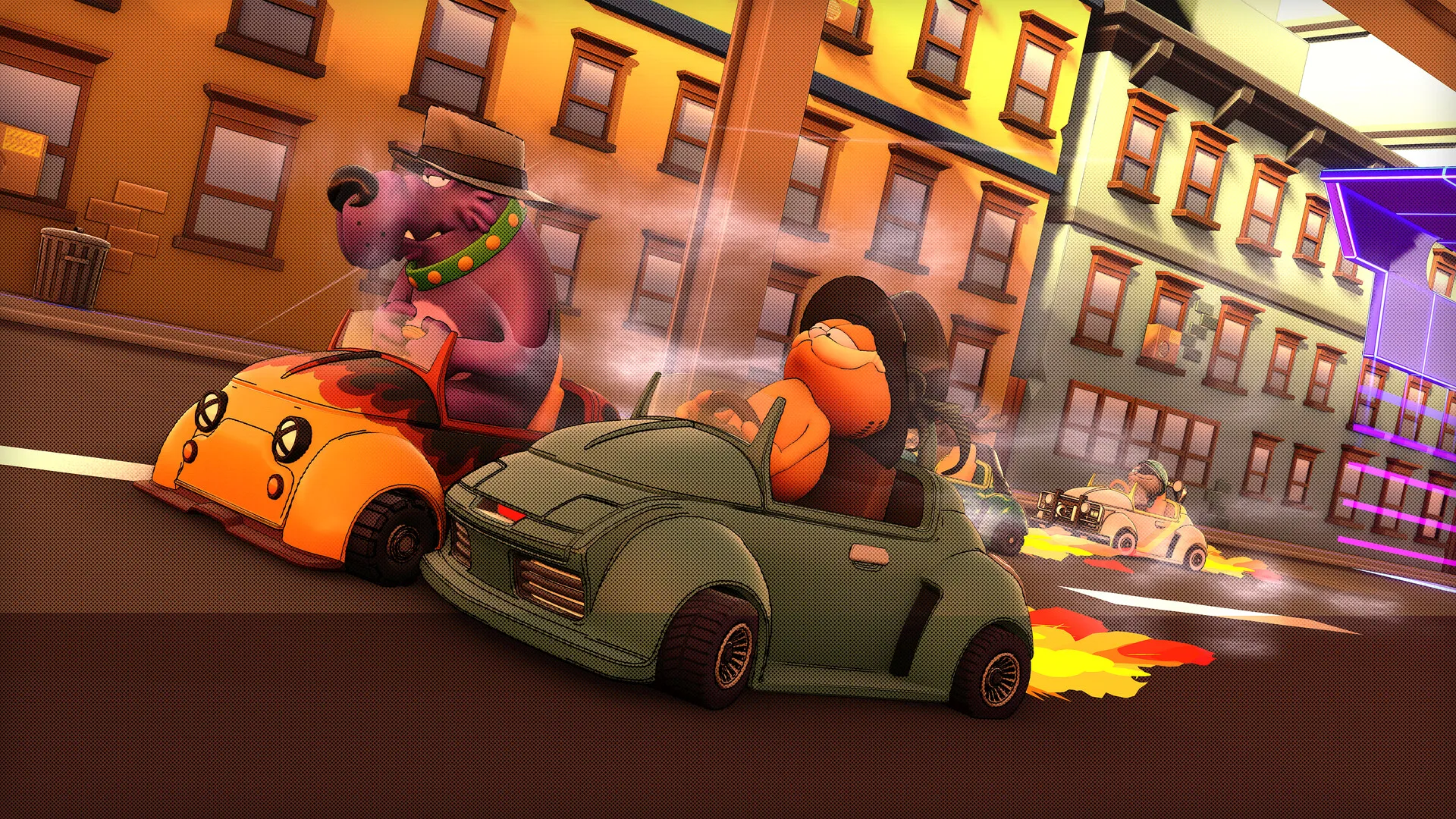
Three tracks adopt extremely short lap lengths, demanding numerous laps to reach standard race durations. This design choice amplifies the repetitive nature of these particular courses. Maps within individual cups feel derivative of each other, lacking distinct identities beyond superficial theme changes.
The track selection never commits fully to Garfield-specific content, instead relying on generic pirates, sci-fi corridors, and Western towns. The absence of secret cups means the 12 tracks represent the complete offering, a lean roster compared to competing kart racers.
The comic book filter applied throughout creates a distinctive visual identity. Thick outlines and cel-shaded textures evoke newspaper comic strips, while the vaporwave aesthetic in certain tracks introduces neon colors and retro-futuristic styling. The neon outlines prove particularly functional, enhancing track readability during high-speed racing. These artistic choices cannot fully compensate for underwhelming graphical fidelity. Models and textures lack polish, and environmental details appear sparse.
The soundtrack earns genuine praise, with several tracks delivering energetic, well-produced music. The complete absence of audio settings undermines this achievement. Players cannot adjust music volume, sound effects levels, or any other audio parameters.
Eight playable characters comprise the selectable roster, a disappointingly small number that excludes notable comic strip figures. Doc, Pooky, and other fan favorites remain absent, while Big Dog appears as a somewhat obscure inclusion. Kart customization offers more depth through unlockable parts affecting acceleration, speed, and handling statistics. Cosmetic options like hats provide light personalization, though the selection remains modest.
Time trial leaderboards supply competitive players with performance benchmarks, but the absence of platinum time trials or collectible puzzle pieces eliminates progression hooks. Battle mode variants never materialize. Technical bugs occasionally surface, including an issue where item boxes and coins become non-interactive.
Limited Returns on Investment
Three core modes structure the single-player experience. Grand Prix tasks players with completing three four-race cups, earning up to three paws for flawless performances. Time Trials provide solo racing against leaderboard times. Free Races allow quick individual course runs.
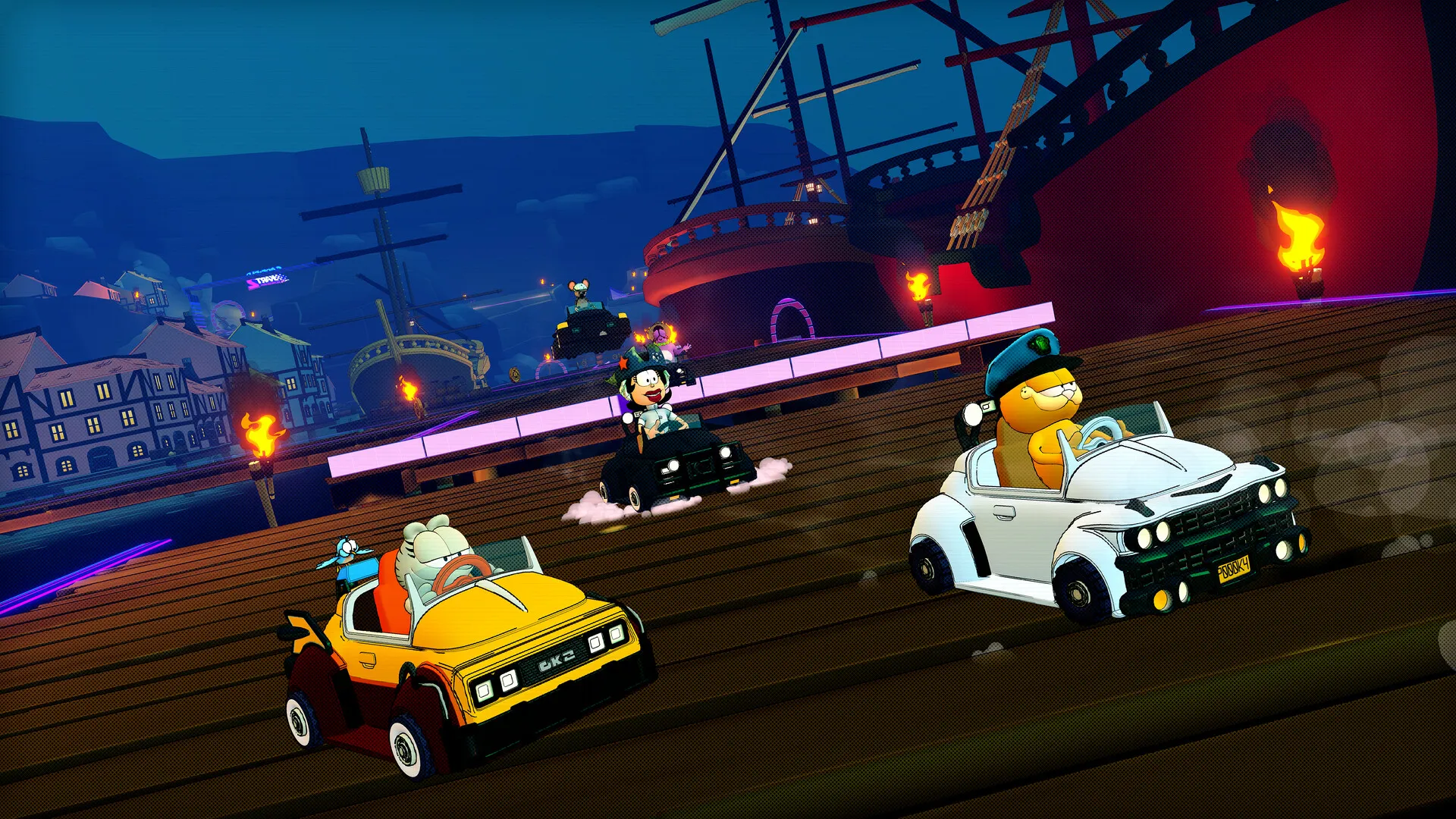
Local multiplayer accommodates four players simultaneously, while online races support eight competitors with cross-play across all platforms. The mode selection represents the bare minimum for a kart racer, with no battle arenas, team races, or creative variants.
Completing the Grand Prix cups and unlocking customization parts consumes only a few hours. Achievement hunters can obtain all trophies relatively quickly given the limited content scope. Replayability depends entirely on personal investment in climbing time trial leaderboards or participating in online races.
The 12-track roster provides insufficient variety to maintain interest across extended play sessions. Players cannot create private lobbies with friends and instead must join random matchmaking on single randomly selected courses.
The $29.99 price point positions Garfield Kart 2 below premium kart racers but above budget indie alternatives. The content offering feels sparse for this asking price. Missing features accumulate: no 50cc mode, limited track count, eight-character roster, no battle modes, and essential quality-of-life features like button remapping and audio controls remain absent.
Platform availability represents the clearest advantage. PlayStation, Xbox, and PC owners seeking kart racing experiences have fewer options than Nintendo console owners. The game functions adequately as a mechanical experience, with improvements to core handling over previous Garfield Kart entries.
The problem lies in what surrounds those mechanics: insufficient content, missing features, and technical limitations. Dedicated Garfield fans wanting to race as specific characters comprise the primary target audience, though even they must accept minimal franchise-specific content beyond character models. The game represents a safe, familiar approach that prioritizes recognizable mechanics over innovation or polish.
The Review
Garfield Kart 2: All You Can Drift
Garfield Kart 2: All You Can Drift delivers functional kart racing mechanics hampered by technical sloppiness and bare-bones content. The 12 tracks offer decent design with worthwhile shortcuts, and the soundtrack impresses, but slippery controls, weak AI, and missing basic features like button remapping drag down the experience. At $29.99, the sparse character roster, absence of battle modes, and lack of meaningful progression make this a tough sell. Garfield fans might find fleeting enjoyment, though the minimal franchise flavor disappoints. Wait for a sale if curious.
PROS
- Well-designed tracks with creative shortcuts and alternative paths
- Strong soundtrack with energetic, quality music
- Cross-play support across all platforms
- Kart customization affects performance stats meaningfully
CONS
- Slippery, imprecise controls with no button remapping
- Weak AI that gets stuck on walls
- Only 12 tracks and 8 characters
- No audio settings or volume controls
- Missing battle modes and 50cc speed class
- Minimal Garfield-specific content
- Technical bugs affecting item collection
- Difficult online matchmaking