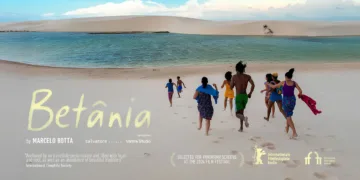
























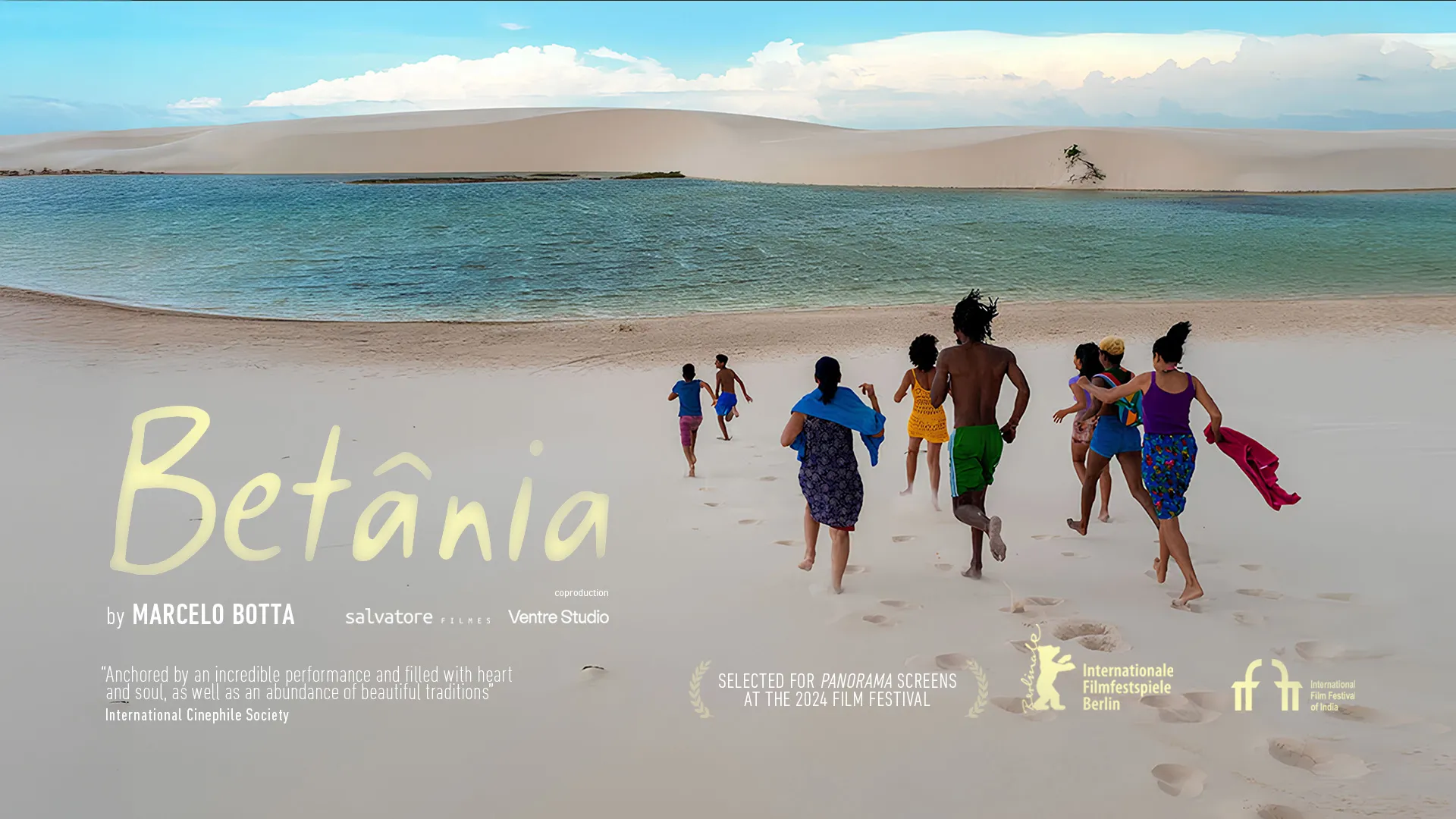

Marcelo Botta’s solo directorial debut, Betânia, studies the ache for permanence inside a world that keeps dissolving. The film acts like a vessel for memory, set against the stark, shifting expanse of the Lençóis Maranhenses national park in the Brazilian countryside. At the center stands Betânia (Diana Mattos), an elderly matriarch and midwife whose life is braided to the remote village that shares her name. The story opens with the quiet aftershock of her husband Raimundo’s death.
That loss unsettles the ground beneath her and brings pressure from family, including her daughters Irineusa and Julecia, who argue for a “modern” life of comfort and convenience. Botta shapes a poetic and compassionate portrait of a woman confronting the possible erasure of a lived philosophy. The film considers the price of remaining in place while everything urges departure, and it listens for grace within the hard, beloved contours of the land.
Echoes of the Eternal
Botta frames an existential question that hums through the film: how does a person stay whole while modernity and globalism loosen the seams of tradition. Betânia’s decision to remain in her village reads as a spiritual vow to self-reliance that resists the pull of modern capital, whether that means the steady hum of a refrigerator or the promises of an evangelical church. Her life illustrates the idea of Body-Territory, a philosophy in which the person and the geography interweave. Identity takes root in the dunes of Lençóis Maranhenses, and the sand seems to hold her name.
The structure favors simple movements that carry wide implications. Scenes arrive like thoughts or half-memories surfacing from unshown hours, which creates a current that privileges communal vitality over strict plot steps. The rhythm mirrors life’s cycles. A communal funeral opens the film, and a lively celebration closes it, a pair of events that face each other like mirrors. Grief and joy feel like two temperatures of the same weather.
Botta works with a gentle touch, letting small moments of humor and ease glint inside heavy circumstances. The risks of isolation sharpen in the thread with Tonhão and the French tourists, a fragile line that answers the cohesion of shared meals and collective searches. Community becomes both shelter and question, and the film keeps listening for what endures.
The Immovable Anchor
Diana Mattos gives Betânia an unwavering core. The performance feels elemental, the magnet that orients every conflict and decision around it. Mattos locates the matriarch’s fierce independence and holds it steady. Betânia stays feisty and steadfast, often pushing family away by insisting on living strictly on her own terms.
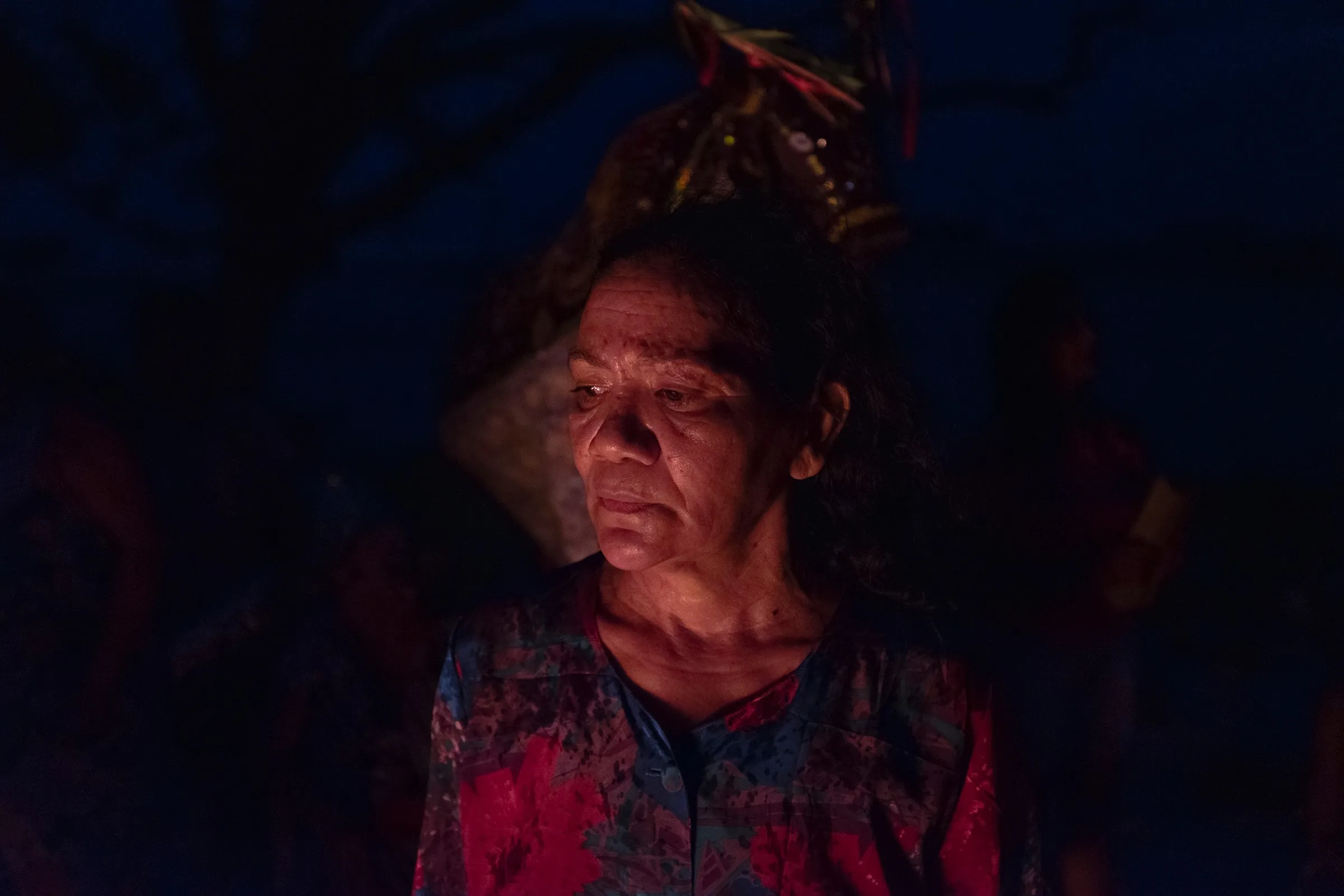
What appears on screen feels un-acted, a striking truthfulness for a debut. That quality allows the film to light up a collective feminine endurance rather than a solitary act of heroism. Betânia is midwife, matriarch, and pillar of resistance for those around her. The intimacy of her life opens a mirror for the persistent strength of women in Maranhão.
The supporting figures press from the edges like weather systems. Tonhão pursues the economy of tourism. Jucélia considers the reassuring order of a structured belief system. Each pressure tests Betânia and makes visible the instability gathering outside her door. The film studies those forces without scolding them. It listens to how faith, money, and family can promise certainty while carrying their own shadows. The questions do not resolve; they hang in the air like heat, and the character holds her ground inside that heat.
The Sensory Landscape
Botta builds an immersive experience through precise technical choices. The cinematography has a stark clarity that registers as beautiful. The wide-screen scope stretches across the Lençóis Maranhenses dunes and frames a harsh, poetic grandeur. The environment gains the presence of a character. Its lines and distances speak for a life bound to wild terrain, and the images let the sand argue its case.
Sound works like a second camera. Wind, voices, and the thud of steps on dry earth guide the movement of scenes and let the ancestry of the region breathe into the present. Musical choices create a chorus for the film’s existential thought. Traditional Brazilian folk songs tied to ritual and solidarity sit beside modern remixed tracks by artists like Lana Del Rey or Sia.
The oscillation marks the meeting of cultural ages and gives the narrative a pulse that carries both memory and immediacy. Vitória’s nights at the local reggae club reveal that pulse as it moves through youth and dance. The soundscape speaks in two directions at once. It draws on what has lasted and answers what arrives now, and in that conversation the film finds its measure.
Betânia is a 2024 Brazilian drama film about a 65-year-old midwife who, after the death of her husband, is persuaded by her daughters to leave her isolated rural life near the Lençóis Maranhenses National Park. The film explores the clash between tradition and modernity as Betânia moves to a new village and struggles to maintain her identity, driven by the ancient music and culture of Maranhão. The film had its world premiere on February 18, 2024, at the 74th Berlin International Film Festival in the Panorama section. In the US, it has been available for streaming on Film Movement Plus Amazon Channel.
Credits
Director: Marcelo Botta
Writers: Marcelo Botta
Producers and Executive Producers: Gabriel Di Giacomo, Marcelo Botta, Luciana Coelho, Isabel Abduch
Cast: Diana Mattos, Tião Carvalho, Caçula Rodrigues, Nádia D’Cássia, Ulysses Azevedo, Michelle Cabral, Vitão Santiago, Enme Paixão
Director of Photography (Cinematographer): Bruno Graziano
Editors: Márcio Hashimoto
Composer: Marcelo Botta, Tião Carvalho, Edivaldo Marquita, Misael Pereira, Henrique Menezes, A Barca
The Review
Betânia
Betânia transcends simple narrative to become a meditation on being. The film captures the existential gravity of place, anchoring a profound thematic struggle against the relentless tides of global change. Diana Mattos's authentic performance provides the necessary soul, transforming a regional story of resistance into a universal statement about identity. Botta’s command of the sensory landscape, from the stark dunes to the resonant soundscape, makes this work deeply affecting. It is a slow, rewarding contemplation of human persistence.
PROS
- Authentic, compelling, and powerful lead performance by Diana Mattos.
- Stunning cinematography that captures the harsh beauty of the Maranhão landscape.
- Deep exploration of existential themes regarding identity and territory.
- Sophisticated blend of traditional and contemporary musical elements.
- Simple, compassionate directorial approach to complex social issues.
CONS
- The unconventional, non-linear narrative structure might prove challenging for some viewers.
- Pacing is deliberate, which may be interpreted as slow.
- Occasional narrative deviations from the central plot might feel momentarily jarring.