
























Director Sasha Wortzel’s River of Grass presents a lyrical visual essay shaped around the Florida Everglades. The film contemplates a fragile ecosystem and braids history, beauty, and an ongoing environmental fight. Its touchstone is Marjory Stoneman Douglas’s 1947 book The Everglades: River of Grass, whose title draws on a Miccosukee expression.
Wortzel builds a non-traditional documentary that combines historical footage, contemporary observational scenes, and reflective narration. This method places the film as both an intimate letter to American wetlands and an urgent call for protection. The approach sits comfortably within a wave of environmentally minded cinema gaining attention across the world.
Weaving the Past into the Present Tense
The film’s narrative design rests on constant conversation between past and present. Wortzel incorporates archival footage of Marjory Stoneman Douglas, revealing an outspoken advocate and a decades-long campaigner for conservation. The material renders a historical figure vivid and independent within twentieth-century activism.
The director’s voice, Douglas’s words, and on-screen text create a continuous current of thought across time. This formal strategy distinguishes River of Grass from standard documentary practice. The film sidesteps familiar interviews, lower-third labels, and data-heavy graphics, inviting viewers to connect the dots. Archival outtakes appear in which crew members direct or nudge animals for a shot.
The choice quietly points to how images of “nature” often carry traces of staging and mediation. Sound design supports the contemplative mood through a meditative score and careful attention to water, wind, and wildlife, so the environment speaks through its own textures.
The Voices of the Watershed
River of Grass frames the crisis through present-day advocates whose work makes the stakes tangible. Betty Osceola, a Miccosukee educator, centers the land and water as ancestral presences through prayer walks and teaching. Her presence addresses the long erasure of Indigenous stewardship from Everglades storytelling. The film links other ongoing efforts to this shared fight.
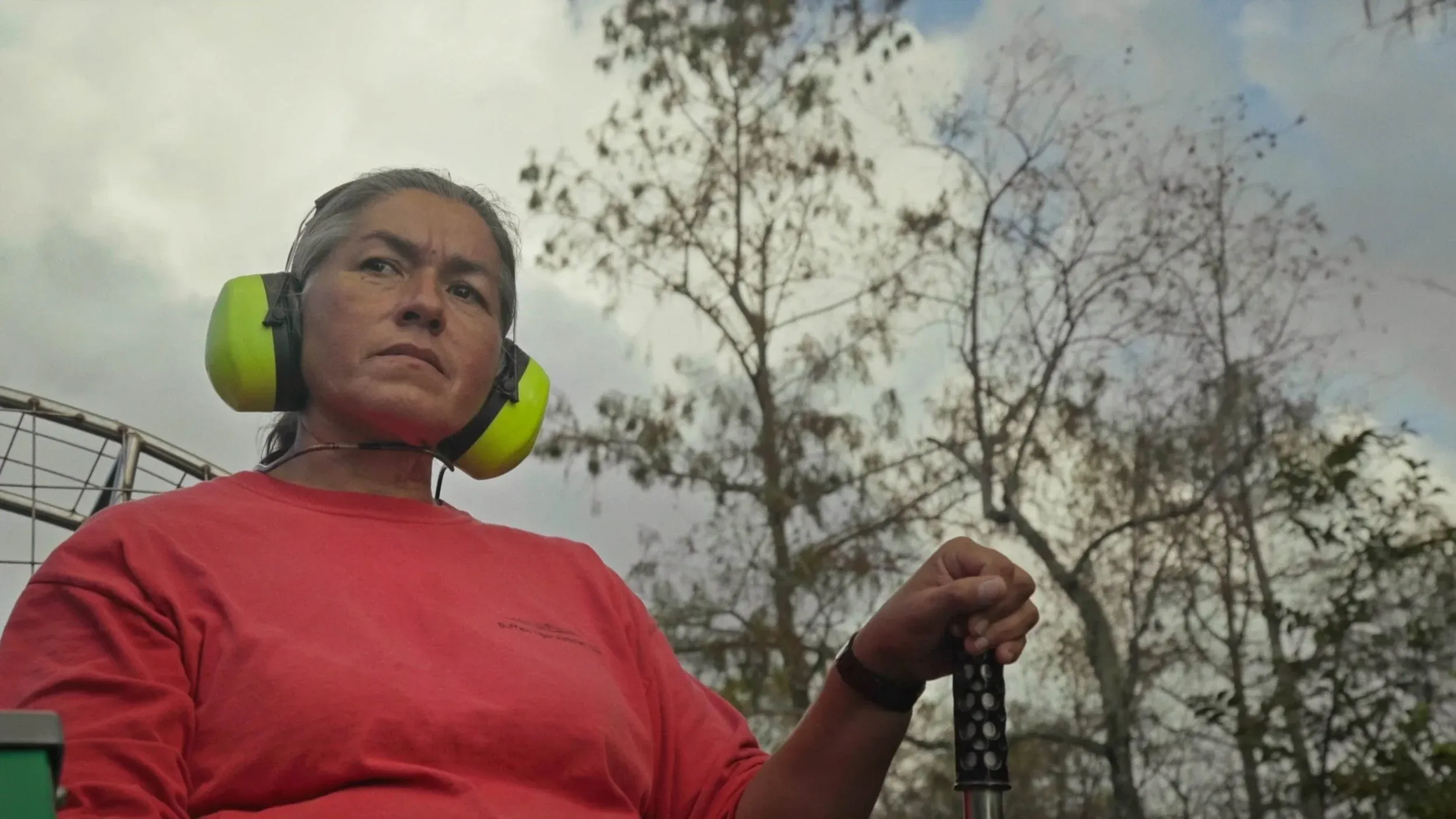
Kina Phillips raises the issue of toxic air flowing into nearby Black communities during Big Sugar’s seasonal field burning. Donna Kalil and her daughter work to reduce damage from invasive pythons that thrive in an altered ecosystem. The camera meets concerned fishermen who track changes in the water, and wildlife veterinarians who treat animals affected by red tides and algae blooms.
Through these voices, Wortzel traces the reach of human engineering. Levees and drainage projects redirected the watershed’s natural flow to enable development on land ill-suited for major cities, and the consequences ripple across communities and species. The people onscreen share a clear devotion to restoration and a respect for the Everglades that guides their action.
Cinematic Grandeur and Grounded Critique
The film’s visual language treats the landscape as a principal character. Cinematographer J. Bennett, a fifth-generation Floridian, frames the horizon with patience and care. The camera surveys enormous stretches of marsh and sky while registering complexity and hurt.
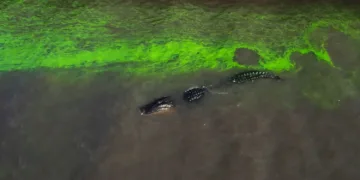
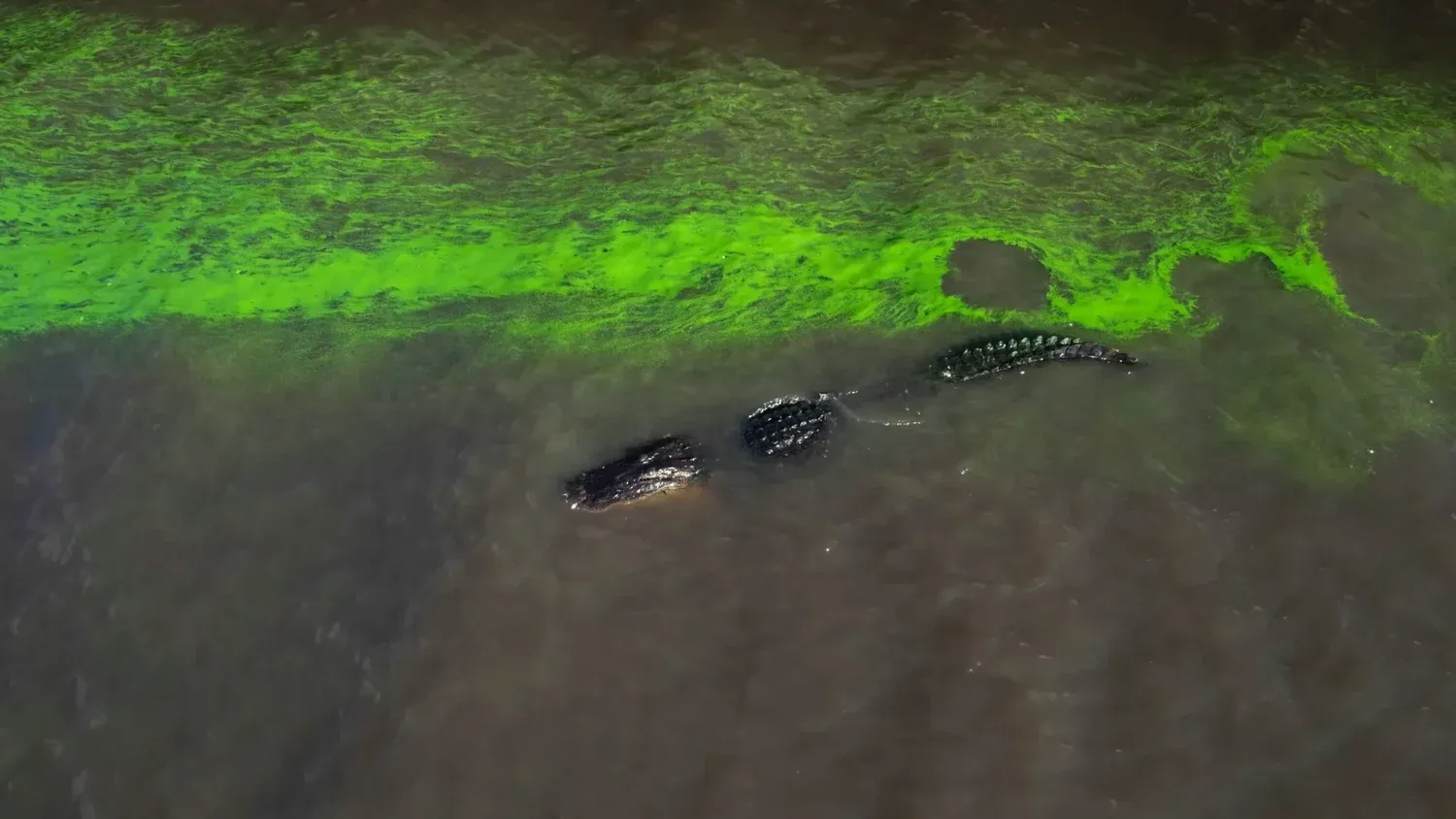
Aerial views place thriving greenery beside sharp canal lines, roads, and the unnerving neon of toxic algae. Wortzel’s emphasis on the land itself aligns the project with international works that use spectacle to press social critique. The images carry tactile evidence of damage and recovery across human and ecological registers, and the critique grows from what the lens records.
The film asks viewers to read their own surroundings with a similar eye for history and cause. It invites a deeper bond with local ecology and a recognition that collective effort shapes protection, linking the Everglades to a wider pattern of wetland destruction around the globe.
River of Grass is a feature-length environmental documentary that serves as a lyrical and immersive ode to the Florida Everglades. The film draws inspiration from the writings of pioneering conservationist Marjory Stoneman Douglas and blends historical archival footage with contemporary vérité moments. The documentary had its World Premiere at the True/False Film Festival and its International Premiere at Hot Docs in 2025, where it won the Joan VanDuzer Special Jury Prize for International Feature Documentary. Due to its recent film festival run, specific wide-release dates or streaming platforms are generally announced following the festival circuit.
Credits
Director: Sasha Wortzel
Writers: Sasha Wortzel
Producers and Executive Producers: Danielle Varga, Sasha Wortzel, Alexandra Codina, Monica Berra, J. Bennett
Cast: Betty Osceola, Marjory Stoneman Douglas, Kina Phillips, Reverend Houston R. Cypress, Donna Kalil
Director of Photography (Cinematographer): J. Bennett
Editors: Rebecca Adorno-Dávila, Sasha Wortzel
Composer: Angélica Negrón
The Review
River of Grass
This review demonstrates the power of the lyrical, non-traditional documentary to convey profound ecological urgency. By skillfully placing the past and present into conversation, Sasha Wortzel honors the Everglades' history while giving voice to the activists fighting for its future. The film is a visually arresting, deeply personal meditation on climate crisis and colonial legacies, offering hope through collective action.
PROS
- Weaves historical archival footage with modern-day observation seamlessly.
- Features visually stunning, reverent shots of the landscape and environment.
- Centers marginalized and local voices (Miccosukee, affected communities) alongside historical figures.
- Succeeds in generating a palpable sense of place, love, and urgency for the land.
CONS
- Can feel slightly disorganized or overambitious, jumping between perspectives quickly.
- Narration sometimes noted as slightly distracting or over-processed.
- The poetic, non-linear style may challenge viewers expecting a standard, statistics-heavy investigative report.
- Attempts to cover a wide scope of issues (pythons, sugar burning, history, climate) in a relatively short runtime.