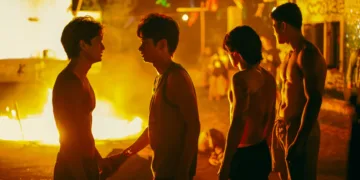



























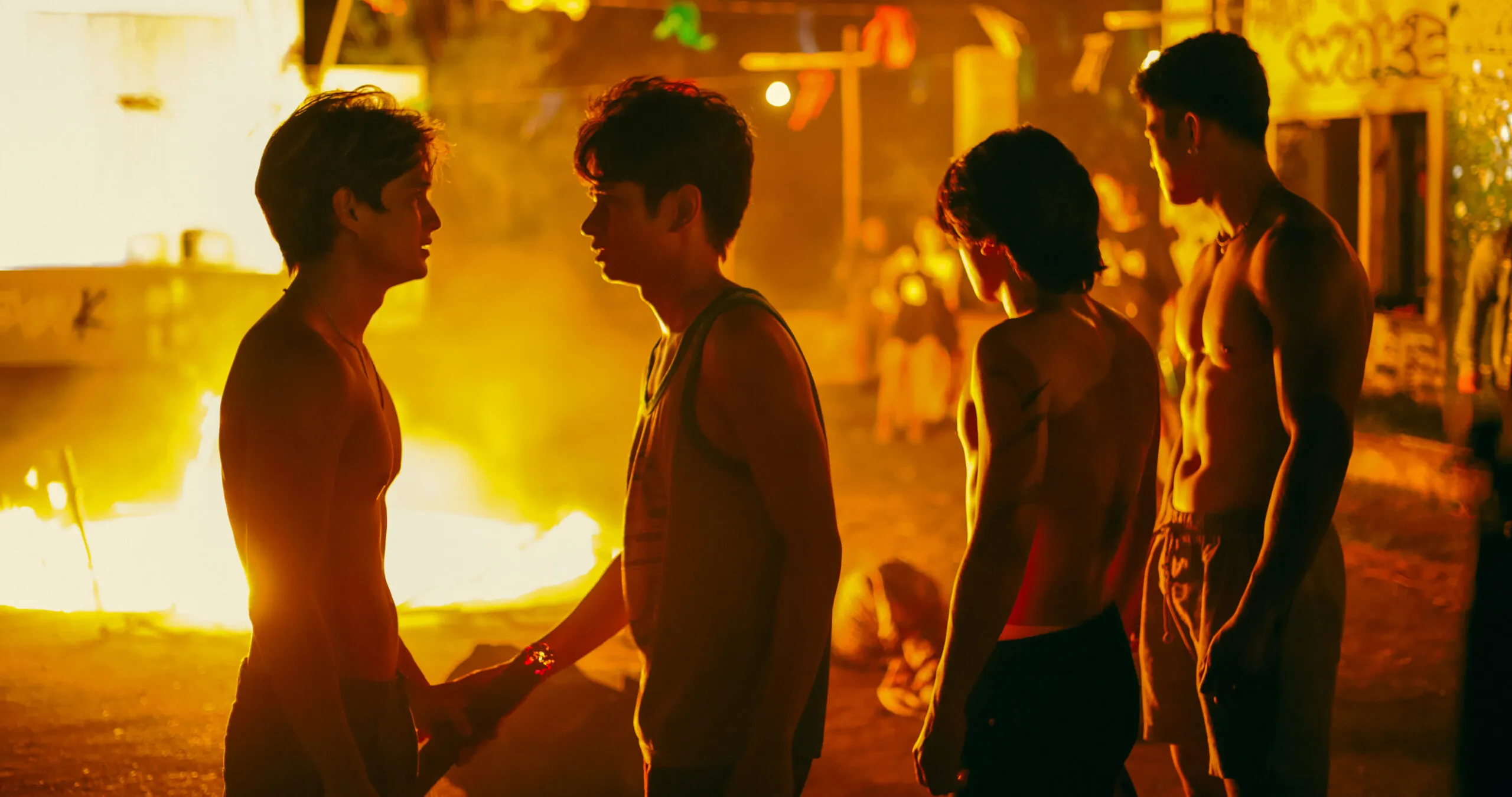

Filipino filmmaker Petersen Vargas returns to independent terrain with Some Nights I Feel Like Walking, a film steeped in the sensory texture of nocturnal Manila. The piece operates as a hybrid, a gritty queer-themed melodrama that shifts into a surreal one-night road movie. Vargas places the viewer inside neon spill, street murmur, and the seedy rooms where his characters work and wait.
The premise stays clear: a group of young male hustlers respond to the sudden overdose of a friend. Their decision to carry his body to his rural hometown in Pangasinan sets a chaotic, somber, and sometimes absurd chain of events in motion. The film studies survival among marginalized youth and frames their pilgrimage as a physical trek tied to an emotional reckoning.
Story Mechanics and the Arc of Unlikely Companions
The structure rides on the dynamic between two figures: Uno (Jomari Angeles), an assured, street-savvy leader of a small crew, and Zion (Miguel Odron), a timid newcomer with a fresh face and little experience. Angeles shapes Uno with limited emotional availability, a tough exterior that functions as a shield against the realities of his trade.
Beneath that surface sits a fragile tenderness, seen in his early hesitation around intimacy. Zion traces a measured transformation. He begins as a cautious wallflower and proves unexpectedly resourceful once the crisis breaks. Their growing connection forms around a shared urge to escape the lives they inhabit.
A single device organizes the narrative: the dead friend’s body. The pressure of moving the corpse in secret turns the story into an absurd dark comedy at the edges of society, and the ordeal tests every loyalty inside the group. The situation forges their status as a chosen family. The film studies the hard texture of that bond, built on shared necessity and collective grief for the friend they lost, stripped of easy sentiment.
Atmosphere and The Shifting Technical Canvas
Vargas adopts an approach that is highly stylized and persistently atmospheric. Russell Adam Morton’s cinematography favors an immersive moving camera and the interplay of warm and cold neon that slices through dense urban night.

The visual and aural design then shifts when the characters leave Manila for the provinces. Urban realism recedes, replaced by an eerie, slightly surreal register powered by “dream logic,” mirroring the characters’ dislocation.
Eddie Huang’s sound design captures the immediate, oppressive feel of walking Manila’s streets after dark. That bed layers with Alyana Cabral’s and Moe Cabral’s pulsing synth and electronic score to build a multi-sensory field.
The craft peaks with an extended uninterrupted 23-minute final shot in the village. The choice functions as sustained immersion that locks attention on the actors’ physical and emotional labor and steers the film toward catharsis.
Marginalization and The Unsanitized Queer Reality
Beyond the plot engine, the film reads as a textured look at marginalized life in the Philippines. It keeps focus on the have-nots and the harsh conditions facing young men in constant difficulty. The story glances at social divisions along class lines and gestures toward the threat posed by authorities to the “street fauna,” acknowledging a wider political climate without turning to didactic messaging.
Grief and mortality form the film’s most resonant layer. The journey of the body links directly to the emotional work of handling loss and confronting the fractures that keep the characters from moving forward. Vargas presents a grittier portrait of queer existence in this setting and avoids sanitized tropes.
The tentative romance between Uno and Zion reads as an expression of belonging and the need for escape, free of prescribed beats. The storytelling feels raw and personal, like an exposed nerve that channels the urgency and volatility of queer youth searching for a place in the world.
Some Nights I Feel Like Walking is a Filipino road drama film that premiered at the Tallinn Black Nights Film Festival on November 13, 2024, before having a limited theatrical release in the Philippines in August 2025. Following its successful run on the international film festival circuit, the movie secured a U.S. digital and VOD release on October 17, 2025. It has been available to stream or rent on platforms like Prime Video and Apple TV in certain territories, and was also available on MUBI in some regions. The film is known for its intense, R18-rated portrayal of young street hustlers in Manila who embark on a frantic journey to fulfill a dead friend’s last wish.
Credits
Director: Petersen Vargas
Writers: Petersen Vargas, Erwin Blanco (Story)
Producers and Executive Producers: Alemberg Ang, Jade Castro, Stefano Centini, Anthony Chen, Si En Tan
Cast: Miguel Odron, Jomari Angeles, Argel Saycon, Tommy Alejandrino, Gold Aceron, Jess Mendoza, Raymond Lee
Director of Photography (Cinematographer): Russell Adam Morton
Editors: Daniel Hui
Composer: Alyana Cabral, Moe Cabral
The Review
Some Nights I Feel Like Walking
The film succeeds best as an atmospheric portrait of Manila's margins, driven by strong technical execution and committed performances. Petersen Vargas masterfully fuses gritty reality with dreamlike surrealism during the road trip, a compelling mechanism for charting the characters' emotional state. While the plot often feels meandering and sacrifices conventional clarity for mood, the core emotional resonance between the hustlers is genuine. This feature is a raw, sensory experience that illuminates the urgent struggle for belonging among marginalized youth, creating a powerful, if structurally uneven, piece of modern queer cinema.
PROS
- The film captures the sensory experience of nocturnal Manila with rich sound design and aesthetic lighting.
- Strong cinematography by Russell Adam Morton, especially the immersive camera movement and the demanding 23-minute final shot.
- Jomari Angeles (Uno) and Miguel Odron (Zion) deliver deeply committed performances that anchor the central emotional drama.
- Explores the gritty, necessary reality of chosen family and the difficult pilgrimage toward emotional healing.
- Effectively transitions from urban realism to rural surrealism, using setting to reflect psychological state.
CONS
- The narrative can feel meandering and confusing at points, sacrificing clarity for mood.
- The plotting is not always cohesive, which may leave viewers feeling unmoored.
- The film's critique of systemic class divisions and police danger is indirect and feels somewhat safe, avoiding confrontation.
- The inclusion of an absurd premise (moving a dead body) can sometimes clash with the desired somber tone.