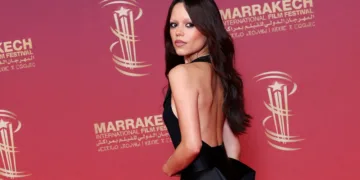































Jenna Ortega used her first day as a juror at the Marrakech International Film Festival to issue a blunt warning about artificial intelligence, telling reporters it is “very easy to be terrified” by a technology she linked to a period of “deep uncertainty” for cinema and society.
Speaking at the main jury press conference, the Wednesday and Beetlejuice Beetlejuice actor said humanity “always takes things too far” and compared the current AI boom to opening Pandora’s box. She suggested that one possible outcome is a kind of cultural overload, where AI-generated work turns into “mental junk food” that leaves audiences feeling unwell and eventually pushes them back toward human-made films.
Ortega argued that filmmakers should keep stressing qualities machines cannot imitate. “There are certain things that AI just isn’t able to replicate,” she said, pointing to the “beauty in difficulty” and in mistakes. “A computer has no soul.” The comments carry personal weight: as a minor, she was sent explicit AI-generated images of herself on social media, an experience that led her to delete her Twitter account and fed her skepticism about how these tools are used.
Her remarks came during a wider exchange on AI among the festival’s eight-person competition jury, chaired by Parasite director Bong Joon Ho and featuring Ortega, Anya Taylor-Joy, Celine Song, Julia Ducournau, Karim Aïnouz, Hakim Belabbes and Payman Maadi. Ducournau called AI “controversial in the way it’s used” and argued that it will not replace human creativity, while Song warned that the technology is “colonizing our planet and minds.”
Bong cast the moment as a chance to rethink what audiences value in performance, suggesting this may be the first time people seriously ask what only humans can do. He then undercut the solemn tone with a deadpan joke about wanting to form a “military squad” to travel the world and destroy AI systems, a gag that drew laughs while capturing the unease hanging over the industry conversation. Against a backdrop of recent Hollywood labor deals that introduced AI rules into writers’ and actors’ contracts, Ortega’s warning in Marrakech lands as part of a much larger fight over who controls the images and emotions that reach the screen.







