




























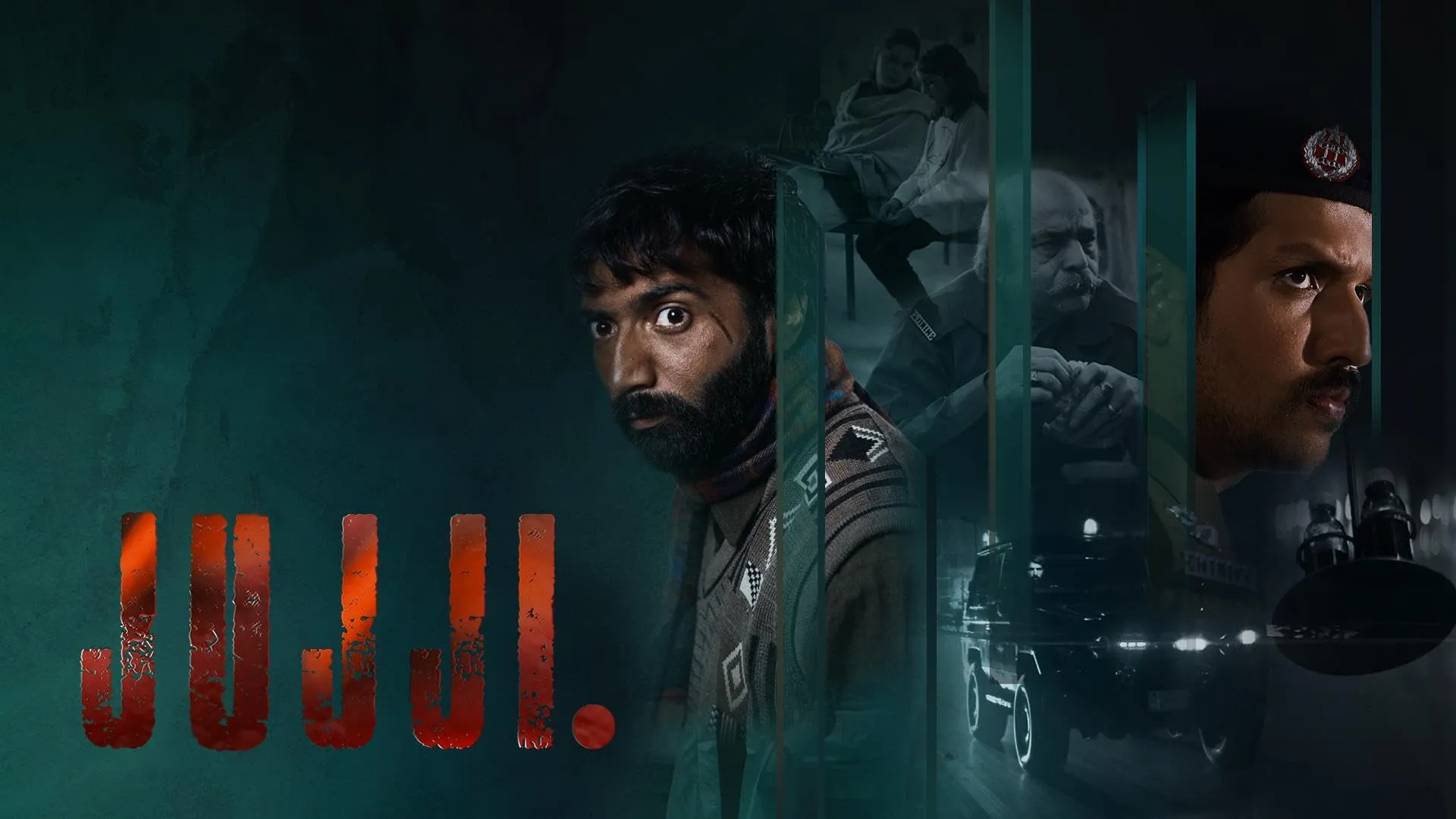

Habib Shahzad’s Pakistani neo-noir crime thriller, Jujji, roots its suspense in social reality. Inspired by true events and written by Ahmad Umar, the film opens with a downbeat, morally knotty mood set against the gritty streets of Rawalpindi. The story follows a police hunt for a serial killer, yet Shahzad reshapes the usual procedural rhythm through a simple move: the killer’s identity appears early. With the “whodunit” removed, the film turns inward, tracking the psychological toll on the officers who must carry the case.
Within this haze stands SI Naveed (Mustafa Rizvi), a principled investigator burdened by memory, partnered with Constable Arshad (Anjum Habibi), a veteran whose temperament rubs against Naveed’s strict code. In that pairing, Jujji joins a wider international drift toward character-first thrillers, placing emotional erosion ahead of puzzle-box plotting. For viewers familiar with South Asian crime cinema, the film feels in conversation with parallel cinema’s patience and with the global noir tradition that treats the city as a moral pressure cooker.
The Weight of the Badge: Trauma and Redemption
The film’s pull comes from its attention to Naveed’s interior life. Rizvi shapes him as the emotional spine of the narrative, feeding each scene with quiet urgency. Naveed’s drive is haunted by one defining failure: a ransom case that collapsed and led to a young girl’s death. That wound turns the present investigation into something personal and painful. His pursuit of the killer becomes tied to duty and to a private need for redemption, a need to convince himself that he still deserves the badge he wears. The trauma sets the case’s stakes, steering the film away from a simple chase and toward the question of how a person keeps living after such loss.
Naveed’s devotion also strains his home life. The film cuts to his wife and daughter in scenes that feel like a second crime site, only quieter. Conversations narrow into silences, and the domestic space carries its own kind of evidence: distance, restraint, and grief that never gets fully named. Shahzad lets these moments breathe, recalling the intimacy of South Asian realist drama where emotional fractures speak louder than dialogue.
Arshad’s presence shifts the temperature. He functions as a cynical counterweight to Naveed’s idealism, and their partnership becomes a study of survival inside police work. Naveed clings to discipline as a lifeline. Arshad meets the same grim world with weary levity, a posture that hints at long exposure to violence. The film offers only brief glimpses of Arshad’s past, yet the friction between the two men lands as recognizably human. It is the tension between faith in the job and resignation to its costs.
The killer, Jujji (Muhammad Arslan), stays at the edge of the frame. Shahzad presents him with a nervy detachment, like a ghost shaped by neglect. The film keeps his psychology at a distance and treats him as a catalyst for the officers’ unraveling. That choice puts the spotlight on the men chasing him, and on what the chase does to them.
Aesthetic and Cultural Realism: Cinematography as Witness
Shahzad directs with a confidence linked to parallel cinema’s refusal of spectacle. Violence never becomes a showpiece. The camera stays with the slow, grinding labor of policing: interviews that circle without payoff, leads that collapse, evidence that must be reopened and re-read. This emphasis on process locks the film into realism and keeps the city’s social texture present at every step.
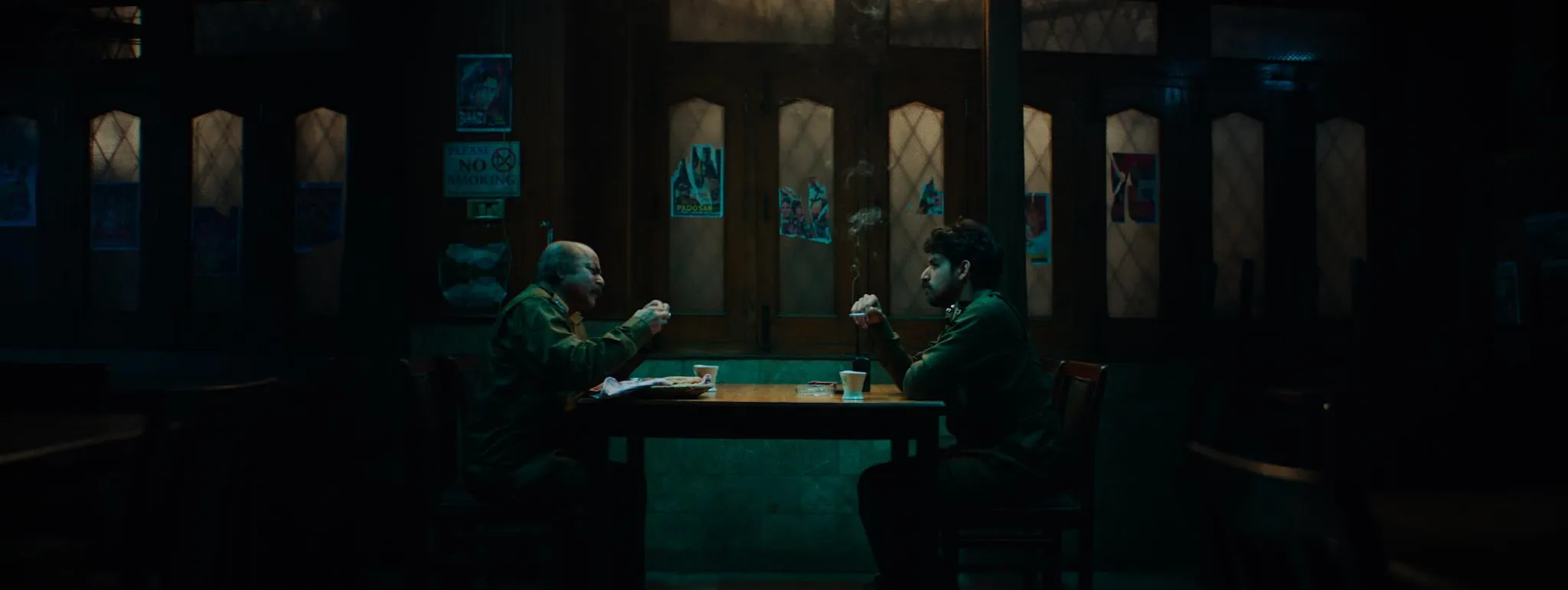
Furqan Gul’s cinematography is central to that texture. Rawalpindi appears in muted tones, streets stripped of gloss and lit in sodium haze. The visual language leans into neo-noir shadows, yet it holds onto cultural specificity through real locations and unvarnished detail. Shahzad’s long takes serve this stance. They carry the plot forward, and they place the camera in the role of witness, letting moments unfold without forced punctuation.
The pacing follows the same logic. At about 70 minutes, the film is tight yet willing to move slowly through emotional tension and moral doubt. It trusts accumulation over shock. The music by Alister Alvin and Zahra Paracha sits beneath the action as a somber undertow. It signals approaching dread with a low, unsettling pulse and supports the mood without crowding the scenes. The result is a raw, textured style grounded in place, aligned with international urban thrillers that treat authenticity as their main aesthetic engine.
Justice as a Lived Burden: Thematic Depth
Jujji works on two tracks. It plays as a lean crime story, and it asks what justice costs the people who chase it. The film frames justice as a lived burden and as a hard personal choice, shaped by circumstance instead of delivered as a clean institutional victory. Naveed’s arc carries themes of trauma, self-scrutiny, and the price of duty. Each step forward tests his moral endurance, and each setback presses on the old wound that drives him.
Shahzad keeps the social world in view. Crime and poverty are not background décor; they sit close to the characters, squeezing their options and bending their decisions. The film refuses easy answers or comforting moral balance. That refusal gives Jujji its place among South Asian crime dramas that use genre to confront the bruising residue of violence. Shahzad’s film stays modest and honest, committed to character-driven noir rooted in the streets that shaped it.
Jujji is a Pakistani neo-noir crime thriller that has been acquired by Buffalo 8 for worldwide distribution. The film is scheduled to premiere on Amazon Prime on November 21, 2024, making it available for streaming internationally. With a tight running time of approximately 70 minutes, the feature is known for its intense focus on the psychological toll of a serial killer investigation on the officers involved.
Full Credits
- Distributor: Buffalo 8 (Worldwide release), Amazon Prime (Scheduled streaming premiere)
- Release Date: November 21, 2024 (Scheduled Amazon Prime premiere)
- Running Time: Approximately 70 minutes
- Director: Habib Shahzad
- Writers: Ahmad Umar
- Cast: Mustafa Rizvi, Anjum Habibi, Muhammad Arslan, Mahnoor Nawab, Arfa Nadeem
- Director of Photography (Cinematographer): Furqan Gul
- Composer: Alister Alvin, Zahra Paracha
The Review
Jujji
Jujji is a quiet, powerful achievement in contemporary Pakistani cinema. By prioritizing the emotional exhaustion of its protagonist over procedural mystery, it transforms a standard serial-killer hunt into a profound meditation on trauma, duty, and redemption. Its authentic setting, restrained direction, and strong lead performance confirm its status as a vital piece of character-driven neo-noir.
PROS
- Excellent psychological study of SI Naveed and his internal struggle for self-worth.
- Habib Shahzad’s measured approach avoids sensationalism, lending moral gravity to the story.
- Distinct neo-noir aesthetic created through clever use of shadow and light, enhanced by deliberate long takes.
- Effectively explores complex issues like duty, trauma, and the personal cost of justice.
CONS
- The partner, Constable Arshad, and the killer, Jujji, could have benefited from deeper backstory or exploration.
- The deliberate, slow pace may test viewers accustomed to faster-moving thrillers.
- At approximately 70 minutes, some thematic or character elements feel slightly underdeveloped.