














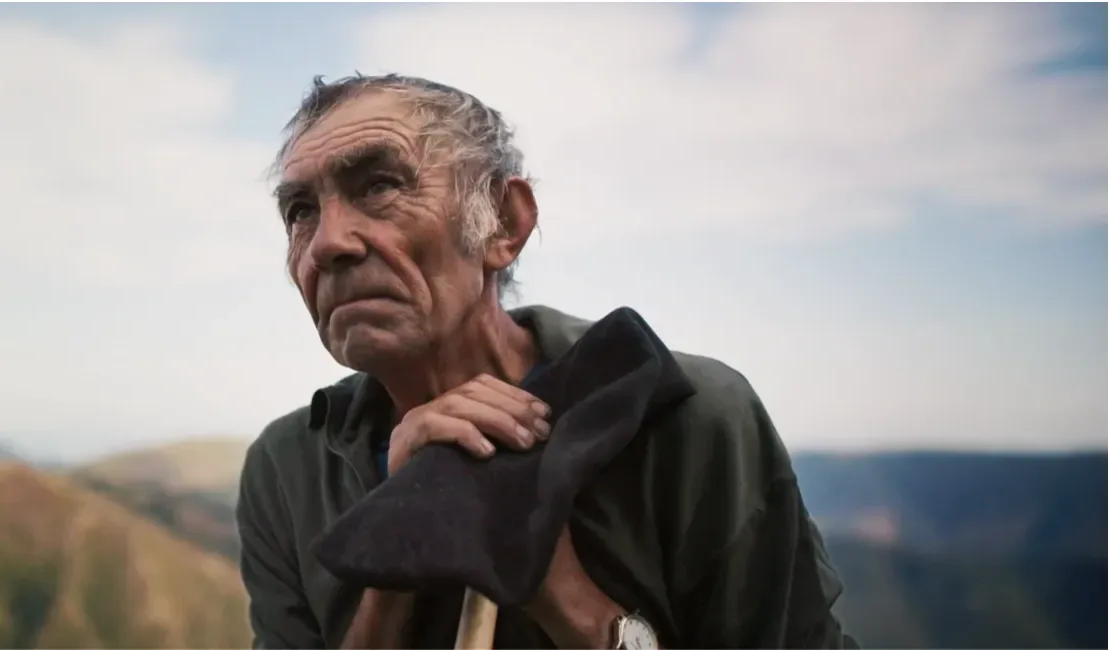

In the high, desolate passes of the Pyrenees, where the air seems ancient enough to remember its own birth, Max Keegan’s The Shepherd and the Bear begins with a quiet calamity. The documentary offers a visual and sonic record of a land torn by an existential divide. Tension springs from the reintroduction of the brown bear species, a policy imposed by distant authorities after local hunters wiped out native bears in 2004, and from the gathering resentment of the shepherding community forced to live with this new presence.
Keegan works with patience and immersion, using a deeply observational method that recalls classic character-driven cinema, so the vast ecological conflict is read through the weathered faces of the Ariège uplands. A wistful, melancholy mood hangs over the film, and it treats the mountain people with real empathy, people who see these heights as ancestral home, and who recoil from the idea of the mountain as an ecological repair project.
The Last Stand of the Pastoral
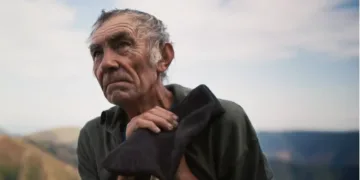
The film draws much of its weight from Yves, an elderly shepherd whose posture seems shaped by wind and stone. He appears as a living artifact, holding a traditional livelihood in his hands while modern pressures close in and a primal foe returns to the slopes. The precarious future of this work gains texture through Lisa, a serious young apprentice learning the ropes, showing that the shepherds’ struggle reaches across generations.
The bears enter as an unforgiving territorial war that threatens a heritage sustained across millennia. Keegan does not soften the consequences. Graphic footage of mauled sheep, followed by the shepherds’ grim need to end an animal’s suffering, makes dread physical. Fear thickens the pastoral air. In the swirling mists, huddled sheep sense a predator awake again.
This anxiety grows sharper in a community that feels abandoned. Policymakers far away set broad ecological change in motion with little contact with the bloody daily cost of life on these slopes. Town hall meetings and public protests catch that anger in the open, staging a fierce collision between ecological theory and the plain demand to survive.
Fractured Visions of the Wilderness
Keegan holds to the human cost, focusing on people whose lives are irreversibly altered by the policy and offering only the briefest glance of a bear. The character study rests on quiet trust, catching moments so close that the camera seems to vanish. Two parallel story lines guide the film, and their occasional dissonance feels like part of the truth on screen.
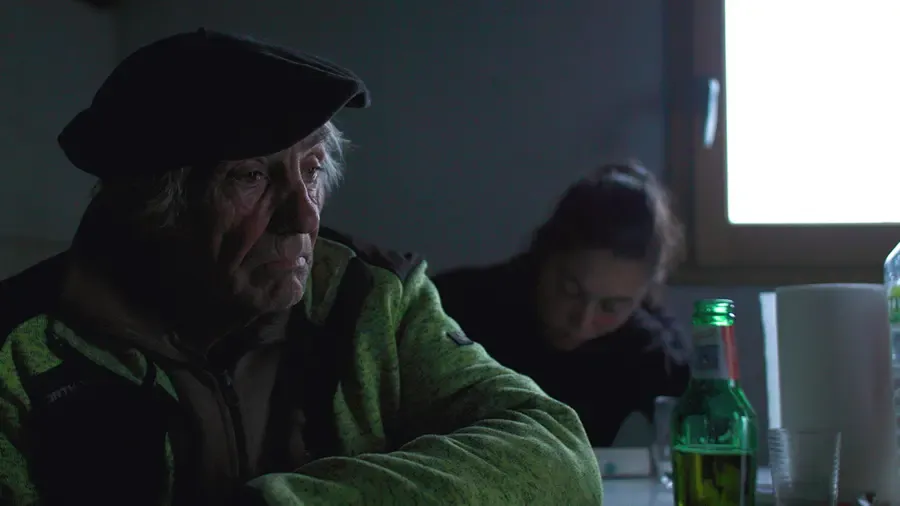
Yves’ pragmatic fight sits beside the seemingly peripheral life of Cyril, a teenager whose farmer mother speaks loudly against the bears. Cyril passes his days in camouflage, photographing nature and hunting for a bear sighting, a private quest that unsettles easy divisions. His reverence for the wild points to a bond that runs deeper than his community’s economic need.
The film can feel unstable when joining these strands, and that instability mirrors the subject. No single viewpoint seems able to hold the whole answer. Keegan also gives rich vignettes of traditional life, a wedding, the desperate chase of an escaped rooster, moments that show how a distinct culture stands at risk. Small details carry their own ache. Red love symbols sprayed on sheep for identification and the building of new fences show a world in painful technological transition, trying to keep the past alive through adaptation.
The Lyrical Weight of Setting
The cinematography is breathtaking. The Pyrenees rise as a sublime, indifferent presence, their slopes moving like a character of their own. Mist rolling across ridges makes the mountains feel like shelter and a source of danger at the same time. The images convey an ancient symbiosis between shepherds and land; the range sits on Yves like a second skin.
Amine Bouhafa’s soundtrack, a somber arrangement of strings and piano, gives the film a wide, melancholy resonance, raising this regional dispute toward the scale of myth. That lyricism is interrupted by hard reality. The chop of a helicopter dropping a bear cage cuts through the quiet and injects a sudden thriller pulse into the landscape.
The film draws strength from ambiguity. Keegan keeps profound sympathy for the mountain people in view while carrying an ecologically conscious vision that needs few words. He refuses easy solutions or a single moral truth, leaving viewers with a restless contemplation of coexistence and the violence embedded in rewilding. What remains after the final frame is an unresolved existential wound, and a question about the cost of correcting history in the living present.
The Shepherd and the Bear is a 2024 internationally co-produced documentary film that chronicles the profound tensions in the French Pyrenees mountains caused by the reintroduction of brown bears. The film centers on the local shepherding community, particularly an aging shepherd named Yves, whose ancestral way of life is threatened as bears prey on his flock. Directed by Max Keegan, the film premiered at the Camden International Film Festival on September 15, 2024, and has since played at numerous festivals including IDFA and Full Frame. As of November 2025, the film is in the process of theatrical and festival runs across various territories, including a planned theatrical qualifying run in the US, with wider home viewing options anticipated for early 2026.
Full Credits
Title: The Shepherd and the Bear
Distributor: Willa (United States), Conic (United Kingdom), Jour2Fête (France)
Release date: September 15, 2024 (World Premiere, Camden International Film Festival)
Running time: 101 minutes
Director: Max Keegan
Writers: Max Keegan
Producers and Executive Producers: Max Keegan, Jesse Moss, Amanda McBaine, Elizabeth Woodward, Jenny Raskin, Kelsey Koenig, Jessamine Burgum, Bill Reedy
Cast: Yves, Lisa, Cyril
Director of Photography (Cinematographer): Max Keegan, Clément Beauvois
Editors: Sabine Emiliani
Composer: Amine Bouhafa
The Review
The Shepherd and the Bear
The Shepherd and the Bear is a resonant document of inevitable loss. It captures a struggle where neither the ancient human occupants nor the necessary return of the wild can truly claim victory. Keegan masterfully uses the spectacular, isolated setting to frame a deep meditation on the costs of civilization and rewilding, making clear that progress for one species often signifies tragedy for another. The film is structurally imperfect in its dual focus, but its visual poetry and profound empathy ensure its impact lingers as an elegy for the vanishing pastoral world.
PROS
- Stunning, lyrical cinematography of the Pyrenees.
- Immersive and deeply empathetic portrayal of the central shepherd (Yves).
- Powerful, melancholy original soundtrack that elevates the emotional tone.
- Philosophical handling of the conflict between ecological policy and human tradition.
- Compelling exploration of the disconnect between urban policymakers and rural existence.
CONS
- The dual storyline, particularly Cyril's plot line, occasionally makes the structure feel uneven.
- The observational style leads to slow pacing that may test the patience of some viewers.
- The film leaves some historical context regarding the long-term relationship between humans and bears in the region unaddressed.