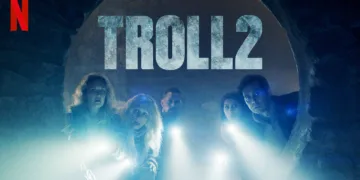
















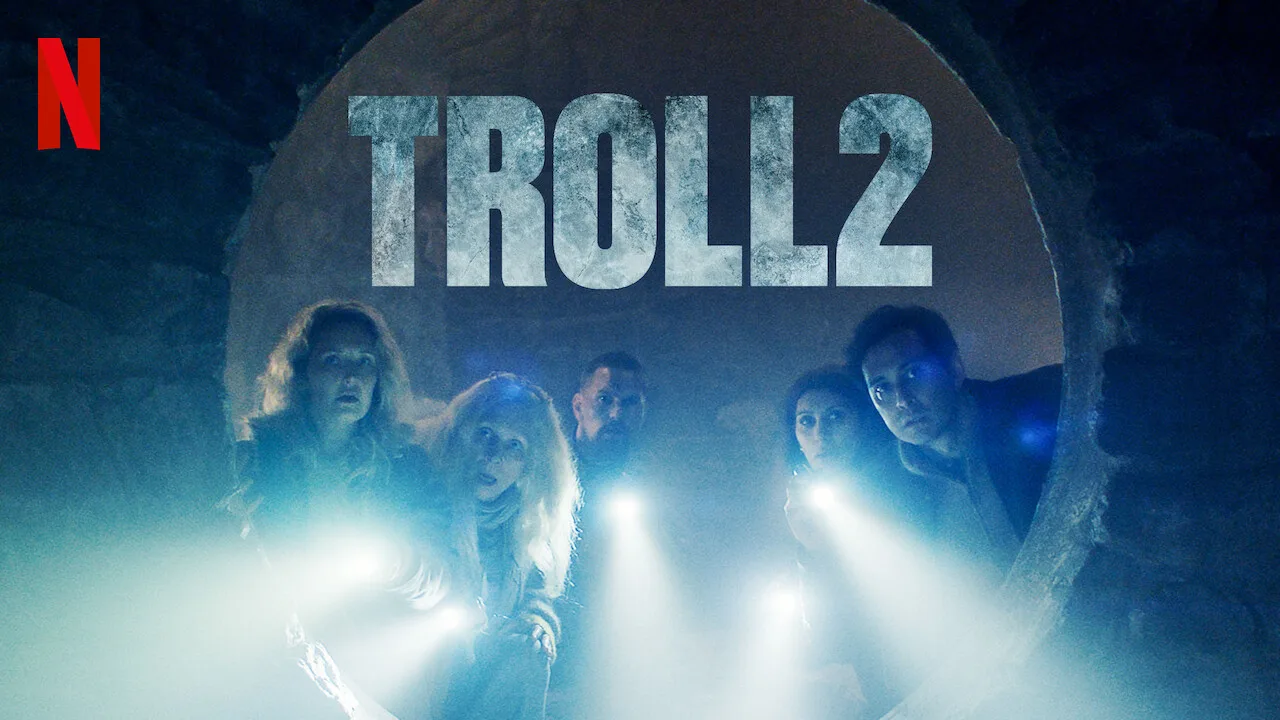

The thunder of an awakened giant is an old story, and Roar Uthaug finds a way to make it feel urgent and now in his follow-up, Troll 2. The film takes the spectacle of the earlier streaming hit from 2022 and expands it into an argument that pairs large-scale destruction with rooted national folklore. Where the first entry dumped chaos into the capital, this sequel fixes on Trondheim and raises both the physical scale and the historical stakes.
The plot opens when a massive, ancient troll is released from a covert government research facility in the mountains. This megatroll moves with purpose, heading straight for the Nidaros Cathedral, a site tied to the nation’s founding figure and famed troll-hunter, King Olav the Saint.
The returning team is pulled back from ordinary lives to confront the threat: the paleontologist Nora Tidemann, the often-flustered advisor Andreas, and Captain Kris. The film stages its conflict as more than a city under siege; it stages an encounter between a modern present and a pagan past insisting on recognition. The result functions as both a mythological inquiry and an adrenaline-fueled monster movie.
The Architecture of Ancient Vendettas
Troll 2 handles the tricky choreography of a sequel with confidence, increasing danger while giving the world more texture. The device that reunites the trio is a secret state project meant to study a supposedly sedated troll, and predictably it fails. That premise may not astonish, but it moves the story forward efficiently. The early scenes, which focus on the creature’s awakening and escape, slow the first act slightly. That pace is necessary because the film is assembling a larger framework than straightforward demolition.
The narrative settles once it shifts away from a straight monster pursuit and toward a historical adventure. In these stretches the film acquires the pace and pleasure of a treasure hunt, carrying the characters into ancient church ruins, neglected tombs, and hidden archives. Nora and her colleagues are driven to unearth a centuries-old conspiracy. The film argues that the troll menace is inseparable from the nation’s founding era, specifically the Christianization under King Olav.
The team must read old manuscripts to grasp the creature’s motives and where it might be vulnerable. The movie’s enlargement of its backstory counts as a notable creative move. It reframes St. Olav as a forceful opponent of trolls, and a brief animated sequence shows the king’s aggressive methods of driving the creatures into the sun. Blending Norwegian folklore, historic sites, and the creature-feature template gives the action a grounded cultural logic that keeps the stakes personal and place-specific.
Scale, Substance, and the Digital Stream
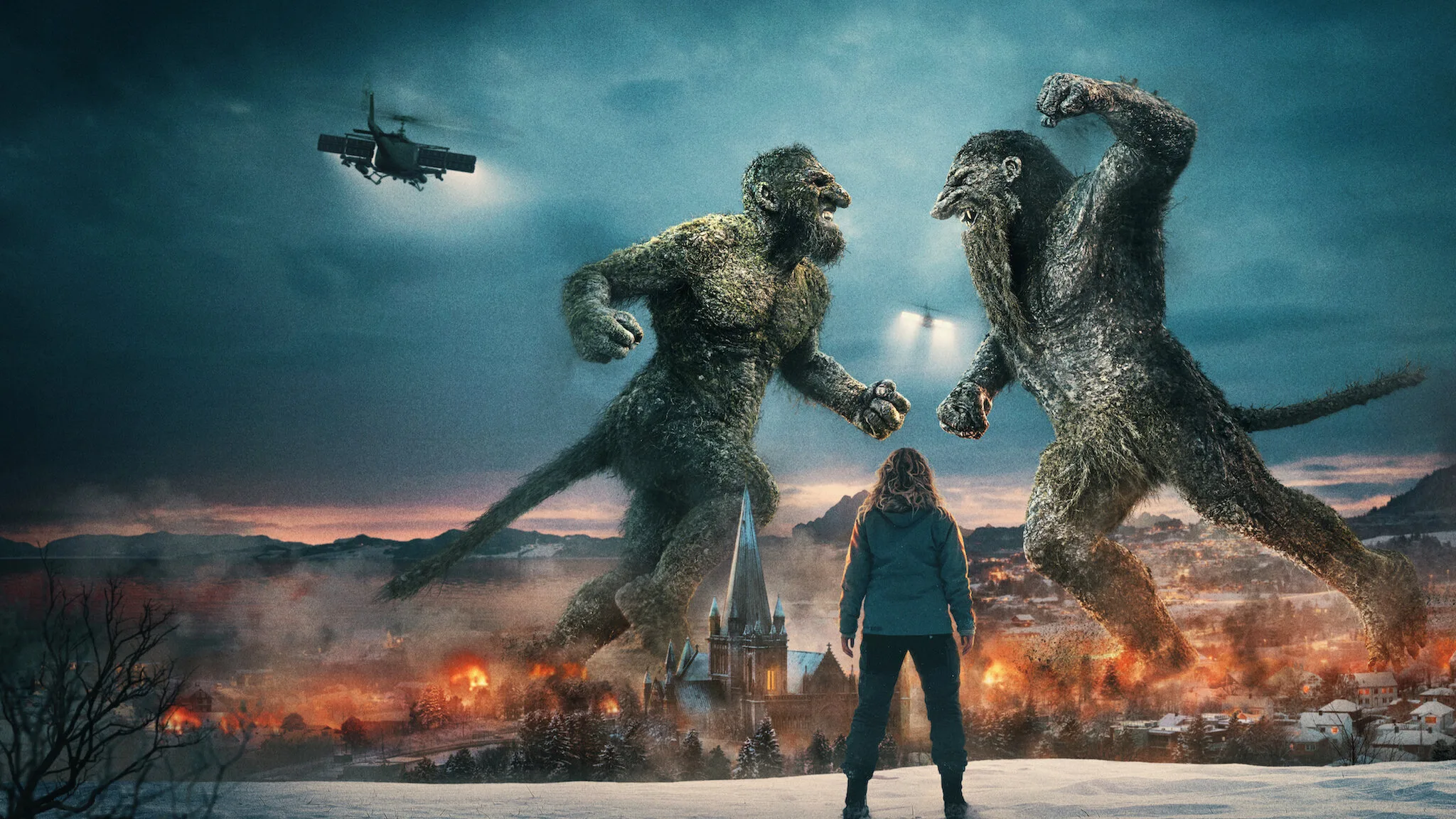
Technically and artistically Troll 2 delivers a convincing statement about scale. Uthaug composes set pieces with clarity. A standout sequence pits the creature against a crowded après-ski bar, where partygoers remain hilariously fixated on selfies, and the film closes with a sweeping confrontation framed by Trondheim’s skyline. The movie refuses to underplay the creature’s overwhelming force.
Credit belongs to the visual effects team for a troll that reads as lived-in. The monsters carry surface detail and mass, their skin suggesting weathered rock, moss, and lichen. They read as an extension of the Norwegian terrain, bearing the marks of mountain and age. Uthaug’s steady use of natural settings, from snowy Jotunheimen peaks to the cathedral, works as a visual strength. I was reminded of my fondness for old matte paintings in films such as The 7th Voyage of Sinbad, where fantasy felt anchored by tactile craft.
The film does encounter a recurring aesthetic issue common to large streaming productions. A glossy, highly digitized sheen at times blunts texture and flattens color, a compression of visual richness that makes some natural vistas feel muted. The director’s eye for composition remains sharp, yet the presentation occasionally reads as restrained where it should be vivid. Dialogue also proves uneven.
The script falls into familiar action-movie phrasing and predictable quips, and those lines sometimes undercut scenes that are operating on a grand historical level. Even so, the visual payoff—especially the image of the creature rising above Nidaros Cathedral—delivers the kind of cinematic awe that compensates for rhetorical shortfalls.
Heritage, Identity, and the Heart of Nora
The film’s emotional center remains its cast and the way they inhabit the material. Ine Marie Wilmann anchors the story as Nora, marrying scientific curiosity with emotional exposure. She steers the audience through the film’s increasing strangeness.
Kim Falck supplies comic timing and urgent energy as Andreas, while Mads Sjøgård Pettersen stabilizes the action as Captain Kris. The addition of researcher Sara Khorami broadens the investigative team and adds a contemporary viewpoint. Anne Krigsvoll stands out as the expert on St. Olav, bringing lively intensity to the sequences that probe the past.
Those performances allow the film to explore themes of heritage and national memory. In Troll 2 the trolls serve as symbols of Norway’s sidelined pagan past, the strands of history that were suppressed during Christianization. Their return forces a confrontation between a nation that prizes progress and older forces that demand recognition.
The film is more concerned with the consequences of history reasserting itself than with the spectacle of ruin alone. That focus on belonging and the weight of origin lends the movie a wistful, mythic undertone. Because the characters earn their moments, the final monster confrontation lands as a meditation on national identity as much as a showcase of special effects.
Troll 2 is the highly anticipated sequel to Netflix’s record-breaking 2022 Norwegian film Troll, which became the platform’s most-watched non-English-language original movie. The sequel continues the high-stakes action saga, featuring a dangerous new megatroll that awakens from the mountains and begins a destructive path toward Trondheim, driven by an ancient conflict tied to Norwegian history and King Olav the Saint. The film is one of Netflix’s major international releases for 2025, premiering globally on December 1, 2025, where it is available exclusively for streaming. The production is notable for being the largest film project ever undertaken in the Nordic countries.
Full Credits
Title: Troll 2
Distributor: Netflix
Release date: December 1, 2025
Rating: TV-14
Running time: 1 hour 43 minutes (103 minutes)
Director: Roar Uthaug
Writers: Espen Aukan, Roar Uthaug (Story)
Producers and Executive Producers: Espen Horn, Kristian Strand Sinkerud
Cast: Ine Marie Wilmann, Kim S. Falck-Jørgensen, Mads Sjøgård Pettersen, Sara Khorami, Jon Ketil Johnsen, Gard B. Eidsvold, Aksel Almaas, Trond Magnum
Editors: Christoffer Heie, Jens Peder Hertzberg (Based on the first film)
The Review
Troll 2
Troll 2 succeeds as a powerful piece of cultural entertainment, escalating the monster action while grounding its core conflict in deep Norwegian history. The film shines brightest when its characters are investigating the ancient conspiracy tied to King Olav. Though the dialogue is often clichéd, and the digital sheen of the streaming format occasionally dulls the magnificent cinematography, the emotional center provided by Ine Marie Wilmann, combined with the colossal scale of the troll spectacle, makes this a worthy and engaging mythological blockbuster. It offers a thoughtful reflection on heritage alongside spectacular mayhem.
PROS
- Seamless blend of Norse mythology and monster action spectacle.
- Strong visual effects, particularly the colossal troll design and sense of mass.
- Compelling historical adventure element focusing on the King Olav conspiracy.
- Ine Marie Wilmann's committed performance as the film’s emotional anchor.
- Powerful use of the stunning Norwegian landscape as a backdrop.
CONS
- Dialogue often relies on generic action movie clichés and weak one-liners.
- The first act's pacing is slow before the main quest begins.
- Visual quality occasionally suffers from the "digital sheen" associated with streaming formats.