

























![Kingdom Hearts Collection [I-III] Review](https://gazettely.com/wp-content/uploads/2026/10/Kingdom-Hearts-Collection-I-III-1-360x180.webp "Kingdom Hearts Collection [I-III] Review: KHII Holds Steady as Newer Entries Fluctuate 37")



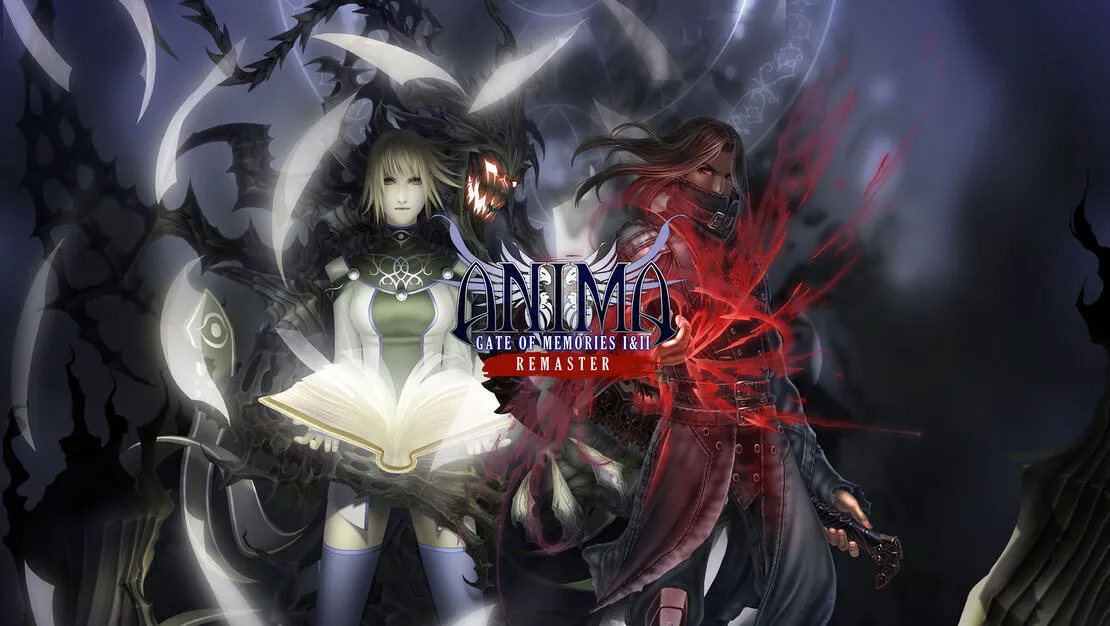

Anima Gate of Memories: I&II Remaster arrives as a two-part action RPG collection from Anima Project, bundling Gate of Memories (2016) with The Nameless Chronicles (2018). Both titles extend the tabletop setting of Anima: Beyond Fantasy, shaping a dark, mystical world. Gaia anchors the lore, while the opening stretch focuses on the Arcane Tower, an astral nexus that links reality to a plane ruled by demons.
This remaster upgrades lighting, textures, and framerate on modern consoles. The intent is a definitive package that invites newcomers and returning players to revisit these stories with cleaner presentation. The release invites a close read of how its narrative structure and mechanical systems support one another.
The Mirror of Destiny
The pair functions as mirror narratives with a shared tragic thread. Gate of Memories centers on the Bearer of Calamities, a young warrior of immense power, and Ergo Mundus, an immortal housed in a book whose arrogance cuts through every exchange. Their uneasy partnership powers a mission to contain or destroy hostile entities, with the Arcane Tower serving as the primary stage.
The Nameless Chronicles rotates the viewpoint to the Nameless, an ancient villain who reframes the same conflict with a different moral lens. Familiar figures such as the Red Lady and the Supreme Inquisitor recur across both games, tying arcs together through repeated losses and hard choices.
The design idea reads like a film device that replays events through distinct perspectives. That ambition sets a strong foundation for emotional payoff. The execution wavers. Narrative progression often feels thin and uneven, and revelations arrive without the force they seek. Sparse direction leaves players guessing where to go or what matters most, which blunts dramatic turns that should land with clarity. Voice work varies. Some of Ergo’s quips undercut heavier scenes and sap tension that the script tries to build.
The worldbuilding carries flavor while the structure obscures the path. The Arcane Tower operates as a semi-open hub connected to separate realms through portals, with each realm mapped to a fractured memory. Layouts alternate between directed corridors and broader fields. Exploration suffers from the absence of modern conveniences.
There is no quest log, no waypoints, and little useful NPC guidance. Optional tasks often send players back through winding zones that feel like mazes. The visual direction still communicates mood with confidence. Misty meadows, hollow churches, and other landmarks carry a steady melancholic tone that suits the fiction.
The Rhythm of the Blade
As a third-person action RPG, the experience rests on camera control, real-time inputs, and readable feedback. The basics include light and heavy strikes, stamina-based power moves, energy-based specials, a dodge with invincibility timing, and a lock-on system. Stringing hits builds combos that feed Focus Points for progression.

A central mechanic allows mid-fight switching between the Bearer and Ergo. The swap holds tactical value because enemy resistances and weaknesses respond to specific abilities. Role definition extends into progression systems. Players manage healing items, collect weapons and artifacts that boost properties such as magic damage or critical chance, and spend experience on levels and new skills.
The moment-to-moment feel lands unevenly. Fights lean on cooldown cycling and frequent dodging against similar enemy packs, which turns many encounters into endurance checks rather than tactical exchanges. Motion can read as sluggish next to faster, combo-forward action titles. Hits connect but rarely register with satisfying impact or precision. The swap feature loses bite in the first game because the two leads share movesets that look and feel alike.
The Nameless Chronicles improves the toolkit with charge attacks and unblockables that add timing nuance. Camera behavior introduces further friction. Sudden shifts to 2D angles or distant top-down shots cut into rhythm and make spacing harder to judge. The collection offers about 20 hours of play, and a higher difficulty setting provides better friction for players who want pushback, since the default setting offers limited resistance.
Polish and Presentation
The remaster’s strengths show up first on the screen. Reworked textures and lighting refresh materials and give environments renewed color and shape. Corridors of the Arcane Tower stand out with a polished, painterly look. Enemy and boss silhouettes read clearly and show care in their shapes and motions.

The foundation still belongs to its original era. This release does not present the sweeping upgrade set by newer action RPGs. Character animations remain rigid, and faces move little. The retro feel may charm long-time fans who value this series’ identity, and it may signal age to players approaching it for the first time.
Sound design splits into two distinct results. The score leads the presentation with sweeping, airy orchestration that carries the melancholic spirit of Gaia and the Arcane Tower. Combat stingers and ambient effects land with a brittle edge and sound dated. The voice mix keeps the earlier issues in place, which makes it harder for the dual narrative to carry the emotional load that the structure promises.
Anima Gate of Memories: I&II Remaster works best as a study in how perspective and mechanics try to reinforce each other. The mirror setup gives players a structural reason to reconsider events, and the combat systems point toward tactical swapping and measured resource use. Weak signposting, uneven pacing, and inconsistent feedback keep that design from reaching full effect.
The art direction and music capture the tone of a world built on loss and memory. The controls, camera, and performance choices do not always meet that tone with equal precision. Players who value layered perspective and moody presentation will find a clear identity. Players who prioritize speed, responsiveness, and modern guidance will meet friction that the remaster’s visual pass does not resolve.
The Review
Anima Gate of Memories: I&II Remaster
Anima Gate of Memories: I&II Remaster is a fascinating, if technically awkward, cult classic. Its dual-narrative ambition and rich worldbuilding are compelling, supported by a truly excellent orchestral soundtrack and sharp new lighting. However, the core combat system often feels mechanical and sluggish, hampered by stiff animations and opaque exploration mechanics inherited from its mid-2010s origin. This is a game for players drawn to dramatic lore and challenging designs, accepting a lack of modern refinement for the sake of unique atmosphere.
PROS
- Excellent orchestral soundtrack.
- Ambitious dual-narrative concept.
- Visually improved lighting and textures.
- Necessary character-swap mechanic.
CONS
- Stiff and dated character animations.
- Combat feels sluggish and mechanical.
- Uneven narrative pacing and opaque exploration.
- Brittle, flat sound effects.







