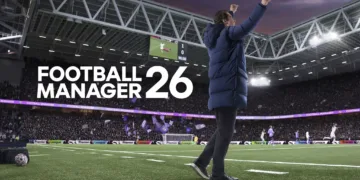































The arrival of Football Manager 26 lands with rare weight for the series. After a two-year development cycle that skipped a numbered release, this entry arrives with a promised rebuild of foundations. The core remains a complete tactical simulation of football management, a sprawling set of variables that generate personal career stories.
This edition signals a technical and philosophical shift. The game now runs on the Unity engine, which reshapes the matchday experience. A sweeping User Interface redesign aims to modernize how managers handle dense, data-driven work. This review examines whether that investment creates a coherent, rewarding loop for long careers on the touchline.
The Engine of Emotional Storytelling
Moving to Unity lifts the matchday experience. The focus stays on simulation fidelity over photorealism seen in titles like EA Sports FC. Player animations look cleaner, lighting reads more naturally, and stadiums with crowds feel fuller. Broadcast-style pre-match cutscenes and line-up introductions stage the fixture as an event inside the career arc.
The extra fidelity serves function as much as spectacle. The match view becomes a reliable surface for analysis. Managers can identify centerbacks stepping out of line or observe team shape without the ball. Individual moments stand out, from a quick stepover by a fast left-back to a star winger feigning injury.
Big shots from distance and hard defensive mistakes become story beats that change squad mood and seasonal momentum. The match engine supports two roles at once: excitement for the viewer and feedback for the coach who needs detail at speed.
Tactics: The Fluid Structure of Strategy
The largest mechanical change arrives through a redesigned tactical layer. The Dual Formation System lets managers set formations, roles, and instructions for two phases: In Possession and Out of Possession. Strategic depth climbs, moving closer to the thinking used in modern coaching.
Also Read







This system encourages fluid shape-shifting. A team can attack in a 4-4-2 diamond, then drop a midfielder to form a 5-3-2 block after turnovers. The granular control over phase behaviors rewards planning that feels like careful character building in a choice-driven RPG.
A revised role framework expands to 39 new, detailed roles, so every player receives clearer instruction. Executing demanding In Possession instructions such as quick counters or strict shot profiles can feel uneven at first and may need deliberate tuning to match the manager’s plan.
The Information Architect
The new interface, called The Portal, steps away from the familiar spreadsheet aesthetic. Tiles, minimalist iconography, and a top navigation bar replace the classic sidebar. Series veterans will face an initial relearning period as old habits no longer map to the layout.

The goal is faster scanning and cleaner workflows. In use, the density of information can overwhelm. Key figures sometimes sit beneath layers of peripheral data, which turns a simple request for one stat into a hunt. Efficiency improves in some places, yet the volume can challenge new players. The design clearly benefits controller play.
The tile grid and navigation favor consoles and handhelds like Steam Deck. Quality-of-life pieces matter here: bookmarks pin frequently used pages, and a strong search function helps managers shape their own routes through the data.
Expanding the Simulated World
FM26 widens scope through content and systems. Premier League licensing arrives with official kits, introductions, and sponsor boards, which elevates the feel of top-tier English management. Recruitment gains a practical tool with transfer searches integrated through TransferRoom, smoothing steps inside the scouting and deal cycle.

Women’s Football enters with key leagues that include the top two English divisions. That addition supplies fresh managerial arcs and a different economic environment. Lower budgets, shorter contracts, and frequent rival-to-rival moves ask managers to adjust philosophy and rework recruitment logic. These conditions add new variables to long careers and create distinct campaign paths inside the same simulation framework.
The Manager’s Time and Engagement
Career tempo remains a design pressure point. The world FM builds holds attention across many layers. Players track distant leagues, scan international tournaments, and follow rivals’ transfer moves, which shows how convincing the simulation feels. Moving from one fixture to the next can still drag.
Veteran players encounter frequent news items and small management tasks, even with heavy delegation. The loop breaks rhythm, and long-term planning can give way to the grind of reaching the next match through many admin screens. The slow pace becomes the cost of detail, a trade that preserves depth at the expense of flow between fixtures.
Technical State and Absent Tools
A platform shift brings instability. Early versions surface bugs, crashes, stuck menus, and performance stutters, with occasional frame rate drops during matches. These issues carry extra sting while managers learn a new interface.
Several valued tools do not appear at launch. Touchline Shouts have been removed. Heatmaps and some comparison screens are missing from the analysis stack. International Management is absent in full, with a free content update confirmed for later. Accessibility raises a clear concern: removing attribute color customization can hinder colorblind and dyslexic players who depend on that cue for quick reads across dense data.
The Review
Football Manager 26
Football Manager 26 represents a massive technical achievement. The Unity engine delivers the series' best matchday experience, providing superior visual feedback and deeper player connection. The new dual-tactics system significantly advances strategic control, offering freedom for nuanced, modern coaching philosophies. However, the radical UI overhaul confuses long-time managers, and the product suffers from technical instability and missing core features at launch. This is the most strategically engaging management simulator available, though it demands patience from its players.
PROS
- Best-in-series match engine with vastly improved animations and graphical fidelity.
- Dual-tactics system (In/Out of Possession) offers profound strategic depth.
- Enhanced functional observation of player performance during matches.
- Authentic integration of Women's Football and Premier League licensing.
- Improved controller optimization for non-PC play.
CONS
- The radically redesigned User Interface (UI) is confusing and information-dense for veterans.
- The overall career pace remains slow due to excessive administrative interruptions.
- Suffers from technical instability, bugs, and frame rate drops at launch.
- Key features like International Management and Touchline Shouts are currently missing.
- Reduced accessibility due to the removal of color customization options.