













![Kingdom Hearts Collection [I-III] Review](https://gazettely.com/wp-content/uploads/2026/10/Kingdom-Hearts-Collection-I-III-1-360x180.webp "Kingdom Hearts Collection [I-III] Review: KHII Holds Steady as Newer Entries Fluctuate 37")



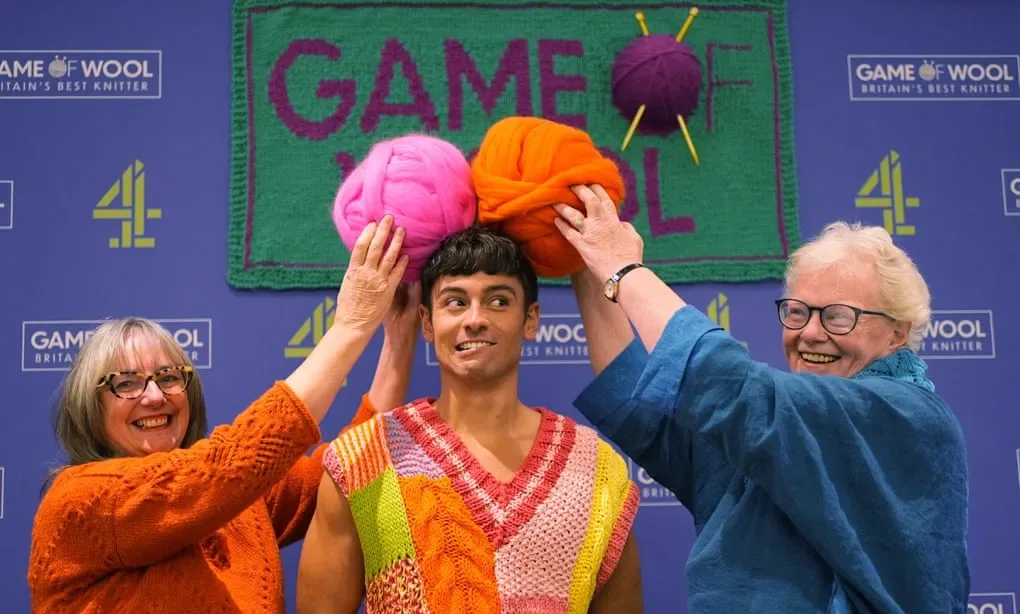

Game of Wool: Britain’s Best Knitter presents an eight-part competition that treats amateur knitting as dedicated craft. Ten of the nation’s finest wool enthusiasts gather, stitch by stitch, to vie for the ultimate title. Production takes place in a bespoke yarn barn set against picturesque rural Ayrshire in Scotland, a region recognized for its wool history.
Challenges call for imaginative expression and precise technique in equal measure, from novelty tank tops and sofa bodysuits to 80s fright-jumpers. The tone stays warm and high-spirited. Competitive pressure exists, yet a sense of camaraderie shapes a cozy, high-stakes display of needlework artistry.
The Anti-Bloke Aesthetic: Hosts, Judges, and Shifting Norms
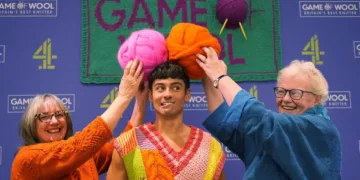
Tom Daley’s presence as host signals an update in cultural norms around craft and care. The Olympic champion, known for athletic excellence and visible advocacy, embraced knitting before lockdown and credits the practice with aiding focus and mindfulness. He functions as a floating omni-host who keeps spirits up while sidestepping the usual reality-television presenter polish.
His over-the-top playfulness, from strutting in extravagant knits to chatting with Wee Tom, a knitted mini-me, turns the set into a space of permission and curiosity. This casting choice punctures fusty ideas about traditionally feminine crafts and places enthusiasm at the center of the show’s identity. His commitment gives the series a steady anchor.
The judging duo of veteran designer Di Gilpin and co-judge Sheila Greenwell supplies credibility and texture. Two middle-aged women hold the authority, a quietly radical configuration inside a broadcast landscape that often hands expertise to men.
Their tone lands as firm but fair. Feedback arrives with care. Gilpin reads as the more openly emotional judge, while Greenwell clips in with sharp comic timing. They evaluate design cohesion and technical elements such as steeking and intarsia. Their partnership places women’s knowledge at the forefront of a field that mainstream media has often sidelined, which gives representation real weight without spectacle.
Casting a Cultural Mosaic: Representation on the Needles
Casting reframes who “gets” to knit. The series introduces a field of fascinating personalities, a mix of likeable eccentrics and gentle souls. Viewers meet figures who challenge demographic expectation, including Simon, an ex-Royal Marine, which affirms that skill cuts across gender. The group reads as a small cultural mosaic, and that variety matters for how audiences map craft onto identity.
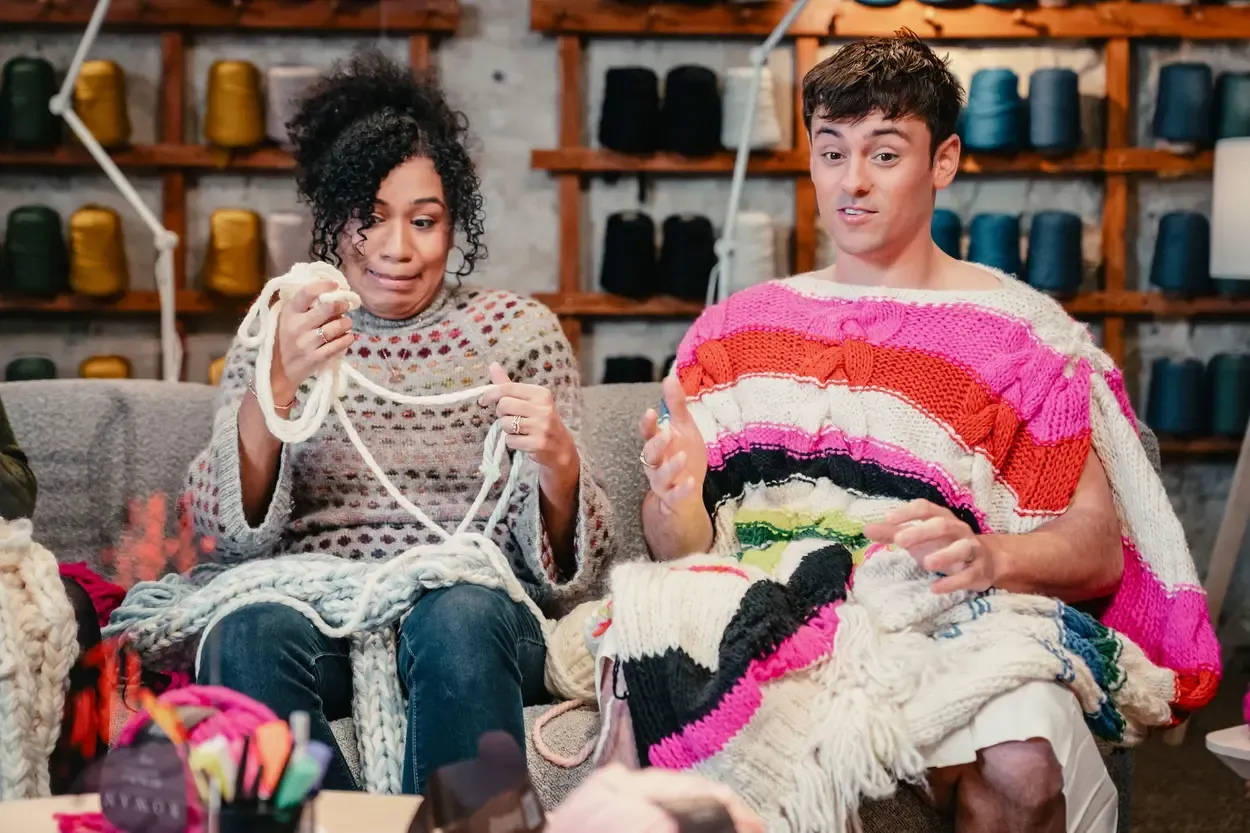
Holger, a proud German Savile Row tailor, becomes the pressure point. His over-qualification injects theater into an amateur contest. Bow tie on, emotional support chicken at his side, he picks at fabric choices and seizes control during early group tasks. Social hierarchies surface quickly, which suits the show’s interest in cooperation and authority. Dipti, a tense librarian, struggles against the clock, and her tiny-necked tank top nearly garottes Daley.
Gordon, a self-defeating cruise ship singer, closes with a piece the judges call cockamamie. The opening brief asks for a tank top that expresses personal identity, which ties handiwork to biography. This choice aligns with a reality-TV shift toward creative prompts that invite self-disclosure and deepen viewer connection. Range of skill and background keeps the portrait of knitters wide, which lets the series mirror everyday life more closely than its subject might suggest.
The Pacing of Progress: Format and Societal Relevance
Game of Wool leans on a familiar Great British Bake Off template, with pastoral cutaways and agreeable sheep. The choice fits a wider industry habit of repeating reliable formats while introducing new crafts. The pace feels comfortable, sometimes cosy to the point of snooze-inducing. Knitting requires long stretches of focused quiet, and 12-hour builds resist high-octane jeopardy by design. The smaller dose of manufactured tension aligns with a cultural appetite for gentler TV, where care and attention replace shouting matches.
One element breaks through: The Big Knit, a weekly group project that forces collaboration on a single large item. The segment operates like a miniature workplace, revealing would-be autocrats, productive partners, and fragile alliances. Wordplay around the yarn barn and eliminations that “cast off” contestants rarely lands, yet short historical interludes about the craft, reminiscent of early GBBO, keep the competition rooted in heritage.
Arguments appear, then dissolve into hugs. The choice to reward kindness over conflict outlines a model of aspirational behavior that suits a moment weary of televised rancor. Stakes remain mild, the mood stays warm, and the show positions itself as a counterpoint to conflict-saturated programming. The approach suggests a path for future craft formats that treat representation, community, and patient skill as the real spectacle.
Game of Wool: Britain’s Best Knitter is an eight-part competitive reality series that premiered on Channel 4 in the UK on Sunday, November 2, 2025, at 8 pm. Hosted by Olympic gold medalist and knitting enthusiast Tom Daley, the show sees ten ambitious amateur knitters compete in two weekly challenges: “The Big Knit” (a team project) and “The Wee Knit” (an individual brief). The contestants are judged by knitting and textile experts Di Gilpin and Sheila Greenwell. The competition is set against the backdrop of the picturesque Scottish countryside, and viewers can watch it on Channel 4 or stream it on the Channel 4 app.
Credits
Title: Game of Wool: Britain’s Best Knitter
Distributor: Channel 4
Release date: Sunday, November 2, 2025
Producers and Executive Producers: Hello Halo
Cast: Tom Daley, Di Gilpin, Sheila Greenwell
The Review
Game of Wool: Britain's Best Knitter
Though the format is overly familiar, Game of Wool finds success by leaning into its subversive casting. It challenges traditional gender norms in craft television through its diverse contestants and the unique, high-spirited presence of host Tom Daley. The cozy pacing and extremely low-stakes drama cater to an audience seeking warmth over jeopardy. The overall atmosphere, reinforced by the two expert female judges, focuses on positive social interaction and artistic expression. It’s a pleasant viewing experience.
PROS
- Diverse and engaging casting that challenges craft stereotypes.
- The presence of two expert female judges is refreshing.
- Host Tom Daley brings genuine passion and an unconventional style.
- The weekly "Big Knit" group challenge provides a unique dynamic.
- Maintains a high-spirited and warm atmosphere throughout.
CONS
- Highly derivative format that relies heavily on existing competition shows.
- Pacing is slow and "snooze-inducing" due to the nature of the craft.
- Strained wordplay and puns often fall flat and feel forced.
- Low overall tension and drama.
- The possibility of an overqualified contestant (Holger).