


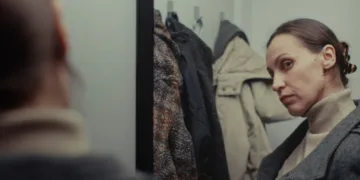

























Netflix’s Badly in Love takes the familiar dating reality setup and swaps seaside romance for full-contact emotion. The hook is simple and sharp: every contestant carries a history as a “yankii,” the Japanese label for former juvenile delinquents or ex-gang members. These men and women, in their twenties and thirties, move into the “Badly in Love Academy,” a renovated old school where they live together for two weeks.
The assignment is almost charmingly straightforward: pair up and confess your feelings at a final “graduation ceremony.” Series creator MEGUMI, who also serves as emcee, builds the experiment around “unapologetically raw” emotion, aiming for the kind of intensity that often feels absent in contemporary dating rituals.
The show lives up to that mission right away, creating an environment where fights, friendships, and crushes escalate at high speed. From the opening stretch, the series plants its flag: chaos works like currency here, and emotions feel like the house weapons.
The Intensity of the “Yankii” Cast
The cast powers that chaos. These are former delinquents, ex-yakuza, and people who openly acknowledge past incidents of assault or violence, now channeling leftover rebellious energy into a shared living space. Yanboh, a rapper and university graduate, arrives as an ex-yakuza who communicates feelings with blunt impact. Tsu-chan, once a biker-gang leader, announces a firm priority on looks.
Among the women, Oto-san immediately draws focus, her tattoos and history framing a deep hunger for connection. Tekarin, an underground fighter expelled from school for defending herself, adds another charged presence to the mix.
Put together, they create an environment where emotion sits directly on the surface, so flare-ups and jealous reactions appear almost immediately. Sparks fly fast. A tense early clash between Tsu-chan and Milk nearly requires security to step in, and later Yanboh erupts in frightening anger when a woman opts to spend time with Milk instead of him. That kind of instant, unfiltered conflict functions as the show’s central hook and main source of thrill.
Structure, Setting, and the Stress Test
Badly in Love understands how to use format and environment as pressure cookers. The Academy location, a former school, reinforces the idea of second chances, even as the production design leans hard into broad visual clichés.
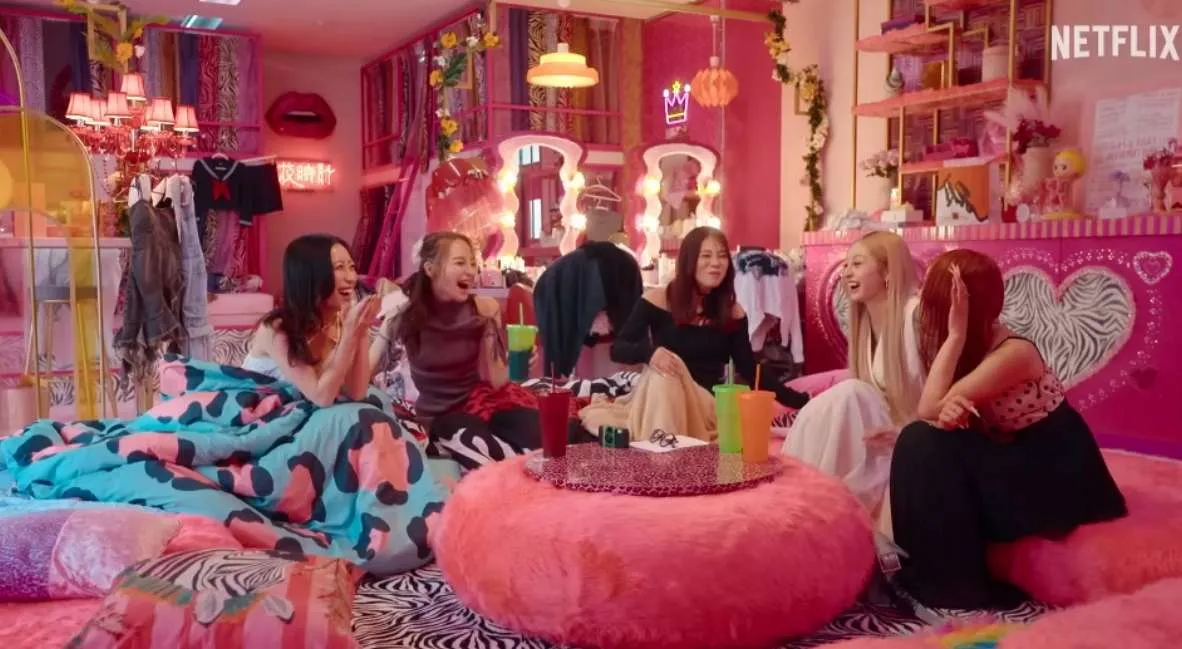
The women’s quarters overflow with zebra print and hot pink, while the men’s room lands squarely in locker room territory with neon lighting. Beneath that loud, campy surface, the romantic machinery feels familiar: one-on-one dates, written notes slipped through lockers, standard dating-show procedure dressed in punk-school drag. The pace, however, refuses a slow ramp-up.
Episodes cram in cliffhangers, and the introduction of “transfer students” like Ten-ten halfway through keeps relationships shaky and volatile. One rule anchors the experiment: no physical violence and no illegal activity. Breaking it leads to immediate removal. The restriction functions like the “no sexual contact” clause in other reality formats, a structural choice that blocks physical aggression and redirects that volatile energy into words, stares, and emotional confrontations, which raises the tension in every argument.
Emcees: The Observational Chorus
Around all this, Badly in Love builds an energetic emcee panel that comments on the drama as it unfolds, a modern Greek chorus with front-row seats. The trio features creator MEGUMI, rapper AK-69, and comedian Nagano. Their commentary keeps the series from collapsing into pure spectacle. MEGUMI anchors the show in its emotional experiment, AK-69 speaks from close familiarity with the “yankii” subculture, and Nagano plays a comic outsider, especially when the slang leaves him baffled.
Together they track the quick shifts in romance, such as the early Milkboy/Yanboh/Baby triangle that becomes a kind of live case study. The hosts keep recurring jokes alive too, from Tackle’s ongoing reputation for creepiness to Yanboh’s dramatic emotional “crashout.” Their banter creates a self-aware layer that acknowledges how outrageous the scenes can look while still keeping attention on context and culture.
The panel shapes the way viewers experience each eruption, turning high-stakes emotional blowups into something watchable and culturally specific, and raising the question of how far a dating show can push volatility before even the chorus runs out of ways to frame the storm.
Badly in Love is a Japanese reality dating series that premiered on Netflix on December 9, 2025. The show gathers eleven men and women with “checkered pasts,” often described as former “yankii” or delinquents, and places them in a secluded location called the “Badly in Love Academy” for two weeks. The purpose is a social experiment to see if these individuals, who have navigated turbulent lives marked by gang culture and personal upheaval, can find and build genuine love. The first four episodes were released on the premiere date, with the ten-episode series scheduled to conclude on December 23, 2025. You can watch the full series exclusively on Netflix.
Full Credits
Title: Badly in Love
Distributor: Netflix
Release date: December 9, 2025
Rating: TV-MA
Running time: 10 episodes (Approx. 40-50 minutes per episode)
Director: Tsuyoshi Kimura (Staging Director), Mutsuya Ikeda (Chief Director)
Producers and Executive Producers: MEGUMI (Creator/Producer), Natsuko Ogata (Producer)
Cast: Shunya Tsukahara (Tsu-chan), Takumi Sato (Milk), Sho Tsuda (Tackle), Nisei Sakurai (Nisei), Isamu Nishizawa (Yanboh), Otoha (Oto-san), Yuria (Baby), Hikaru (Tekarin), Kirei (Kiichan), Amo, Ten-ten, MEGUMI (Emcee), AK-69 (Emcee), Nagano (Emcee)
The Review
Badly in Love
Badly in Love succeeds by mixing the familiar framework of reality dating with an unbridled, explosive emotional cast. The series delivers genuine chaos and high-stakes interpersonal drama, fueled by the participants’ intense backstories and their raw desire for connection. It is fast-paced, entertaining, and utterly unpredictable, proving a thrilling contrast to more subdued dating shows. It works as both a deep character study and satisfying reality TV spectacle.
PROS
- The participants’ "yankii" backgrounds lead to genuinely raw and explosive conflicts.
- The show is fast-paced, utilizing cliffhangers and rapid relationship escalation.
- The casting of former delinquents provides a fresh, volatile twist on the dating show genre.
- The emcees (MEGUMI, AK-69, Nagano) provide sharp, funny, and necessary context.
CONS
- The living quarters feature cliché, on-the-nose aesthetic choices.
- Conflicts can sometimes feel overly orchestrated for dramatic effect.
- While entertaining, the constant intensity might fatigue some viewers looking for slower romance.
- The show walks a fine line between raw reality and exploiting intense personal histories.