

























![Kingdom Hearts Collection [I-III] Review](https://gazettely.com/wp-content/uploads/2026/10/Kingdom-Hearts-Collection-I-III-1-360x180.webp "Kingdom Hearts Collection [I-III] Review: KHII Holds Steady as Newer Entries Fluctuate 37")



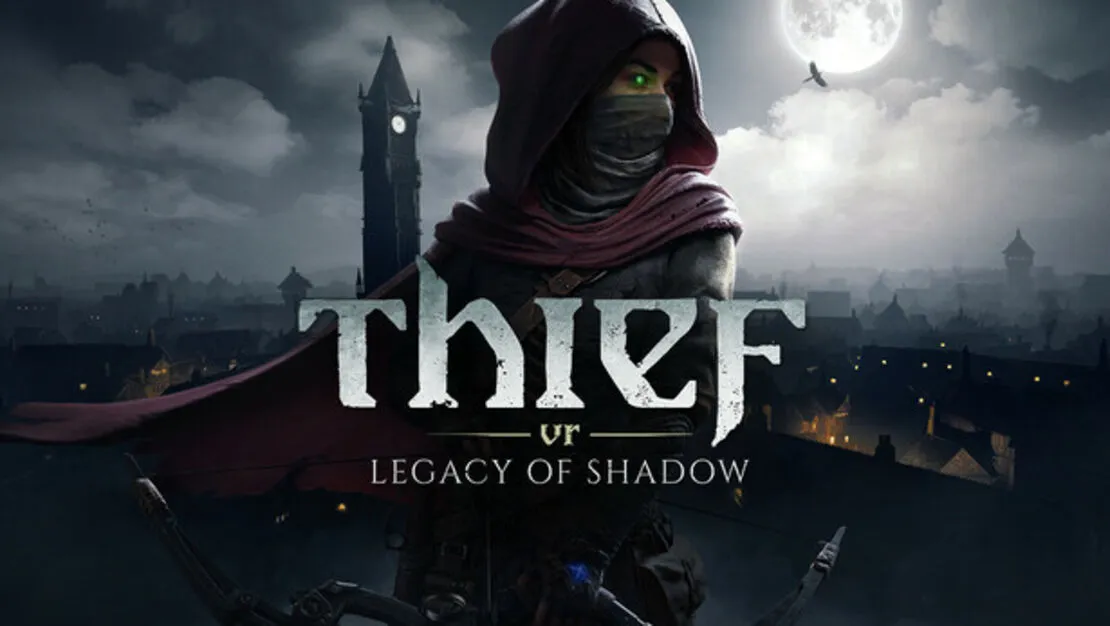

The measure of a revival lies in how well it respects its origins while carving out a clear role for itself in the present. Thief VR: Legacy of Shadow, developed by Maze Theory and published by Vertigo Games for PSVR 2, takes on that challenge by focusing on tactile stealth in virtual reality. It drops the player into a world of darkness and steam-powered menace and quickly establishes an oppressive mood.
The story follows Magpie, a capable low-level operative working in the grim, industrial sprawl known only as The City, which lies under the control of Baron Ulysses Northcrest. Her routine changes when she acquires a mysterious artifact that gives her an unlikely partner: the voice and guidance of legendary master thief Garrett, now confined to a mechanical eye.
Their partnership frames a concentrated, hands-on VR stealth experience. The game’s identity rests on how well it converts classic stealth concepts into VR mechanics, focusing on the physical act of stealing rather than a large open-world structure. It plays as a tightly scoped experiment in immersive action.
Redefining Stealth Through Physicality
Legacy of Shadow succeeds by turning traditional stealth inputs into physical tasks. What used to be simple commands on a gamepad becomes a series of movements the player’s body must perform inside a virtual environment. Crouching no longer comes from a stick press, and leaning is no longer a button tap.
Players bend at the knees, lean their torso around door frames, peer through narrow gaps, and physically duck behind crates. This expectation of physical presence makes every escape from detection feel hard won and personally achieved.
Routine systems gain weight through this approach. Lockpicking stops feeling like a short distraction on a flat screen and becomes a two-handed operation. The player uses motion controllers to position the picks and must listen carefully for subtle audio cues that signal when a tumbler has settled into place. That focus on hands-on interaction extends to every act of theft.
Looting involves physically opening drawers, sliding cabinet doors, and reaching in to collect coins. The fantasy peaks with the pocket-pick. To steal a key or pouch from a guard’s belt, the player must reach out and lightly brush against the NPC, creating a genuine sense of risk since any clumsy movement can trigger a physical or auditory reaction.
Environmental interaction treats shadow as a tool. Light sources react dynamically, and Magpie can remove them in multiple ways. One option uses the PSVR 2 microphone so the player can literally blow out candles. Another has the player pinch the flames using the controllers. Immersive Mode extends this commitment to physical and environmental realism by mapping real-world player sounds, such as talking or coughing, to in-game noise that can attract guards and prompt investigations.
Magpie’s gear reflects the franchise’s practical design philosophy. The bow and arrow system emphasizes control and utility over sheer lethality. Water arrows extinguish torches and lamps. Blunt arrows allow stealthy takedowns from a distance. Rope arrows support vertical traversal and create shortcuts, which plays a key role in dealing with complex map layouts.
The mechanical eye adds another layer of support through Glyph Vision, a guidance tool that highlights interactive objects, clues, and patrolling enemies. It directs the player’s attention while leaving room for careful observation and planning. Together, these systems form a mechanical framework that keeps the player grounded in the world, where each silent step or successful theft feels fully earned.
Atmosphere, Structure, and Competency
The City appears as a gothic, steampunk-inspired space, built to feel oppressive and industrial. The visual design leans on PSVR 2’s strengths, with detailed interiors, rich textures, and a strong sense of place. Lighting and shadow play a central role, not only for style but as a core mechanic. Deep pockets of darkness serve as functional hiding spots, turning each pool of light into a tactical concern.

Level design supports that philosophy. The game does not attempt the expansive, sandbox scale associated with foundational entries like Thief II: The Metal Age. Instead, each area is compact, dense, and carefully layered. Missions contain multiple infiltration routes. Players might scale pipes to reach a balcony, tackle a difficult lock on a side entrance, or crawl through a hidden passage. This intricate spatial setup encourages players to study layouts, plan routes, and commit to a chosen path with clear awareness of risk and reward.
Sound design takes on a central role in the experience. Directional audio is not a cosmetic enhancement but an essential tool. Players continually turn their heads to track footsteps, guard chatter, and layered conversations that reveal where enemies are moving. The need to interpret positional audio deepens immersion and ties directly into the stealth loop, as a misread sound cue can lead to exposure.
The main area of friction lies in Enemy AI. Guards follow mostly fixed and predictable patrols. They respond to diversion tactics, such as thrown bottles or noisy objects, in ways that are easy to exploit, which gives Magpie room to slip by.
This predictability may frustrate players who want stealth opponents that adapt aggressively, yet it supports a power fantasy where the player feels like a skilled infiltrator. If stealth breaks down, Magpie has a blackjack for close-quarters encounters. Combat relies on timing: the player must block or parry attacks to stun an opponent, then strike their head for a finishing blow.
These skirmishes reinforce that direct confrontation functions as a last resort rather than a primary playstyle. Different guard types, from unhelmeted foes to those wearing heavy sallets, require more or less effort to subdue, which reinforces the idea that observation and avoidance provide the safest path through each scenario.
Story Pacing and Progression Quirks
Legacy of Shadow uses its narrative as a structure for heists rather than a sprawling character study. The focus on Baron Northcrest’s rule and the hunt for secrets follows a familiar conspiracy-driven template. The story touches on conspiracies, artifacts, and warring factions and covers the expected beats, yet it keeps those elements relatively shallow.

Supernatural twists appear and then often go unexplained, which leads to uneven pacing between missions. The game handles immediate narrative needs more effectively. Mission goals and context arrive clearly through environmental storytelling and strong voice work, so each heist feels anchored in a specific place and purpose.
The campaign layout is concise. Players work through an introductory sequence and around seven main missions. The stealth cycle, powered by VR interactions, remains enjoyable, yet the structure changes little from one mission to the next, which introduces a sense of repetition by the end.
Magpie’s growth depends on how much loot the player collects. Every valuable item feeds into a central score. This score underpins high ranks and unlock tracking. Money earned from these takings leads to a limited upgrade system. At each progression milestone, the player chooses from three ability improvements.
Across the campaign, there are 14 possible skills, each offering a passive boost such as more health, softer landings, or faster body dragging. The system feels basic. Loot does not function as a currency for gear purchases or targeted upgrades, so classic stealth arithmetic around equipment investment and resource management loses some force. Scouring every corner of a map shifts toward completionist behavior instead of a tactical choice that shapes future tools.
Regarding Technical Performance, the game maintains strong image quality. High contrast and fine detail sit comfortably within PSVR 2’s capabilities, and the world benefits from that clarity. The same physical focus that defines the mechanics introduces occasional issues.
Small physics quirks appear, such as knocking objects over when virtual hands do not align perfectly with the environment. Tracking can briefly falter during sequences like pipe climbs. These issues are short-lived and do not fundamentally damage the experience, yet each incident can cut into the intense immersion that the rest of the design works hard to sustain.
The Review
Thief VR: Legacy of Shadow
Thief VR: Legacy of Shadow is a highly successful VR translation that delivers the core fantasy of being a master thief. Its strength rests entirely on the tactile mechanics—lockpicking, looting, and movement—which feel genuinely immersive and rewarding. The stunning atmosphere and detailed level design uphold the franchise's heritage. However, the game is held back by repetitive mission design, a thin progression system, and predictable enemy AI. It sacrifices systemic depth for immediacy and physicality, resulting in a thrilling but structurally simple experience.
PROS
- Excellent Tactile VR Mechanics (Lockpicking, physical looting, peek/lean)
- Highly Immersive Atmosphere (Gothic style, effective light/shadow contrast)
- Strong Directional Audio (Necessary for situational awareness)
- Dense Level Design (Multiple infiltration routes)
CONS
- Basic Enemy AI (Guards are predictable and easily fooled)
- Repetitive Mission Structure (Core loop rarely evolves)
- Thin Narrative Scope (Story serves mainly to frame heists)
- Rudimentary Progression System (Loot is mainly for high score)







