

























When a warrior’s code collapses, the void before him fills with the terrible weight of existence. Lone Samurai opens in abandonment, far from any image of glory. The film marks director Josh C. Waller’s return to feature filmmaking, carried by the visceral credentials of the Uwais Team production banner.
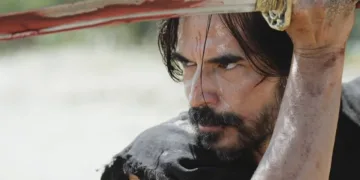
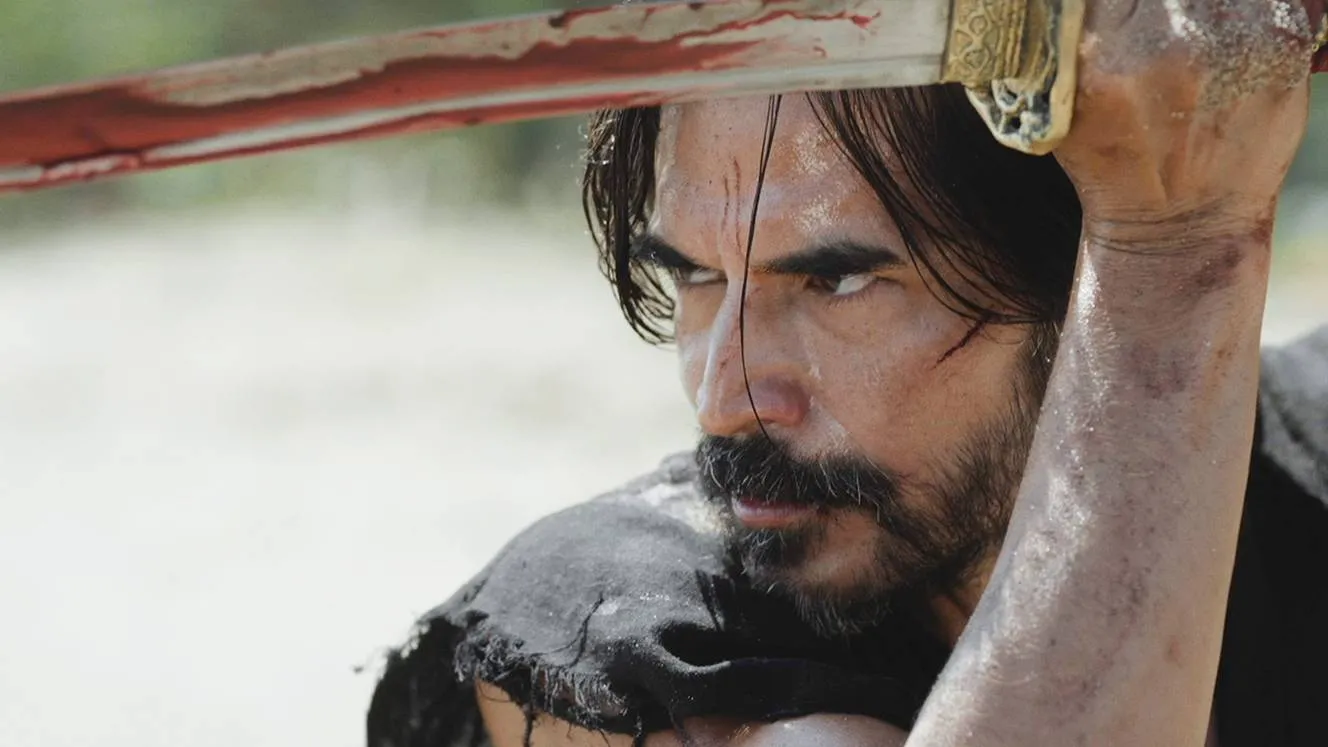
The story unfolds in the grim aftermath of the late 13th century, a period when Japanese forces struggled to hold back the vast Mongolian invasion. The frame closes in on Riku (Shogen), a masterless samurai, a ronin, who is violently cast onto a remote shoreline. He lies stranded, his body impaled and his sword uselessly broken, a state harsher than a simple shipwreck.
The narrative follows his desperate effort to endure the elements and his own fractured psyche, until an external evil drags him back toward engagement with the world. The film resists a single label and takes the shape of a violent triptych that moves between survival drama, psychological horror and action cinema. From the start, the promise on offer points away from salvation and toward a profound, inescapable reckoning.
The Severed Self and the Threefold Descent
The film arranges its meditation on existential dread into a tripartite structure that fractures the viewing experience. The first third plays as prolonged, contemplative survival. Riku’s isolation feels absolute, with stark wilderness surrounding his slow physical recovery and the onset of relentless hallucinations. This portion, stripped of conventional cinematic urgency, resembles an extended internal monologue that locks the audience inside Riku’s solitude. The patience of this design may divide viewers. It carefully traces the psychological decay that shapes the character.
This fragile interior quiet is then shattered by the second third, which throws the narrative into raw horror. Riku’s capture by a cannibalistic tribe arrives as a shock of extreme tonal shift. The earlier calm saturates the sudden, nauseating brutality of his captivity with a sickening force. The change in mood suggests that the nightmare that had lived inside Riku now finds a physical body in the world around him.
The final third reaches for crescendo and commits to continuous action. Riku channels his fury into a sustained fight for survival against the tribe. This violent return to the world exposes the film’s central philosophical contradiction. Riku’s code of honor had moved him to consider ritualistic seppuku, a final rejection of life, and fate then compels him to re-enter a cycle of savagery.
His descent moves toward a primal existence where his only purpose lies in inflicting harm, far from any idea of redemption. Grief and despair cling to him as he sees spectral visions of his lost wife and children. This samurai discovers his truest, darkest self in the act of killing. He carries the image of an honorable warrior. The film presents him as a highly skilled instrument of necessary destruction, a figure stripped of heroism. The chaos he endures and inflicts leaves his morality permanently stained.
Shifting Vistas and the Sound of Solitude
The visual framework of Lone Samurai shapes much of its atmosphere, using the Indonesian landscape as a mirror for Riku’s spiritual collapse. Noah Greenberg’s cinematography pursues a naturalistic and ritualistic approach, capturing striking locations across Java. The camera initially observes forests and beaches with a serene, almost untouched quality, a world indifferent to Riku’s suffering. Over time, the film alters this environment, turning the lush scenery into a hostile, twisted space that reflects the horrors Riku witnesses and commits.
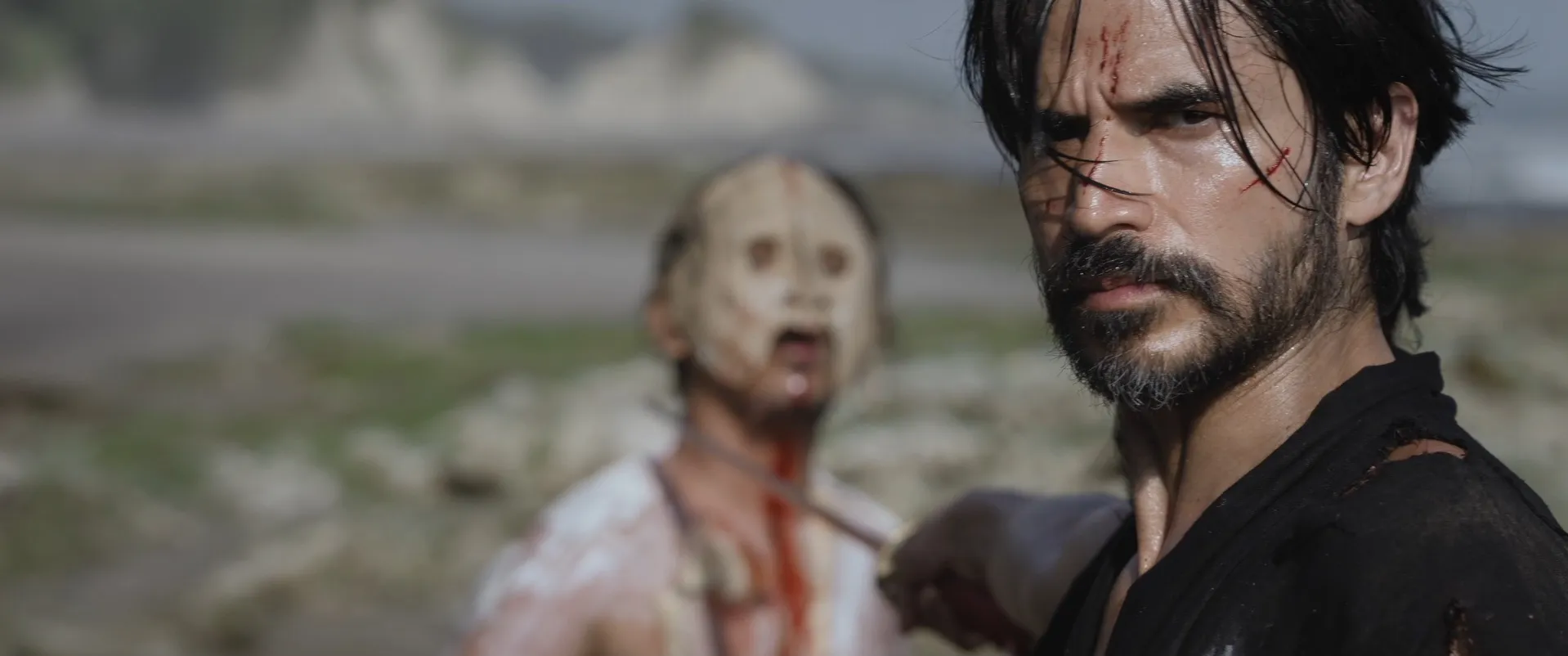
Stylistic decisions frequently heighten the sense of unease. Careful control of color and lighting separates the hallucinatory passages from the grounded horror. A slight overuse of wide-angle shots occasionally thins the intense focus that a single-character drama demands. When Riku faces his final opponent on the beach, the location reaches for the grandeur of classic Chanbara climaxes, a visual aspiration that sometimes exceeds what the staging can fully support.
Sound anchors the experience in Riku’s isolation and fear. Bartek Gliniak’s score plays a vital role, remaining understated when necessary so that the natural sounds of the wilderness can dominate. The music blends echoes of old-school Chanbara scoring with a modern, anxious pulse and provides a frame for the building tension.
The intricate combination of sound and music becomes especially potent during Riku’s mental break, deepening the sense of dread as his grasp on reality loosens. The aural design stands as the film’s most consistently controlled element and sustains the narrative even when the images feel fragmented.
The Art of Brutality and Embodied Will
The impact of Lone Samurai rests heavily on Shogen’s physical and emotional work as Riku. The role demands an unusual level of presence, especially in the dialogue-minimal opening movement, where the actor must express profound internal chaos through stubborn stillness. Shogen manages a difficult shift. He first appears broken and adrift, then gradually reveals a fierce, almost frightening competence once battle begins. He feels most alive during combat, finding clarity only inside the exchange of violence.
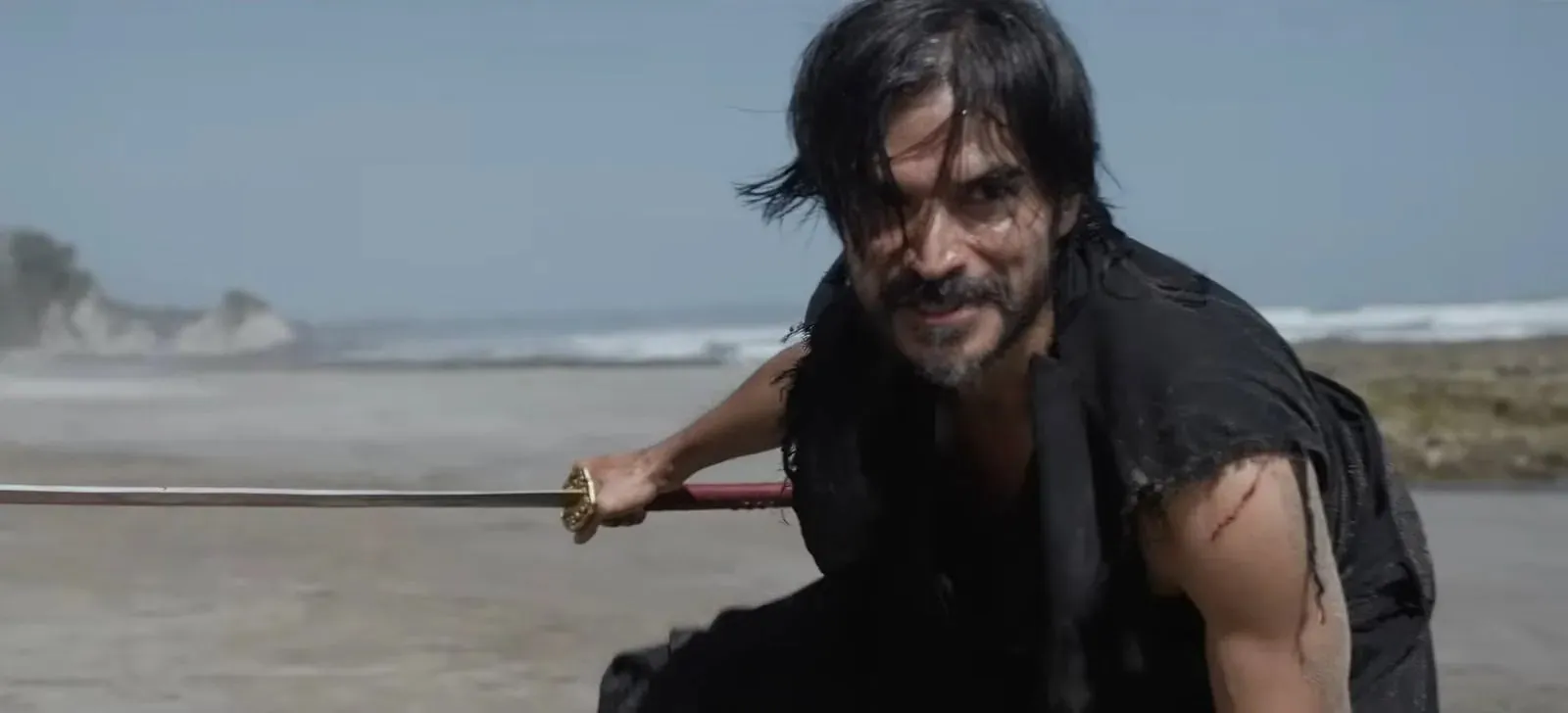
The film gains power from the involvement of seasoned Indonesian action performers. Yayan Ruhian, credited as Witch, draws the eye whenever he appears. His role is relatively small, yet his physical intensity and expressive features create a sense of threat that does not depend on dialogue. Rama Ramadhan, in his debut acting turn as the antagonist Boar, delivers a convincing portrait of an opponent whose ego sits beside formidable fighting skill.
Action choreography, led by Faisal Rachman with contributions from Erik Rukmanila, Yandi Sutisna and Ramadhan, brings a specific strain of ferocity. The Uwais Stunt Team connection sets a demanding expectation, and the approach here leans into a deliberate hack-and-slash style, a functional and brutal mode of combat that fits Riku’s desperate situation. The fights avoid the fluid, intricate Silat complexity that often appears in other projects involving the team.
The sequences carry considerable kinetic force. The extended final battle sometimes suffers from poorly timed cuts that interfere with a clear view of Shogen’s technique. Riku’s near-superhuman capacity to overwhelm his enemies also weakens the feeling of sustained danger. Even so, standout moments remain, particularly the tight, high-impact duel featuring Ruhian, which serves as a strong example of embodied, physical storytelling.
Ambition and the Problem of the Frame
The central difficulty of Lone Samurai resides in the film’s struggle to reconcile its different aims. Tonal inconsistency runs deep; the work feels like two projects welded together, one an arthouse psychological survival piece, the other an action-horror adventure that leans toward convention.
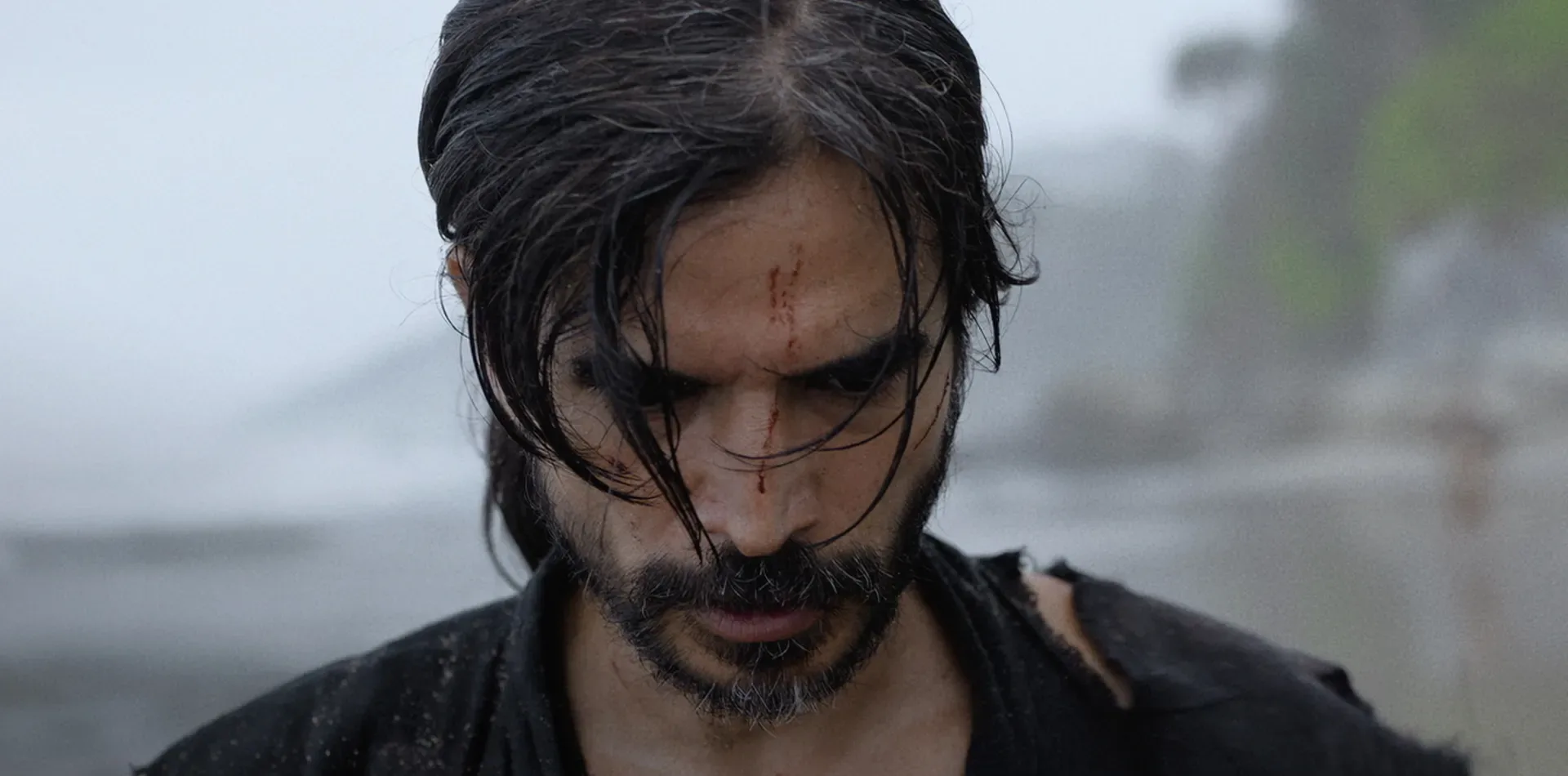
This structural division holds back the emotional stakes. The slow, attentive character work of the first act feels distant from the chaotic, visceral energy of the third. Scenes in which Riku tries to write poetry while combat rages around him carry an affected quality and clash with the immediate bloodshed.
An even more troubling issue appears in the film’s sociological framing. The image of a supposedly “civilized” samurai facing “barbarian” cannibals, especially in a production rooted in Indonesia, calls up uneasy echoes of historical violence and colonial mythmaking. This narrow binary of good and evil keeps the film from reaching the moral depth suggested by its aesthetic ambition.
Lone Samurai stands as a bold and highly ambitious hybrid. It offers impressive visual work and striking bursts of action. Its failure lies in the inability to fuse its different impulses into a coherent, morally layered whole, leaving a flawed yet fascinating attempt to bind philosophical reflection to pulp brutality.
Lone Samurai is a historical fiction action drama that follows a 13th-century ronin named Riku who is shipwrecked and wounded on a seemingly deserted island. As he contemplates ritual suicide, his will to live is brutally awakened when he is captured by a murderous tribe of cannibals. The film premiered at festivals and will be released in select U.S. theaters and available on digital platforms starting December 12, 2025. Given today’s date, you can expect to find this movie available for viewing very soon.
Full Credits
Title: Lone Samurai
Distributor: Well Go USA Entertainment
Release date: December 12, 2025 (Limited U.S. release)
Rating: R
Running time: 95 minutes
Director: Josh C. Waller
Writers: Josh C. Waller
Producers and Executive Producers: Josh C. Waller, Alan Pao, Doris Pfardrescher
Cast: Shogen, Yayan Ruhian, Rama Ramadhan, Sumire Ashina, Faisal Rachman, Fatih Unru
Director of Photography (Cinematographer): Noah Greenberg
Editors: Brett W. Bachman, Jon Berry
Composer: Bartek Gliniak
The Review
Lone Samurai
Lone Samurai is a deeply flawed, fiercely ambitious film. Its psychological depth in the quiet first act is severely undermined by the jarring tonal shift and the simplistic morality of the action segments. Shogen delivers the performance of a broken man finding brutal purpose, supported by striking cinematography. However, the disjointed structure and troubling sociological framing prevent its cinematic vision from fully cohering.
PROS
- Beautifully captures the Indonesian setting as a psychological landscape.
- Strong, internal portrayal of a man consumed by trauma and finding release in violence.
- Features visceral, kinetic fighting sequences (especially the final extended combat).
- Bartek Gliniak's music effectively blends traditional and modern influences to build dread.
CONS
- The shift from meditative drama to brutal horror/action is jarring and disconnected.
- The samurai-versus-cannibal trope raises concerns regarding simplistic, colonialist framing.
- Inappropriate cutting sometimes obscures the choreography.
- Riku often overpowers his foes, diminishing suspense in the action scenes.