

























![Kingdom Hearts Collection [I-III] Review](https://gazettely.com/wp-content/uploads/2026/10/Kingdom-Hearts-Collection-I-III-1-360x180.webp "Kingdom Hearts Collection [I-III] Review: KHII Holds Steady as Newer Entries Fluctuate 37")



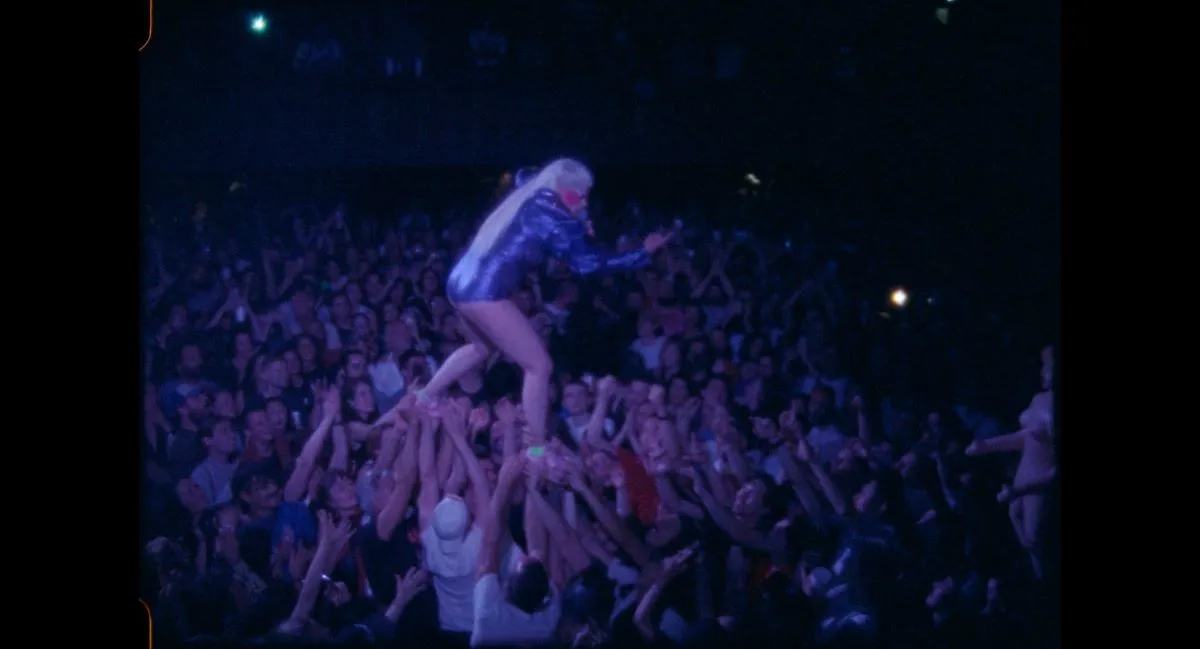

One seldom encounters a documentary so willing to let narrative tidiness fall away in favor of raw proximity. Marie Losier’s Peaches Goes Bananas does exactly that. The film follows roughly seventeen years in the life of Merrill Nisker, the Canadian artist known worldwide as Peaches, and it does so through a material object: Losier’s hand-held Bolex 16mm camera. The choice of this small, tactile machine, with its frequent lack of synchronized sound, functions as an opening manifesto.
The project seeks emotional accuracy rather than polished biographical clarity, searching for feeling inside grain, flicker, and visual distortion. The images drift with a kind of dream logic, as episodes from nearly two decades overlap, echo, and comment on one another without concern for linear time.
As a public figure, Peaches built a name by confronting gender, identity, and bodily autonomy through explosive performance art. Losier’s film reaches for the persistent, quieter person inside that spectacle. The portrait suggests that the line between the provocative persona and the private woman behaves less like a firm border and more like a shimmering, constantly renegotiated field of identity.
Stylistic Verité and the Blurred Frame
Losier’s formal strategy abandons the conventional documentary template and assembles a collage. The structure privileges sensation over explanation, yielding a work that feels fluid, tactile, and instinctively resistant to authority. The camera’s hand-held intimacy and the 16mm texture create frames that seem to breathe. Losier favors stylized setups, Peaches posing with a plastic fish perched on her head or slowly eating vividly colored desserts, then folds them together with unguarded verité moments.
This movement between posed and candid images aligns with cinematic traditions that value visceral response more than tidy narrative closure. The grain of the celluloid and the way light falls across faces and bodies often produce a gentle chiaroscuro. That chiaroscuro quietly isolates Peaches inside busy rooms, tracing loneliness inside crowds of crew members or fans.
Aël Dallier Vega’s editing anchors this visual experiment. The cutting stitches scattered fragments into a non-linear pulse that echoes the frantic, kinetic energy of Peaches’ stage work. Time compresses; two decades feel present and immediate, as if memory refuses to stay in the past and constantly presses against the current moment. The viewer experiences a stream of images that keep the past active, shaping every present-tense gesture.
The strongest structural element emerges from the sustained intimacy between Peaches and Losier, an intimacy built over years of shared experience. Losier rarely appears in the frame, yet her presence is unmistakable. Her off-camera voice and conversational prompts shape exchanges about aging, touring, and exhaustion. This trust opens rooms the camera rarely reaches in more conventional portraits and shows the person underneath the costumes and prosthetics.
The camera shifts from visitor to accepted companion, and the usual distance between observer and observed dissolves. This closeness produces startlingly unguarded moments. It also raises a philosophical question that hangs over the film: at what point does the lens move from passive witness to active participant in the subject’s ongoing act of self-invention. By the end, the documentary registers as an extension of Peaches’ continuous performance, a stage that has simply expanded to include the film itself.
The Private Face of Existential Freedom
The film locates its philosophical center in the tension between the “filthy-mouthed, sex obsessed punk goddess” and the “funny, family-oriented” Merrill Nisker. The gap between the overwhelming force of the stage persona and the quieter, anxious offstage reality, marked by fatigue and stress from constant touring, prompts reflection on the price of a chosen identity. Through this contrast, the narrative studies free will and self-construction, especially as they relate to aging and the physical body.
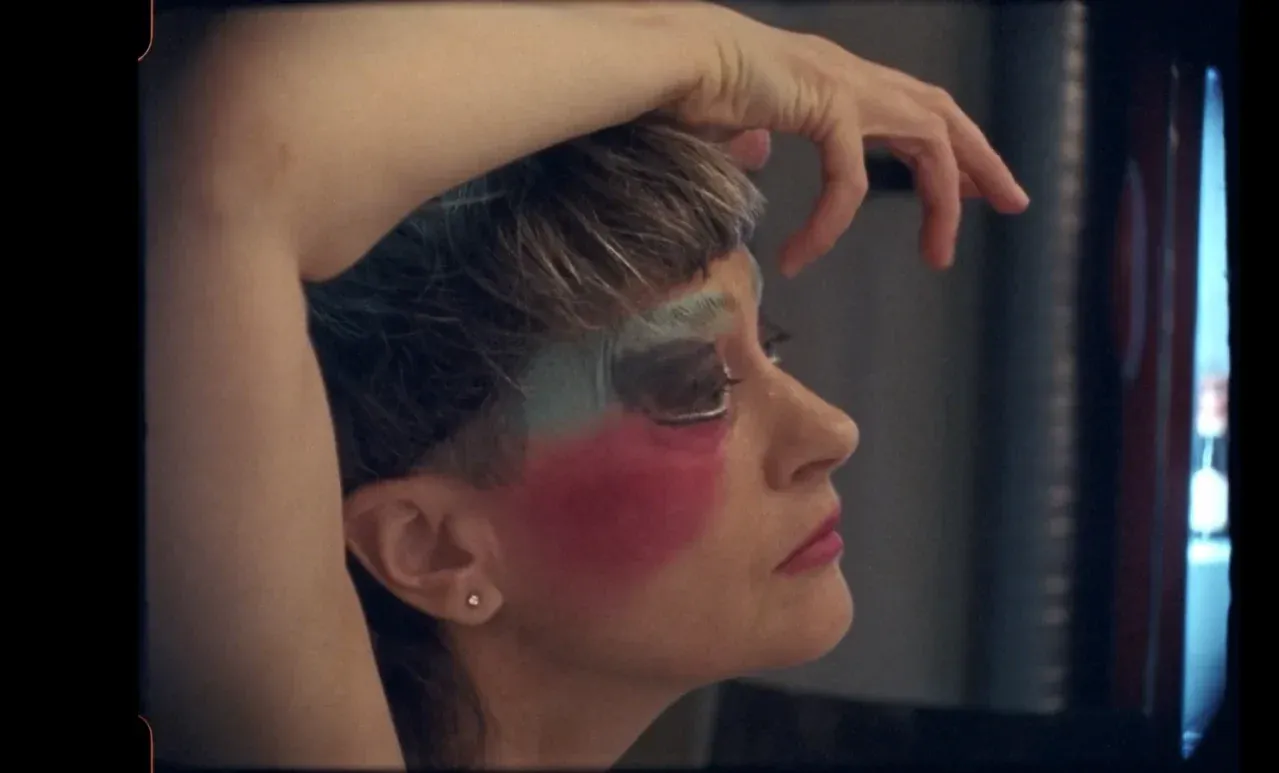
Peaches’ decision to keep performing in minimal clothing at nearly sixty reads as a sustained act of revolt. The performances resist the limiting societal gaze and the ageism that tends to erase older women from visibility. She uses her changing body as both image and argument, a political instrument as much as a personal canvas.
Her stated aim is to make aging cool, and the film treats that goal as a serious artistic project. The refusal to fade from view becomes a declaration of artistic self-determination, a claim that freedom means taking full possession of one’s own body, whatever cultural prescriptions may say.
Domestic life gives the film its heaviest emotional charge. The close relationship with her older sister, Suri, who lives with multiple sclerosis, forms the emotional engine of the piece. These scenes carry a softness that exposes Peaches’ capacity for care and vulnerability, sharply different from the feral power of the stage image. Watching this bond shift across the years moves the film’s existential focus from solitary self-making toward themes of connection and impending loss. The private exchanges with Suri reveal a reservoir of strength that feeds the public ferocity.
A brief yet resonant appearance from her affectionate parents in Toronto adds another layer to this background. Their unwavering support suggests that a radically transgressive performer grew out of a foundation of stable, unconditional care. The documentary traces how an artist’s history, from early folk-style sing-alongs in a daycare center to the texture of family life, informs the later spectacle of the stage.
Spectacle, Process, and the Body’s Labor
The concert footage arrives with physical force. Losier’s camera renders the stage as a charged theatrical zone, alive with movement and color. The shows have been called “bubblegum cavalcades,” an apt phrase for the orchestrated chaos of props and costumes. Stuffed-vulva headdresses and enormous condom balloons crowd the frame.
Within that bright excess, the film pays attention to the sheer athletic effort the performances demand. Peaches’ body works at a relentless pace, and the images underline the labor required to maintain this iconic presence over twenty years. The apparent ease of the act reveals itself as a carefully sustained illusion upheld by endurance and will.
The film hints at a broader artistic range beyond electro-clash. Brief flashbacks to her time as a folksy children’s sing-along leader show an earlier stage of her career, one she credits with giving her tools to handle tough audiences. Later, the camera observes her rehearsing to sing the male title role of Orfeo in Monteverdi’s 17th-century opera L’Orfeo. These glimpses widen the portrait beyond a single genre and sketch an artist whose desire for expression reaches into classical theatre as readily as club stages.
The documentary also lingers on process. Losier watches Peaches designing costumes and props, her hands arranging fabric, foam, and objects that will later explode into spectacle under stage lights. The focus stays on preparation rather than only on finished images. Life and art appear tightly braided, every gesture and bit of stage business treated as a deliberate choice.
The film captures a particular mix of directness and artistry in Peaches’ approach. She appears as someone committed to working without compromise, whether in front of a roaring crowd or quietly refining a costume. The fractured, candid structure of Peaches Goes Bananas mirrors that stance and confirms that the defiance visible on stage functions as a sustained way of living.
The documentary film Peaches Goes Bananas offers an intimate and unconventional portrait of Canadian electroclash musician and queer feminist icon Merrill Nisker, better known by her stage name, Peaches. Directed by Marie Losier, the French-Belgian production was filmed over a seventeen-year period using a distinctive 16mm handheld style. The film premiered at the Venice Film Festival on February 17, 2024, and has since screened at numerous festivals globally. As of today, December 4, 2025, the film is primarily circulating through international film festivals, so viewers should check local independent cinema listings or future streaming announcements for a viewing platform. It captures both the explosive intensity of her stage performances and the vulnerable, personal life of the artist, particularly focusing on her relationships with her family.
Full Credits
Title: Peaches Goes Bananas
Distributor: Norte Distribution, Galeries Distribution
Release date: February 17, 2024 (Venice Film Festival Premiere)
Running time: 73 minutes
Director: Marie Losier
Writers: Marie Losier
Producers and Executive Producers: Sébastien Andres, Carole Chassaing, Alice Lemaire, Martin Marquet, Hanneke van der Tas
Cast: Peaches, Suri Nisker
Director of Photography (Cinematographer): Marie Losier, Jivko Darakchiev
Editors: Aël Dallier-Vega
Composer: Peaches
The Review
Peaches Goes Bananas
The documentary is a compelling, textured portrait defined by its seventeen-year intimacy and the spontaneous grace of its 16mm aesthetic. It succeeds in humanizing the legendary stage presence, illuminating the personal resilience and family bonds that ground her relentless artistic defiance. While its non-linear structure offers an evocative experience, it sometimes sacrifices traditional biographical clarity. It remains an essential document of a boundary-pushing artist.
PROS
- Hand-held 16mm cinematography offers a raw, textural, and uniquely poetic aesthetic. The non-linear editing creates an immediate, immersive sense of time.
- The filmmaker's seventeen-year relationship with Peaches results in profoundly candid, unfiltered access to her private life, especially concerning her family and struggles with ageism.
- Provides a thoughtful, humanizing contrast between the explosive "Peaches" persona and the "Merrill Nisker" self, making it a powerful commentary on identity, self-determination, and the physical labor of performance.
- The focus on the bond with her sister Suri grounds the film with genuine emotional weight and vulnerability.
CONS
- The film's collage-like, non-linear approach may be elusive for viewers unfamiliar with Peaches' career, as it prioritizes sensation over a clear biographical arc.
- Its commitment to observational verité means that pacing can occasionally drift in certain segments, such as the numerous hair and makeup scenes.
- The film is not a comprehensive biography, omitting significant career points, past relationships, or details of her early career evolution.