

























The continent of Orsterra keeps its familiar HD-2D look, but Octopath Traveler 0 shifts how that world is used for storytelling. This version, adapted from the mobile title Champions of the Continent, abandons the criss-crossing arcs of eight separate travelers in favor of a single, tightly framed quest.
As the Ringbearer, a player-created avatar, you step into a narrative driven by one defining event: the destruction of your hometown, Wishvale. The game reshapes its mobile framework into a dense, standalone JRPG, presenting itself as a prequel that refines the series formula into a more focused structure. Its fusion of classic 16-bit-style pixel art with modern visual effects supports a story that feels more cohesive than earlier entries in the franchise.
The Single Path: Narrative Cohesion and Dark Themes
The decision to build the story around a player-created silent protagonist underpins the game’s narrative strength. Earlier titles asked players to divide their attention across eight leads; here, the script aligns the player’s investment with a single, personal loss. The opening scene does not offer a menu of origin stories.

It moves straight to the burning of Wishvale at the hands of three power-hungry figures. From there, the plot follows a long-form revenge campaign against the Masters of Wealth, Fame, and Power. This sharper focus lets the story build momentum, sidestepping the uneven tone and emotional fragmentation that can emerge from multiple disconnected character arcs.
This narrowed structure supports a markedly darker, more mature mood. The writing lingers on corruption, vice, and destructive desire with a level of detail that presses against the edges of its rating. The villains form a memorable rogues’ gallery, each drawn with specific shades of cruelty. The Master of Fame, for example, works as both playwright and sadistic serial killer, turning the torment of his victims into a creative spark. The script presents an unforgiving world where moral lines blur and horrific outcomes are common, which in turn gives the Ringbearer’s revenge and attempted restoration of Wishvale a heavy emotional charge.
The campaign plays out in episodic chapters, each focused on tracking and confronting one of the three Masters. The game encourages a non-linear route through these chapters, nudging players to complete the first chapter of all three antagonists before advancing to their second acts. This structure produces a segmented rhythm. The story often surges into intense confrontations, then pauses while the player moves laterally across the map to trigger the next step. That stop-and-start flow reflects the title’s origin as a frequently updated live-service game and gives the narrative progression a deliberate, almost serialized cadence.
Over time, a large cast of recruitable allies joins the Ringbearer, but their function shifts toward systems rather than story. These characters primarily serve as pieces in the tactical lineup. Their individual narratives play out as compact vignettes instead of full dramatic arcs. The central emotional throughline stays with the silent protagonist, the three main antagonists, and the effort to reclaim and rebuild Wishvale. The game trades wide character coverage for a tighter focus on the main conflict, which suits its emphasis on a single vendetta and the consequences of that vendetta.
Tactical Warfare: The Eight-Member Battle Engine
The turn-based combat system represents the game’s most striking mechanical success, taking the series’ familiar foundation and sharpening it into a demanding strategic frame. The established “Break and Boost” structure returns. Players probe for enemy weaknesses, whether elemental or weapon-based, to chip away at shield points. Triggering Break stuns the target, creating a short window where stored Boost Points (BP) can be poured into amplified skills and heavy-hitting attacks. When used well, this loop turns even routine fights into a steady sequence of planning, setup, and payoff.
The eight-member party format transforms how those ideas play out in practice. Every lineup splits into a Front Row of four active and vulnerable combatants and a Back Row of four reserves. While the front line absorbs pressure, the back line stays safe and quietly accumulates BP. The key tool lies in the ability to swap characters between these rows during a turn.
That single action changes the feel of encounter design. Players can pull out a weakened character, shelter them in the rear, or suddenly field a reserve ally who has been building BP for a decisive attack. The two-row structure pushes players to think carefully about party composition, turn order, and positioning, since each swap can reset the flow of a fight.
Character growth follows a more streamlined path after the removal of the second job or subclass system. Each character remains tied to a primary class, which clarifies their battlefield role. Flexibility comes through equippable Mastery Skills. Players spend Job Points to open slots for these skills, which arrive through items or NPCs. This framework allows small twists on established class identities, such as granting a physical attacker access to a limited elemental option, while still nudging every character toward a defined tactical purpose. The design favors clear, bespoke roles and leans on smart party pairings instead of experimental multiclass combinations.
Challenge tuning leans high, especially during significant boss encounters. The game expects players to engage with the entire eight-member toolkit rather than cruise through fights with a single overpowered setup. Leveling proceeds at a measured pace, which reduces the effectiveness of grinding as a shortcut around difficulty spikes. Progress therefore depends on learning how to read turn order, striking at weak points, and rotating characters between rows at the right moment. The difficulty curve asks players to treat each system as part of one interconnected combat puzzle.
World Interaction and Rebuilding Wishvale
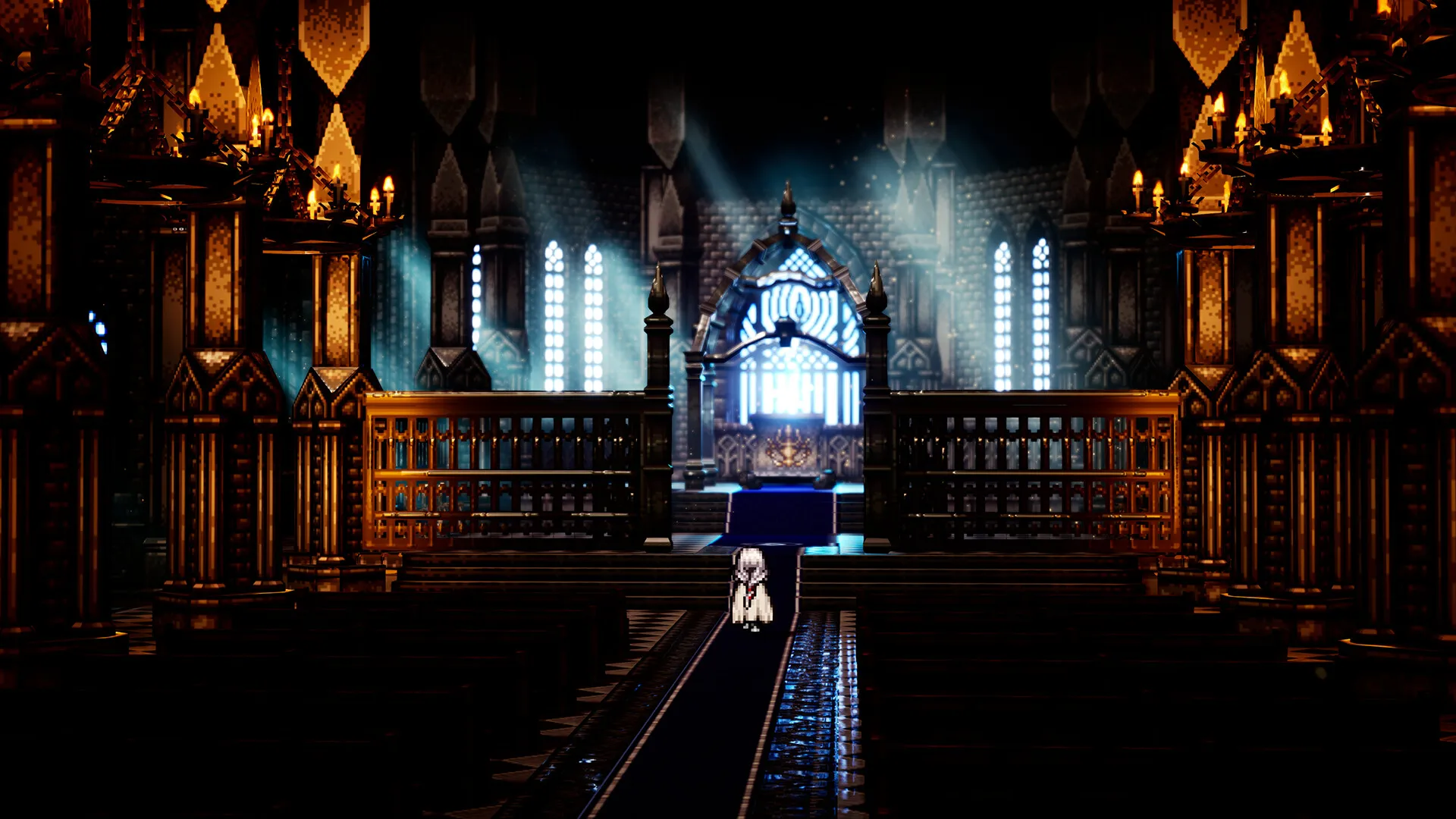
The HD-2D presentation continues to work well as a visual frame. High-definition effects and deliberate camera work sit on top of detailed pixel art to create a layered look. The game reuses a fair amount of environmental material from its mobile origins, and the color palette can feel somewhat subdued or “muddy” next to some other contemporary titles, depending on display settings, but the core aesthetic still gives Orsterra a distinct identity.

Outside combat, interaction with the world runs through revised Path Actions. The single protagonist now performs all key actions, such as Inquire, Steal, Fight, and Invite, on non-player characters. Success or failure no longer depends on the stats of individual party members. It tracks with the Ringbearer’s Wealth, Fame, and Power. This approach keeps the system straightforward but shifts its texture. Field interactions feel less like a puzzle built around party composition and more like a check against the player’s accumulated standing in Orsterra.
Wishvale’s reconstruction provides the most notable structural addition. The player undertakes both the physical repair and the emotional revival of the ruined hometown. Townbuilding plays out through simple but satisfying steps: clearing rubble, collecting materials, and dropping functional buildings onto a grid. These structures offer practical bonuses, including training options for benched party members and facilities for cooking stat-boosting meals.
The Invite Path Action extends this system by letting the protagonist bring NPCs from across the world back to Wishvale as residents. Each new inhabitant adds a small mechanical benefit, such as extra resources or improved JP gain. This gentle, non-combat layer sits beside the grim main plot and gives the revenge story a parallel arc of restoration. The townbuilding loop feels rewarding, encourages repeat visits to Wishvale, and ties progression directly to the idea of rebuilding what was lost.
The Review
Octopath Traveler 0
Octopath Traveler 0 successfully refocuses the series, swapping narrative breadth for singular intensity and refined mechanics. The core Break and Boost combat system is deepened significantly by the eight-member, row-swapping structure, making every encounter a demanding tactical puzzle. The focused revenge plot and darker tone give the adventure genuine emotional weight, while the Wishvale town-building provides a satisfying, heartfelt counterpoint to the main campaign’s brutality. It delivers a streamlined, strategically richer JRPG experience that builds expertly on its foundation.
PROS
- Deep, refined combat (eight-member party, row-swapping strategy)
- Focused, cohesive narrative with a dark, mature tone
- Satisfying town-building feature (Wishvale)
- HD-2D visuals are effective and enhanced
CONS
- Character progression is limited (no second jobs)
- Pacing lulls due to episodic, chapter-based structure
- Narrative roles of supporting party members are minimal
- Level grinding can feel slow and necessary for challenges