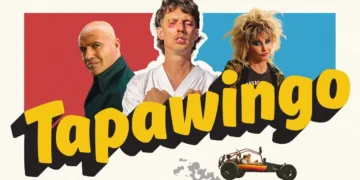
























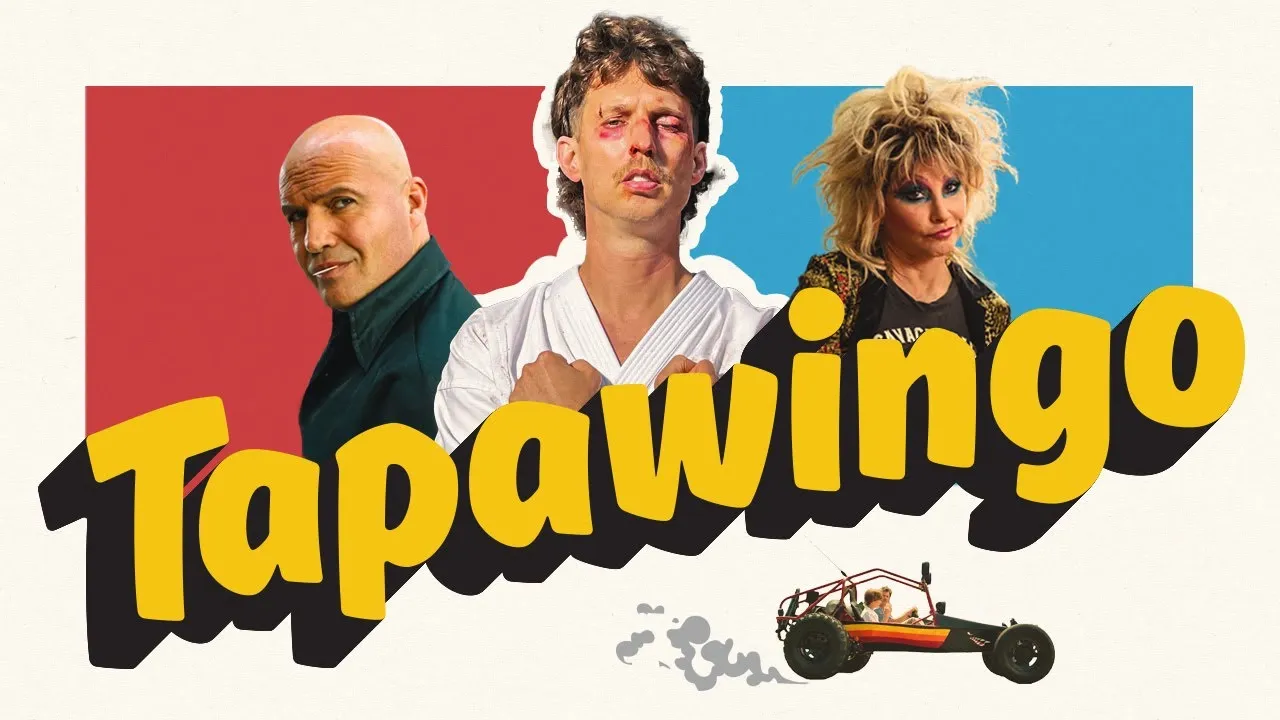

Tapawingo, directed by Dylan K. Narang and co-written with Brad DeMarea, invites viewers into a world that follows its own eccentric rules. The film follows Jon Heder as Nate Skoog, a man whose life seems frozen in place. Nate works in the mailroom, still lives with his mother, and pours his biggest ambition into the idea of becoming a high-paid mercenary alongside his best friend, Will.
The setting matters a great deal here: a small American town, staged as a hazy version of the 1970s or 1980s, built from immaculate period detail and carefully chosen throwback costumes. The story shifts into motion when Nate takes on a seemingly routine errand, driving his boss’s son, Oswalt, home from school.
That simple task escalates into a chaotic tangle with the local hoodlums, the Tarwater brothers, and forces Nate’s secret warrior fantasies into an absurd real-world trial. The film rides an offbeat, fully committed comedic wavelength that asks the audience to tune in to its frequency. I found it an infectious, hilariously enchanting slice of independent comedy.
Heder’s Return to Form
Jon Heder’s work as Nate Skoog powers Tapawingo’s strange sense of movement. He leans completely into Nate’s stiff line delivery and apologetic body language, a trademark style that produces steady laughs. One sequence captures this perfectly, as Nate tries to project menace yet seems to apologize with every inch of his posture for daring to take up space. The character clearly carries echoes of Heder’s earlier iconic creation, yet the performance gives Nate Skoog a specific texture that feels both depressive and hopeful.
The supporting players sync neatly with Nate’s rhythm. Jay Pichardo, as Will Luna, Nate’s training partner, supplies a slightly steadier voice that still fits inside the film’s oddball energy while giving Nate someone solid to bounce off. Sawyer Williams, as Oswalt, reaches a level of pure, unfiltered geekiness that feels almost scientifically improbable, and his awkwardness can rival Nate’s own.
The film also fills out the town with a surprising lineup of recognizable performers, including Gina Gershon and John Ratzenberger, each one comfortably tuned to the script’s bizarre sense of humor. Billy Zane’s turn as Stoney Tarwater, the threatening older brother, stands out through an entirely wordless performance built on his quiet, ominous presence.
The Art of Obsessive Aesthetic
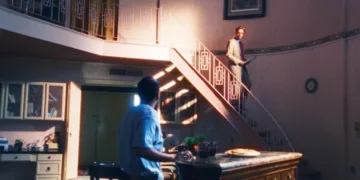
Tapawingo finds its strongest expression in artistic and technical choices. The film plays like a study in fully committed stylistic direction. Narang’s approach shapes a vivid cultural object through meticulous period design. The images stack up: Tab soda cans on tables, wood-paneled interiors, specific vintage jackets, and outdated technology, all working together to create an obsessive aesthetic that turns the town into a living museum of late ’70s and early ’80s kitsch.
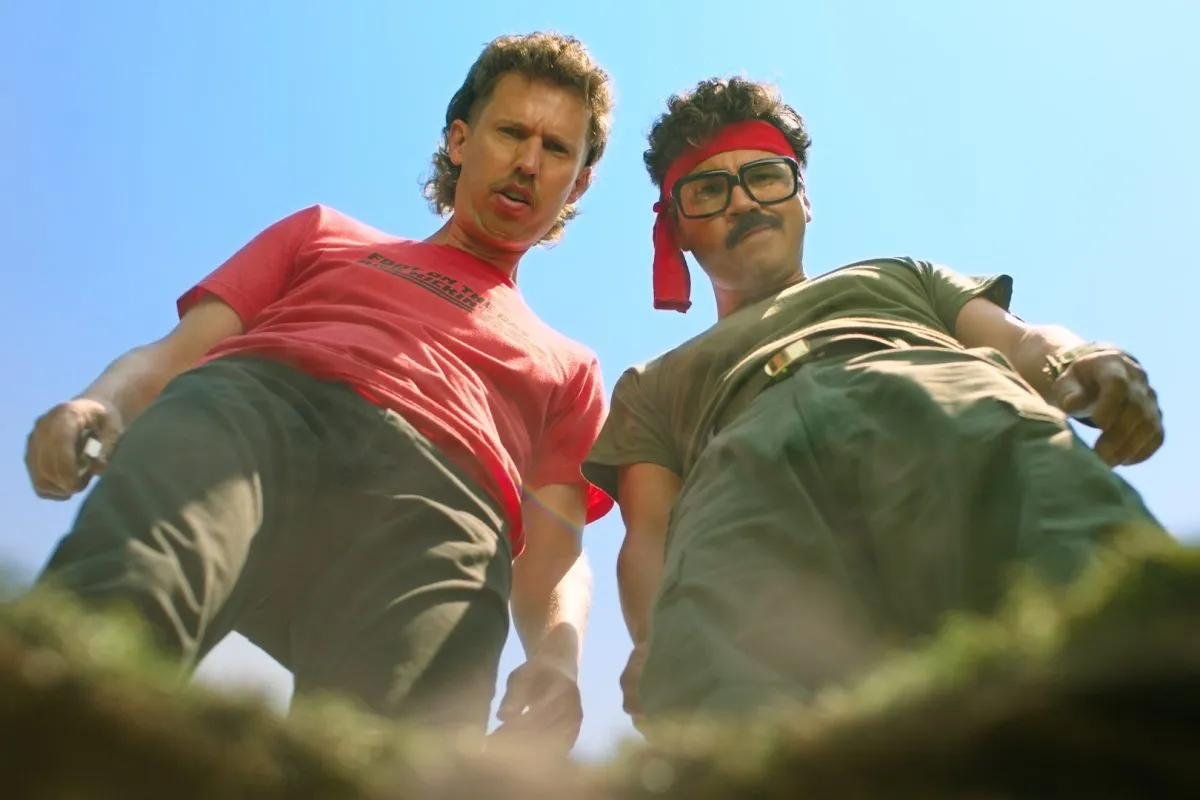
Cinematographer Jarrod Russell uses quick snap zooms, energetic camera whips, and sharp cross-cuts to sharpen the comedic timing and give the movie a distinctive visual rhythm that suits independent cinema. The production design and costumes support this rhythm with a level of care that matches the camera work.
The soundtrack deepens that style. A synthesized, percussive score sits beside a steady run of classic-rock needle-drops from bands such as Kiss, Pat Benatar, and ELO. This dense musical presence creates a nostalgic, heightened sense of reality, though the sheer volume or placement of some songs occasionally threatens to overpower the scene work.
Finding the Groove in Narrative Oddity
The film’s narrative approach rests on a traditional foundation, filtered through a fiercely unconventional lens. The plot moves along a clear track: Nate lands a new position, meets new figures in his life (Oswalt and the tough, charming Gretchen), and stirs up trouble with local menace Nelson Tarwater. This conflict grows, pulling Nate’s unlikely mercenary fantasies into direct, physical confrontation.
The structure stays linear, yet the absurdist humor and deliberate focus on character quirks give the film a different cadence, closer to a string of linked, intensely stylized vignettes than to a standard story arc. This style of filmmaking, which places atmosphere and personality ahead of slick plotting, reflects an independent cinema ethos. The film studies what it means to try to find your place in a world that has not made much room for you.
Nate, Will, and Oswalt come across as wonderfully strange figures who stumble into a sense of meaning simply by continuing to be themselves. The pacing stays measured, and the running time feels as if it could lose about 20 minutes, yet the looseness in the plot never truly pulls the film away from its main aim. Tapawingo plays as a goofy, sweet comedy that succeeds through steadfast dedication to its own strange, heartfelt comic vision.
Tapawingo is a comedy centered on Nate Skoog (Jon Heder), a thirty-year-old eccentric stuck in a mailroom job who lives with his mother and dreams of becoming a high-paid mercenary. His life gets a sudden jolt when he’s tasked with picking up his boss’s misfit son, Oswalt, from school, drawing Nate into a confrontation with local bullies that tests his warrior fantasies. The film had a limited theatrical release on November 14, 2025, and is scheduled for a Video On Demand (VOD) release on December 2, 2025.
Full Credits
Title: Tapawingo
Distributor: Indican Pictures
Release date: November 14, 2025 (Limited Theatrical), December 2, 2025 (VOD)
Running time: 109 minutes
Director: Dylan K. Narang
Writers: Brad DeMarea, Dylan K. Narang
Producers and Executive Producers: Dylan K. Narang, Jeff Robinson, Holly Narang, Brad DeMarea
Cast: Jon Heder, Jay Pichardo, Sawyer Williams, Chad Dukes, Billy Zane, Gina Gershon, Amanda Bearse, John Ratzenberger, Kim Matula, George Psarras, Paul Psarras
Director of Photography (Cinematographer): Jarrod Russell
Editors: Rex M. Teese
Composer: Jacob Yoffee
The Review
Tapawingo
Tapawingo is a genuinely funny and wonderfully strange comedy that succeeds because of its complete surrender to its own absurd wavelength. While the pacing lags in the final act, the film is rich with style, meticulous in its nostalgic design, and anchored by Jon Heder's committed, unique performance. It’s an infectious, sweet-natured story about outsiders finding their footing, offering big laughs for fans of quirky, stylized independent cinema.
PROS
- Successfully maintains a consistent, absurd, and offbeat sense of humor.
- Jon Heder fully commits to the awkwardness, delivering sharp physical comedy.
- Features impressive, obsessive attention to 1970s/1980s period detail in set design and costumes.
- The ensemble, including Jay Pichardo and Billy Zane, is perfectly aligned with the movie's eccentricity.
- Uses inventive cinematography (snap zooms, cross-cuts) to enhance comedic timing.
- Features a sweet, underlying message about finding purpose and acceptance.
CONS
- The film is noticeably overlong and the plot progression sometimes drags, particularly in the later stages.
- The frequent classic-rock needle-drops can be distracting and occasionally overshadow the dialogue or scene work.
- The style and Heder's performance are so similar to a cult classic that it occasionally struggles to establish a completely distinct identity.