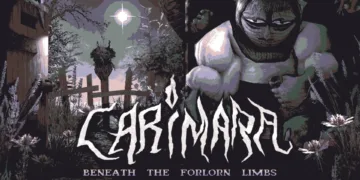




























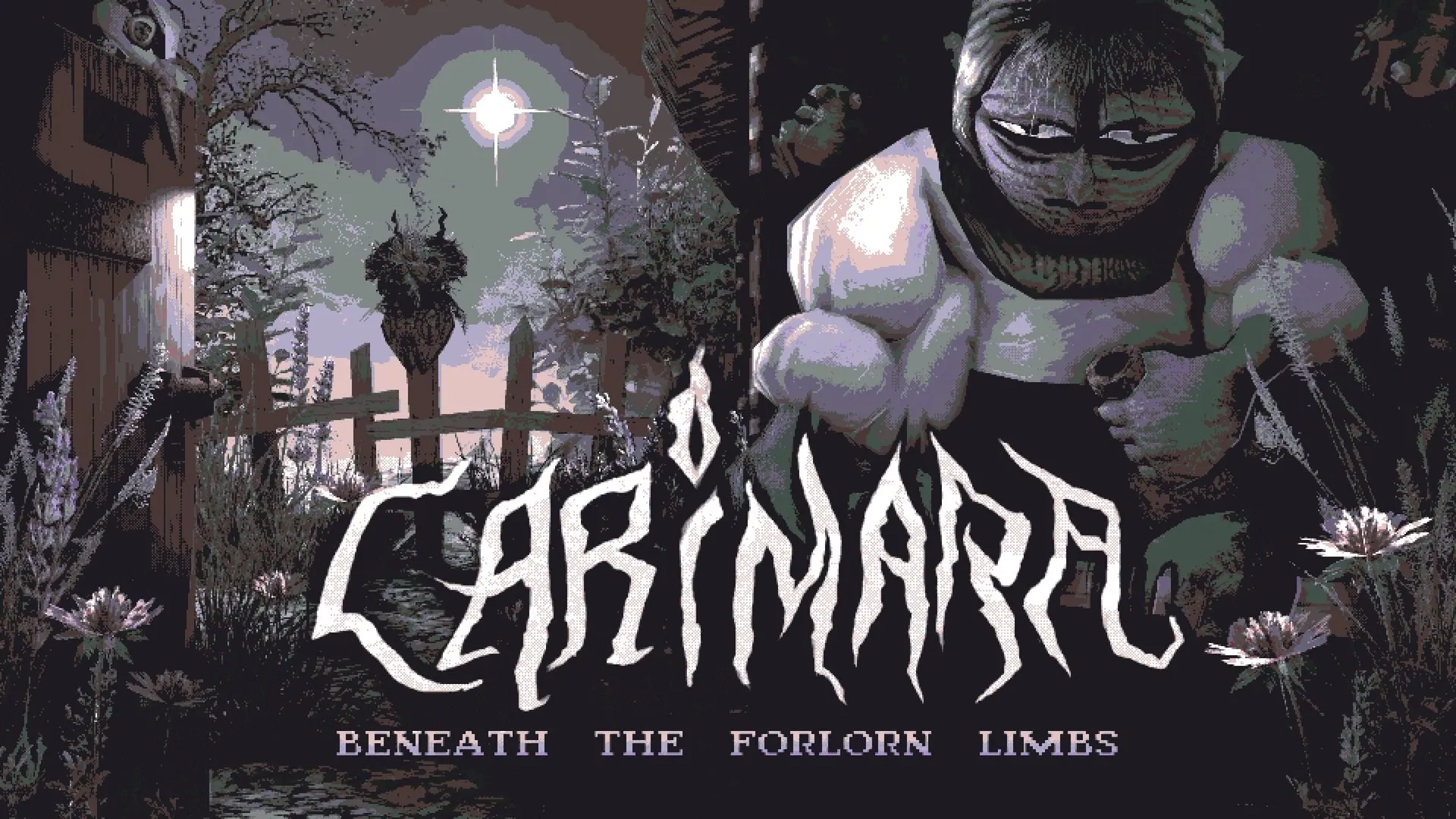

The air in Carimara: Beneath the Forlorn Limbs feels heavy with damp soil and withheld stories, pressed into the crooked frame of a solitary cottage. The game presents a supernatural mystery through the structure of an adventure game, but the emphasis lies on quiet dread and a constant edge of unease rather than direct shocks. You step into this world as the Carimara, a silent spirit worker and investigator.
The summons comes from a terse, guarded older woman who pays for discretion and demands that the presence in her cellar be pacified. Your assignment sounds straightforward: uncover the spirit’s past by determining who they were, who killed them, and how they died. The tone and premise echo the darker strands of Norman folklore, so each step feels like moving through a thorny, half-remembered fairy tale.
The Grammar of Deduction
The game’s strength comes from the way its core mechanic grows directly out of the main character’s restriction. Because the Carimara cannot speak, the familiar mystery structure shifts into a system built around visual logic. The whodunnit format becomes a puzzle of connections, where progress relies on what you see and how you interpret it.
Communication runs through a set of flash cards. Every object and creature you can interact with in the small, carefully controlled space can be studied and turned into a card, a compact visual symbol. These cards form the Carimara’s entire language. Presenting them to the two key conversational anchors, the jittery Old Woman and an excitable anthropomorphic owl, prompts them to share details. Conversations feel like a cautious exchange, where you probe with images instead of words. You are not scrolling through dialogue trees; you are laying out evidence and hoping that a particular picture nudges the scene toward a new fragment of story.
In practice, the cards echo the process of gathering items in a classic point-and-click adventure, only here they act as conceptual keys. They unlock deeper layers of the situation rather than doors or chests. Piecing together the right combination of cards to trigger a memory or a hidden scrap of knowledge feels mentally satisfying. When the chain of logic finally aligns, the satisfaction comes from seeing your theory click into place. The whole investigation leads toward the cellar, where the Carimara must present the ghost with a three-part conclusion using the collected cards: victim, perpetrator, and weapon.
Incorrect guesses do not trigger harsh punishment. The Carimara collapses, then wakes in the cottage again, usually alongside a subtle environmental shift such as the Old Lady repositioning herself, a small touch that implies that time and circumstance continue to move even after failure. This loop keeps the focus on deduction and gives the final correct solution a strong sense of achievement, because closure grows directly out of careful observation and reasoning.
Texture and Tension in Design
The visual presentation stands out immediately and gives the game a distinct sense of place. The cottage and its grounds appear as a carefully assembled diorama, a small-scale scene that feels like a crafted art object you can walk through. The style leans into lo-fi qualities: grainy surfaces, deep shadow, and a deliberately restrained palette. Animations stutter and twitch slightly, which reinforces the sense that the world is unstable. The environment may be gloomy and compact, yet it feels richly worked. Each frame looks considered, nudging your attention toward tiny movements and quiet clues, so you feel an urge to inspect every corner of the screen.
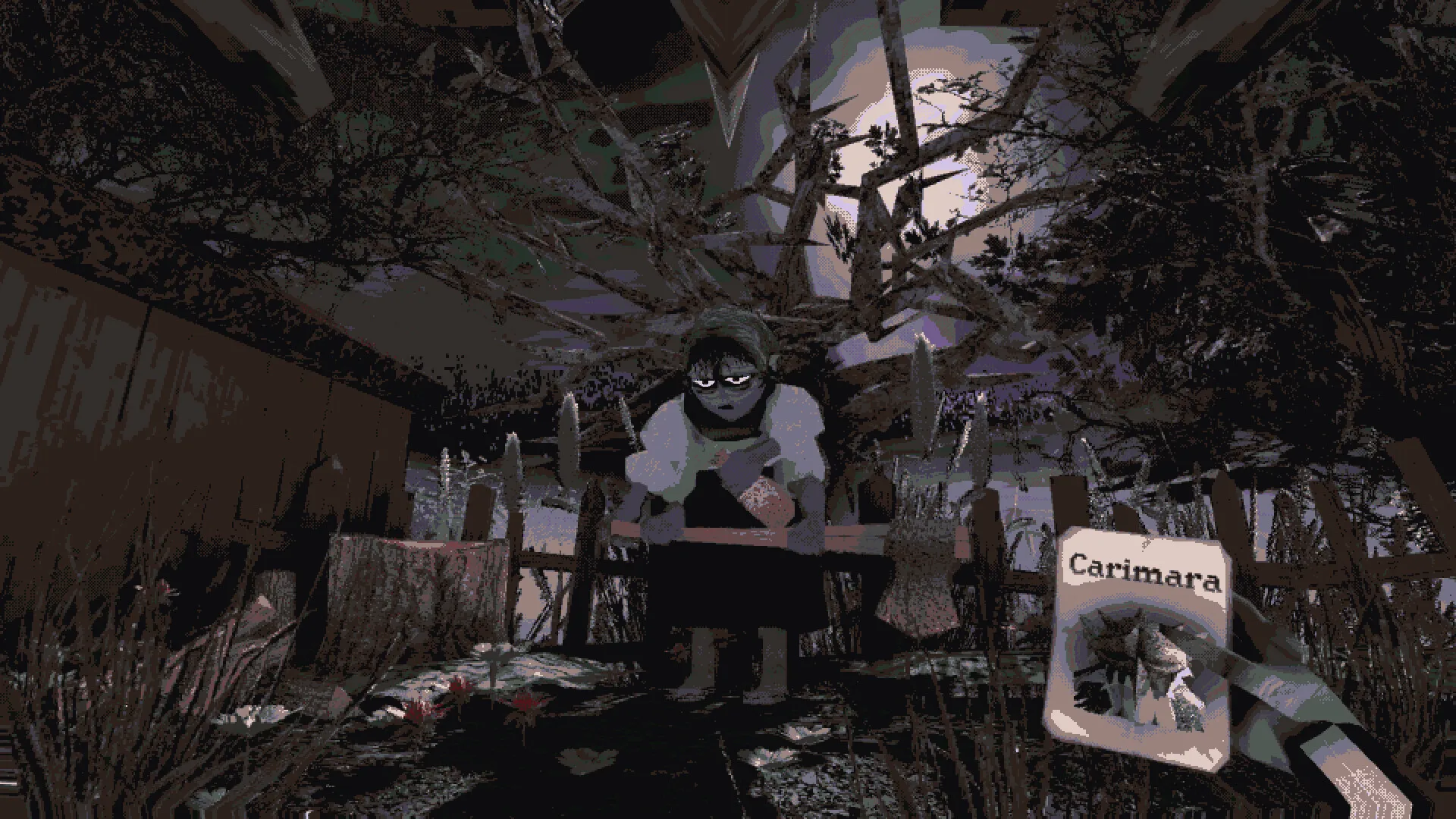
This visual approach plays a key role in building atmosphere. The mood does not rely on sudden scares. Instead, the game holds a gentle but persistent feeling of wrongness. Sparse sound design and limited spoken dialogue support that mood, keeping a low, steady tension running underneath every interaction. Nothing feels quite safe, and even ordinary details seem skewed.
The small group of characters intensifies this feeling. The Old Lady and the Owl leave a strong impression, even with their brief appearances. Their scenes often bring them uncomfortably close to the Carimara, and they answer questions with blunt, sometimes abrasive directness that can flip from dry humor to genuine menace. The Old Lady’s cryptic comments suggest motives that reach beyond the simple hiring of a spirit worker, and the Owl’s manic chatter feels completely unmoored. These performances feed curiosity about the truth behind the request and keep you moving through the cramped, gloomy, Norman-inspired setting.
The Sharpness of the Vignette
Carimara runs for a short span, usually under an hour, with a little extra time for players who chase every secret. That brevity might sound restrictive, yet the limited scope becomes a defining feature of the design. The tight environment, the cottage and the small area around it, concentrates the investigative work. The game behaves like a focused narrative vignette that avoids the padding that can slow lengthier adventure titles.
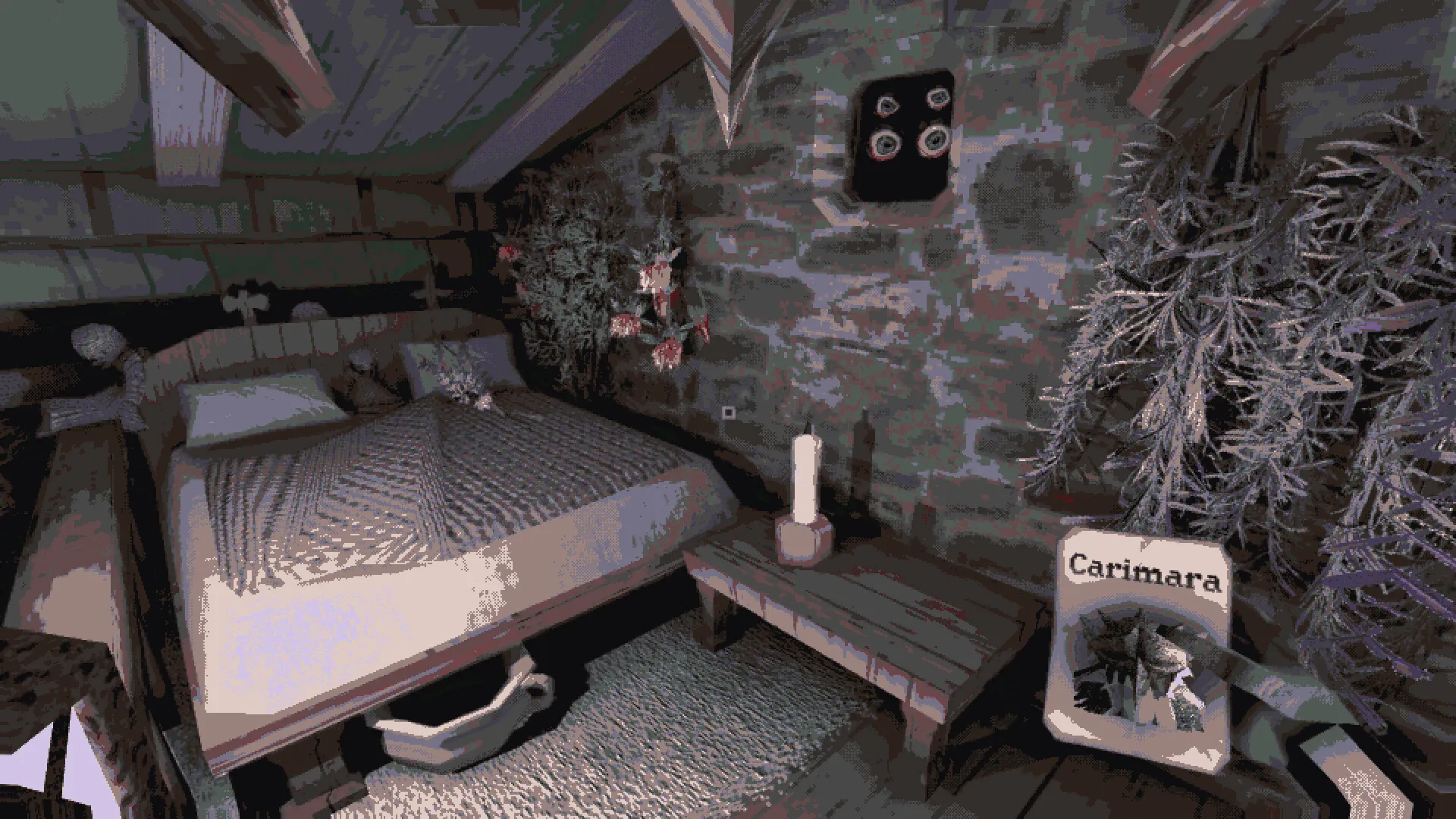
Within that modest frame, the investigation feels carefully arranged. The puzzles never reach extreme complexity, and the sense of satisfaction comes from how cleanly their answers feed into the story’s payoff. The brief playtime keeps the flash card mechanic sharp from the first interaction to the final confrontation, so the system never settles into repetition. The game rewards close attention and curiosity, which gives the compact world a surprising sense of movement.
The financial proposition strengthens that impression. For a low purchase price, Carimara delivers a strong mix of narrative weight and atmospheric design. The short duration still leaves the cottage and its strange tale lodged in memory. The experience embodies the idea of carefully crafted content taking priority over raw length. The only real frustration stems from the wish for extra cases, further disturbing figures, and a wider space for certain key revelations to breathe. Even with that lingering hunger for more, Carimara feels like a small but striking piece of interactive fiction, a sharply focused mystery that uses mechanics and storytelling in tandem and earns the effort it asks from the player.
The Review
Carimara: Beneath the Forlorn Limbs
Carimara: Beneath the Forlorn Limbs is an essential, focused mystery experience. Its unique card-based communication brilliantly merges the game mechanic with the narrative concept of a mute detective, all set within a hauntingly stylish and well-designed world. Though brief, this folk-horror vignette is impactful, atmospheric, and highly rewarding for fans of short, smart adventure games. It's a creative gem that leaves a lasting impression.
PROS
- Inventive card communication mechanic.
- Highly distinct and impressive visual aesthetic.
- Atmosphere of quiet dread is deeply effective.
- Sharp, rewarding narrative pacing.
- Excellent value for a short experience.
CONS
- Very short runtime (under one hour).
- Limited environment and cast.
- Low replayability.