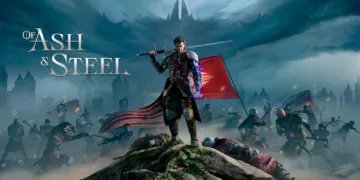















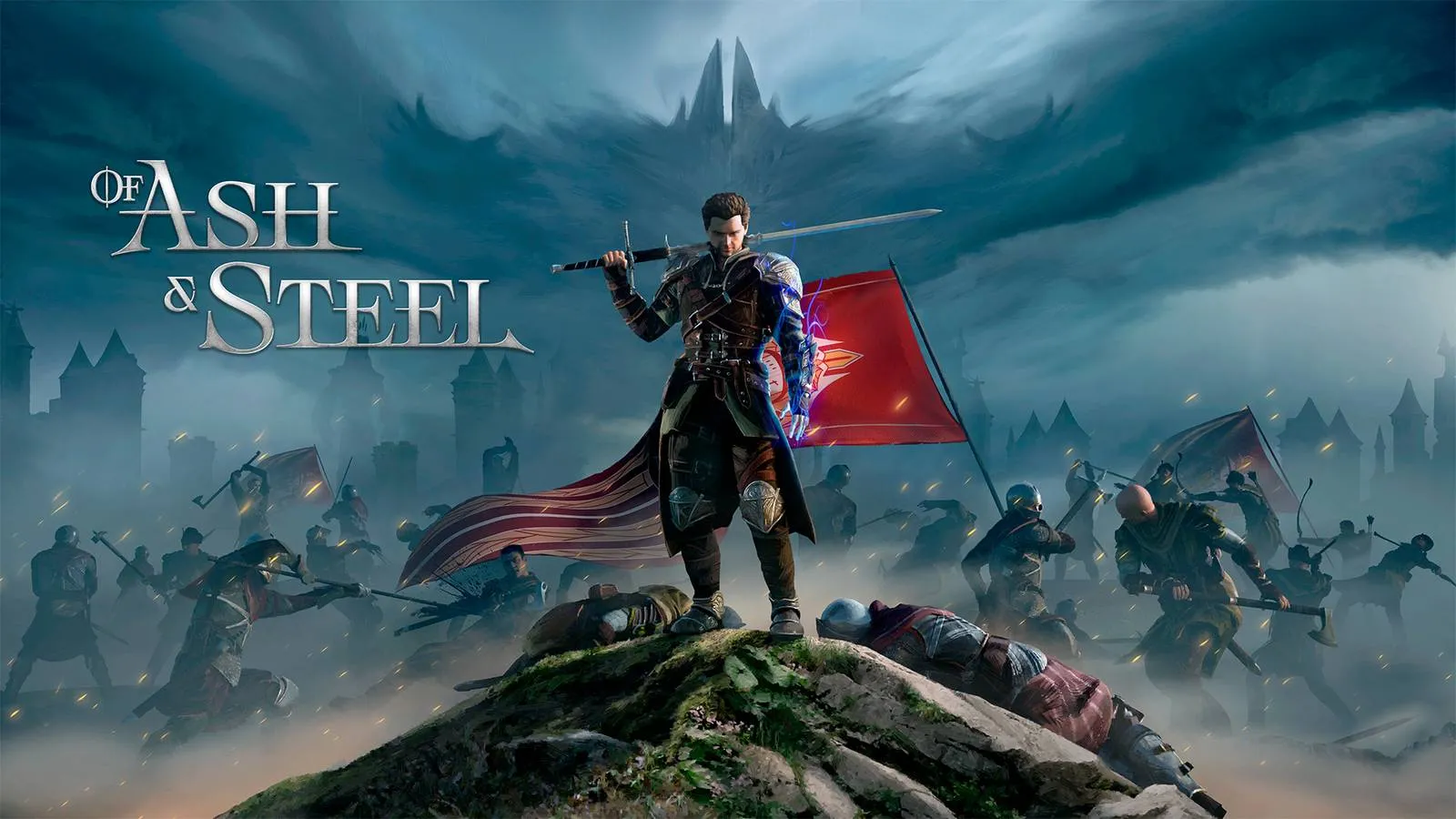

Tristan washes up on the island of Grayshaft carrying a satchel of ink and a head full of geometry. He comes from the capital of Astartia, trained as a cartographer who thinks in lines, angles, and measured distances. Then his ship breaks apart on the rocks.
The wreck leaves him shivering on the shoreline, alone, with his crew gone and his standing erased in the same moment. Grayshaft is a hard rupture from the comfort he knew. He has no sword. He has no map. He has no reputation that might keep local brigands at bay. The island stretches out as thick woods and stone cities, with something hidden behind each rise in the land.
Tristan’s immediate goal is simple to state and brutal to pursue: recover a vital document taken during a bloody ambush. The island offers little guidance and demands competence from the first step. The story’s main interest sits in his change from a desk-bound clerk into someone who can exert real force in a hostile place. He learns how to live where a single mistake can end everything for good. Grayshaft feels immense in a way many modern games avoid, and it asks for a level of sustained attention that can feel rare now. His progress reads as a slow haul out of the mud, measured in hard-won inches.
The Slow Birth of a Warrior
Tristan starts from a position the genre rarely grants its protagonists. He does not arrive crowned by prophecy or backed by divine blood. He arrives as an ordinary man who can barely manage the coordination needed to swing a heavy blade. In the first fights, his defense looks sloppy because it is sloppy. When he brings a rusted sword around, you feel how little weight he can put behind it.
That awkwardness produces real danger in each encounter. One wolf can kill a man whose life has been spent sketching borders onto paper. His weakness forces a different relationship with the world. Bandit camps are problems to study, not places to storm. You crouch in grass, watch patrols, and wait for a clean opening. The game positions you as an underdog from the start, and that fragility anchors the tension.
Turning Tristan into someone useful takes time and labor. The game refuses the quick fantasy of killing a handful of pests and emerging as a master. Strength arrives through trainers placed across Grayshaft’s geography, each with their own expectations. They require respect, they require payment, and they require that you meet an experience-point threshold before they will teach you.
Gold becomes the second gate, since lessons cost a lot. The result is a tight economy where every coin matters. Purchases turn into trade-offs you can feel: a piece of armor now, or one combat technique that might keep you alive later. That pace gives upgrades real heft. It rewards people who plan hours ahead, and it turns the chase for gold into a constant drive. You hunt, you steal, and you take on jobs with one thought in mind: paying for the next lesson.
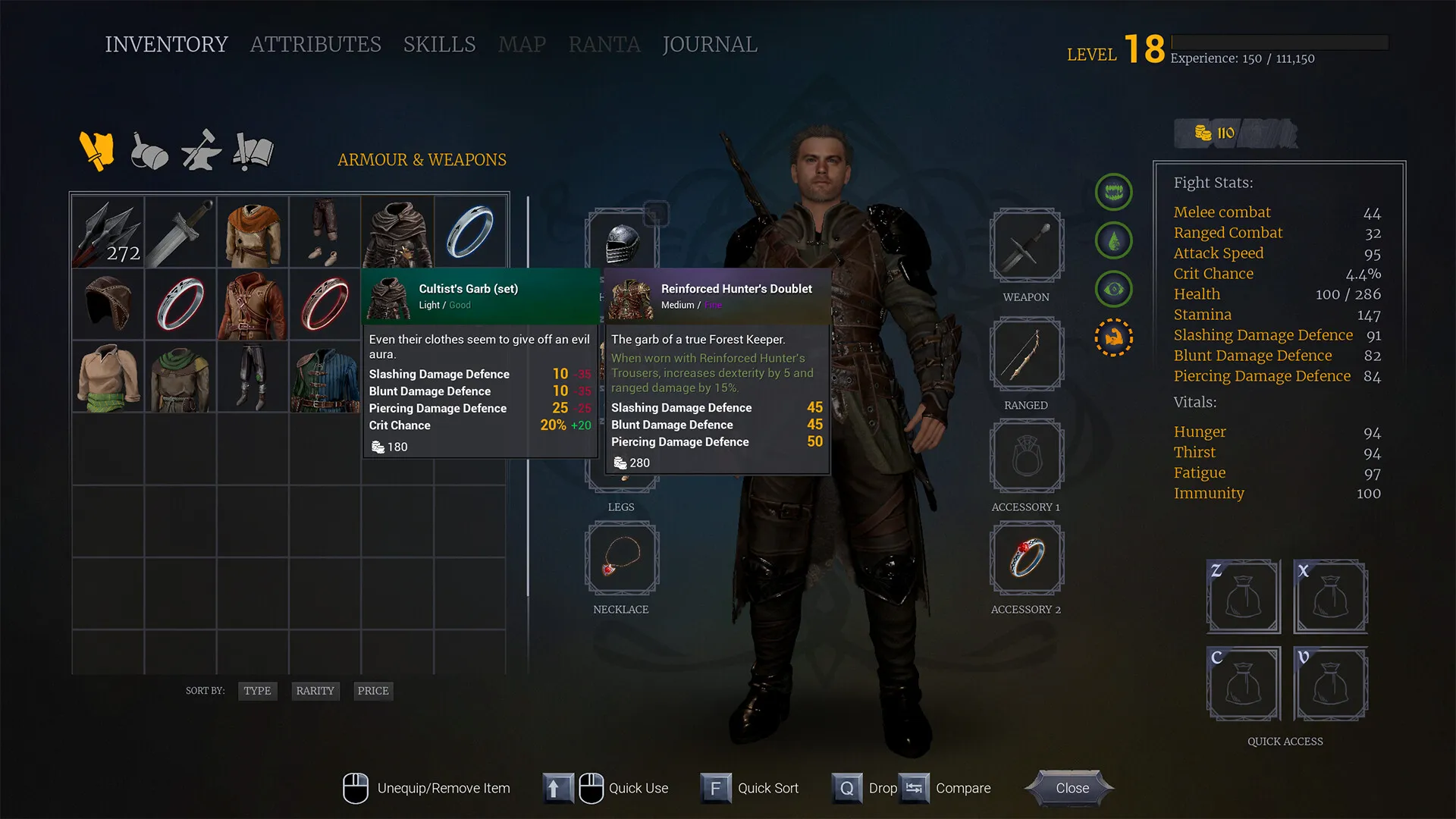
Equipment rules deepen the commitment. Weapons are locked behind attribute requirements. A heavy battleaxe calls for high Strength. A precise crossbow can demand Dexterity. The game pushes you toward a defined path early. Tristan becomes a nimble fighter or a heavy bruiser, and the choice stays meaningful because high-end gear remains out of reach for a long stretch.
You can carry a superior sword for hours without being able to lift it effectively. This design echoes the original Gothic, where stats feel like life-changing commitments instead of mild nudges. Each point shapes who Tristan becomes, and you feel those decisions accumulating as he sheds the habits of a helpless clerk and takes on the shape of your priorities.
The Psychology of Being Lost
The interface embraces friction as a design choice. The missing mini-map registers immediately. There are no glowing ground trails pointing to a quest step. The screen stays clean of icons and waypoint clutter. You get a simple compass in the corner that offers cardinal directions and little guidance beyond that. The game pushes you to look outward, not down at a HUD. You learn the horizon’s silhouette. You pick landmarks, like the tallest mountain or a lighthouse, and use them as anchors. Getting around becomes a skill you practice. The software does not hand it to you.
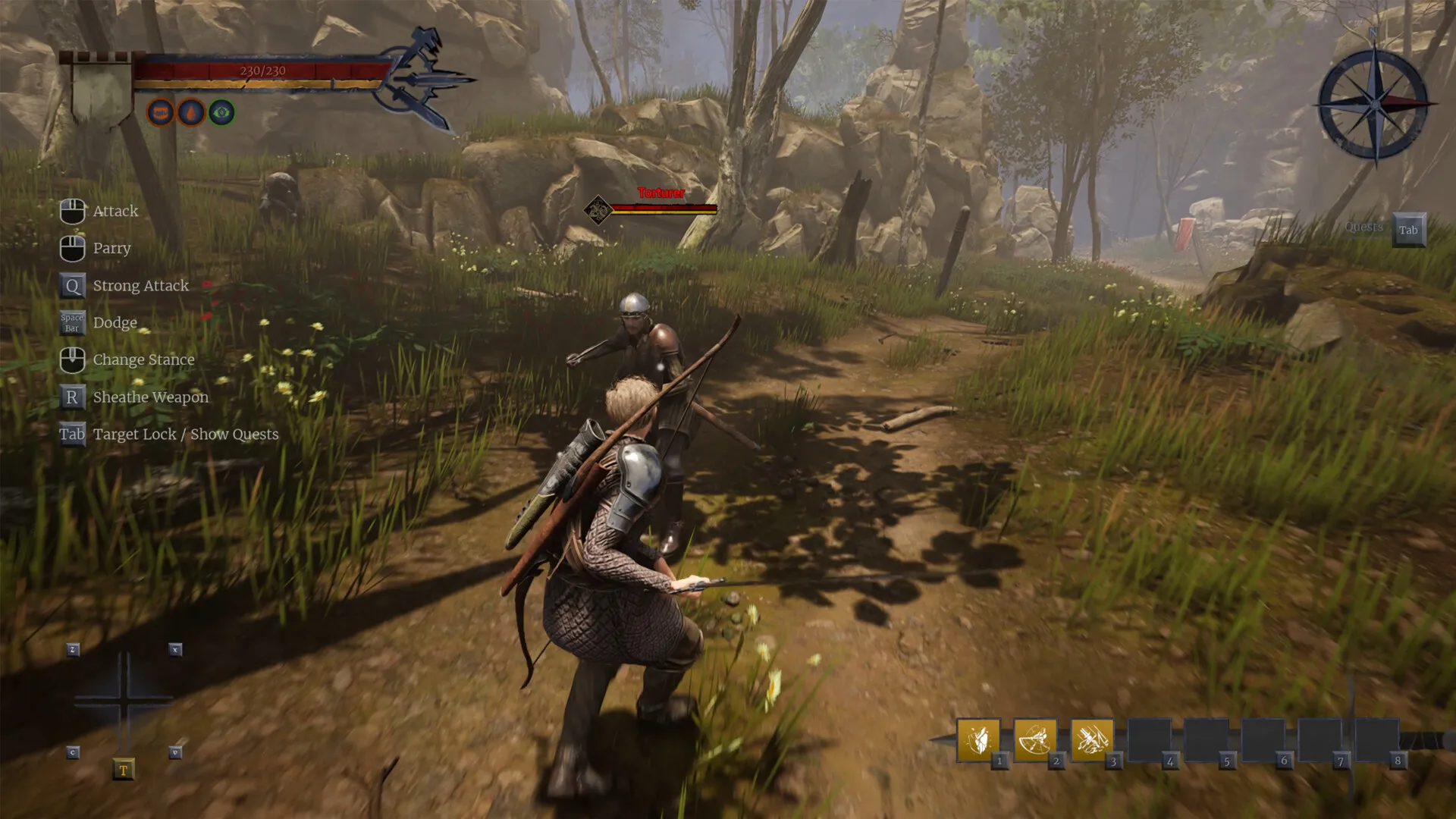
Conversation fills the gap. Residents of Grayshaft function as your main source of direction. NPCs do not attach markers to a map, because you do not have that kind of support. They speak in descriptions. A farmer can tell you to follow the road south until you reach a burnt wagon, then head toward the coast.
Your job is translating language into movement. This builds a strong bond between player and terrain because you have to live inside the geography. Memory starts to matter more than reflex. Forget where a cave lies, and you can wander into a high-level zone by accident. The game treats you as someone capable of paying attention, and it leaves the mental labor in your hands.
There’s a sharp irony in Tristan’s first hours. He is a cartographer without a map of the island he came to chart. For a meaningful portion of the opening, you exist without a clear picture of the wider land. Maps do not appear as casual loot, and shops do not solve the problem. You earn maps through service to a faction. That choice sustains a rare feeling of isolation for a modern RPG, since being lost functions as a mechanic you engage with constantly.
The world grows in mystery because you cannot reduce it to a diagram. Joining a group and gaining access to a map lands with real satisfaction, like you’ve carved one small certainty out of the wilderness. The danger stays, yet your sense of scale changes. Discoveries land as personal wins against the land’s silence, and you shift from disorientation to geographic control, one remembered road at a time.
The Heavy Cost of Conflict
Combat plays like a physical contest with exhaustion. The stamina bar dominates every fight. Each swing and dodge pulls energy away. Let it drain completely and Tristan moves as if he’s wading through deep water. Attacks slow down and lose the force needed to crack an enemy’s guard. Fights become tactical problems to solve. You wait for a strike, watch for a gap, and manage breathing in the rhythm of the exchange. This design blocks mindless hack-and-slash habits and asks for patience. The pacing brings to mind Kingdom Come: Deliverance, with its deliberate timing and emphasis on restraint.
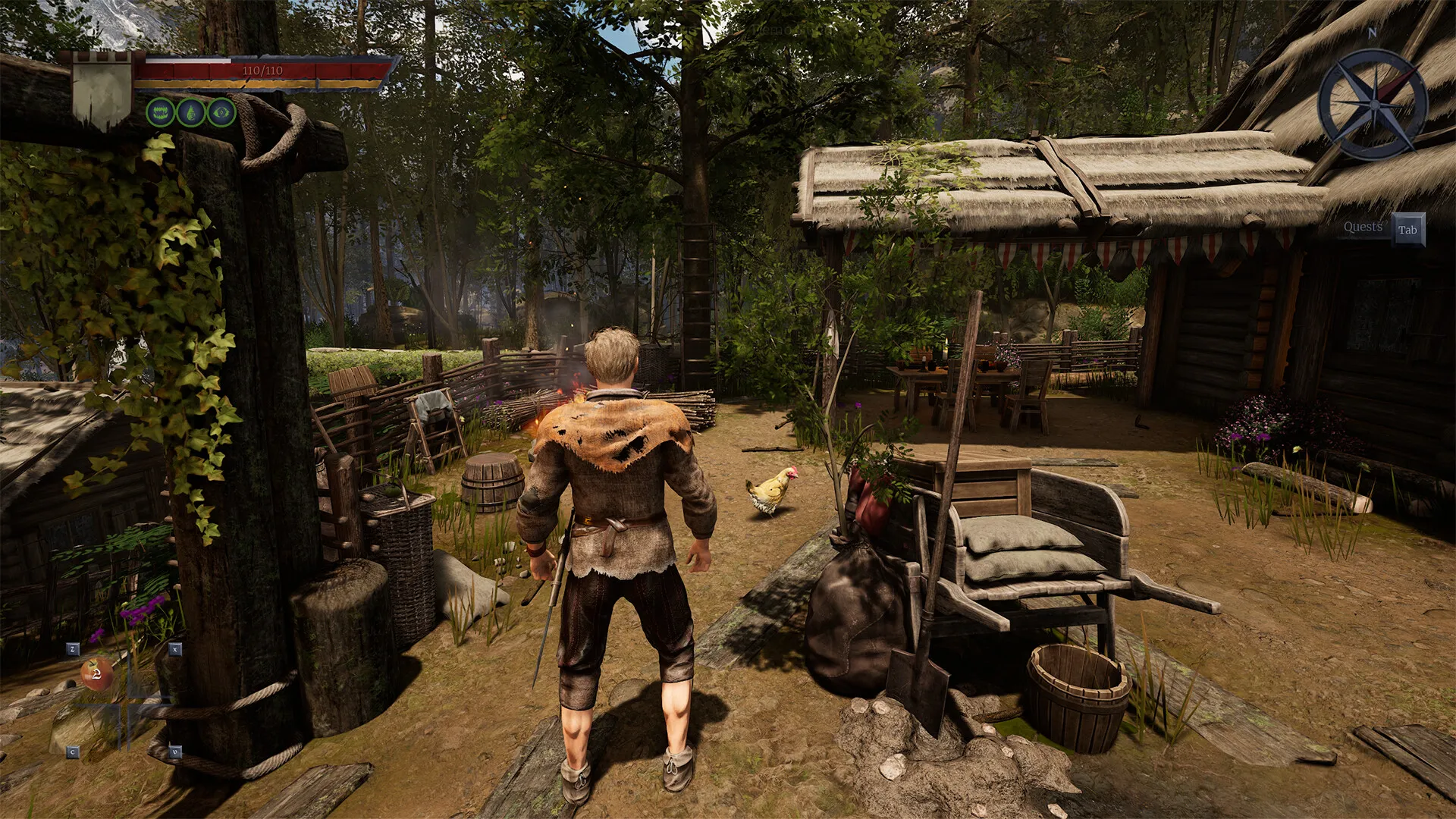
The texture of combat shifts as Tristan improves. Early animations feel stiff, and that stiffness reads as character logic rather than accident, reflecting someone with no training. He looks like a man unfamiliar with weapons. Even chaining one strike into the next takes effort. Paying trainers begins to change that. The clunkiness recedes, and you learn how to connect attacks with more fluid motion.
Special abilities arrive that can flip a losing fight. Magic enters far later, treated as a scarce power tied to heavy investment in certain skill trees. The gradual climb makes Tristan’s growth feel earned. You can see it in how he carries himself, how his stance widens, and how confidence shows up in movement.
Weapon variety supports distinct approaches. Rapiers offer quick thrusts and keep you mobile. Two-handed axes hit hard, then punish you for a miss by leaving you open. Bows and crossbows matter for reducing groups before they close the distance. Each tool has its own reach and timing, so spacing becomes part of mastery. Multiple opponents stay dangerous, since enemy AI can press aggressively and try to surround you. Surviving demands preparation: check gear, watch stamina, commit with care. A single mistimed parry can end your life in seconds. The game responds to arrogance with swift death.
The Social Structures of Grayshaft
Grayshaft runs on competing interests, and progress ties into finding a place within them. Several factions shape the island’s power structure. The Order stands as knights with a legacy of dominance, wrapped in heavy plate and guided by tradition. The Free Hunters offer a different way to live, staying near the wild edges, leaning on leather and stealth.
Smaller groups exist too, including Smugglers and Bounty Hunters. Joining a faction carries real weight. It sets the route you take through the story, determines the quests you receive, and changes what you gain in return. It can shift how people treat you across the island, and wearing a group’s colors can turn certain areas hostile. Identity becomes a function of alliance.
Survival sits beside politics as a constant pressure. Tristan needs food and water to keep his strength intact. Hunger and thirst bring serious penalties that hit combat directly. Starving slows stamina regeneration. You search for food in the world, hunt for it, and keep a routine that includes cooking at a campfire.
Meals can grant temporary benefits, turning preparation into part of your build. Injuries add another layer of planning. Falls and heavy blows can leave lasting wounds that require specific medical supplies. Your movement through the island starts to include supply lines. Long trips demand forethought, because safe camps and proper resources become the difference between a successful expedition and a collapse in the field.
The law in Grayshaft carries teeth. Crime comes with a direct price tag, and the fines can be huge. Get caught stealing and guards demand payment that can erase your savings in a single exchange. Theft lacks a clear UI warning, so you rely on judgment to tell what belongs to someone else. Fail to pay, and guards will treat you as a target on sight. City life gains a steady tension, shaped by how carefully you move through streets and how cautiously you interact with objects. This system gives actions weight and reinforces the social order. Tristan lives under local rules, and the world expects obedience backed by consequences.
The Reality of the Forge
Grayshaft’s visual identity stands out as its strongest strength. Lighting carries much of the atmosphere. Morning sun slices through forest canopy, and nighttime turns the world into a dark, frightening space with deep shadows. Environmental audio supports that mood, from wind ripping through ruins to the distant sound of fighting. The island feels physical, like a place with mass and age, not a theme-park zone. The art direction leans toward grounded medieval textures, steering away from neon palettes and high-fantasy excess. History reads in crumbling stonework and paths reclaimed by growth.
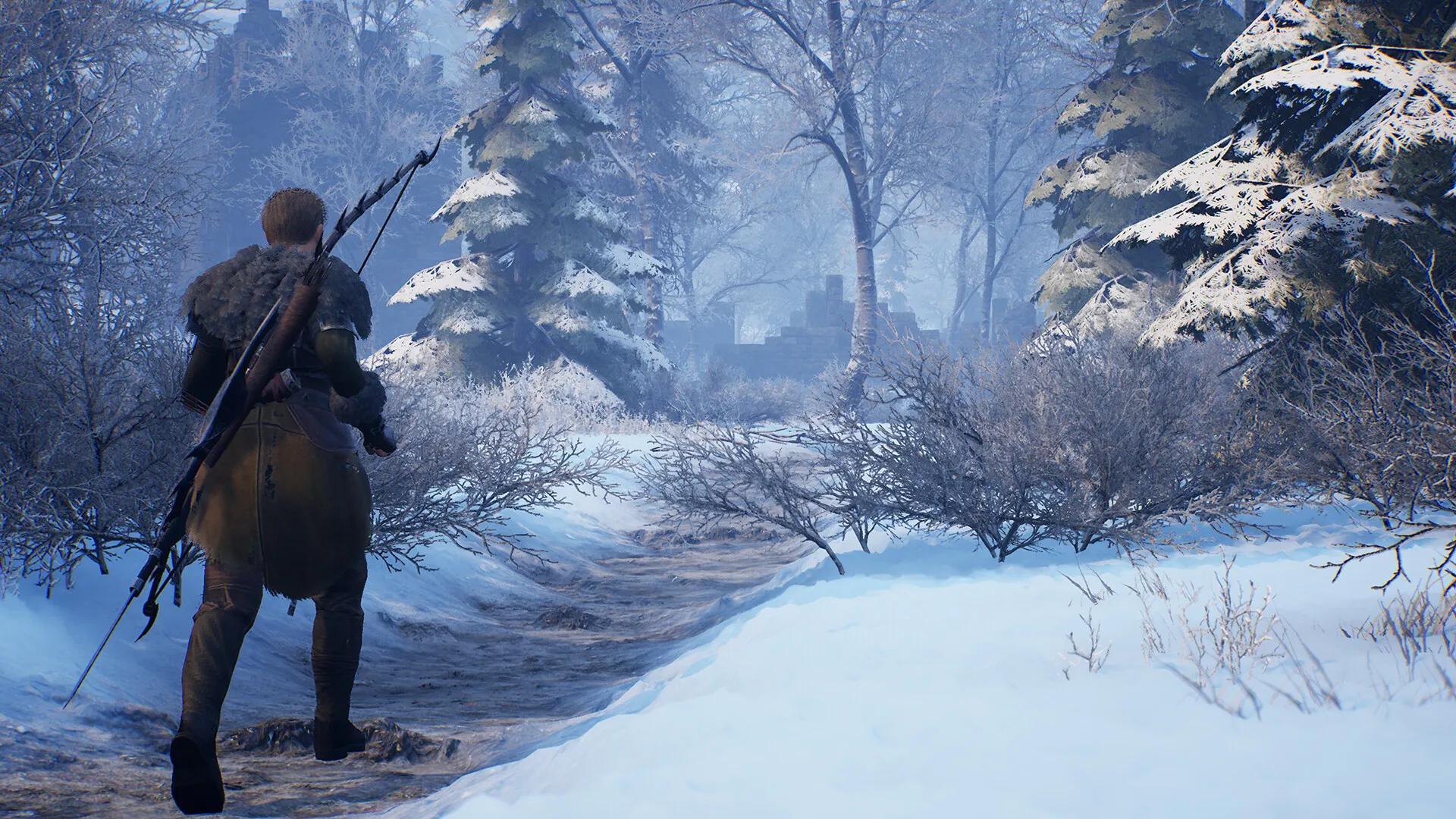
The technical presentation shows the limits of a smaller project. Character models can wear stiff expressions, and lip-sync can drift away from spoken lines, creating distance during long conversations. Voice acting covers almost every line, and quality varies, shifting between strong performances and flatter deliveries. Some characters even switch voices during combat, a familiar flaw for games built at this scale. Big ideas arrive without the finish of a large studio, and the experience asks you to meet it halfway.
Performance issues reinforce that ask. Initial loading times can run long, sometimes close to a full minute before the world appears. Bugs can hit inventory behavior, with items failing to show after collection. Losing a unique weapon or a quest item can be brutal.
The safest approach is frequent saving, spread across multiple slots, so one corrupted moment does not ruin hours of progress. These rough edges can test patience, and the game demands tolerance. Players who can live with the lack of polish will find depth and reward in the world beneath it. The flaws become part of how the project presents itself: grit, ambition, and a sense of passion showing through the seams.
The Review
Of Ash and Steel
Of Ash and Steel is a demanding tribute to the uncompromising RPGs of the early 2000s. It rewards patience and observation while punishing those who expect hand-holding or polished combat. While the technical "jank" and steep gold requirements for progression can be frustrating, the sense of genuine discovery is a rare find in the modern landscape. It is a rugged, atmospheric experience that prioritizes immersion over convenience. If you can tolerate the rough edges and clunky animations, you will find a deep world worth mapping.
PROS
- Rewarding, old-school exploration without quest markers.
- Deep character progression that feels earned.
- Strong atmospheric lighting and environmental design.
- Meaningful faction choices and social consequences.
CONS
- Significant technical bugs and long loading times.
- Stiff character animations and poor lip-syncing.
- Punishing economy and high gold costs for skills.
- Combat feels clunky and unresponsive in the early stages.