
























![Kingdom Hearts Collection [I-III] Review](https://gazettely.com/wp-content/uploads/2026/10/Kingdom-Hearts-Collection-I-III-1-360x180.webp "Kingdom Hearts Collection [I-III] Review: KHII Holds Steady as Newer Entries Fluctuate 37")




Sugar Goodson lies face down in the Wapping mud, a pugilist reduced to something the street can swallow without noticing. The sight carries the series back into Steven Knight’s 1880s East London with the same sickly clarity: whatever shine once accompanied arrival has thickened into a smog-choked grind for breath and money. A year has passed since the first season’s collisions, and the cost sits in plain view.
The central figures are split by the ambitions that once gave them shape. Hezekiah Moscow, Mary Carr, and Sugar Goodson read less like rising names and more like people picking through the wreckage they helped create.
The story turns from the pulse of the fight to the slow ache that follows it. The docks feel heavier. The soot holds fast. The Forty Elephants keep working the margins of a city that seems eager to erase them. This season plants itself in a society without a safety net, where displacement and desperation function as the daily weather.
Ghosts in the Ring and the Parlor
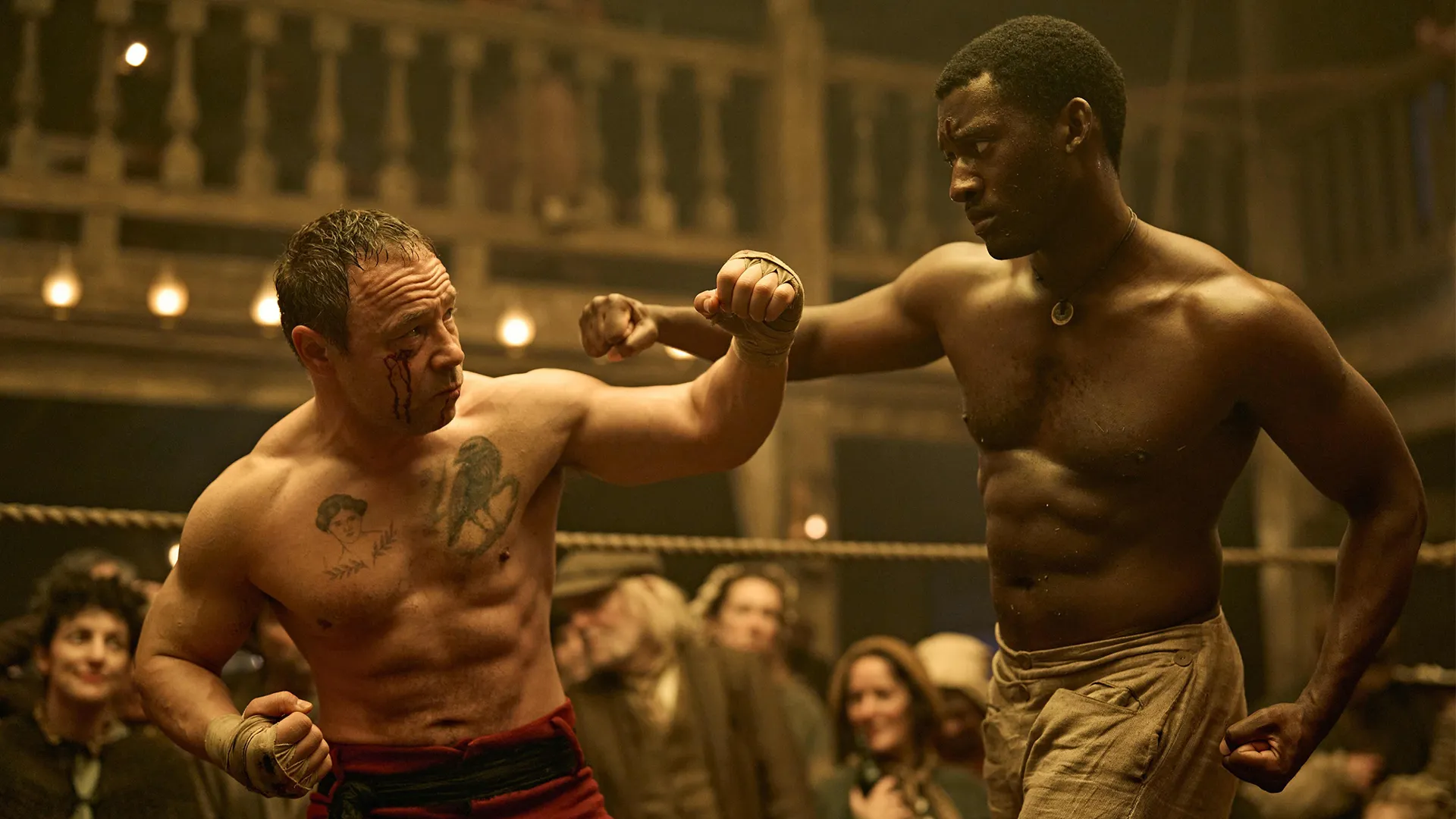
Stephen Graham plays Sugar Goodson as a man emptied out by his own violence. The guilt of breaking his brother’s mind has soaked through whatever fire once drove him, leaving a damp, frantic hunt for absolution. His sobriety feels fragile, a thin pane of glass under constant pressure from memory. He moves through the streets like a shadow scraped along cobblestones, visible and barely held together.
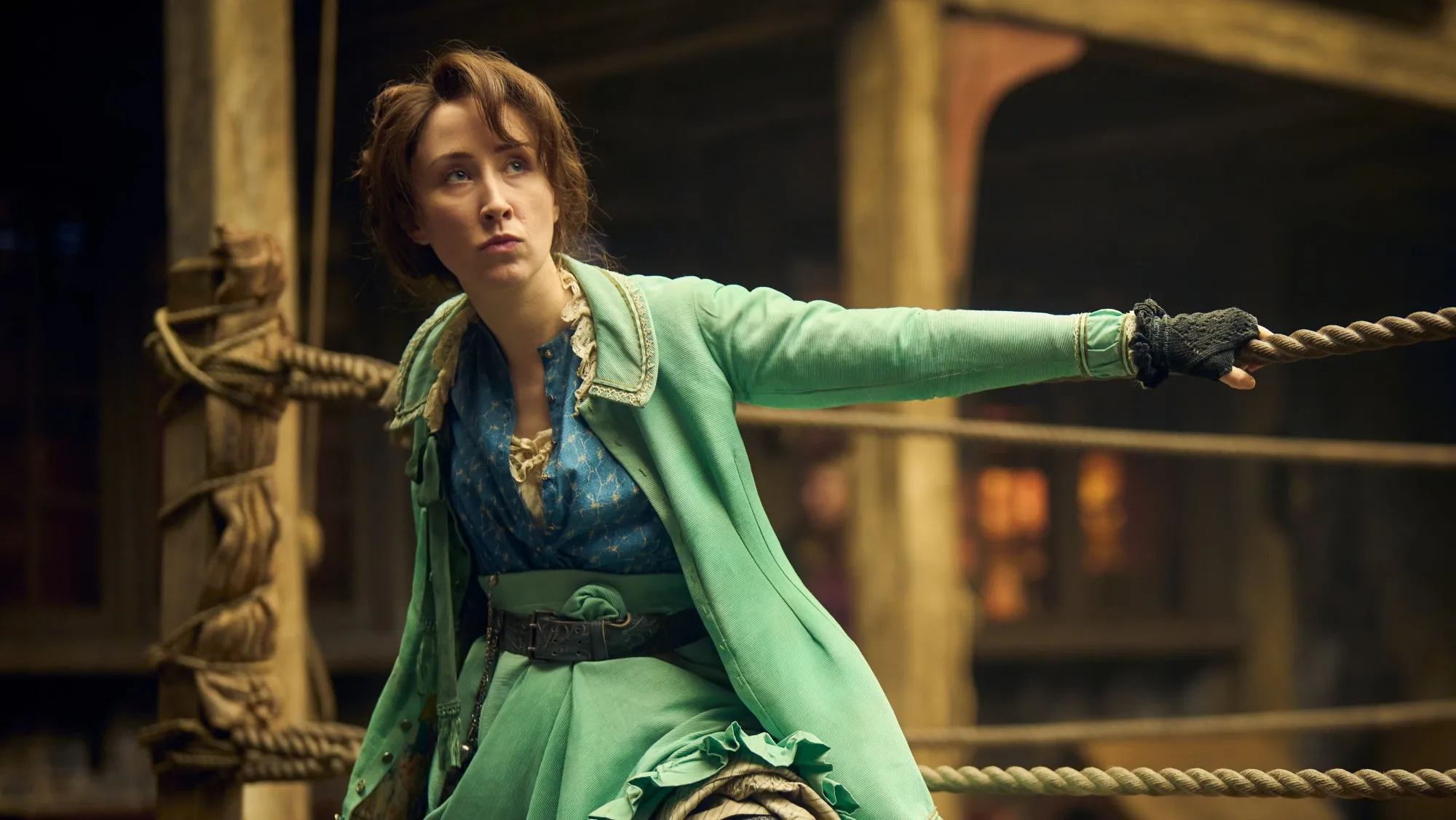
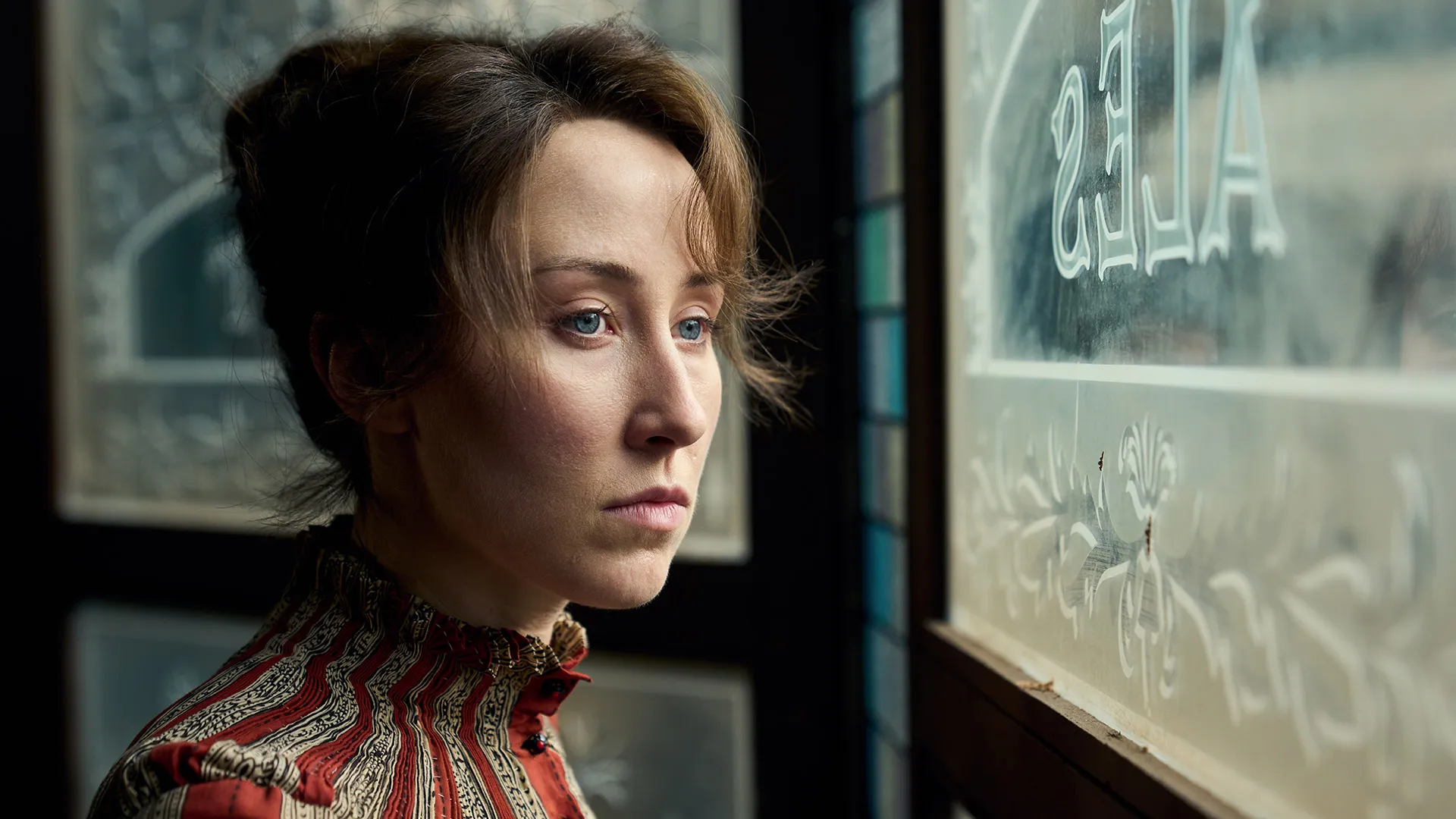
Erin Doherty remains the magnetic pull of the series. Cut off from her crew and held under Indigo Jeremy’s control, Mary carries herself with a cold, lethal resilience that never needs to announce itself. Vulnerability shows up in the silences, in the pauses where the future presses in. She holds a quiet terror of being dragged back into the poverty she fought to outrun, and her plans to return are measured with a surgeon’s precision.
Malachi Kirby gives Hezekiah Moscow the weight of disillusionment, the look of someone who killed a champion and felt his own soul slip with the blow. Buster Williams lingers over him like an unpaid debt. Hezekiah drifts through unlicensed barge bouts, watched by crowds that treat him as a curiosity to be consumed. Hope has cooled into resentment aimed at a London that demands his blood and refuses his humanity.
James Nelson-Joyce adds a tragic counterpoint as Treacle. His changed state after the head injury stands as a living monument to Sugar’s failure. He carries the outline of who he used to be, and the gap between past and present becomes a wordless accusation. His presence keeps the cycle of violence and regret in motion, even in scenes where he says little.
Schemes, Shadows, and Sovereignty
The season’s narrative spine rests on a daring heist built around a Caravaggio masterpiece. The plan sparks Mary’s attempt to reclaim authority over the Forty Elephants, framing leadership as something seized and defended through audacity. Sophie Lyons enters as an American mesmerist, bringing a theatrical edge to the criminal machinery. Her work lets the series play with high society’s gullibility through deception and psychological manipulation, exposing how easily polish can be guided by suggestion.
Indigo Jeremy stands against these efforts, and Robert Glenister plays him with a quiet, unsettling brutality. His leadership reflects a rigid tradition that treats women as tools to be managed. The tension comes from that ideological collision: Mary’s clever, modern tactics meet his blunt demands for obedience and control.
Running alongside the street-level wars is the thread involving Hezekiah and Prince Albert Victor. Teaching a royal scion to box becomes a sharp way to examine the class divide, placing East End reality inside the gilded rooms of the West. The city feels poised for a larger eruption. French anarchists hum in the background, and the threat of dynamite hangs in the air, a reminder that the ground can shift without warning. Those political tremors complicate the local rivalries, making every grab for control feel unstable, like a fight on sand that keeps sliding.
The Texture of the 1880s
The series’ visual language captures the era’s physical density, the sense that air itself has weight. The Blue Coat Boy pub glows with amber light and thick smoke, a refuge that increasingly reads like a trap with warm walls. The docks are rendered through filth, noise, and the relentless churn of the industrial machine. Surfaces look damp. Coats seem heavy with weather, as if the climate has learned how to cling.
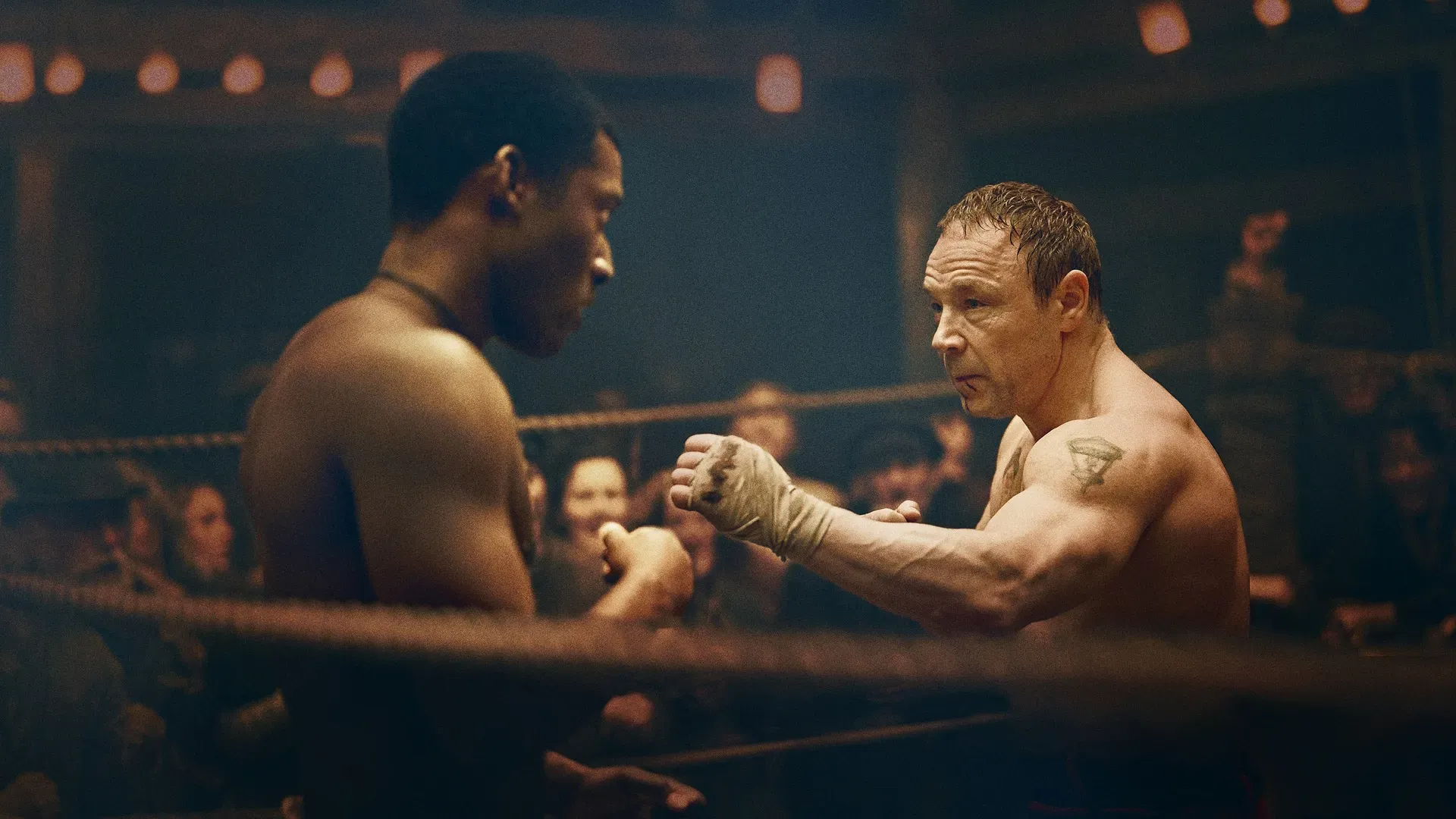
The boxing matches have moved away from organized pits into the volatile environment of barges. These fights land as messy, raw affairs, unsteady in both space and consequence. The royal sparring sessions, by comparison, play as sterile performance, controlled and curated. Class markers run through the fabric of the show. Mary uses fashion as tactical disguise, her sharp silhouettes granting access to rooms designed to reject her.
The Goodson brothers look like extensions of the street, their clothes tattered and stained, their bodies carrying the same grime as the alleys they haunt. Direction and editing adopt a slower, more internal pace, lingering on faces through long takes instead of chasing momentum through rapid cuts. The city becomes its own force, larger than any single villain, pressing down on everyone within reach.
Power and the Myth of the Savage
The series operates as a study of outsiders forced into exhausting performance. Hezekiah’s life as a Black man in Britain is shaped by constant display: crowds pay to watch him fight, then spit racial vitriol at him in the same breath. That tension feeds his internal unrest, turning every bout into an arena for humiliation as much as survival. His history in Jamaica sits inside him as trauma carried into each ring. His connection with Victoria Davies grows out of a shared awareness of living at the margins of a white imperial order, where belonging is policed and safety is conditional.
The Forty Elephants embody a violent rejection of the limits placed on women in the Victorian era. Mary’s relationship with her mother, Jane, traces a cycle of betrayal treated as a survival skill, learned and repeated because mercy can be a liability. Survival reads as business, and the price is paid in trust.
The series sharpens its critique through the “Wild Man” label pushed by the zoo and the boxing promoters. Hezekiah is packaged as a primitive curiosity, marketed for easy thrills. The nobility and gang leaders like Indigo Jeremy enact cruelties that carry far greater intention and scale. The people at the story’s center slip through the fissures of a society that praises progress and abandons the workers who build it. East End desperation emerges from a system that rewards property and title and lets human dignity fall where it may.
A Thousand Blows is a visceral historical drama that premiered its first season on February 21, 2025, with the highly anticipated second season following shortly after on January 9, 2026. Created by Steven Knight, the series plunges viewers into the brutal, soot-stained world of 1880s Victorian London, focusing on the intersection of immigrant survival and the illegal bare-knuckle boxing circuit. The show is currently available to stream in its entirety on Hulu for viewers in the United States and on Disney+ for international audiences.
Full Credits
Title: A Thousand Blows
Distributor: Hulu, Disney+
Release date: February 21, 2025 (Season 1), January 9, 2026 (Season 2)
Rating: TV-MA
Running time: 43–56 minutes
Director: Katrin Gebbe, Dionne Edwards, Tinge Krishnan, Nick Murphy, Coky Giedroyc, Ashley Walters
Writers: Steven Knight, Yasmin Joseph, Harlan Davies, Insook Chappell, Ameir Brown
Producers and Executive Producers: Steven Knight, Kate Lewis, Damian Keogh, David Olusoga, Tinge Krishnan, Stephen Graham, Tom Miller, Sam Myer, Hannah Walters
Cast: Malachi Kirby, Erin Doherty, Stephen Graham, Francis Lovehall, James Nelson-Joyce, Jason Tobin, Darci Shaw, Hannah Walters, Morgan Hilaire, Caoilfhionn Dunne, Jemma Carlton, Nadia Albina, Tom Davis, Daniel Mays, Gary Lewis, Susan Lynch, Robert Glenister, Ned Dennehy, Catherine McCormack
Director of Photography (Cinematographer): Milos Moore, Catherine Derry, Rasmus Arrildt
Editors: Al Morrow, Jo Smyth, Peter Christelis, Carly Brown, Mark Davis, Daniel Lapira, Brin Simone Nesti
Composer: Federico Jusid
The Review
A Thousand Blows Season 2
This second outing is a somber, deliberate evolution of the series. It trades the kinetic thrill of the boxing ring for a deep, psychological excavation of its protagonists. By grounding the narrative in the trauma of the previous year, the show finds a new, more resonant weight. The central performances remain exceptional, anchoring a sprawling plot that occasionally threatens to drift into excessive subplots. It is a dense, atmospheric study of survival in a city designed to crush the vulnerable.
PROS
- Erin Doherty and Stephen Graham deliver Masterclasses in cold resilience and sodden regret.
- The visceral depiction of 1880s London feels tangible, filthy, and lived-in.
- Sharp commentary on race, class, and the gendered nature of Victorian criminality.
- A more internal, focused aesthetic that prioritizes emotional clarity over spectacle.
CONS
- The sheer number of subplots, including the royal training and anarchists, can feel slightly overstuffed.
- The shift to a slower, more ruminative tempo may frustrate those seeking the high-octane energy of the first season.







