

























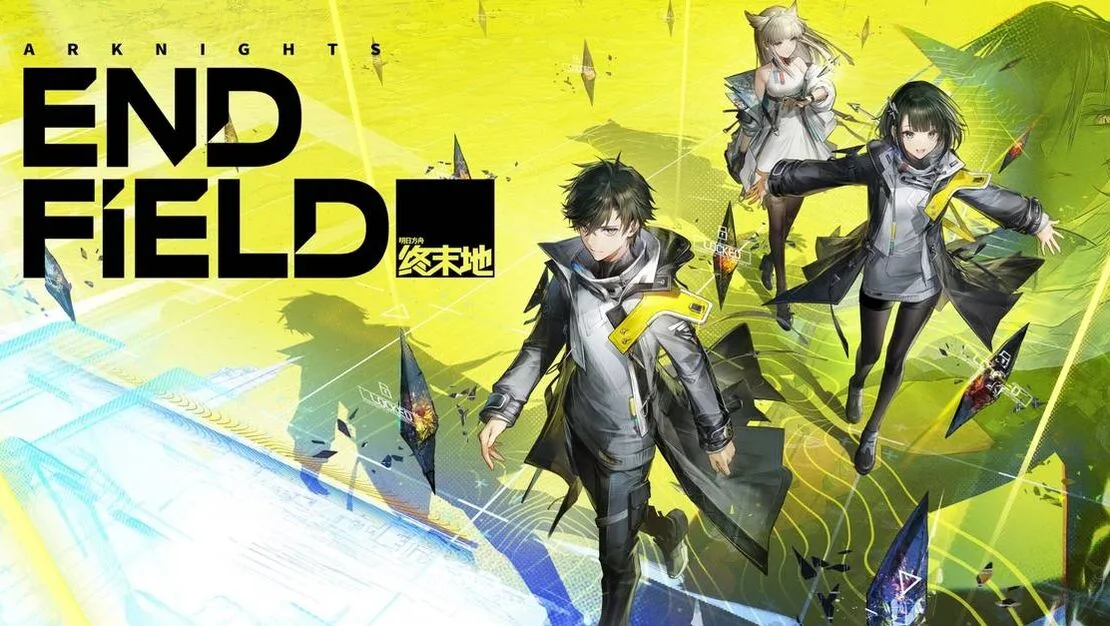

Waking up as the Endministrator on the moon of Talos-II plays like a cold promotion into middle management for a celestial quarry. After ten years in stasis, you step into a harsh industrial frontier built on emptiness. You run Endfield Industries, a corporation trying to colonize a planet shaped by supernatural anomalies and hostile factions. The writing avoids the comforting tone many fantasy RPGs lean on and commits to a clinical sci-fi mood where resource extraction and survival define your day-to-day priorities.
Anchors, strange celestial objects, fall from the sky and bring the Aggeloi with them, rock-like entities that put the colony under constant threat. Another pressure point comes from the Landbreakers, human scavengers who have rallied into an organized resistance with a mysterious leader at the top.
The heavy industrial look sets this apart from the high-fantasy vocabulary of Genshin Impact, swapping lush wonder for steel, gray stone, and hard edges. The story keeps returning to the friction between these groups and your own missing history. The lead functions as a silent stand-in for the player, so the forward motion often rests on supporting Operators such as Perlica and Wulfgard, whose presence injects personality and tension into a world that often feels intentionally sterile.
Tactical Repetition and the Weight of Combat
Combat runs on a four-member squad. You control one character directly while AI pilots the others, and you can swap between Operators to keep your offense moving. Standard combos build a stagger meter on enemies, and filling that bar opens the door for a Coup De Gras that lands big damage.
The system rewards careful sequencing, since chaining skills across characters drives your best bursts. One character’s elemental ability can set up a follow-through from another, and I consistently got the cleanest results by building mono-element teams to keep those chains efficient and predictable.
That structure sounds brisk on paper, yet the moment-to-moment fighting often feels like endurance work. Aggeloi and Landbreaker foot soldiers carry huge health pools, so encounters drag even when your inputs stay sharp. I ended up fighting the same Landbreaker Flamethrower dozens of times, and level matching keeps those clashes from softening as you move forward.
The result is a persistent mismatch between stylish animations and the pace those visuals suggest. Wuthering Waves uses a similar dodge-and-parry language, and it feels far more responsive. Here, heavy visual clutter can bury the timing window and turn parries into guesswork. Perfect dodges generate Skill Points that help accelerate the loop, yet the enemy durability slows everything back down and pushes the rhythm toward repetition. Wulfgard looks fantastic during cutscenes, and parts of his kit sell speed and force, but that energy does not consistently carry into how fights actually play.
Logistics as a Core Gameplay Pillar
The Automated Industry Complex, or AIC, is the feature that most clearly separates this game from nearby genre rivals. A large chunk of your time goes into deploying autonomous drills on Ferrium and Originium deposits. After extraction, you build out the infrastructure: conveyor belts, refiners, and power lines that transform raw materials into upgrade parts.
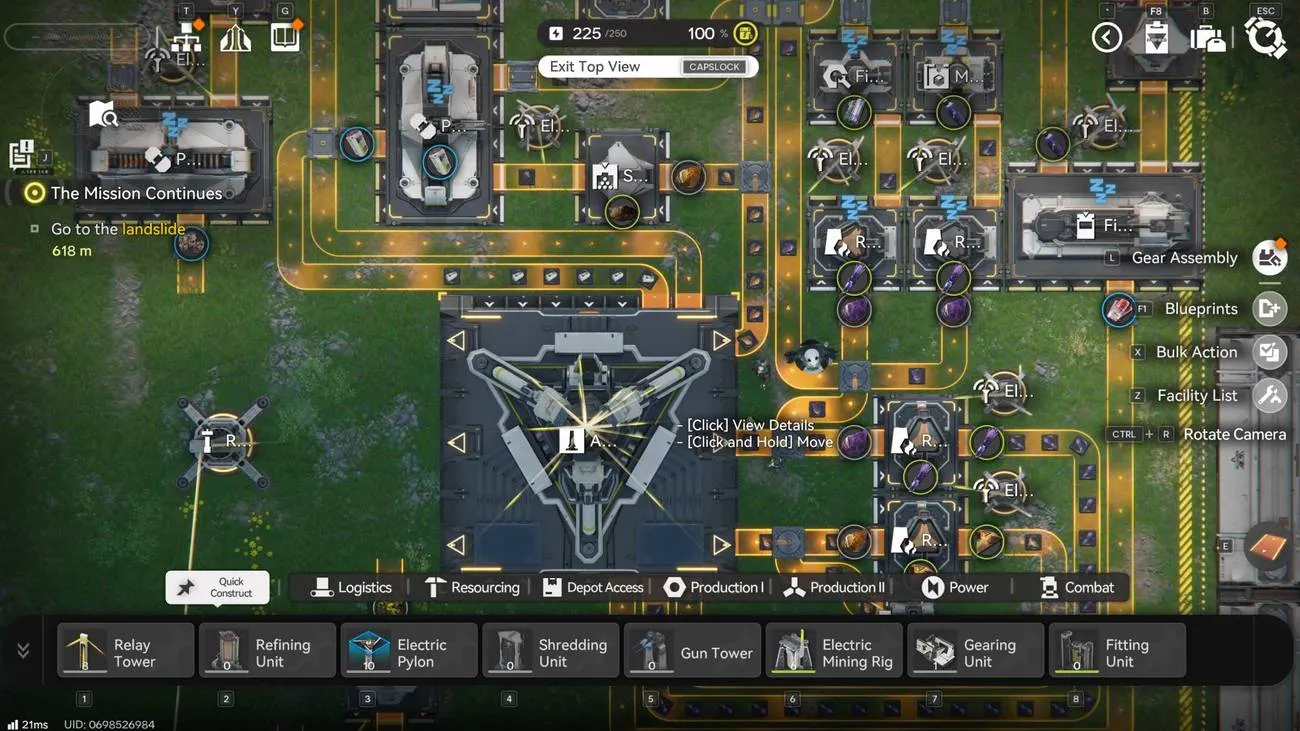
The logic tracks closely to Factorio or Satisfactory, with production lines that expand in steps. You convert Ore into Dust, then into Crust, then into the parts needed to level your team. The factories keep working while you are away, which creates a steady sense of output and a constant pull to return and tune efficiency.
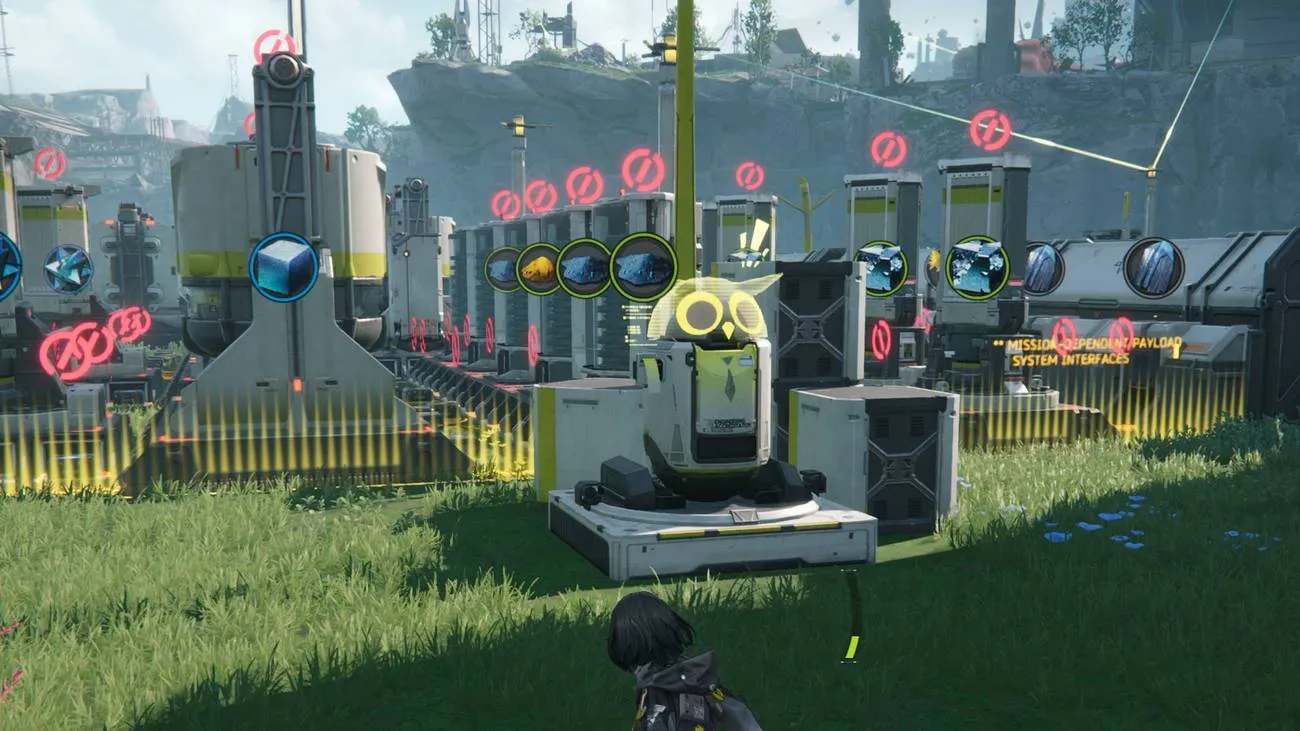
Exploration connects directly to that engineering layer. Your characters lack climbing and gliding, so progress often depends on what you construct. Ziplines let you cross massive chasms, and power relays open gates and support environmental puzzles. That grounded approach makes the terrain feel dense and physical, since movement becomes a practical problem you solve with tools.
Asynchronous multiplayer extends the same idea into a light community layer, since structures you place can appear in someone else’s world and help them cross a difficult stretch. The parallel to Death Stranding comes through in the way the game rewards you for making travel smoother for others. Route planning becomes a quiet obsession, with power requirements shaping how far you can push toward distant chests. Water-heavy areas highlight a strange limitation, since there is no swimming mechanic, and the focus stays locked on mechanical traversal.
Aesthetic Contrast and the Live Service Loop
The visuals lean on a sharp split between detailed anime characters and realistic industrial spaces. Character models look polished, combat animations flow cleanly, and flashy effects frequently fill the screen when skills start chaining. The soundtrack matches that range, shifting between operatic boss themes and quieter atmospheric pieces for the wilderness.
English voice work lands professionally, even if the script leans hard on technical jargon. One cutscene lands a quick joke when a character removes his glasses and reveals a second pair underneath, a small moment that signals a sense of humor inside a story that often carries a serious tone.
Progression sits inside a familiar gacha structure, with premium currency used to pull new Operators and weapons. The economy expects daily visits to recycling stations to keep resources moving, and those stations often sit far from fast travel points. That distance turns upkeep into a routine designed around frequent check-ins. The user interface piles on information, including stock market details and factory efficiency readouts.
Players who love min-maxing will find plenty to chew on, though the layout can feel cramped on a smaller screen. The loop of gathering materials and waiting for respawns settles into a predictable cadence. The factory simulation can hold your attention for long stretches, yet the daily maintenance tasks add persistent friction that weighs down the experience.
The Review
Arknights: Endfield
Arknights: Endfield is a deep simulation of industrial survival. The factory mechanics are the most polished part of the experience. They offer a sense of scale and logic that is rare in this genre. But the combat is slow and repetitive. The high enemy health and constant grind make it feel like a chore. It is a polished game with a specific focus on logistics. If you love building systems, you will find a lot to enjoy. If you want fast action, you might be disappointed.
PROS
- Complex factory automation systems.
- Detailed industrial art direction.
- Innovative traversal through engineering.
- High-quality soundtrack and voice work.
CONS
- Repetitive and spongey combat.
- Oppressive daily progression grind.
- Cluttered and information-heavy UI.
- Limited enemy variety in early chapters.