























Joseph Bullman returns with a production that plays like a case file opened on national television. Dirty Business lands on Channel 4 as a three-part investigation tracking the decay of water systems across England and Wales. The series starts in 1989, when the industry passed into private ownership under promises of efficiency. From there, it builds a timeline of promises collapsing into murky rivers and polluted coastlines.
Bullman tells the story through a hybrid form, pairing dramatized scenes drawn from documented events with rough, real news footage and campaign material. The effect is immediate. The viewer stays close to the evidence, and the crisis keeps its physical weight.
At the center sits a lopsided fight between ordinary people and giant companies that seem protected from consequences. The tone carries controlled anger. It shifts from sharp satire to scenes of personal loss and keeps its attention fixed on the erosion of public protections.
The Detectives of the Riverbank
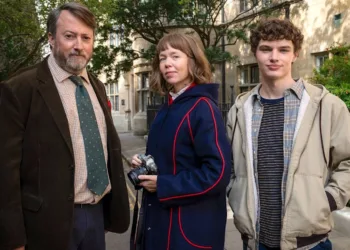
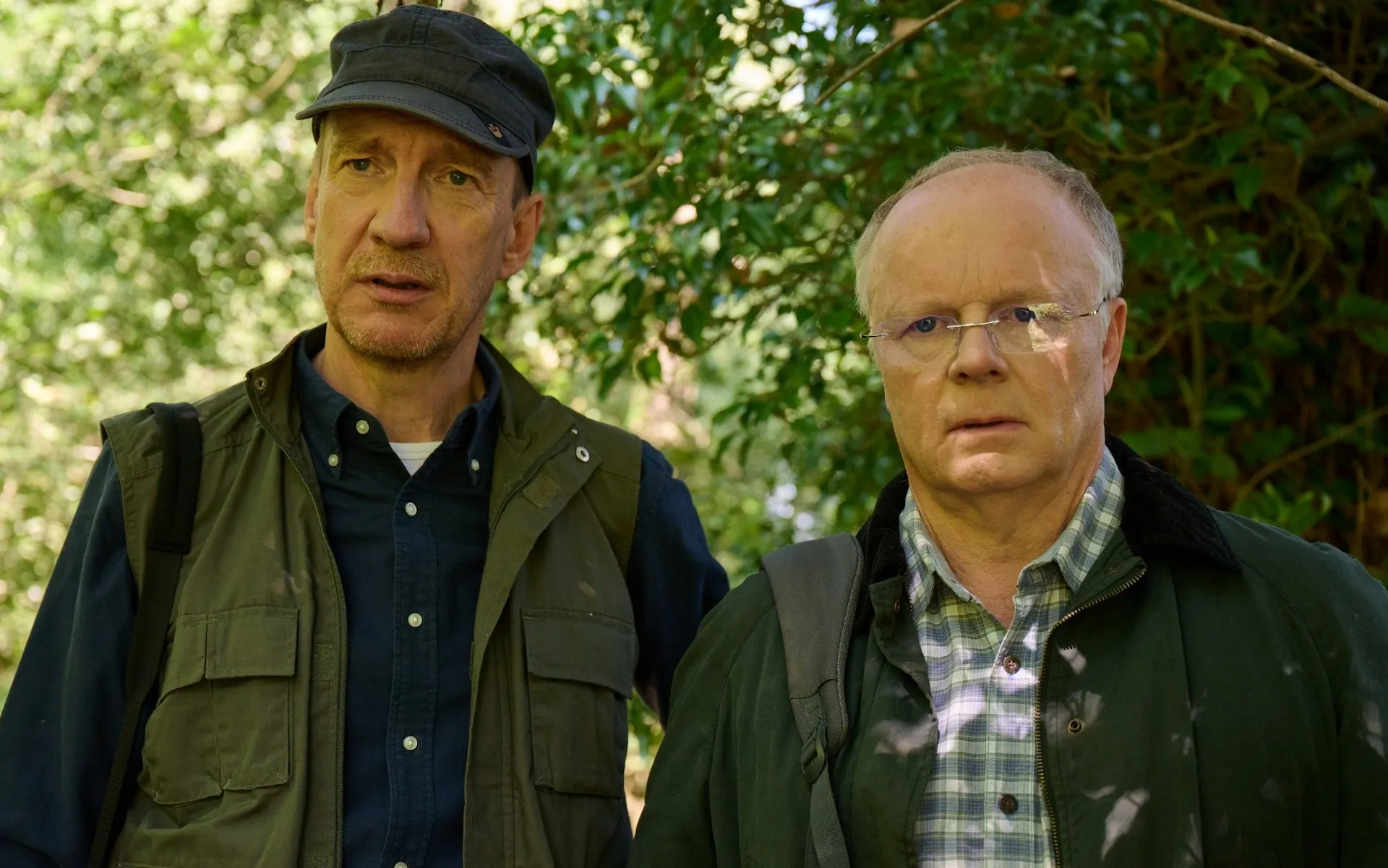
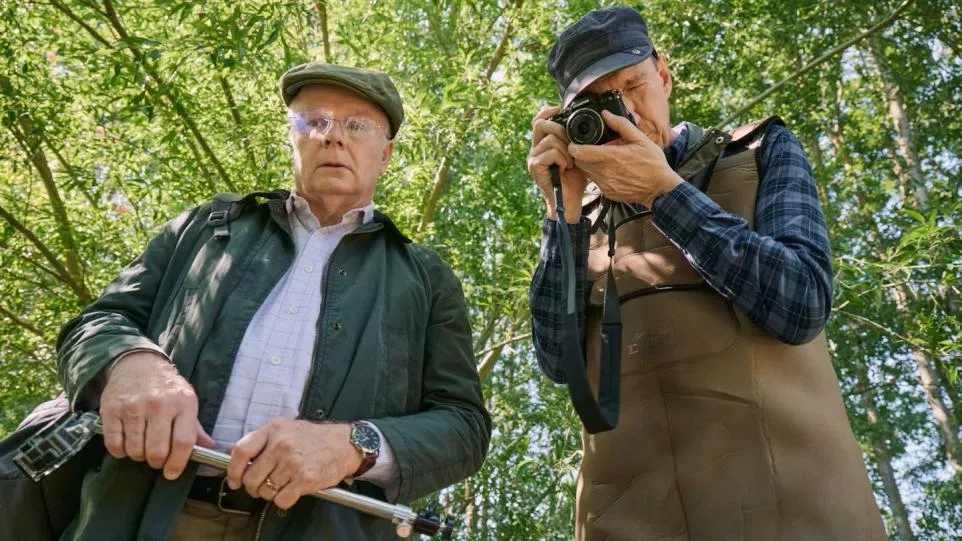
The series finds its narrative engine in two neighbors in the Cotswolds who spot a mystery close to home. David Thewlis plays Ashley Smith, a former police investigator with no patience for corporate evasion. Jason Watkins plays Peter Hammond, a retired academic with a strong command of biological data and mathematical patterns. Their inquiry starts in 2016 after they notice foul brown discoloration in the River Windrush. The local water company offers familiar excuses, and Ash and Peter start digging.
Thewlis gives Ash a twitchy, driven energy that suits a man who can smell a cover-up from across the riverbank. He catches the character’s instincts and his anger at a system built to lose its own paperwork. Watkins meets him with a quieter rhythm as Peter, all method and concentration, processing huge volumes of information with steady intensity. Their chemistry matters. The pair share a dry, funny rapport that gives the series a needed release valve without softening the subject.
Peter eventually builds a specialized algorithm to sort through thousands of sewage-dumping incidents. The discovery points to a systemic problem tied to three decades of underinvestment. John Pardue’s cinematography presses that point through the look of the water itself. The camera lingers on the polluted streams and finds a strange pull in them, even as the surfaces look foul. Those images set the green beauty of the English countryside against the grey thickness of industrial neglect. The visual strategy tracks Ash and Peter’s path from enjoying the landscape to documenting its slow ruin.
The Human Residue of Neglect
The main investigation gives the series momentum, and the emotional force comes from secondary timelines that show what these failures do to people. The hardest stretch lands in 1999 with Mark and Julie Preen. Tom McKay and Posy Sterling play them with striking restraint as parents who take their children to a Devon beach because it carries clean status. Their eight-year-old daughter Heather contracts a fatal infection after contact with effluent from an undisclosed pipe.
The script handles this material with discipline and keeps away from easy emotional cues. It stays with the blunt reality of the family’s grief and the absence of accountability that follows. A legal verdict of misadventure leaves the parents carrying guilt, and that burden later feeds further tragedy for Mark. The timeline matters because it shows the danger as a long-running crisis, not a recent shock.
The series links that earlier loss to present-day victims, including a surfer living with permanent ear disease. It also brings in whistleblowers, played by Asim Chaudhry and Chanel Cresswell, and that choice widens the frame of suffering. These characters give an internal view of the system, including the strain of working inside decaying plants and inside a regulator stripped of power. Their scenes show negligence hitting workers and the public alike, creating a shared working-class anger that runs through the series like a current.
The Boardroom and the Blind Eye
The final layer studies the political and corporate machinery that turned environmental decline into normal operating practice. Bullman depicts the Environment Agency as a weakened body and stages several scenes with a near-absurd edge. One standout moment features a manager explaining that water companies will monitor their own legal breaches. The series plays this policy shift with dry comedy, and the joke lands because the logic is so broken.
Charlotte Ritchie gives an excellent performance as a corporate executive fluent in polished excuses. She carries a plucky, articulate manner that makes the character’s evasions feel even sharper. The role captures the greenwashing language used to calm public anger as the infrastructure keeps failing.
Bullman also uses real footage of political figures, from Margaret Thatcher to current leaders, to show a long chain of government inaction. The clips underscore a revolving-door culture in which regulators and executives trade places and protect the same arrangement. The series also points to class dynamics, showing ordinary citizens met with condescension by people holding power.
By the closing stretch, the show leaves easy victory on the cutting-room floor. It stays with the image of Peter Hammond nearing a breaking point under the strain of the fight. His exhaustion mirrors a public ignored for decades. The final impression lingers like contaminated water left standing in a pipe: how long can a country treat its most basic resource as private profit and expect public trust to hold?
Dirty Business premiered on Channel 4 on February 23, 2026. It is currently available for streaming on the Channel 4 streaming service. The production focuses on a ten-year investigation into the environmental practices of water companies in the United Kingdom. It explores themes of corporate responsibility and regulatory failure through a mix of dramatized events and real-world footage. Viewers can watch the entire miniseries online or tune in to scheduled broadcasts this week.
Full Credits
Title: Dirty Business
Distributor: Channel 4
Release date: February 23, 2026
Rating: TV-MA
Running time: 48 minutes per episode
Director: Joseph Bullman
Writers: Joseph Bullman
Producers and Executive Producers: Laura McCutcheon, Meeshan Saxena, Aysha Rafaele
Cast: David Thewlis, Jason Watkins, Asim Chaudhry, Posy Sterling, Tom McKay, Jon Culshaw, Vicky Pepperdine, Craig Parkinson, Charlotte Ritchie, Chanel Cresswell, Lucia Keskin, Alex Jennings, Alice Lowe
Director of Photography (Cinematographer): John Pardue
Editors: Mark Harrowes
Composer: Sarah Playford
The Review
Dirty Business
Joseph Bullman delivers a sharp, essential piece of television that strips away the corporate jargon to reveal a visceral national crisis. By grounding systemic failure in the lives of those it has devastated, the production avoids becoming a dry lecture on policy. It is a rare work that manages to be both informative and deeply moving, using its hybrid format to bridge the gap between historical negligence and current decay. The series demands a reaction, refusing to provide the comfort of a resolution while the waters remain murky.
PROS
- David Thewlis and Jason Watkins provide a grounded, witty anchor to the investigation.
- The use of real footage creates a gut-punch reality that drama alone cannot achieve.
- The script expertly balances dark, satirical humor with harrowing human tragedy.
- John Pardue’s cinematography makes the environmental decay look hauntingly magnetic.
CONS
- The three-episode limit feels brief for such a sprawling, multi-decade timeline.
- The dense data-driven segments might require close attention from casual viewers.