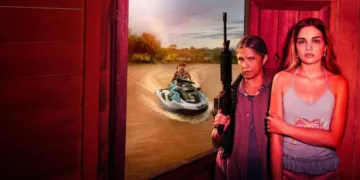















Some shows are comfort food. Rivers of Fate is not one of them. This four-part Brazilian limited series, originally titled Pssica, is a shot of something bitter and potent, meant to be swallowed quickly. Set in the oppressive humidity of the Amazon, its title hints at the currents that pull its characters into a violent vortex of crime and human trafficking.
This is not a relaxing watch; it is a brutally realistic plunge into a world where hope is a scarce commodity. The story kicks off with the collision of three lives, each on a path to ruin. We meet a young woman cast out by her family, a mother whose world is shattered by murder, and a reluctant criminal who connects their fates. Prepare for a viewing experience that is short, sharp, and deeply unsettling. It’s a series that grabs you by the throat from its opening moments and rarely loosens its grip.
Three Characters in Search of an Exit
The narrative of Rivers of Fate is a tightly wound knot of desperation, its tension derived from the intercutting of three lives spiraling independently toward a shared, violent center. The show throws you directly into these separate worlds, forcing you to find the threads.
At one end is Janalice (Domithila Cattete), a teenager whose catastrophic fall from grace is both swift and appallingly mundane. After a consensual moment with her boyfriend is filmed and shared, she becomes an object of public shame. Her family’s reaction is a case study in cruelty disguised as piety. Her mother, incensed by the dishonor, physically strikes her.
Her father sees his daughter not as a victim of betrayal but as a source of his own humiliation among his coworkers. Their solution is not protection but exile, shipping her off to an aunt in Belém. This act severs her last safety net, sending her into a world that is completely indifferent to her well-being.
There, a brief, cynical friendship with a streetwise teen named Dionette provides a flicker of camaraderie before Janalice is lured into the hands of traffickers. Her story is a raw depiction of survival against impossible odds.
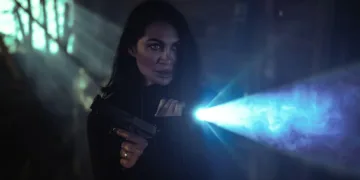
Pulling on another thread is Mariangel (Marleyda Soto), a woman forged by a harder past. As a former guerrilla fighter, she possesses a skill set and a resilience that sets her apart. She was attempting to build a quiet life with her husband and son, saving money to escape a region steeped in a homophobia that threatened her son’s existence.
The life she envisioned is obliterated in a single night of random, pointless violence. A group of river pirates, led by the unstable Gigante, diverts from a planned heist looking for alcohol and attacks her home. Her husband and son are murdered. Mariangel’s response is swift and absolute: vengeance. Her grief is channeled into a cold, methodical mission to hunt down every person responsible.
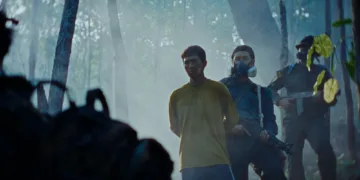
The man tying these two women together is Preá (Lucas Galvino), one of the pirates responsible for Mariangel’s loss. He is also entangled in the operation that holds Janalice captive. Preá is a fascinatingly complex figure, a gang leader by circumstance who seems to lack the requisite sadism for the job. He is often a reluctant participant in the chaos instigated by his crew, particularly the brutish Gigante.
Preá’s internal conflict crystallizes when he first sees Janalice. In her, he seems to recognize a flicker of an innocence he has lost, sparking a protective instinct that puts him at odds with his entire world. His desire to save her becomes a desperate grasp at some form of redemption. With only four episodes, the plot moves with relentless speed. Every scene feels critical, and the strong supporting cast fleshes out a world that feels dangerously real.
Staring into the Abyss
Rivers of Fate is determined to make you uncomfortable, using its crime-thriller framework to conduct a bleak survey of institutional decay. It presents a world rife with corruption and misogyny, where the supposed pillars of society offer no protection. The failure begins with the family unit. Janalice’s parents, governed by religious dogma and social shame, actively push their daughter into harm’s way.

Their faith provides a justification for their cruelty, not a moral compass. This theme of systemic failure extends outward. The law is a non-entity on the Amazon’s murky waters; pirates and traffickers operate with near total impunity, creating a shadow state where the only rule is survival of the fittest.
The series dissects a culture where women are disposable commodities and homophobic violence is an accepted norm. Mariangel’s desperate plan to move her family was a direct response to this threat, a threat that ultimately found them anyway.
The show confronts sexual violence with a directness that is often shocking. This approach forces a difficult question: does the graphic depiction of brutality serve to illuminate a horrific reality, or does it become exploitative? The show’s relentless bleakness can feel like a shortcut to raising the stakes when the writing could have done more work.
Certain creative choices are particularly debatable. Filming a sexual assault from the victim’s point of view is a provocative decision, a technique that aims for visceral immersion. The effect, however, is complicated. Instead of fostering a deeper connection to the character’s trauma, such a technique risks pushing the audience away, making them question the filmmaker’s intent rather than feeling the character’s pain. It turns an act of horror into a stylistic choice that can feel self-conscious.
This contrasts with the violence meted out by Mariangel. Her acts of revenge are framed with a sense of righteous catharsis, a bloody rebalancing of the scales. This places the series in a conversation with classic revenge thrillers while subverting the genre’s norms.
By placing a determined woman at its center and giving its primary antagonist a conscience, Rivers of Fate moves beyond a simple story of good versus evil. It explores a world of moral ambiguity, where victims become killers and villains search for grace. It walks a fine line between authentic horror and sensationalism, and its success in staying on the right side of that line is a matter of viewer tolerance.
Polished Misery
For a story so grim, Rivers of Fate is exceptionally well-made. The direction from Fernando and Quico Meirelles is confident and unflinching, every frame composed with purpose. Fernando Meirelles, known for the acclaimed film City of God, brings a similar kinetic energy and gritty realism to this project. His signature style is evident in the show’s visual language.
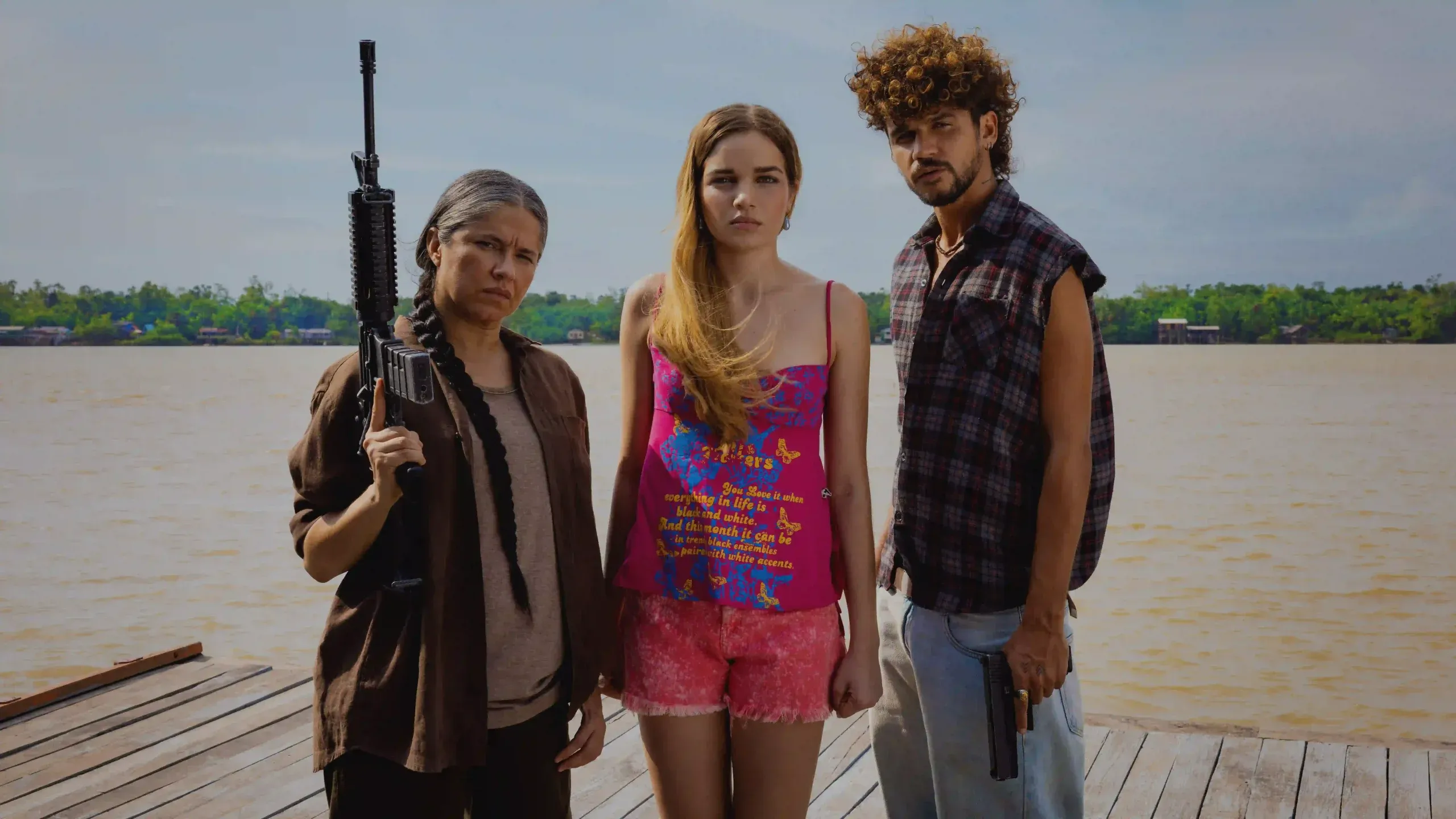
The cinematography captures the lush but menacing atmosphere of the Amazon, making the environment feel like another antagonist. The vast, indifferent river and dense, suffocating jungle are shot with a muddy, desaturated color palette that makes the world feel perpetually damp and decaying.
Handheld camerawork during chase scenes and violent encounters creates a documentary-like immediacy, plunging the viewer directly into the chaos. The camera’s gaze is often uncomfortably intimate, using tight close-ups that trap the characters in their fear and despair.
This visual intensity is matched by the sound design. The score is minimal, often replaced by the unsettling ambient sounds of the jungle, the creak of a boat, or the sudden, jarring noise of an engine. This naturalistic soundscape heightens the sense of dread, making the world feel both expansive and claustrophobic.
Sharp editing keeps the tension high, cutting rapidly between the converging storylines to build momentum. The performances are the bedrock that supports the show’s heavy themes. Domithila Cattete is outstanding as Janalice, her face a canvas of fear and budding resilience. She communicates volumes in silence, her eyes reflecting the terrifying journey from betrayed teenager to a survivor fighting for her life.
Marleyda Soto brings a righteous, contained fury to Mariangel. She embodies the physical confidence of a trained fighter, her movements economical and purposeful, her grief simmering just beneath a hardened surface.
Lucas Galvino skillfully portrays Preá’s inner turmoil, conveying his character’s conflict through subtle expressions and hesitant actions that stand in stark contrast to the overt brutality of his crew. The high quality of the acting and direction provides a strong foundation for the series’ difficult subject matter. It is this level of craft that makes the brutal events feel so grounded and immediate, transforming a grim story into a potent piece of filmmaking.
“Rivers of Fate,” also known as “Pssica,” is a gripping Brazilian crime drama miniseries directed by Quico Meirelles, with an episode directed by Fernando Meirelles, known for films like “City of God”. The series is based on a book by the Paraense writer Edyr Augusto. The show premiered on August 20, 2025, and is available for streaming on Netflix.
Full Credits
Directors: Quico Meirelles, Fernando Meirelles
Writers: Bráulio Mantovani, Fernando Garrido, Stephanie Degreas
Producers: Andrea Barata Ribeiro
Cast: Domithila Cattete, Marleyda Soto, Lucas Galvino, Ademara, Ana Luiza Rios, Bruno Goya, Claudio Jaborandy, David Santos, Felipe Rocha, Gabriel Knoxx, Luca Dan, Maycon Douglas, Ricardo Teodoro, Sandro Guerra, Sendí Baré, Welket Bungué, Wesley Guimarães
Composer: Federico Jusid
The Review
Rivers of Fate
Rivers of Fate is a masterfully crafted piece of television that is almost impossible to recommend. Its unflinching brutality and powerful performances create a visceral, unforgettable experience, but its relentless bleakness and questionable stylistic choices in depicting violence make it a punishing watch. This is expert filmmaking in service of a story that is deeply, intentionally unpleasant. Approach with extreme caution.
PROS
- Exceptional performances from the entire lead cast.
- Stunning cinematography and atmospheric direction that ground the story.
- A tense, fast-paced narrative that benefits from its four-episode structure.
- Complex characterization that avoids simple hero-villain dynamics.
CONS
- The relentlessly bleak and brutal tone can be emotionally draining.
- Explicit depictions of sexual violence may feel exploitative to some viewers.
- Certain provocative stylistic choices can detract from the story's impact.
- Definitely not suitable for viewers sensitive to graphic content.