


















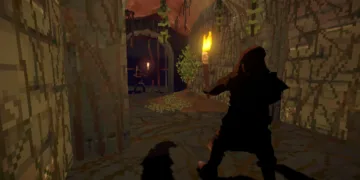








Maya’s evening opens with a quiet family dinner. The routine breaks the moment she answers a ringing phone in the hallway. No voice answers. She goes back to the dining room and finds it empty. Her family is gone. When she steps through the front door, the world outside has turned into ruins. A massive castle towers over the landscape. The game presents this place as a prison formed from Maya’s damaged memories.
The psychological horror setup builds tension right away through isolation. The player shares Maya’s disorientation while moving through a space that resembles home and still feels wrong. The mood recalls the surreal dread of David Lynch. Each hallway points to severe mental instability.
The opening hour depends on that lonely atmosphere. Maya moves through the space like a toy in the hands of an unseen force. Her past appears in vignette-like fragments that keep questioning her sanity. She wanders a decayed structure where memory works like a trap.
The Physics of Inverse Momentum
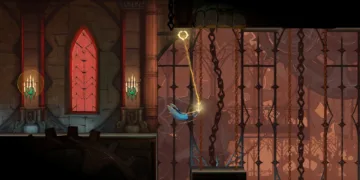
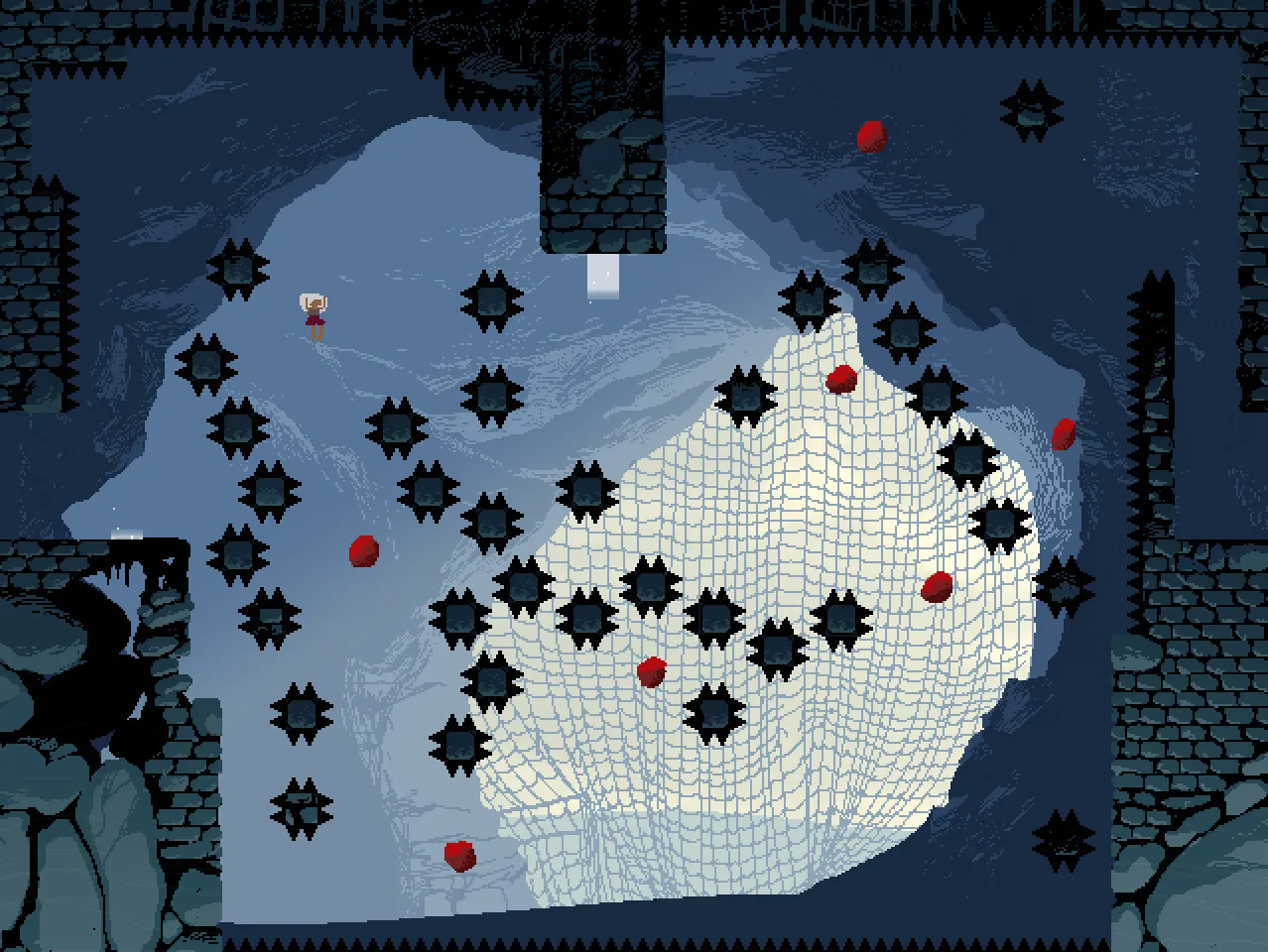
The gameplay is built around gravity inversion. Maya can jump and use a high jump. Her signature ability lets her flip toward the ceiling. She sticks to that surface until she jumps and flips again. The system has a hard rule. Maya gets one flip while airborne. She needs to land before the ability resets. Floating red orbs create the sole exception. Touching these crystals in mid-air refreshes the flip at once.
That rule set creates long airborne sequences. Players need to learn the game’s momentum physics with precision. Maya keeps moving forward after a flip because velocity carries through. The result is a yo-yo-like motion where direction changes lag behind player input.
A late gravity reversal can send Maya into a spiked ceiling and kill her. Timing and acceleration demand a near mathematical sense of rhythm. The game uses a precision-platformer format in the vein of Celeste and Super Meat Boy. Each screen functions as a single-room test packed with hazards. Spikes and lasers require exact execution. Death happens often and the game treats it as part of the loop.
Instant respawns and checkpoints on every screen reduce the sting of repeated failures. The difficulty curve echoes the cadence of I Wanna Be The Guy. Progress feels like instinct wrestled into shape inside a hostile space. The controls stay simple and place all pressure on focus. Many rooms take dozens of attempts before the correct route becomes clear.
Retro Claustrophobia and Sonic Dread
Love Eternal uses a retro 4:3 aspect ratio. That frame gives the hand-drawn pixel art a cramped, claustrophobic feel. Character sprites are clean and minimal. The backgrounds carry detailed hand-painted scenery. Those backdrops suggest a larger world than the screen can show. The environments are filled with uncanny details. Thin netting hangs over suburban trees and houses. The image points to Maya as a captive trapped inside a simulated memory.
The sound design shifts between gentleness and violence. During exploration, the ambient score stays quiet and haunting. The calm breaks each time Maya dies. Every mistake lands with sharp sound effects. The sound of a crystal shattering becomes an important timing cue for jumps. High-level play leans heavily on that audio feedback. Sudden silence also strengthens the horror beats.
The empty soundscape produces a chilling sensation during narrative revelations. Across the castle, the presentation keeps a cold, dreary look. Small color changes and rain mark different parts of the stone structure. The visual design supports the lonely tone of the story. The art stays away from flashy effects and holds on to a steady mood of unease. The package carries a look that recalls the Flash era.
The Meta Fiction of Digital Captivity
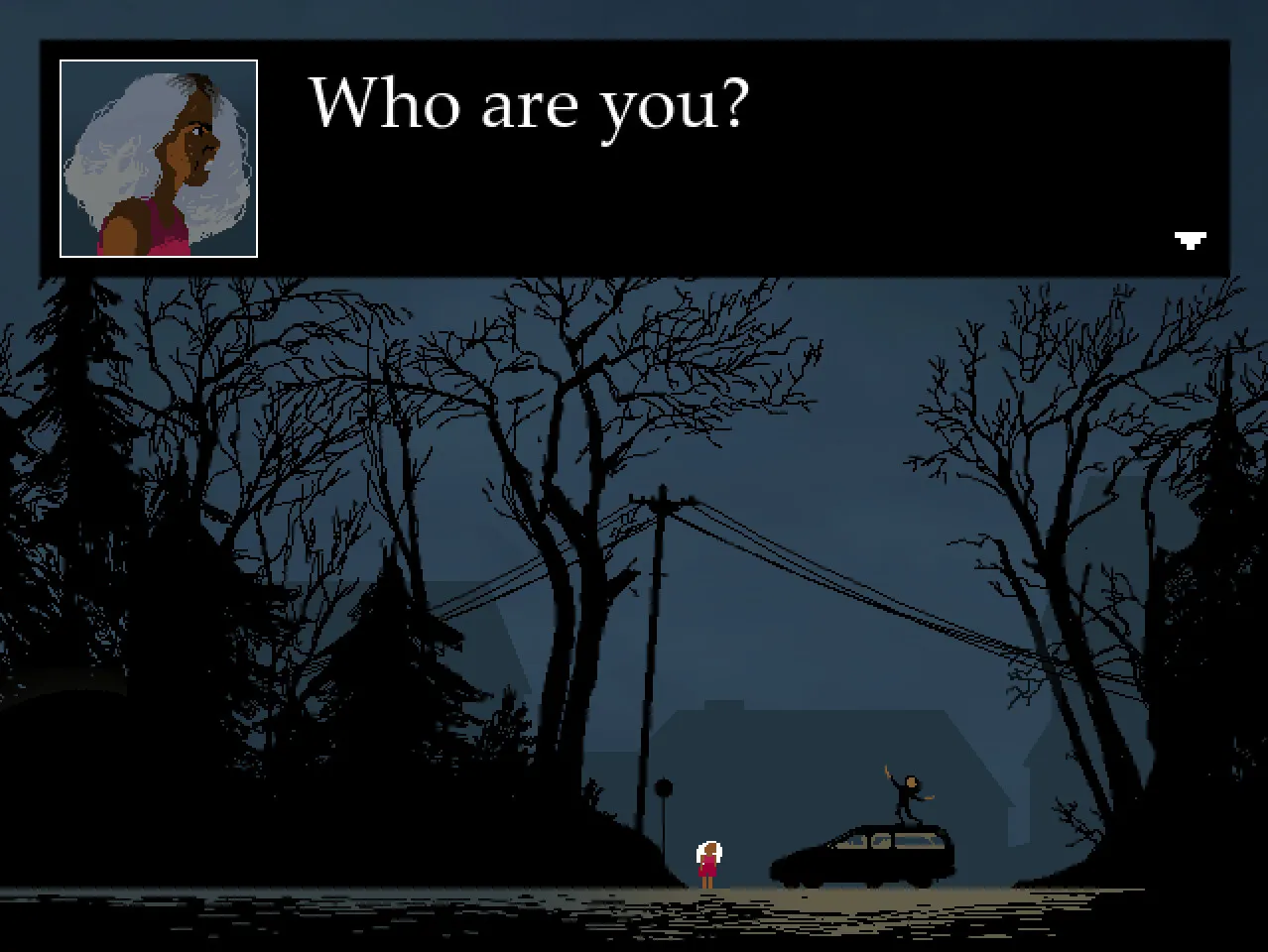
Midway through the game, a major structural shift takes place. The side-scrolling platforming drops out. A first-person point-and-click interface replaces it. This section imitates a visual novel with tightly limited player control. Progress depends on mandatory actions such as talking and looking. The game presents choices while restricting real agency. Even basic tasks like pouring cereal require a fixed sequence. That restriction mirrors Maya’s helplessness.
The antagonist enters during these scenes. This godlike figure uses a PowerPoint full of clip art to explain its motives. The tone pairs humor with real dread. Internet culture references appear throughout, including rage comics and specific manga-reading habits. The game breaks the fourth wall in ways that recall Doki Doki Literature Club and The Stanley Parable. A meta layer adds a streamer who is playing the game.
She comments while the player still controls Maya. The result is a disorienting overlap between multiple realities. If the player delays too long, the streamer runs out of dialogue. The late game turns abstract and abandons traditional logic for a dadaist storytelling mode. These experiments interrupt the pacing. They push the player toward the history of Maya and earlier victims. The experience turns into a memetic confrontation with an entity that sees humanity as a pile of JPEGs.
The Review
Love Eternal
Love Eternal is a striking, surreal experiment that succeeds through its mechanical simplicity and atmospheric dread. The gravity-flip platforming offers a high-stakes challenge, though the momentum-based physics can lead to moments of frustration. While the sharp genre shifts and meta-narrative elements disrupt the pacing, they provide a layer of creative depth rarely seen in 2D platformers. It is a brief, haunting experience that stays with you long after the final glitch.
PROS
- Creative and challenging gravity-flip mechanics.
- Hauntingly beautiful hand-drawn pixel art and backdrops.
- Strong, unsettling psychological horror atmosphere.
- Clever meta-narrative and fourth-wall-breaking surprises.
CONS
- Momentum-based movement can feel imprecise in high-difficulty rooms.
- Sudden genre shifts significantly disrupt the gameplay flow.
- Brief runtime with limited incentive for exploration.