




























A serial-killer case built from IMAX footage and studio gossip should feel like a trapdoor under Hollywood’s polished floor. Chapter 51 has the ingredients for that kind of nasty pleasure: a fake $500 million movie called Dissident, three murdered actresses, a killer who posts his crimes online, and a former FBI profiler trying to reopen the wound years later. Tyler Shields, serving as writer, director, cinematographer, producer, and actor, plays Thomas Scott, the investigator who guides the film through its faux true-crime structure.
That structure is the film’s sharpest cultural joke. American cinema has spent years turning murder into prestige content, complete with dim interviews, archival footage, suspect timelines, and solemn narration. Chapter 51 copies that language and drops it into a production where every person seems one bad note from self-combustion. The idea is savage: Hollywood can absorb anything, even death, if the budget is large enough and the cameras keep rolling.
The problem is that the film asks for belief it rarely earns. Three actresses die during production, yet Dissident keeps replacing them and pushing forward. Thomas somehow has access to an ocean of private set footage. The murders become case files, then gossip, then another part of the brand. That absurdity can play as satire, and sometimes it does, but the detective story underneath never develops the discipline of a true whodunnit.
The Auteur as Suspect
The strongest figure in this circus is Christopher Pace, played by Connor Paolo as a director whose idea of artistic rigor seems to involve yelling until oxygen leaves the room. He takes over Dissident after Christopher Demy leaves the production, then treats the set like a battlefield where actors must be broken before they can be useful. Pace threatens, humiliates, and escalates, making himself an obvious suspect and an obvious symbol.
This is where Chapter 51 becomes most recognizably American. Its Hollywood is a nation-state of egos, with producers, actors, and directors negotiating power through performance rather than policy. Tedd Mankiewicz, the producer, carries the quiet menace of someone who can turn private relationships into leverage. Melvin Asher wants Dissident to prove he has artistic weight beyond movie-star muscle. Younger actors like Dustin Scott appear to lose pieces of themselves inside the machinery of the shoot.
Colman Domingo’s Christopher Demy appears briefly, yet his presence matters. Demy represents an older species of filmmaker vanity: the auteur who speaks of art with cathedral seriousness while everyone around him bleeds time, money, and sanity. Pace is the mutation, smaller, louder, meaner, shaped by a culture where every tantrum can be repackaged as genius if the footage looks expensive enough.
The actresses suffer the film’s most bitter conceptual fate. Ava, Barbara, Greta, and the later replacement figures become both victims and production problems. The repeated replacement of murdered women is a brutal joke about disposability, and it could have cut deeper. Too often, the film drifts toward screaming matches and salacious relationship details when the sharper target is already in view: a system that calls women essential until the next call sheet is printed.
A Global Form Trapped in Hollywood Narcissism
The mockumentary has traveled well across cinema because it exploits trust. From television-style confessionals to handheld evidence, the form borrows documentary codes, then bends them into fiction. Chapter 51 uses that global language for an intensely local subject: Hollywood’s addiction to its own mythology. This is less a murder mystery than an autopsy of the dream factory performed by the dream factory itself.
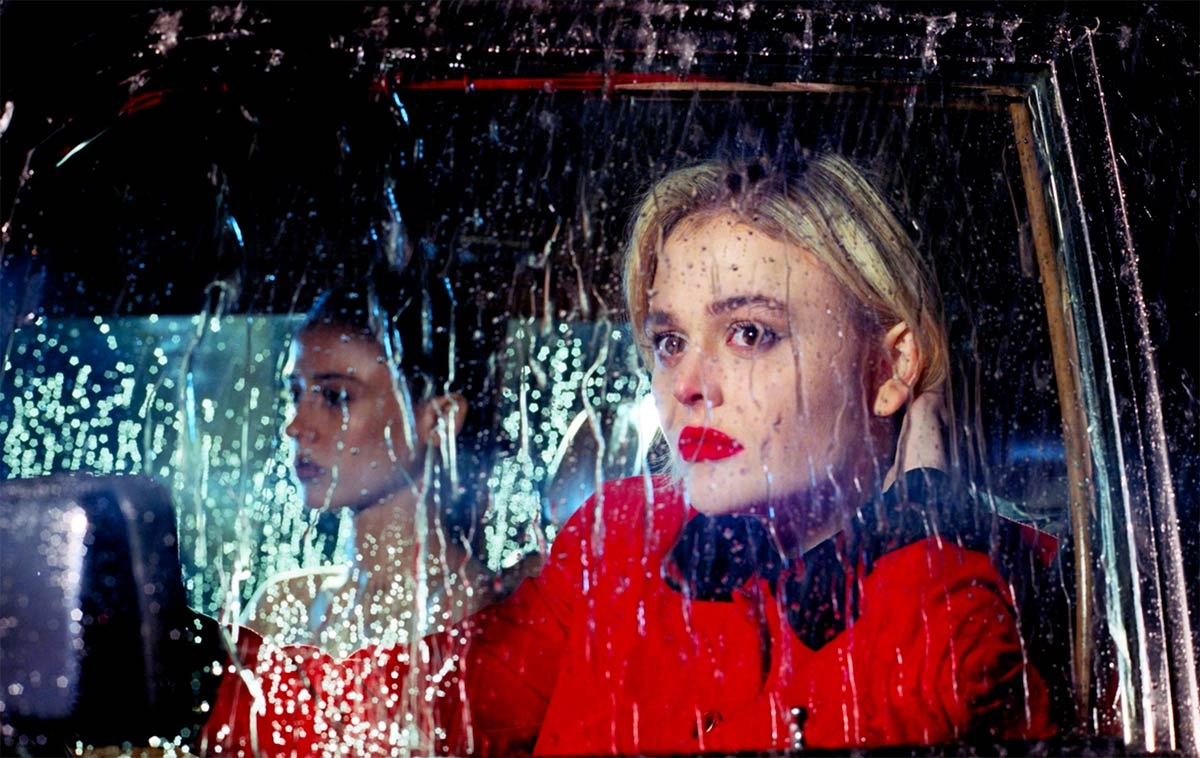
That inward gaze gives the film both its flavor and its ceiling. The characters name films, discuss formats, argue about performance, and turn cameras into sacred objects. The production of Dissident is supposedly one of the great cinematic events, yet the fragments we see never persuade us that this fake movie could reshape culture. The 1940s costumes, period-crime styling, and saturated old-Hollywood surfaces create a convincing mood, but not a convincing masterpiece.
There is a useful comparison to be made with international films that turn production itself into social allegory. In some traditions, a film set can expose class, censorship, labor, or national memory. Here, the exposed wound is fame. That is valid territory, yet Chapter 51 keeps circling the same diagnosis: artists are vain, producers are predatory, actors are unstable, and cameras are always hungry. The observation has bite at first. Repetition dulls it.
Thomas Scott’s investigation should provide counterweight, a procedural spine to hold the satire in place. Instead, he often becomes another framing device inside a film already full of frames. His profiler background promises insight into THK’s psychology, but the case advances through suspect profiles and inflammatory clips rather than accumulating dread.
The Image Wins, Then Overstays
Shields’ visual control is the reason Chapter 51 cannot be dismissed. The film shifts across IMAX, VistaVision, Ultra Panavision, 65mm, 35mm, 16mm, and Super 8, creating a texture map of cinema history. Grain, scale, and aspect ratio keep changing, and many compositions have the polished severity of fashion photography crossed with studio noir. Harsh light cuts faces out of darkness. Empty black backgrounds turn confrontations into theatrical duels. Desert exteriors and the Los Angeles River sequence give the film breathing space when the set-bound chaos begins to feel airless.
The format play has meaning. A story about Hollywood murder told through every available cinematic surface suggests an industry unable to experience reality without first selecting a lens. THK films his crimes. Pace leaves cameras running between takes. Thomas rebuilds the case through footage. Everyone is either performer, witness, or image.
That idea is strong enough to carry stretches of the film. It is not strong enough to carry every stretch. The constant shifts in format can feel thrilling, then ornamental, then a little needy. Chapter 51 keeps proving that Shields can make beautiful images, while the mystery keeps proving less worthy of them. The film’s prettiest shots often stare back like expensive mirrors, and Hollywood, naturally, cannot resist looking.
The mystery-thriller mockumentary Chapter 51 celebrated its exclusive New York City premiere at Lincoln Square in April 2025 before executing its wider theatrical and home entertainment rollout on June 23, 2026. Distributed globally by Cineverse, the genre-bending independent film is available for streaming, rental, and digital download on major premium video-on-demand platforms. The narrative dives into a pitch-black Hollywood mystery tracking the production of an ill-fated 500 million dollar block-buster titled Dissident, where a string of brutal on-set actress murders committed by an elusive serial killer triggers a chilling post-production investigation into studio obsession, madness, and corporate excess.
Where to Watch Chapter 51 (2026) Online





Full Credits
Title: Chapter 51
Distributor: Cineverse
Release date: April 14, 2025 (Lincoln Square Premiere), June 23, 2026 (Digital and VOD Release)
Rating: PG-13
Running time: 120 minutes
Director: Tyler Shields
Writers: Tyler Shields
Producers and Executive Producers: Todd Mandel, Giovanni Ribisi, John Ryan Jr., Tyler Shields, Steve Carson, Jake Cloobeck, Kenan Thompson, Tyler Transki
Cast: Abigail Breslin, Colman Domingo, Emily Alyn Lind, Charlotte Lawrence, Connor Paolo, Allie Marie Evans, Logan Huffman, Andy Janbek
Director of Photography (Cinematographer): Tyler Shields
The Review
Chapter 51
Chapter 51 is strongest as a glossy artifact about Hollywood’s hunger for self-mythology. Tyler Shields’ command of film formats, shadow, texture, and scale gives the movie a seductive surface, and the fake true-crime frame has a sharp cultural idea behind it. The murder mystery lacks the same rigor. Too many suspects blur into tantrums, and Dissident never feels like the cinematic monument everyone claims it is. A striking visual experiment trapped inside a thinner whodunnit.
PROS
- Gorgeous mixed-format imagery
- Sharp Hollywood self-critique
- Strong visual texture
- Connor Paolo’s volatile director
- Clever mockumentary premise
CONS
- Weak mystery payoff
- Repetitive set chaos
- Thin victim characterization
- Dissident hype feels unearned
- Thomas lacks investigative weight