
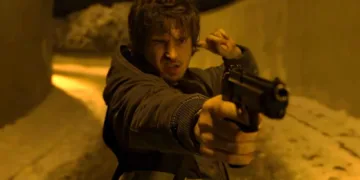

























The busy streets of modern Taiwan kick things off with an opening that plays like a catastrophe engineered for a trending YouTube clip. Influencer Yen Wei plants himself outside a police station, waving a weapon and chasing attention with the kind of desperation the internet loves to reward. Veteran detective Chen Chia-jen responds the way a veteran cop is trained to respond: he fires his service weapon and ends the threat. Then the detail that matters online drops like a trapdoor. The gun was a harmless fake.
That single twist turns the incident into a botched suicide-by-cop spectacle and recasts Chen as a digital villain before he can even catch his breath. The footage loops, the comments pile up, and millions watch the collapse of his professional image as if it were a season finale. The show uses that public shaming as the fuse for something nastier: an online menace called Witch Baba. Anonymous, theatrical, and perfectly calibrated for mass attention, she claims she can see the future through tarot cards.
Her predictions come with a cost, and the bill arrives fast. She begins foretelling the deaths of prominent internet celebrities, and the accuracy lands with a cold thud each time. Chen ends up stuck in the blast radius of a case that threatens his name, his job, and any sense that reality can compete with a viral narrative. To clear himself, he has to catch a killer who lives behind a screen, and the body count keeps climbing.
Tarot for the TikTok Era
The series commits hard to the machinery of digital obsession and the internet’s fickle appetite. Witch Baba registers as a genuine haunting presence, even before the plot makes it clear this story has its feet on the ground. She wears a smiling mask with a disturbingly blank look, then deals tarot cards stamped with contemporary symbols, like an old ritual repackaged for a new feed.

Her streak of four perfect predictions sends a wave of dread through the influencer community, and the show smartly tracks how fear scales on platforms built for amplification. More than a million people tune into her broadcasts, forming a roaming crowd of amateur sleuths who treat tragedy like content. They chase clout, swarm scraps of information, and stomp through real evidence with the confidence of people who have never had to be correct in public.
That frenzy sharpens the series’ central tension: an investigation trying to function inside a virtual spectacle. The crimes stay rooted in reality, with psychological manipulation and careful stagecraft doing the heavy lifting behind Witch Baba’s “prophet” persona.
The show keeps her as a chaotic catalyst, because her viral drops dictate the tempo of the search and the city’s mood. Each new broadcast feels like a pacing device and a threat at once, pushing the plot forward in the same way a trending topic pushes people into an argument they never asked to join. The lingering question hangs there in the air: how does truth compete with a lie that has already been shared a million times?
A Generational Crash Course
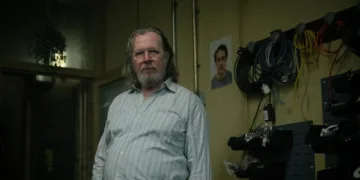
The investigation pairs up three characters who embody a widening gap in how people read the world. Ekin Cheng plays Chen Chia-jen with weary, old-school gravitas, the kind that suggests a long career spent trusting what you can touch, photograph, bag, and log. He carries personal grief too: the loss of his wife and a relationship with his stepdaughter, You-jie, that has begun to crumble.
The case presses on those raw nerves in a specific way. Chen remembers You-jie wearing masks and playing with cards as a child, and a private dread creeps in. The memory points toward a possibility he does not want to face: the killer could be closer to home than his instincts would like.
His partner, Li Hsin-ping, comes from the High Technology unit and lives in a world of data and algorithms. Chen reads as a relic beside her, and the show gets mileage from that discomfort without turning it into a lecture. To close the gap, they bring in Lin Ting-yu, a charismatic influencer fluent in the secret language of content creators, trends, and the social rules that govern attention.
The partnership starts out clumsy and full of friction. Chen leans on gut instincts and physical evidence. Li and Lin chase digital footprints, engagement metrics, and the patterns that emerge once a crowd starts moving in unison. Their push and pull underlines a shift in what “crime scene” even means in this world.
The series frames a smartphone as a dangerous tool, right up there with a firearm, because it can mobilize people, destroy reputations, and spread fear at a speed policing was never built to match. The trio eventually finds a functional rhythm, but the tension between traditional policing and tech-driven reality stays in the room, like a notification you cannot clear.
Hyper-Cuts and Haunted Streets
Director Shaun Su makes choices that keep the series feeling like it was born from the culture it’s criticizing. The editing comes in hot and rarely lets up, using rapid-fire cuts that mimic the frantic cadence of a social media feed. It can be disorienting, and that seems like the point. The style captures a shortened attention span and turns it into form, making the show move the way the internet moves: fast, jumpy, and eager to keep your eyes from drifting.
The production treats the city of Taiwan as a living participant in the mystery. The team captured authentic street scenes through crowd control and lane shutdowns, and the result gives the series a grounded sense of place even as the online chaos spins out. The atmosphere leans dark and heavily shadowed, with the streets looking watched and wary.
Sound design does a lot of quiet work here. Digital pings and urban hums build a constant-surveillance texture that fits the story’s pressure, like the world has developed its own electronic tinnitus. Action beats stay practical, offering clean jolts of adrenaline instead of glossy unreality. A standout sequence puts Chen clinging to the hood of a moving vehicle, a moment that sells danger through physical strain and sheer stubbornness.
Costume design lands the final note of unease. Witch Baba’s mask is minimalist horror at its sharpest, a simple frozen expression that turns every appearance into a punch of dread. In a series obsessed with performance and perception, that mask feels like the perfect avatar: readable, repeatable, and impossible to argue with in the comments.
Can a veteran cop who doesn’t understand the “like” button truly outmaneuver a killer who treats murder like a livestream event?
Million-Follower Detective is a gripping Taiwanese crime-thriller series that premiered globally on Netflix on February 12, 2026. Set against the backdrop of modern social media culture, the show follows a veteran detective who must navigate the treacherous world of influencers and viral fame to solve a string of murders predicted by a mysterious online figure. As of today, February 14, 2026, the first season is available for streaming in its entirety on Netflix, offering eight episodes of intense mystery and cultural commentary.
Where to Watch Million-Follower Detective


Full Credits
Title: Million-Follower Detective
Distributor: Netflix
Release date: February 12, 2026
Rating: TV-MA
Running time: 45 minutes per episode
Director: Shaun Su
Writers: Shaun Su
Producers and Executive Producers: Zhang Yating, Chen Zhixuan, Wu Mengqian
Cast: Ekin Cheng, Patty Lee, Shou Lou, Wang Po-chieh, Lee Lee-zen, Buffy Chen, Chloe Xiang, Kent Tsai, Zhan Huai-yun, Yang I-hsuan
The Review
Million-Follower Detective
This series offers a frantic, neon-soaked look at the intersection of traditional policing and digital fame. While the rapid-fire editing captures the pulse of social media culture, it occasionally sacrifices narrative depth for sheer "vibe." Ekin Cheng provides a solid emotional anchor as a man out of time, and the "Witch Baba" mystery remains chillingly relevant. It doesn't reinvent the crime thriller, but it navigates the modern landscape with enough flair to keep you scrolling until the end.
PROS
- Strong lead performance by Ekin Cheng
- Creepy and memorable antagonist design
- Authentic use of Taiwanese cityscapes
- Insightful commentary on influencer culture
CONS
- Predictable plot twists in the final episodes
- Hyper-fast editing can feel disorienting
- Supporting characters sometimes lack depth
- Occasional shifts into standard "copaganda"