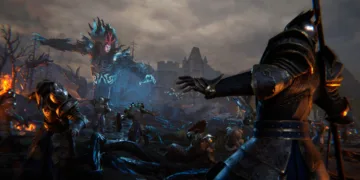



























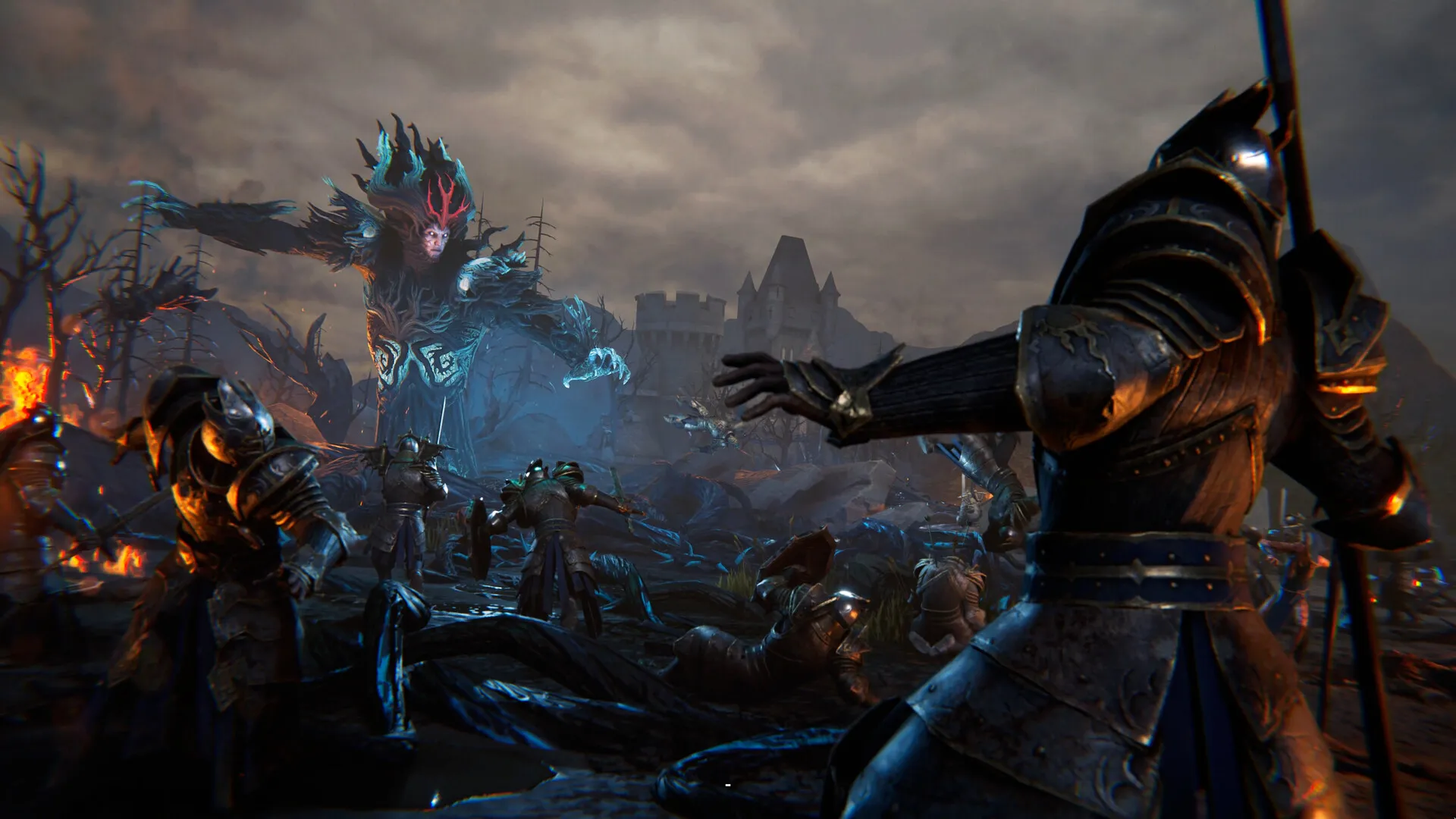

Disciples: Domination drops you back into the grim world of Nevendaar, a setting locked in terminal decay. The story kicks off fifteen years after the previous entry, with Avyanna, the heroic Queen from the past, spending that time in hiding. Her disappearance leaves room for her kingdom to splinter and slide into instability, so the game’s opening already frames leadership as something you can abandon, then spend the rest of your life paying for.
The new crisis arrives through corrupted mana rivers. They glow with eerie blue light, and that glow is not decoration. It poisons the land and the people living on it, turning the environment into a constant reminder that the rot is spreading faster than politics can keep up.
Avyanna steps out of seclusion to confront the threat, and the campaign shapes itself around that return. She gathers allies, including the dwarf Helmer, while pushing back against religious zealots chasing ascension to godhood. You also move among familiar powers like the Empire and the Undead Hordes, which helps the sequel feel anchored in the series’ established factions and grudges.
That grounding extends to the presentation. The campaign runs roughly thirty-five hours, and it leans into dark fantasy weight with theatrical voice acting that sells the melodrama without softening the bleak mood. The sequel carries itself like an old friend in the same dark clothes: recognizable, steady in tone, and focused on continuing Avyanna’s personal struggle without trying to reinvent the world’s cynicism.
The Burden of the Crown
Running a kingdom here means tracking stone and silver with the same seriousness as swords and spells. Yllian serves as your central hub, a pocket-dimension fortress that grows alongside your progress. The expansion is tied to spending, since you pour wealth into upgrading structures, and those upgrades directly shape what kinds of soldiers you can recruit. That link matters because it turns “base building” into a story beat. Each improvement signals Avyanna rebuilding authority in practical steps, one construction project at a time.
The economy is built around four resources: Gold, Iron, Wood, and Essence. You collect them by searching maps or taking control of buildings that generate them. That’s the mechanical backbone, but the pressure point comes from what the system refuses to let you do.
There is no way to sell equipment for gold, so old gear becomes a materials problem. You dismantle it to scrape together metal and wood, and that choice pushes you into a constant loop of recycling and cautious spending. The game’s rhythm comes from that loop. You fight, you collect, you return to Yllian, you decide what to upgrade, and you feel every shortage in your next recruitment decision.
Politics enters through the Grievance system, which puts Avyanna in front of petitions from different groups. Your answers set your reputation with factions, and those reputations collide. Support for the Elves can damage your standing with the Empire, turning a dialogue choice into a strategic cost. High reputation pays off in tangible ways, such as reduced leadership costs or stronger units, so the throne room scenes become part of army management rather than a separate narrative layer.
The effect is simple and heavy: you feel the weight of each decision while trying to mend a broken world, and the game keeps tying that emotional pressure to the strength of your military. Between battles, gathering resources and settling disputes creates a steady cadence that fits Avyanna’s attempt to reclaim authority through diplomacy.
Forging a Sovereign
Progression centers on Avyanna’s growth through four roles. You can shape her into a Warmaster focused on physical strength, or a Witch Queen built around powerful spells. The Primordial Ruler and the Holy Regent give two more directions, and each path comes with a tiered skill tree. Advancement is slow and structured: you gain one point per level, then spend it on passive bonuses or active skills. That pacing can feel methodical, even stubborn, which fits a game that frames power as something rebuilt through repeated, disciplined choices.
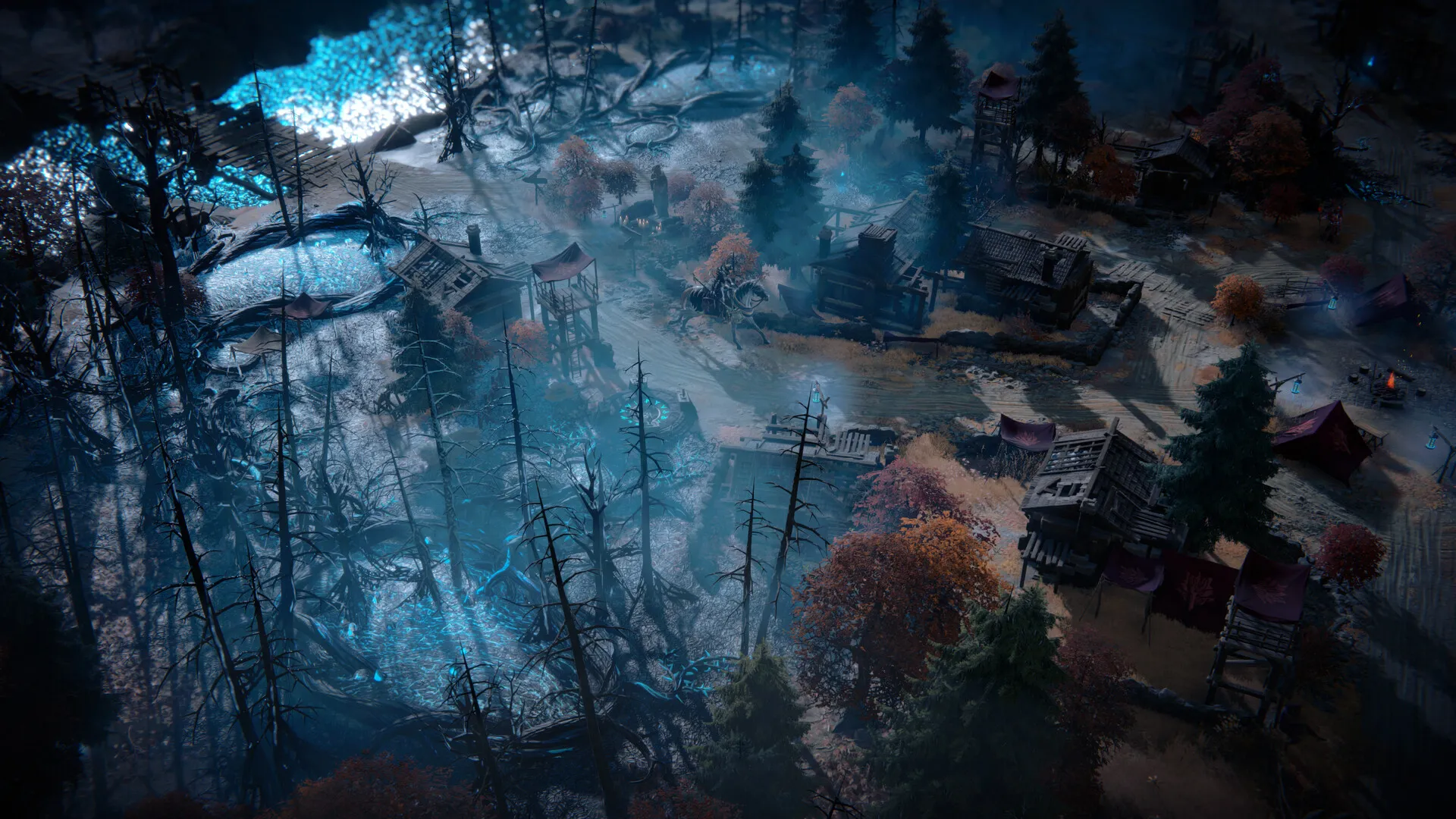
Army composition is constrained by the Leadership stat, a hard limit on how many soldiers you can bring into a fight. That limit forces constant evaluation of what your party needs right now. You can pack the field with ten weak mercenaries, or you can commit to two or three elite units and build the rest of the plan around them. The decision pushes you toward thinking in terms of squad synergy, since every slot has opportunity cost and every unit changes how you approach positioning, survivability, and damage timing.
Equipment feeds that planning through several rarity tiers, with weapons and armor found while exploring. The Shard system adds another tuning layer by letting you slot magical crystals into gear for stat boosts like health or critical hit chance. Item upgrades deepen the tactical implications, since extra effects can reshape how a unit plays.
A blade that adds fire damage asks different questions of enemy durability. Armor that triggers healing shifts how aggressively you can trade hits. Put together, customization lets you tailor the party to your playstyle while still working inside a rigid framework. The game encourages experimentation, but it also makes you earn it slowly, building power piece by piece as the next challenge gets closer.
The Chessboard of War
Combat plays out on compact hex-based maps where positioning decides almost everything. Units cannot move through each other, so space becomes a resource you fight over. Blocking pathways, holding choke points, and managing tight lanes can matter more than raw numbers, since one bad placement can trap a unit or open a clean line for an enemy strike.
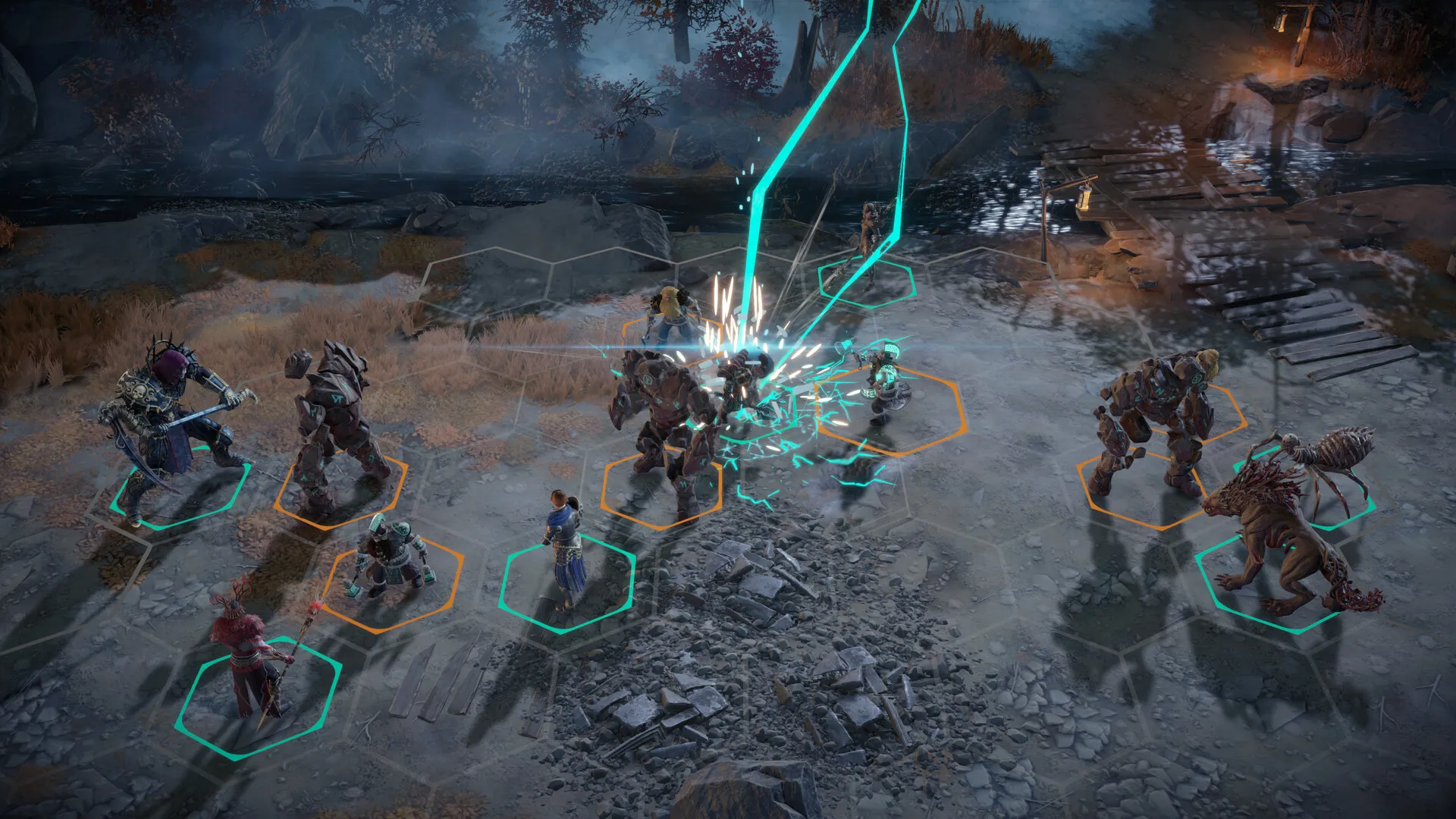
The Action Point system gives each turn a clear structure. Blue points handle movement. Orange points can be spent on movement or skills, giving flexible options inside a tight budget. Red points are reserved for the most powerful attacks and spells, which makes big moments feel earned through planning rather than impulse. The system pushes you to think several steps ahead, because spending the wrong color of point at the wrong time can leave a unit stranded or unable to finish a plan.
Your force is divided into a frontline and a backline. The frontline supports up to ten active units, while three backline slots hold support characters that act automatically each round to provide heals or buffs. That split reinforces the game’s “small map, big consequences” feel, since every frontline placement interacts with backline automation. Environmental conditions add extra variables.
Falling rocks can crush whoever stands on a targeted hex. Glowing runes appear on tiles to apply buffs or debuffs, and stepping onto a regeneration rune can keep a dying soldier alive long enough to matter. You can push enemies into obstacles for collision damage, adding a physical edge to movement choices. Status effects like bleed and poison drain health over time, turning tempo into a weapon.
The result is combat that reads like a series of intricate puzzles. You study the enemy roster, look for weaknesses, and treat every hex as a decision that carries forward into the next round. Victory comes from understanding how blocking, Action Points, backline support, terrain hazards, runes, pushes, and status effects collide in practice. Many turns are spent setting up the clean strike or building a defensive wall that holds long enough for the plan to pay off, and the game rewards patience and careful observation in every encounter.
The Review
Disciples: Domination
Disciples: Domination offers a reliable tactical experience that honors its dark fantasy roots. The combat remains a highlight, presenting intricate puzzles through its hex-based positioning and backline support systems. While the narrative occasionally falters due to uneven pacing and campy delivery, the depth of character customization and the strategic weight of the Grievance system provide a satisfying loop. It serves as a solid continuation for fans of the genre, even if it avoids taking significant risks with the established formula.
PROS
- Rewarding, puzzle-like tactical combat.
- Deep character and army customization.
- Engaging resource and hub management.
- Atmospheric and detailed dark fantasy art.
CONS
- Uneven voice acting and dialogue.
- Repetitive mission and dungeon design.
- Clunky inventory and menu interface.