




























The fourth season of this legal drama opens on the sunlit streets of Los Angeles and refuses gentle pacing. It arrives with suffocating intensity and a sequence that stitches itself to a desperate cliffhanger. Defense attorney Mickey Haller is taken into custody after a patrol officer finds the lifeless remains of a former client concealed in the metal confines of Mickey’s own car.
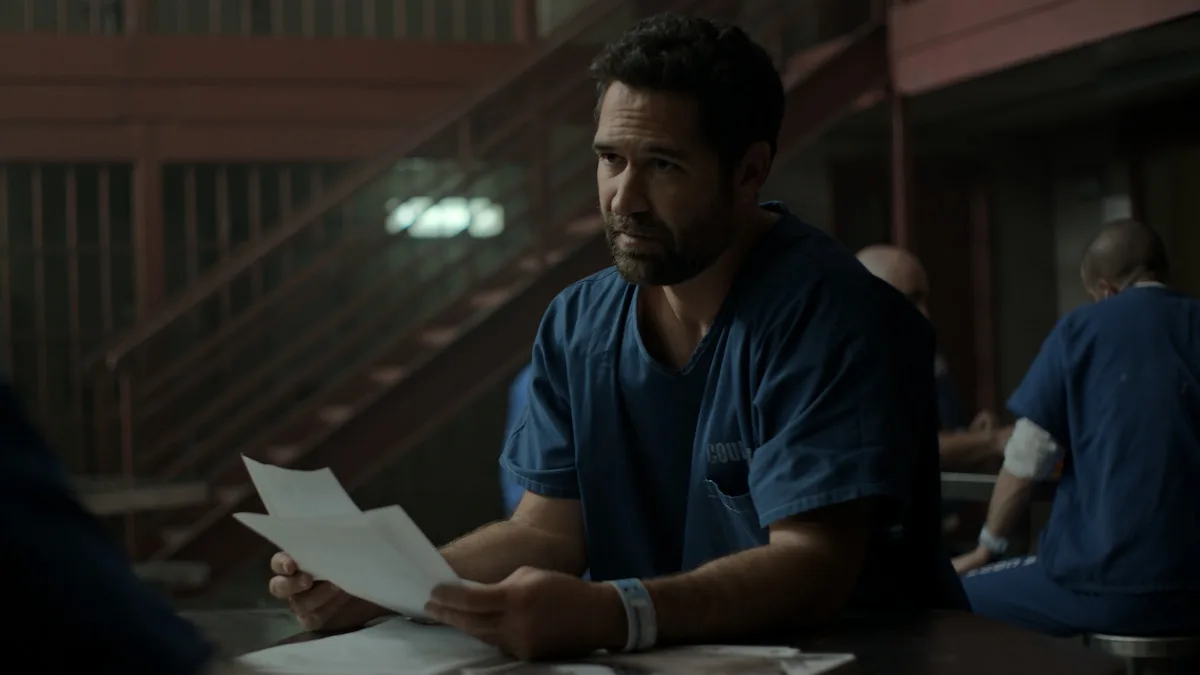
That discovery sets the terms of the story: a man must defend his pulse and his future under a charge that turns private life into public record. The season draws from a specific entry in the source novels and lets that text shape the world it portrays. Much of the opening places Mickey behind bars, where he confronts the system he once navigated from a place of advantage.
The episodes map his efforts to hold his firm and his mind together while a murder charge looms. The team around him and his family sustain the narrative. The setting remains the bright glare of the city legal circuit. This becomes the most personal trial of the man who sits in the back of the car.
Echoes of the Innocent Law
The first three episodes adopt a meditative crawl in tempo. The choice narrows attention; frantic energy from the prior finale recedes and the series asks the viewer to inhabit the silence of Mickey’s cell. The story’s pulse accelerates only as the trial machinery engages. The plot orbits the ghost of Sam Scales, a man of many deceptions who met a brutal end.
The writing uses a spare metaphor: a prosecutor tends a dark tree of guilt while the defense searches for the tool that will fell it. The season preserves a faithful connection to the sixth volume of the source books and keeps the moral outlines of its figures. Legal dialogue arrives with the sharpness of its printed origin.
Inside prison walls the protagonist acquires a bleaker perspective on human beings. He gives counsel to those caught in the gears that now threaten him. He sees the legal machine absent the polish of his ego. The risk here grows past professional ruin to the loss of a name and a life framed by iron bars.
His bond with his child hangs on a fragile edge that feeds a steady thrum of anxiety. Each scene carries the weight of a man aware of his truth while the world demands another narrative. The innocence of the accused becomes a burden, an urgent need for a truth that the system frequently overlooks in favor of conviction.
The Anatomy of a Fractured Mask
Manuel Garcia-Rulfo moves through a raw emotional landscape. He sheds the comfortable armor of charm and renders a man hollowed by the exhaustion of confinement. In the silence of solitary custody his mental fortress develops cracks. The performance transmits a physical sense of dread that renders the character reachable.
Mickey finds the practice of applying his own legal wisdom nearly impossible when his fate rests with others. The actor stages this inner war with quiet precision. Pride in his craft encounters the terror of a suspect. Body language narrates the trial’s cost: he looks worn and gray, an image that aligns with the season’s darker aesthetic. By the legal battle’s end the character is transformed.
The portrayal indicates a change in the practice of the man who returns to work: his intellect remains keen and acquires a layer of weary wisdom. He feels the cold breath of the state in a way he had not before. The man who leaves the courtroom presents a different figure from the one who entered it. He has looked in a mirror and found a stranger.
The Gravity of the Collective
Lorna Crane rises into leadership as crisis compresses the office. She fights to keep daily work functional while the firm’s name is dragged through public mud. She takes a divorce case for a client named Celeste; that subplot acts as a forge for courtroom skill and confirms her competence under pressure.
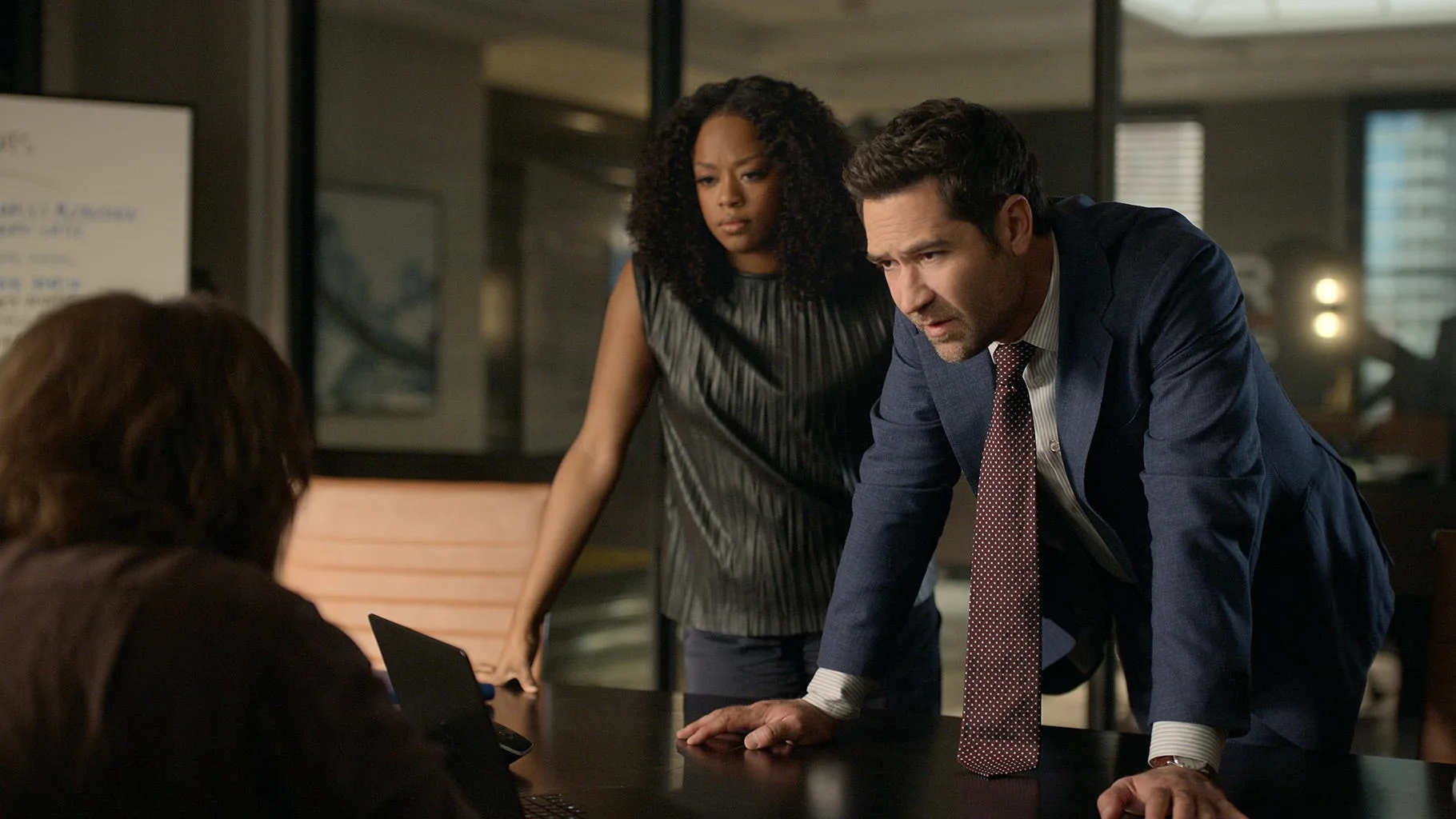
Cisco moves through shadowed precincts to unearth the truth behind the murder. He functions as the quiet force handling the investigation’s grit, and his devotion to Mickey becomes an anchor for the season. Izzy holds steady; she collaborates with a student named Grace to uncover digital evidence and expands her role beyond office management. Neve Campbell returns with more influence.
Maggie occupies a spiritual center for Mickey, and her legal history helps the team anticipate their opponent. The bond between her and Mickey reads as something permanent. Hayley supplies a different form of strength and the father-daughter relationship shows strain beneath public scrutiny. The series examines how a single charge fractures a family.
Elliott Gould contributes a sense of history and the wisdom of a man who has watched the cycle of justice turn many times. His presence grounds the chaos and reminds Mickey of the legacy that surrounds him. Collective effort becomes the measure of a lawyer’s strength: the people who believe in him form the pillars of a house under collapse.
The Ritual of the Court
Constance Zimmer arrives as a sharp antagonist whose nickname implies she allows little mercy. She returns from the past and deploys procedural tools to bury the defense. Trial sequences operate as the season’s summit. Berg conceals evidence and contorts witness statements.
Mickey faces the task of making light in a room of mirrors. The interplay between prosecutor and defense builds heavy tension. Mickey elects the dangerous path of self-representation and transforms the trial into a strange dance in which the accused assumes the role of inquisitor.
The courtroom becomes a stage of high drama while the judge maintains strict procedural bounds. Arguments remain tethered to a cold legal reality. The resolution of the Sam Scales case arrives with a sense of finality and exposes choices that reveal the core of Mickey’s character. The victory reads as hard-won.
The finale turns toward a future where past events return to haunt the protagonist and point toward a route back into his history. The legal win restores a voice altered by experience and provides a new perspective. He prepares to return to the life that begins and ends with his car, carrying the memory of the cage as he takes up new battles.
The fourth season of The Lincoln Lawyer premiered on Netflix on February 5, 2026, bringing the high-stakes legal drama back to the screen with its most personal case to date. Based on Michael Connelly’s novel The Law of Innocence, the new season finds defense attorney Mickey Haller trading his seat at the counsel table for the defendant’s chair as he fights to clear his name of a murder charge. Viewers can stream all ten episodes of the season exclusively on Netflix, where the series continues to explore the gritty intersections of justice and survival in Los Angeles.
Full Credits
Title: The Lincoln Lawyer Season 4
Distributor: Netflix
Release date: February 5, 2026
Rating: TV-MA
Running time: 45–55 minutes
Director: Ted Humphrey, Rob Seidenglanz, Alonso Alvarez-Barreda
Writers: David E. Kelley, Ted Humphrey, Michael Connelly, Dailyn Rodriguez, Gladys Rodriguez, Matthew J. Lieberman
Producers and Executive Producers: David E. Kelley, Ted Humphrey, Michael Connelly, Dailyn Rodriguez, Ross Fineman, Barry Jossen, Tana Jamieson, Matthew J. Lieberman, Gladys Rodriguez
Cast: Manuel Garcia-Rulfo, Neve Campbell, Becki Newton, Jazz Raycole, Angus Sampson, Yaya DaCosta, Krista Warner, Elliott Gould, Constance Zimmer, Kyle Richards, Jason Butler Harner
Director of Photography (Cinematographer): Abraham Martinez
Editors: Jeff McEvoy, David J. Siegel
Composer: David Buckley
The Review
The Lincoln Lawyer Season 4
Mickey Haller’s descent into the machinery of his own profession reveals a fragile man beneath the legal armor. This season abandons light optimism for a cold look at the weight of iron bars and the cost of truth. It remains a sharp study of survival within a system designed to consume the individual. The performances provide a raw pulse to the legal proceedings. It is a grim, necessary evolution of a character who finally understands the fear of those he defends.
PROS
- Manuel Garcia-Rulfo provides a visceral portrayal of vulnerability.
- The stakes feel heavy and personal.
- The courtroom scenes maintain a high level of tension.
- Secondary characters find new purpose and professional growth.
- The narrative stays faithful to the spirit of the source material.
CONS
- The initial pacing feels sluggish and heavy.
- Certain plot resolutions feel convenient.
- The transition from the previous finale lacks immediate momentum.