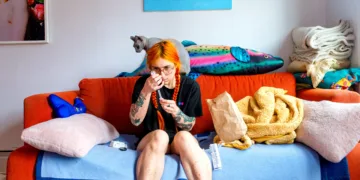









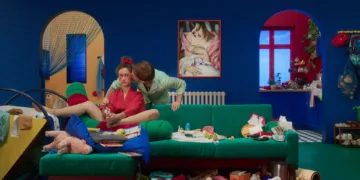













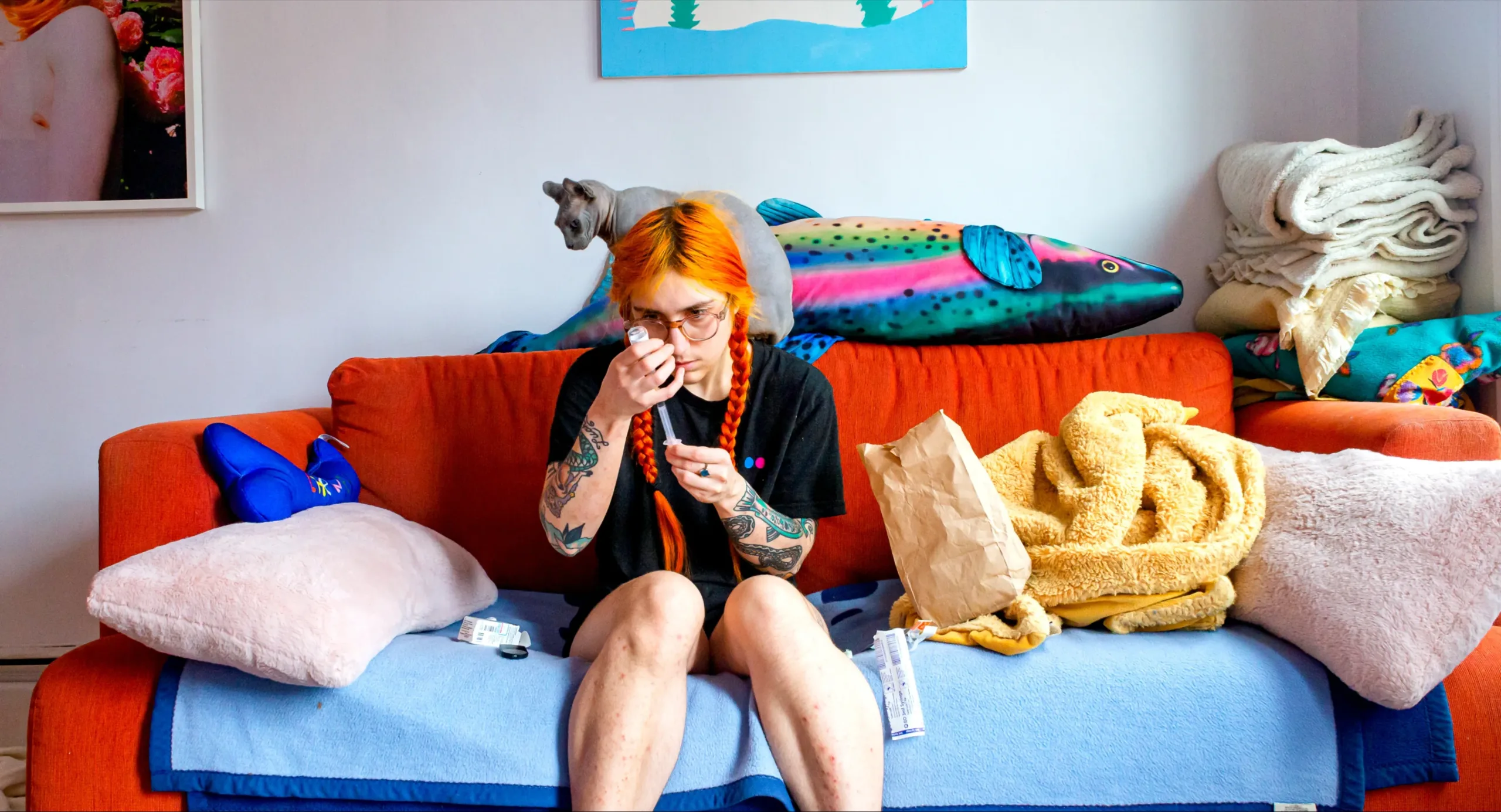

Catherine Legault’s latest film brings Laurence Philomène into view as a Montreal photographer whose life already carries the texture of art. The documentary follows the making of their book, Puberty, which records their first year on testosterone. The frame carries the same gentle hues that shape Philomène’s photographic work. Pink, pale blue, and lavender fill the spaces they move through.
Legault films this environment through intimate handheld images, giving the camera the feeling of a trusted presence moving through bright apartments and green city parks. The soundscape stays in step with that visual language, using a folky score that holds the sweetness and ache running through the artist’s daily life. Legault also folds in pieces of animation that echo the tactile feel of making art.
That decision gives the documentary a looser, more handmade form. The film often feels guided by the artist’s own way of seeing. Montreal becomes a quiet, airy setting for this portrait, a place where time seems loose enough for close self-examination. I still think about walking through the Plateau on a warm July evening, and Legault catches that hazy light with striking precision.
The Art of the Every-Day
Philomène treats transition as a creative act with no fixed endpoint. That idea shifts away from a familiar screen pattern that frames medical stories around a final destination. Here, hormones are presented as a mode of self-expression. The film lingers on domestic routines that many movies would trim away. Making a meal or getting ready for the day becomes central to the rhythm of the piece.
Laundry, a trip to the vet with a sick cat, and other ordinary tasks carry emotional presence. These scenes give shape to the quiet facts of living. The documentary locates deep feeling in repetition. Legault uses light and color in ways that make these familiar spaces glow. The method reflects a current in independent cinema that leans toward close observation.
Drama stays low, and attention falls on the plain details of daily life. A bedsheet’s texture or the steam from a kettle becomes part of how identity takes form through steady, repeated choices. That attention to the present tense lets transition register as an ongoing state of growth. It opens space beyond stories built only around bodily change.
Community and the Shared Life
The film offers a vivid sense of the people around Philomène. Their parents become a moving example of family learning in real time. We watch them move from old pronouns toward they and them, and that movement feels honest because the film gives it room. Their mother keeps her child’s photographs in her workshop, a small gesture that carries real affection and pride.
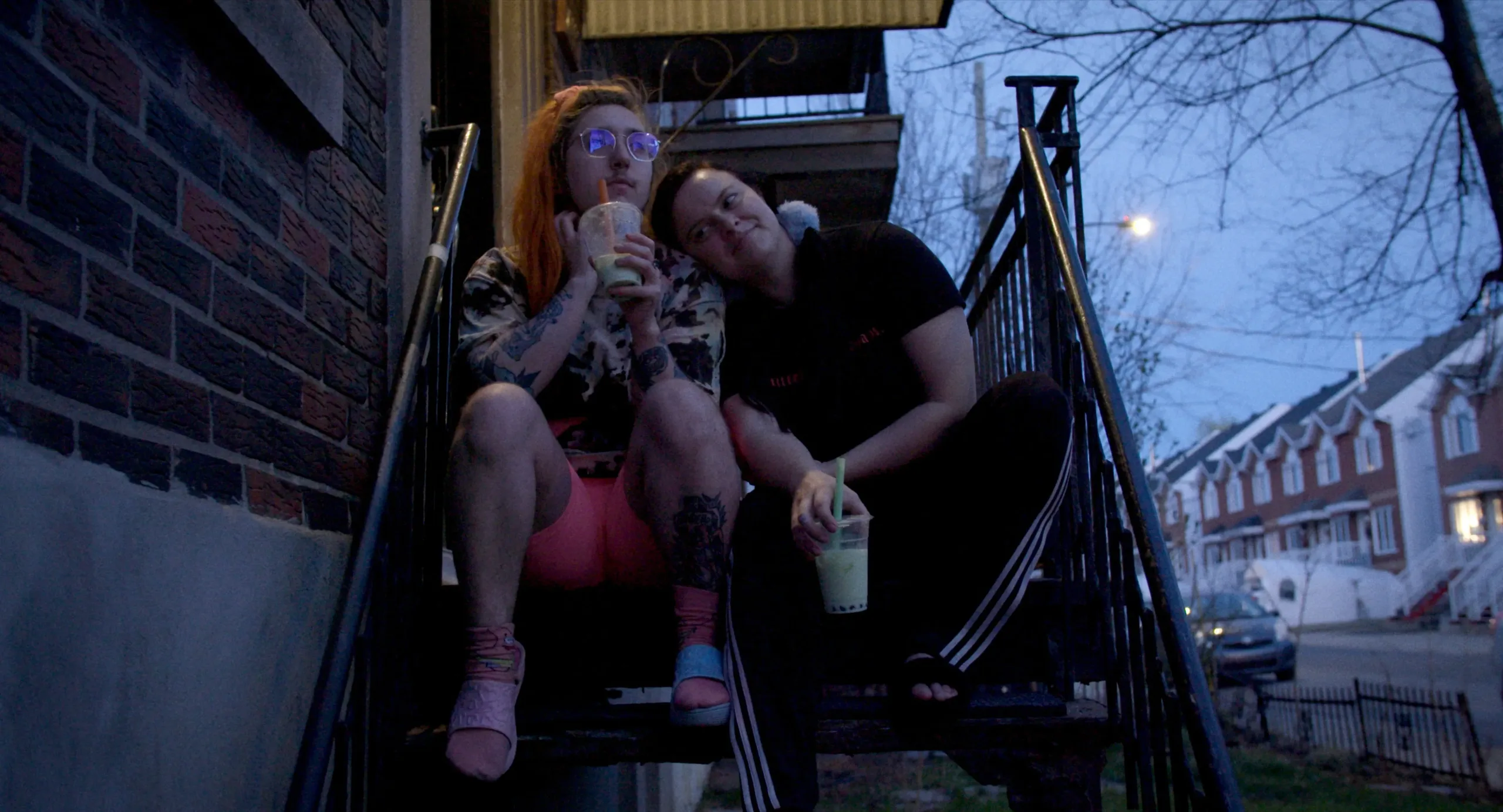
Outside the family home, the documentary sketches a circle of friends that includes Nina Drew and Lucky Dykstra-Santos. Their presence matters deeply to Philomène’s mental health. Legault shows mutual aid through everyday acts. Friends help locate medical resources, and they offer emotional care through simple acts of attention. That sense of kinship gives the film a shared, communal pulse.
A quieter strain runs through the material involving Philomène’s romantic partner. This person wants a private life, and that creates friction once their image enters autobiographical art. The film uses that tension to think about what it means to become part of someone else’s work. Art carries a negotiation with the people closest to us. Legault films these relationships with warmth and an easy directness.
The Quiet Power of Being
Legault sustains a breezy, drifting mood, and that feeling reads as a deliberate artistic choice during a time of loud public argument. The calm becomes its own kind of resistance. In a climate that often frames trans lives through panic, this film gives its attention to rest and happiness. Joy becomes one of its strongest artistic commitments.
The documentary also shows the gap between the safety of Philomène’s private world and the threat that can wait outside it. Philomène speaks about the fear of being seen or recognized in hostile spaces. A trip to the US brings out the relief of moving through a place without being questioned. Montreal in summer feels like a refuge where growth can unfold without constant pressure.
That atmosphere gives the film room for ease and play. Legault avoids the heavy instructional mode that shapes many issue-driven documentaries. She stays with the fact of a life being lived on personal terms. The softness of that approach creates real closeness between viewer and subject. The film’s authenticity comes from its commitment to portraiture. It remains focused on a person finding peace within their own skin. That attention to lived experience offers a strong answer to the louder political rhetoric surrounding it.
Released in April 2025, this documentary offers a window into the world of Montreal photographer Laurence Philomène. The film captures the creation of their photography project titled Puberty while focusing on themes of identity and community. Viewers can watch the production on digital platforms like MUBI and True Story. It presents a colorful visual style that reflects the artistic perspective of its main subject.
Full Credits
Title: Larry (they/them)
Distributor: Les Films du 3 Mars
Release date: April 4, 2025
Rating: Not Rated
Running time: 103 minutes
Director: Catherine Legault
Writers: Catherine Legault
Producers and Executive Producers: Isabelle Phaneuf-Cyr, Rémy Huberdeau, Catherine Legault
Cast: Laurence Philomène, Nina Drew, Lucky Dykstra-Santos
Director of Photography (Cinematographer): Claire Sanford, Samuel Trudelle, Catherine Legault
Editors: Catherine Legault
Composer: Eric Shaw, Scout the Wise
The Review
Larry (They/Them)
Catherine Legault delivers a gentle and visually striking study of an artist defining their own path. The film succeeds by centering on the quiet beauty of a transition that refuses to fit into traditional boxes. Its strength lies in the focus on domestic peace and the importance of a supportive community. While the pacing mirrors the slow rhythms of daily life, the result is a sincere look at human identity. This documentary offers a refreshing perspective on the radical nature of simply existing.
PROS
- Soft, pastel cinematography that matches the artist's work.
- Deeply personal and candid look at domestic life.
- Strong portrayal of familial growth and community support.
CONS
- The folk music score feels standard for the genre.
- Certain expert interviews feel less essential than the personal footage.