
























![Kingdom Hearts Collection [I-III] Review](https://gazettely.com/wp-content/uploads/2026/10/Kingdom-Hearts-Collection-I-III-1-360x180.webp "Kingdom Hearts Collection [I-III] Review: KHII Holds Steady as Newer Entries Fluctuate 37")



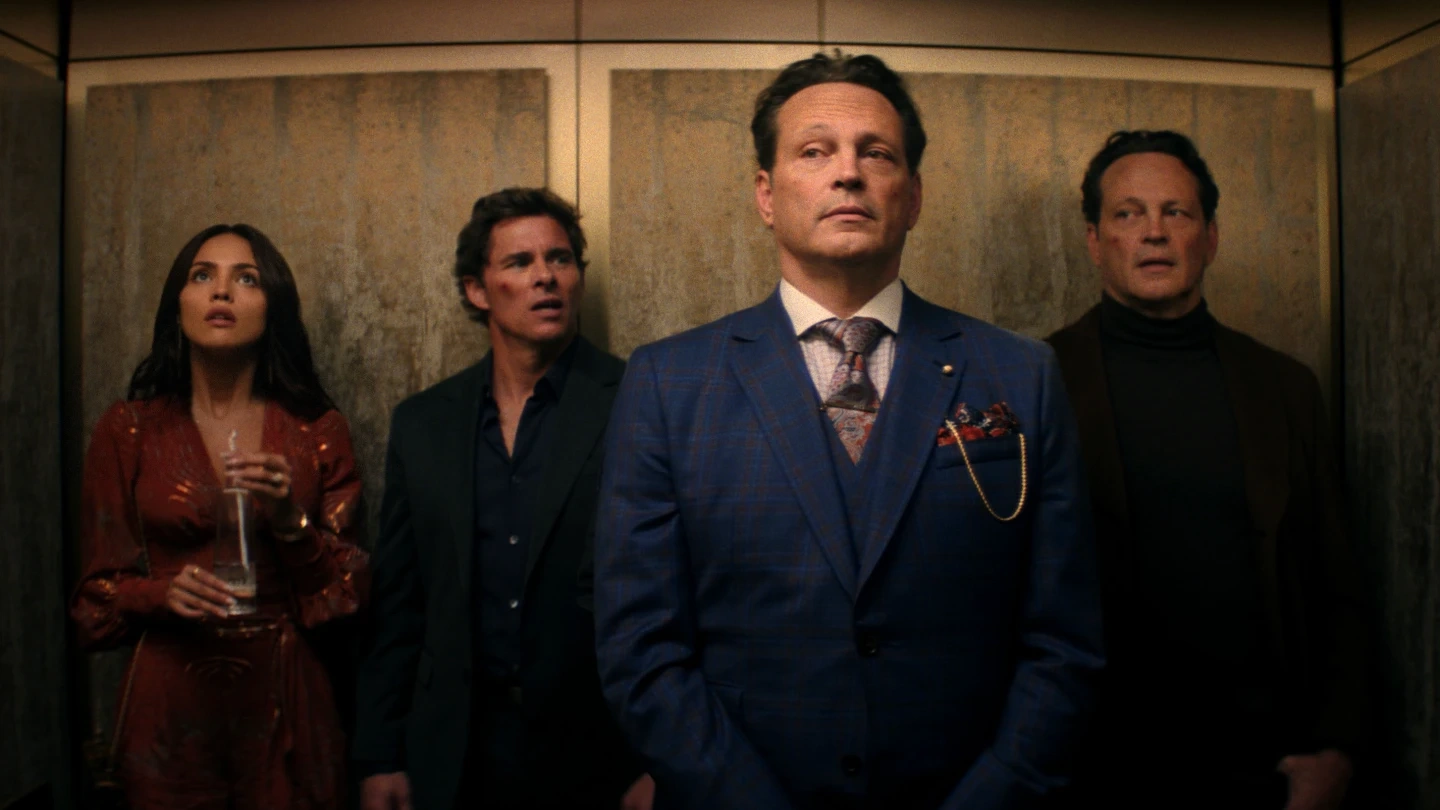

“Mike & Nick & Nick & Alice” builds its story around fallout. The film takes place in the orbit of “The Organization,” a criminal syndicate where Nick and Mike work as enforcers, and it wastes little time establishing how badly their private lives have tangled with that job.
Mike is carrying on a secret affair with Nick’s wife, Alice, and that betrayal sets the plot in motion once Nick pins the incarceration of Jimmy Boy, son of mob boss Sosa, on Mike. That act summons The Baron, a cannibalistic assassin brought in to kill him, and the film then swerves into science fiction through the arrival of a Nick from six months ahead, using a device created by a scientist named Symon.
That premise could have collapsed under the weight of its own cleverness. Instead, the film introduces its tone with disarming confidence. It opens on a surreal musical number in which Symon sings along to “Why Should I Worry?” from “Oliver & Company,” a choice that signals a film comfortable with absurdity from the first scene. The trick is that the absurdity never cancels the danger. The comedy has teeth, the violence lands, and the time-travel machinery serves a very human story about guilt, betrayal, and the cost of decisions already made.
The structure keeps the stakes intimate. Temporal complications pile up, yet the film stays fixed on a handful of people trying to survive one disastrous night and live with what they have done to each other. That gives the narrative a sense of control. Beneath the action-comedy surface, the story is tracking accountability, and it does so with a level of focus that keeps the high-concept premise from drifting into empty trickery.
Character Dynamics and the Dual Performance of Vince Vaughn
Vince Vaughn carries much of the film’s dramatic weight by playing two versions of Nick with sharply defined differences. Present-day Nick is a cold operator, emotionally shut down and almost casual in the damage he causes. He moves through the film with the bearing of a man who has spent years treating feeling as a liability. Future Nick arrives as the visible result of that life, burdened in body and mind by regret. Vaughn adjusts posture, rhythm, and vocal tone in a way that makes the distinction clear without turning the performance into a stunt.
That split gives the film one of its strongest storytelling devices. It turns self-reckoning into an actual confrontation. Future Nick has to watch his earlier self make the same destructive choices and try to redirect events before they harden into permanent ruin.
The setup carries the shape of a redemption story, filtered through mob-world cynicism and science-fiction chaos, and Vaughn handles that tension with impressive control. The film asks him to play arrogance, shame, and dawning self-awareness all in the same narrative space, and he keeps each beat legible.
James Marsden gives Mike a worn, restless energy that suits a fixer trying to find a way out. Mike’s desire to leave the syndicate gives the film a clean emotional throughline, and Marsden makes his confusion genuinely funny once he is forced to deal with two versions of his boss in the same night. His scenes with Alice matter because they feel rooted in mutual longing for a different life, not in some abstract romantic subplot inserted to keep the thriller moving.
Eiza González gives Alice a strong place in the machinery of the story. She is active, quick-thinking, and fully involved in the effort to stay alive. Her wit and her readiness for violence put her on equal footing with the men around her, which gives the trio a useful balance.
The affair carries danger far beyond jealousy because it feeds every choice being made under pressure, and the chemistry among the three leads keeps that pressure alive. The film needs that emotional friction. Without it, the science-fiction mechanics could have felt like an exercise. With it, the plot has pulse.
What lingers most is how the dual-Nick setup opens space for character work inside a premise that could easily have leaned on gimmick alone. Vaughn finds the sorrow buried inside the comic chaos, and that gives the film a surprising degree of emotional substance.
Aesthetic Texture and Cultural Influences
Director BenDavid Grabinski shapes the film with a playful, handmade sensibility that recalls the stranger edges of 1980s pop culture. The visual and tonal choices give the movie a scrappier personality than the polished flatness common to many streaming releases. That matters because the film depends on tonal agility. It needs to move from crime story to sci-fi detour to romantic fallout without feeling mechanically assembled, and Grabinski gives it a world that can hold all of that at once.
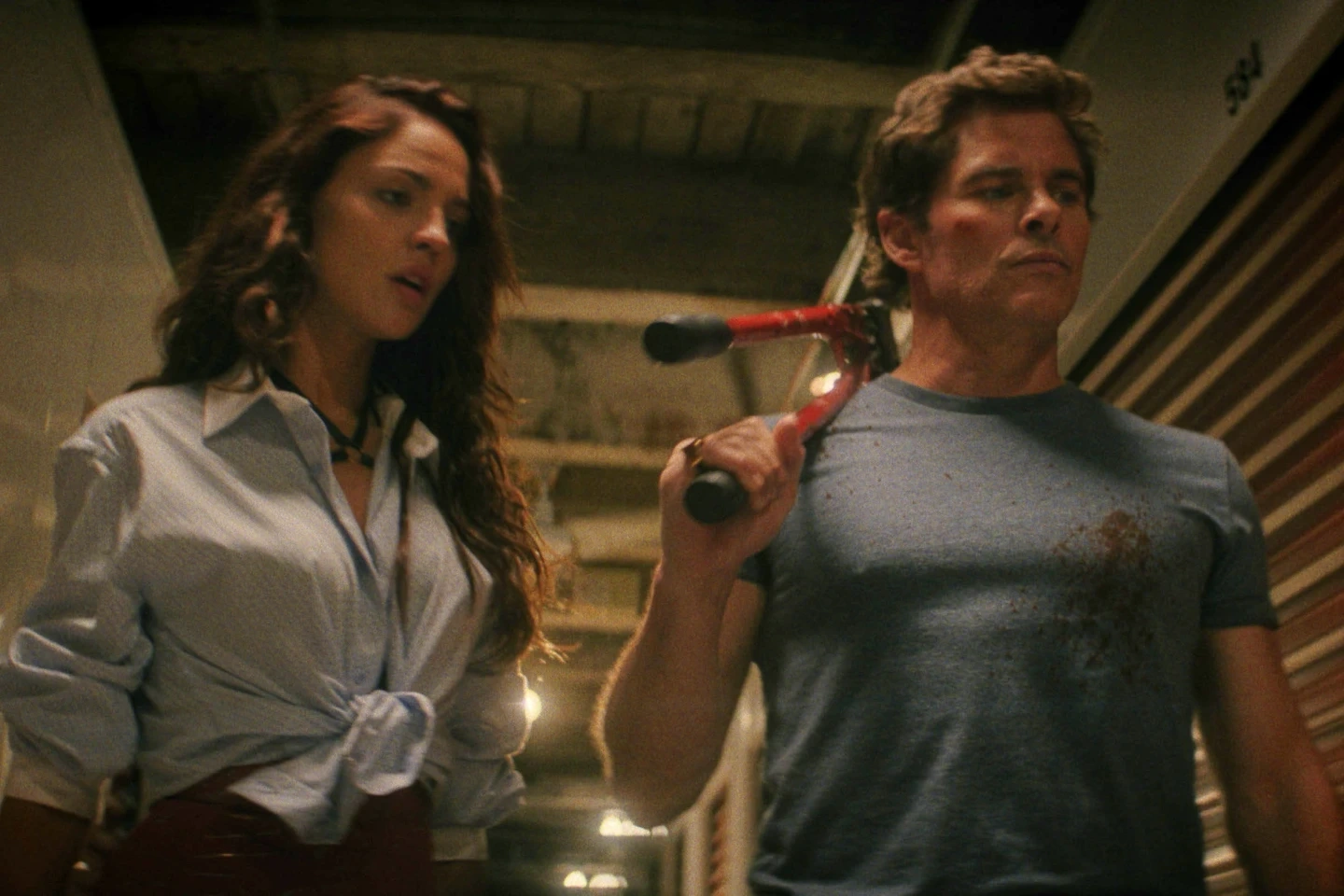
There is a clear affinity with the kind of genre filmmaking associated with Joe Dante, especially in the way high-concept science fiction is folded into familiar crime and action frameworks. The film understands that concept alone is never enough.
Atmosphere has to do part of the storytelling, and music becomes one of the key tools here. Needle drops from Billy Joel and Steve Winwood give the movie a specific emotional texture, adding a nostalgic charge that rubs against the grit of the mob setting in productive ways. Those choices feel chosen with care, tied to mood and character rather than deployed as easy shorthand.
The screenplay also builds personality through oddly specific references. A long conversation about Rory Gilmore’s boyfriends is the sort of detail that could have played as a strained bid for quirk. Here it lands because it sounds like the kind of tangent people actually pursue in the middle of stress, boredom, or panic. The dialogue often works this way. It is funny, but it also suggests a world that exists past the edges of the plot.
Visual design supports the narrative organization as well. Black-and-white flashbacks chart the history of Mike and Alice and separate their romantic past from the neon-drenched disorder of the present. This helps the timeline stay readable without burying the audience under explanation.
The film shows notable discipline here. The time-travel device matters because of what it does to people, not because the script wants to lecture anyone on physics. By keeping the mechanics light and the emotional consequences front and center, the movie preserves room for humor, dread, and character reaction inside the same sequence.
That choice places the film in a familiar storytelling trend. Many contemporary genre pieces treat lore as the main event and bury character inside exposition. This one takes the opposite path. It trusts reaction, mood, and interpersonal damage to carry the weight. The result feels recognizably built from older influences and still unusual enough to stand apart.
The Supporting Ensemble and Comedic Subplots
The supporting cast gives the film much of its texture, filling out the criminal world with characters who are heightened enough to be funny and grounded enough to keep the stakes intact. Keith David’s Sosa anchors the syndicate with commanding ease. He brings menace to the role, yet he can pivot into humor without softening the character’s authority. That steadiness makes him an effective presence at the top of this strange underworld.
Jimmy Tatro plays Jimmy Boy as a fool with grand ideas about his own image, and much of the comedy grows from the gap between how he sees himself and how little he understands. His attempts to channel a 1990s hip-hop icon give the character a ridiculous edge that feeds neatly into the film’s comic rhythm. The father-son dynamic between Sosa and Jimmy Boy adds another layer to the criminal setup, turning routine mob-business scenes into something sharper and funnier.
Other syndicate figures, including Roid Rage Ryan and Dumbass Tony, push the film further into absurd territory through conversations soaked in ego and insecurity. They fit a familiar henchman tradition, but the script treats them with enough specificity that they register as comic personalities instead of disposable background noise. Their exchanges give the world a lived-in stupidity that is very funny.
Ben Schwartz’s Symon has the difficult task of bringing the time-travel device into the story without stalling momentum. He manages it through manic energy and a performance pitched to match the film’s off-center tone. Symon explains the setup, yet the character never feels like a delivery system for exposition. He feels like one more unstable force in an already unstable night.
Then there is The Baron, whose presence shifts the movie into darker territory whenever he enters. As a cannibalistic assassin, he gives the story a real sense of threat, and the uncertainty around his identity sustains suspense across the film. That tension is essential. The movie needs a figure who can cut through the banter and remind everyone that the consequences here are fatal.
This ensemble work points to one of the film’s smarter structural choices. The side characters are funny, eccentric, and frequently scene-stealing, yet they do not pull the narrative off its axis. They widen the world and sharpen the danger around the leads. The movie gets a lot of mileage from that balance.
Technical Execution and Narrative Pacing
The action scenes are staged with clarity and confidence. Grabinski favors wide framing and coherent choreography, which gives the violence shape and weight. A gas station fight stands out for that reason. The scene lets bodies move through space in a way the audience can actually follow, and the result feels tactile instead of chopped into confusion by frantic editing. In a genre full of action built in the editing room, that choice carries real value.
Touches like bullet time appear in moderation, used to punctuate moments of intensity without turning into a self-conscious display. The nods to films such as “The Matrix” play as affectionate references because they are folded into the action with restraint. The movie understands that visual quotation works best when it serves rhythm and impact.
Editor Tim Squyres keeps the one-night structure moving with impressive precision. Flashbacks, temporal jumps, and present-tense action all feed into each other cleanly, which is no small achievement for a story built on duplication and timeline interference. The pacing stays brisk across the 107-minute runtime, and the film rarely lingers in places that do not matter. That efficiency suits the material. Every scene seems to know what plot beat, character turn, or tonal adjustment it is there to handle.
The structure also supports the film’s central idea of accountability. The time machine offers access to the past, yet the story never treats that access as a clean escape hatch. Future Nick learns that fixing the damage means facing the version of himself that caused it. That gives the climax emotional force beyond the mechanics of the action. The film is interested in regret as an active burden, one that cannot be erased through technical intervention alone.
The ending leaves the characters with lives still marked by the choices that brought them here, and that feels true to the story the film has been telling from the start. It resolves the internal tensions that matter most and leaves the scientific details loose at the edges. That is the right call for this material. The movie’s interest lies in survival, shame, and the chance of change, and its technical choices stay aligned with that interest all the way through.
What emerges is a lean piece of storytelling with a firm grip on pace, action grammar, and thematic focus. The craftsmanship is visible scene by scene, and it gives the film an identity stronger than the usual streaming-genre churn.
The action-comedy Mike & Nick & Nick & Alice made its world premiere at the South by Southwest (SXSW) Film & TV Festival on March 14, 2026. Following its festival debut, the film was released worldwide for streaming on March 27, 2026. Written and directed by BenDavid Grabinski, this high-concept crime caper features Vince Vaughn in a dual role as both the past and future versions of a mob enforcer. Viewers in the United States can watch the film exclusively on Hulu, while international audiences can stream it via Disney+.
Where to Watch Mike & Nick & Nick & Alice (2026) Online

Full Credits
Title: Mike & Nick & Nick & Alice
Distributor: Hulu, Disney+, 20th Century Studios
Release date: March 14, 2026 (SXSW), March 27, 2026 (Worldwide)
Rating: R
Running time: 107 minutes
Director: BenDavid Grabinski
Writers: BenDavid Grabinski
Producers and Executive Producers: Andrew Lazar, Vanessa Humphrey, Richard Middleton, Cary Davies, Mikey Eberle
Cast: Vince Vaughn, James Marsden, Eiza González, Keith David, Jimmy Tatro, Ben Schwartz, Stephen Root, Lewis Tan, Emily Hampshire, Arturo Castro, Dolph Lundgren
Director of Photography (Cinematographer): Larry Fong
Editors: Tim Squyres
Composer: Joseph Trapanese
The Review
Mike & Nick & Nick & Alice
The film anchors its absurd time travel mechanics in a human story about regret. Vince Vaughn’s dual performance provides a surprising emotional weight that keeps the high-concept comedy grounded. BenDavid Grabinski manages a tonal balance that feels like a respectful tribute to 1980s genre experiments without falling into lazy parody. While the syndicate subplots occasionally lean on clichés, the central trio and the sharp dialogue make it a standout entry in the streaming landscape. It is a playful, weird, and rewarding look at the cost of fixing one's past.
PROS
- Vince Vaughn delivers a career-best dual performance as two versions of Nick.
- The script features sharp, character-driven dialogue and witty cultural references.
- The action choreography is fluid and visually clear.
- Authentic chemistry exists between the lead trio of Vaughn, Marsden, and González.
- Effective musical choices provide a nostalgic and energetic atmosphere.
CONS
- Certain supporting characters in the syndicate subplots feel like genre clichés.
- The runtime feels slightly stretched during the middle act.
- The specific cultural banter may feel too niche for some viewers.







