
























![Kingdom Hearts Collection [I-III] Review](https://gazettely.com/wp-content/uploads/2026/10/Kingdom-Hearts-Collection-I-III-1-360x180.webp "Kingdom Hearts Collection [I-III] Review: KHII Holds Steady as Newer Entries Fluctuate 37")





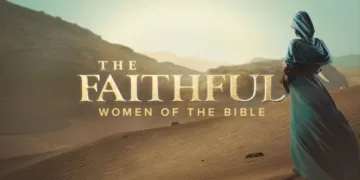
The Faithful: Women Of The Bible arrives as a three-part television event on Fox, and its design is clear from the opening movement. It retells foundational Genesis narratives through the lives of its matriarchs. Each two-hour installment follows a different generation of women tied to the lineage that leads toward the Kingdom of Israel. The first chapter turns to Sarah and her fraught relationship with the Egyptian servant Hagar.
Later installments move to Rebekah, then to Rachel and Leah, the sister brides. Filmed in Malta and Rome, the series uses Mediterranean landscapes to stand in for the ancient Levant. The story opens with Sarah in Harran, where she refuses the marital role expected of her before leaving with Abraham for Canaan.
In Egypt and in the desert, the drama follows her infertility and her decision to seek an heir through Hagar. From that act, the line extends through Isaac and into the next generation. Minnie Driver plays Sarah, with Jeffrey Donovan as Abraham and Natacha Karam as Hagar. The series reaches for the weight of scripture and folds into it a modern interest in domestic agency.
The Fragmentation of Time and the Transaction of the Womb
Dividing Genesis into three separate arcs gives the material a fractured sense of time, and that fracture suits the material. Sarah, Rebekah, Leah, and Rachel are observed in discrete chambers of story, almost like remembered lives lifted from a larger ruin. Their separation sharpens the repetition in their suffering. A patriarchal record becomes domestic drama, and the scale contracts from legend to the closed air of tents, rooms, and barren land.
Hagar’s role in Sarah’s attempt to secure an heir carries the chill of necessity. The arrangement is treated as an exchange in which bodily autonomy is handed over for the sake of legacy. Flesh, spirit, inheritance, and power meet in the same wound. The imbalance between mistress and servant never leaves the frame.
Sarah’s refusal to submit to a man becomes the axis of her characterization. In Egypt, her resistance gives her a presence marked by will and self-possession. She reaches for sovereignty in a narrative tradition that often leaves her with little space to claim it. The move from Harran to Canaan reflects a hardening within her, a motion toward belief stripped of warmth. Her skepticism gives the series some of its strongest human texture. It fixes the drama in a world where divine speech can feel distant, withheld, or lost in the wind.
The desert becomes a geography of waiting. In that long suspension, the women form their own ideas of power. They live in the silences between prophetic declarations. Absence shapes them. The womb becomes the contested ground on which the future is secured. Birth carries triumph, and it carries an erosion of self. The show treats these passages with grave patience. It sits with the cost of bloodline and leaves the wound open.
Faces of Faith and the Weight of the Divine
Minnie Driver plays Sarah with an eerie stillness that holds the eye. Her face carries skepticism so severe it begins to resemble despair. Her cadences feel remote, worn down, shaped by years spent serving a promise that never arrives in tangible form. Guilt moves through the performance even when the script leaves it unnamed. Driver gives shape to silences the dialogue cannot fill.

Jeffrey Donovan’s Abraham radiates intensity of a troubling kind. His wide-eyed expression suggests a man receiving visions no one around him can touch. He comes across as possessed by spirit, bound to command, pulled toward the invisible. His love for Sarah registers. So does his obedience to the voice that calls him forward. He feels like a man standing before something measureless and terrifying.
Natacha Karam gives the first installment much of its emotional force. Her Hagar carries the pain of a woman trapped inside the needs of a mistress she still loves. In the desert exile, Karam uses posture, movement, and physical strain to register the cost of surviving inside divine designs made by others.
She makes Hagar’s solitude palpable. The later ensemble reaches for the same inward life. Alexa Davalos and Tom Mison appear later and take on the burden of the next generation. Their presence preserves continuity in a world where inherited sin lingers over every household.
The actors often have to wrestle with names made monumental by scripture. Driver finds a trembling human fear in Sarah, the fear of being erased by time. Donovan finds another terror in Abraham, the fear of having given himself to the wrong voice. Their chemistry rests on years endured together and on silences that have hardened into habit. The younger performers carry the difficult task of turning icons into people. They search for pulse, frailty, and breath beneath the ceremonial surface.
Landscapes of Dust and the Artifice of Grace
The show builds its visual world from the scorched allure of Malta and Rome. These landscapes provide a fitting stage for a story that wants to feel ancient and half remembered. Light in the Egyptian court differs sharply from the hard glare of the Canaanite desert. Yet the production often feels arranged rather than inhabited.
Some costumes never gain the density of clothing shaped by long use. Wigs and aging makeup can pull the viewer out of the drama. The surfaces of this world appear too polished for people wandering through wilderness. The scenery reveals careful construction at nearly every turn. Mediterranean light gives the series beauty, though that beauty can feel strangely vacant.
The treatment of the divine exposes another weakness. God arrives through a plain voiceover, and the effect has little mystery. It lands with the flatness of a recitation, not with the dread or awe that such moments require. The infinite never presses against the frame with real force. Danny Cannon’s pacing also wavers. The move from Ishmael’s birth to Sarah’s late pregnancy arrives too quickly.
Time passes in a rush, and the long erosion of waiting goes missing. Sarah’s ninety years do not settle into the body of the episode. The shift plays like an editorial leap. It never gathers the force of inner transformation. The camera returns to the desert again and again, almost as if it expects the land to supply meaning on the script’s behalf. The show’s aesthetic reaches for reverence and falls short of grit. This visual world feels like memory turned into painting, full of shadow and pitiless light.
The Formal Tongue and the Shifting Script
The dialogue leans on an archaic register, and that choice often leaves the speech rigid. It creates distance from the inner lives of the characters. Piety takes precedence over psychological immediacy. Many lines land like stones placed one after another. The Egyptian sequence introduces a notable change to the source material. Sarah becomes the one who initiates the lie about her relationship with Abraham. That revision gives her agency and recasts her as the author of her own survival. The first installment also leaves out the sacrifice of Isaac. That absence removes the harshest test of Abraham’s faith and weakens the full shape of his characterization.
The world of the series remains hazy in ways that limit its force. It never settles the question of how miracle and coincidence coexist in this setting. Surrounding tribes receive little cultural texture, and the protagonists seem to move through emptied history. Complexity has been washed from the margins. The series keeps its attention on the women and renders the men in gentler strokes. That recalibration gives the drama a modern symmetry, yet the harder edges of these stories fade with it.
Violent acts of faith have been pared back, and the adaptation develops a guarded quality. It seeks solace where provocation might have cut deeper. Formal speech hangs over the series like a veil. Beneath it lies a harsher reality of blood, fear, survival, and hunger that rarely breaks through. The biblical echo remains audible. Its bite rarely does. The script feels like a chart drawn from a vanished place, careful in outline, haunted in spirit, and never fully alive to the terror living inside its own inheritance.
The biblical event series The Faithful: Women of the Bible premiered on Fox on March 22, 2026, and concluded its three-week run on April 5, 2026. This miniseries offers a grounded, female-centric reimagining of the Book of Genesis, focusing on the interwoven lives of the matriarchs who shaped ancient history. Currently, the complete series is available for streaming on Hulu in the United States and on Disney+ for international viewers.
Where to Watch The Faithful: Women Of The Bible Online









Full Credits
Title: The Faithful: Women of the Bible
Distributor: Fox, Hulu
Release date: March 22, 2026
Rating: TV-PG
Running time: 120 minutes per installment
Director: Danny Cannon, Catriona McKenzie, Daniel Barnz
Writers: René Echevarria, Amy Berg, Francisca X. Hu
Producers and Executive Producers: Carol Mendelsohn, Julie Weitz, René Echevarria, Franco Della Posta, Christina Giubbetti
Cast: Minnie Driver, Jeffrey Donovan, Natacha Karam, Alexa Davalos, Tom Mison, Tom Payne, Ben Robson, Millie Brady, Blu Hunt, James Purefoy, Will Stevens, Taylor Napier
Director of Photography (Cinematographer): Christopher LaVasseur
Editors: John M. Vitale, Mark S. Manos
Composer: Benjamin Wallfisch
The Review
The Faithful: Women Of The Bible
This production exists in the tension between the weight of scripture and the fragility of the human face. While Minnie Driver finds the quiet desperation of a woman defined by her womb, the series often retreats into a stiff, formal piety. It is a visually lush but emotionally distant exploration of legacy. The divine remains a hollow voiceover. The human cost of these ancient covenants is acknowledged but rarely felt in its full, jagged reality. It is an artifact of reverence that lacks the courage of its own existential questions.
PROS
- Minnie Driver’s nuanced performance as Sarah.
- Natacha Karam’s striking portrayal of Hagar.
- Visual beauty of the Mediterranean filming sites.
- The focus on domestic agency within ancient scripture.
- A look at the generational impact of private choices.
CONS
- Formal dialogue creating emotional distance.
- Weak aging makeup and technical artifice.
- Sanitized storytelling avoiding the darkest parts of the text.
- Literalist voiceovers for the representation of God.
- Abrupt pacing during major temporal shifts.







