


























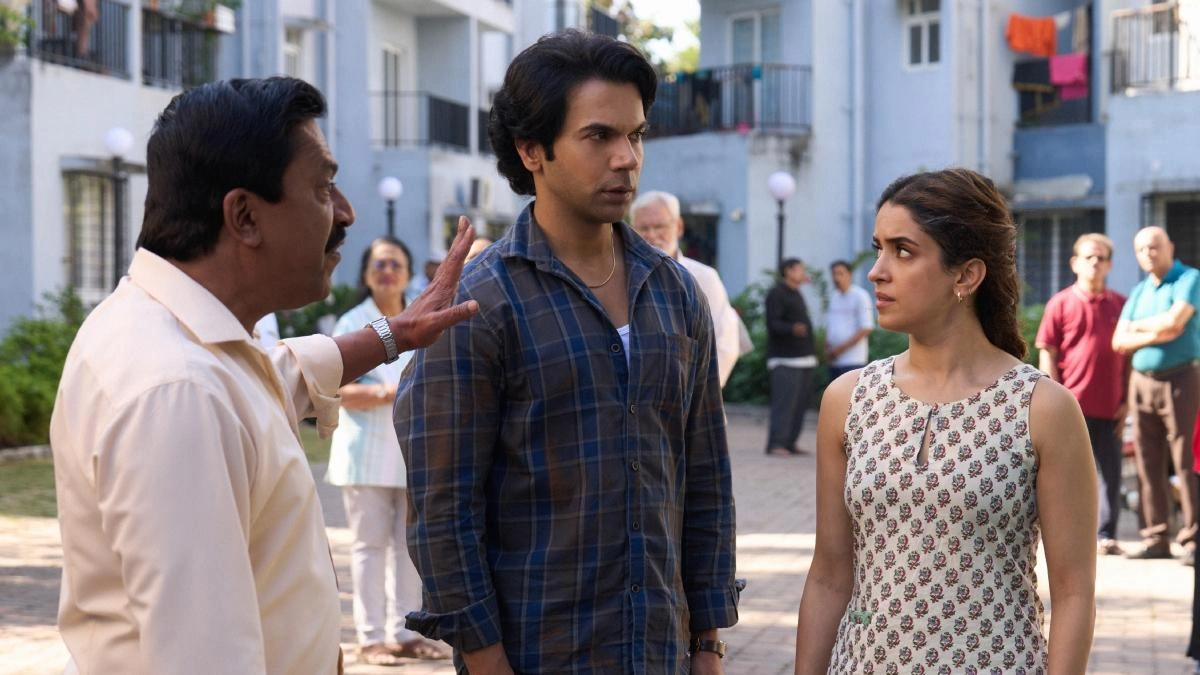

Ramakant moves through the gated lanes of Borivali with the discipline of a man who measures life in numbers. He sells perfume, a product linked with pleasure and display, yet his attention stays fixed on the exact worth of every rupee. His habits present an extreme portrait of middle-class thrift in a contemporary city. Each morning, he secures a free breakfast of buttered toast from his landlady as part of his daily effort to cut expenses. He brings the same fierce commitment to a six rupee refund dispute with the electricity board.
That routine faces disruption when his wife, Shilpa, wants to buy a wedding gift. They spend five thousand rupees on a household appliance. The wedding is called off soon after. Many people would write off the gift as a loss. Ramakant pursues the item, determined to return it to the shop and recover the full amount.
That fixation on cash sets off a disorderly chain of events. A corrupt politician enters the picture, followed by a murder investigation. An ordinary domestic object turns into a source of danger. The film builds its comic tension from this household premise and shows how one man’s fixation on saving money sends the social world around him into disarray.
A Character Study in Middle Class Eccentricity
Rajkummar Rao supplies the film with its restless pulse. He plays Ramakant through a carefully judged mix of appeal and exasperation. Rao has often taken on versions of the eccentric city dweller in Hindi cinema, and that familiarity works in the film’s favor here. He carries the polished smile of a salesman while revealing the character’s stubborn self-interest.
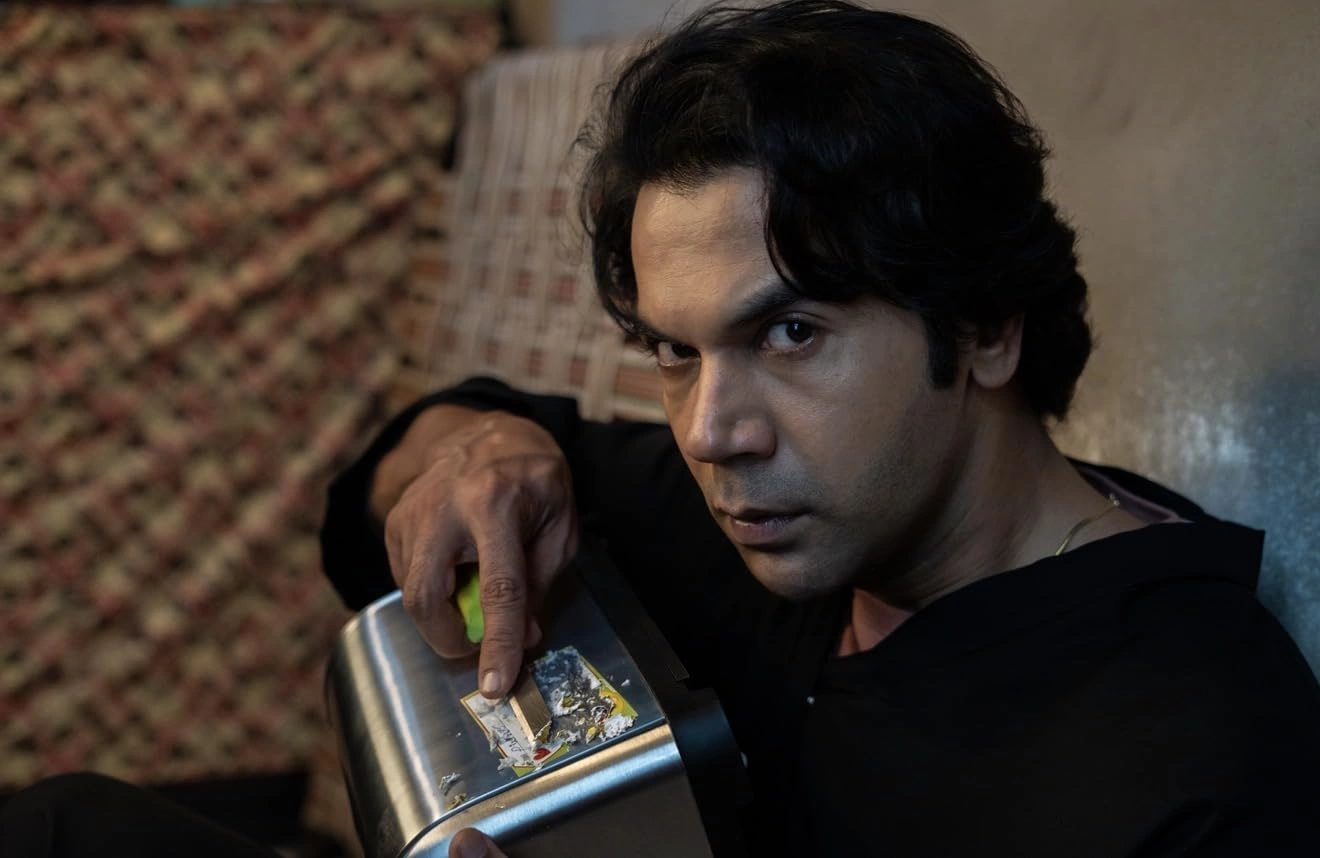
He makes Ramakant’s thinking legible, even when that thinking reduces dignity to a small pile of coins. Sanya Malhotra brings steadiness to Shilpa. The film gives her a judo black belt background and fills her days with a crime show called Hoshiyar Hindustan. Once a body appears in their building, that viewing habit pushes her into the role of amateur investigator. She begins to suspect her husband and trails him across the city.
Archana Puran Singh plays Malini, a neighbor who maintains a polished image inside the housing society while concealing private desires that clash with that exterior. Her performance gives the story an unpredictable edge. Abhishek Banerjee appears as Glen, the landlady’s stoner son, and the character carries a secret hidden inside the gift.
These actors handle the film’s absurd turns with control and timing. Farah Khan and Pratik Gandhi appear in cameos. Across the ensemble, each performer gives the exaggerated material a touch of recognisable human behavior. That quality matters in a story built on escalation.
The group dynamic remains the film’s strongest asset. Each actor finds small gestures and rhythms that separate one character from another amid the confusion. The dialogue moves quickly, and the cast keeps pace with it. Their momentum sustains interest through the lighter stretches of the narrative. The performances lift material that remains fairly simple on the page.
The Structural Stumble of a Repetitive Gag
Director Vivek Daschaudhary’s ad-film background can be felt in the way individual scenes are assembled. The screenplay is built around one dominant trait: the frugality of its protagonist. That quality generates each conflict and each comic turn. For much of the first hour, the humor lands well. In the latter half, the material starts to feel stretched.
The pacing loses force as the stakes grow larger. The narrative moves from situational comedy into dark crime caper territory, yet the shifts lack ease. By the closing stretch, the film’s energy has weakened. The script keeps returning to its main joke until the joke loses its edge. What begins as absurd escalation starts to feel circular.
The plot twists seem designed to support the running time. The writing stays on the surface of the chaos and does not give the events much thematic weight. That keeps the film from cutting deeply as satire. The latter half suffers from weak narrative momentum, with characters repeating patterns of behavior without a strong sense of movement.
The change from domestic comedy to political thriller feels imposed on the material instead of growing from it. The film reaches in several directions at once, and the result is a crowded narrative. Characters keep moving through the same spaces and reactions. The premise has comic potential, yet the script struggles to discover fresh uses for it. The writing becomes preoccupied with plot machinery and gives less attention to comic texture.
Visual Choices and Sonic Absurdity
The film’s visual design follows the digital look common across many streaming productions. Yellow and blue tints dominate the frame, giving the image a polished surface that feels synthetic. The actual texture of the Mumbai suburbs does not come through strongly. The camerawork is tidy, though it offers little sense of the locality as a living environment.
The background score fits the film’s playful tone and helps sharpen the tension around the chase for the toaster. Its energy suits the absurd trajectory of the plot. Borivali offers a setting that viewers can easily recognise, yet the film does not draw much character from the city itself. The location reads as a broad urban backdrop instead of a fully felt neighborhood.
The final stretch leans into slapstick. Sanya Malhotra performs several stunt-driven moments linked to Shilpa’s judo skills, and those scenes give the ending a needed jolt of motion. The production values are polished and efficient. As a one-time watch, the film works well enough.
It produces a string of laughs, though its effect fades quickly afterward. The craft serves the film’s light tone with competence. It fits the expectations attached to a current streaming release. Daschaudhary favors visual legibility over formal risk, a choice that keeps the film accessible for viewers across markets.
The editing preserves a brisk surface pace, even in passages where the narrative itself loses steam. The film operates as serviceable entertainment, offering a bright, quick-moving experience. The sound design supports the movement between comedy and suspense. The color design stays steady across the runtime. These technical choices align with the production’s commercial aims. The film remains inside the familiar frame of a streaming comedy and plays best as an easy weekend diversion.
Toaster premiered on Netflix on April 15, 2026. It follows a man whose fixation on a wedding gift leads to a series of chaotic events. You can stream it on the Netflix platform. The production features a mix of dark humor and suspense.
Where to Watch Toaster (2026) Online


Full Credits
Title: Toaster
Distributor: Netflix
Release date: April 15, 2026
Rating: U/A, TV-MA
Running time: 126 minutes
Director: Vivek Daschaudary
Writers: Parveez Shaikh, Akshat Ghildial, Anagh Mukherjee
Producers and Executive Producers: Rajkummar Rao, Patralekhaa, Tarun Bali
Cast: Rajkummar Rao, Sanya Malhotra, Archana Puran Singh, Upendra Limaye, Farah Khan, Abhishek Banerjee, Jitendra Joshi, Seema Pahwa, Vinod Rawat, Pratik Gandhi
Director of Photography (Cinematographer): Jishnu Bhattacharjee
Editors: Chandrashekhar Prajapati
Composer: Aman Pant
The Review
Toaster
The film provides a light viewing experience through its dedicated cast and an amusing central idea. Rajkummar Rao carries the narrative with his portrayal of extreme frugality. The story loses its momentum as it tries to expand a single joke into a crime caper. It remains a functional piece of entertainment. The reliance on a thin premise prevents the movie from reaching a higher standard.
PROS
- High energy performances from the lead cast.
- Humorous supporting character arcs.
- Sharp dialogue in the initial acts.
CONS
- Narrative repetition in the second half.
- Inconsistent tonal transitions.
- Generic visual presentation.