

























![Kingdom Hearts Collection [I-III] Review](https://gazettely.com/wp-content/uploads/2026/10/Kingdom-Hearts-Collection-I-III-1-360x180.webp "Kingdom Hearts Collection [I-III] Review: KHII Holds Steady as Newer Entries Fluctuate 37")



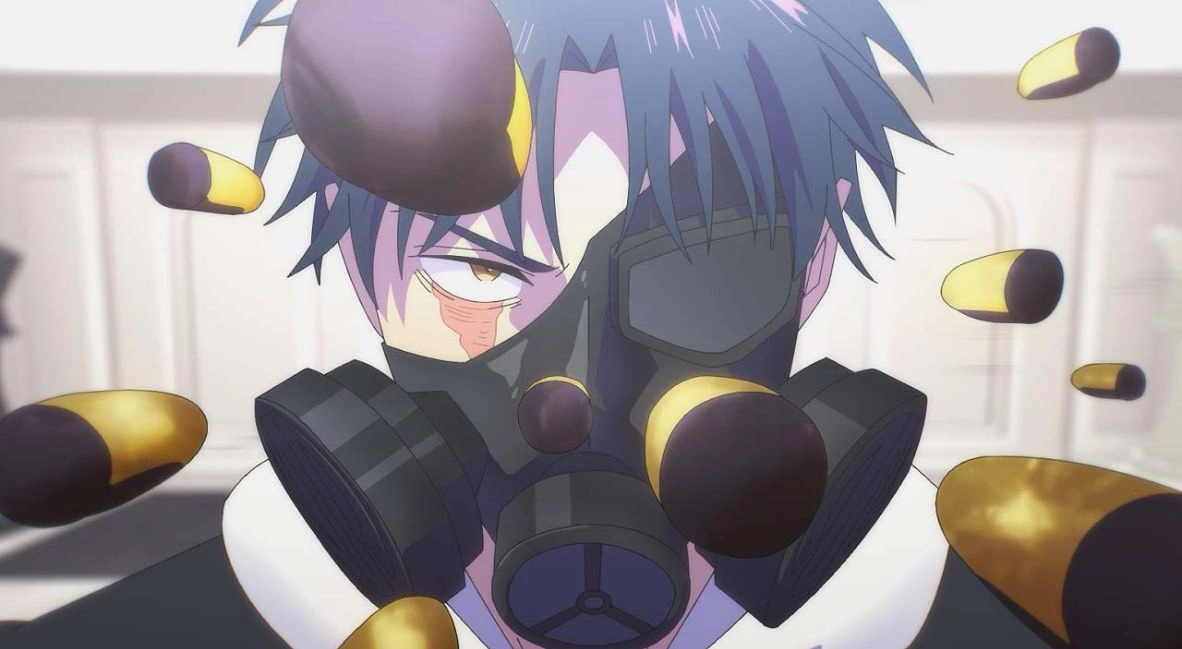

Hikaru Gero spends his nights dissolving the bodies of organized crime leaders with carefully prepared chemicals. He serves as a master of the Poison Clan, and the series introduces him as someone built for sudden violence. Outside that work, he has almost no social life at all.
That isolation becomes a family problem when his grandmother orders him to produce an heir and protect the bloodline. If he cannot do it, his sister Akari will be pushed into a politically useful marriage. Gero’s answer comes through Mei Kinosaki, a sharp con artist who survives by taking money from wealthy men.
Gero meets Kinosaki on what should have been an assassination job, then changes course and proposes a deal. Kinosaki will teach him how to date, and Gero will search for a real romantic connection while trying to preserve his sister’s freedom. That setup places a trained killer inside the humiliations of modern courtship, and the series gets plenty of mileage out of the gap between those two modes of living.
The Strategy of Bloodline Preservation
The story runs on the force of family obligation. The Poison Clan is presented as a rigid institution where legacy matters, and Gero’s decision to carry the burden himself gives the plot its first strong dramatic anchor. His sister wants a life with her partner, so he steps forward and accepts a role he is plainly unequipped to handle. That choice gives his arc shape from the beginning. He fears rejection, struggles with ordinary social contact, and still enters a public search for a partner because the alternative would cost his sister her freedom.
That choice also shapes the structure of the series. The early episodes move away from a familiar assassin format and settle into something more specific. Gero is still operating in a violent world, yet the plot keeps redirecting those skills toward rescue work.
Kinosaki quickly understands that Gero has no chance in a normal matchmaking setting. His first appearances at parties end in disaster because every interaction carries the same intensity he brings to combat. Kinosaki’s solution is ruthless, funny, and perfectly tuned to the show’s logic: put Gero in situations where saving someone’s life becomes his introduction.
From that point forward, the series finds a workable engine. Each mission functions as an action set piece and a dating test at the same time. The luxury ship rescue, where Gero fights through guards while fretting over how he looks, captures the show’s rhythm well.
The joke lands because the concern is sincere. He can deal with armed men. A first impression is harder. That tension gives the humor its shape and keeps the story fixed on a clear emotional line. Gero is learning how to exist as a person, not simply as a weapon trained for clan business.
The app that supplies shady jobs is a smart piece of worldbuilding because it ties old family systems to a present-day criminal market. It also gives the show a practical way to keep moving. Gero takes these assignments in search of possible partners, and the pace benefits from that clean objective.
The movement from failed matchmaking events to rescue-based courtship feels coherent, since each disappointment increases the pressure created by his grandmother’s deadline. The series understands that Gero uses work as cover. Kinosaki keeps dragging him into situations where emotional exposure cannot be scrubbed away with chemicals.
The Domestic Life of a Professional Killer
Gero works because the writing keeps his contradictions active in nearly every scene. He can react with impossible speed in combat, then shut down during a routine conversation with a woman. The series leans into that split without flattening him into a single joke.
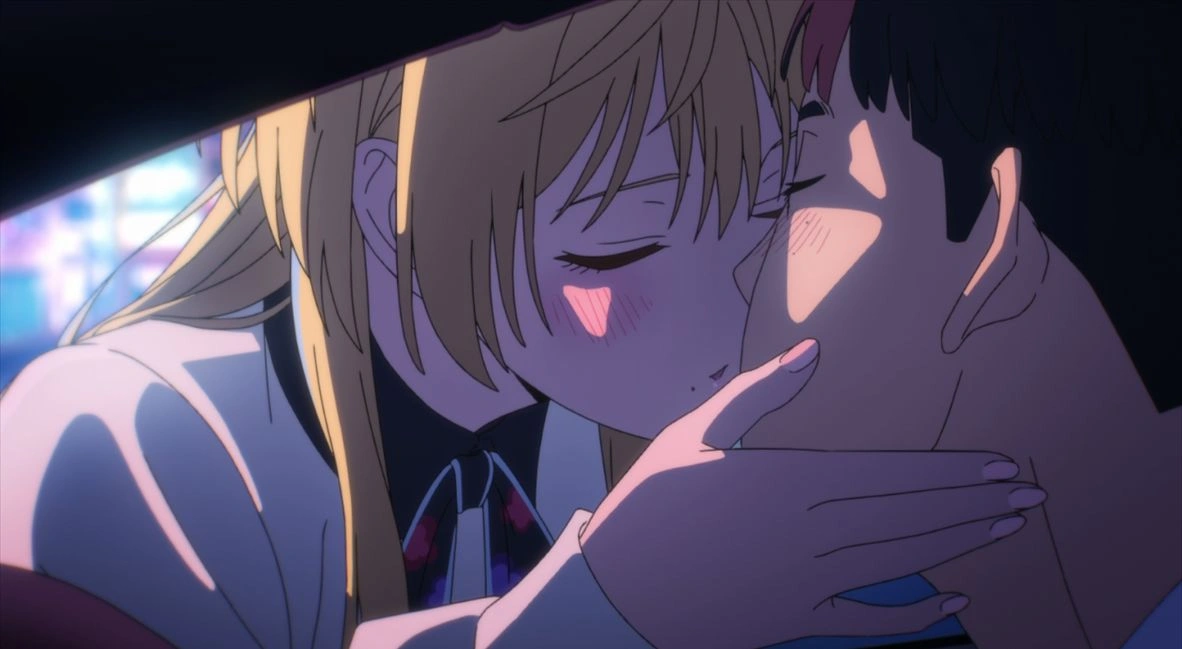
His domestic habits do a lot of the character work. He makes DIY candy kits for children, obsesses over homemade cleaning products, and treats orderliness as a personal refuge. Since those same products can melt iron, the show gets a grim comic edge from watching him apply them to public bathroom floors with total seriousness.
These details keep him sympathetic. He is dangerous, disciplined, and deeply strange, yet the script gives him a moral framework that separates him from the people around him. He kills those who harm others, and that line matters because it places his violence inside a code he still treats seriously. The series does not try to smooth away the ugliness of his profession. It gives him enough clarity and restraint to keep the audience invested in his search for a different life.
Kinosaki is the figure who makes that life legible. He swindles wealthy men while wearing feminine clothing, and he does it to cover his brother’s medical bills. The series handles that material with a clean, direct touch. Gero learns Kinosaki is a man, accepts it immediately, and the story moves forward without panic or cheap confusion. That decision helps the partnership feel grounded. Their bond begins as a contract, then slowly develops into a relationship built on trust, teasing, and genuine care.
Kinosaki also serves a clear dramatic purpose. He sees what Gero cannot see in himself. He notices the kindness, the discipline, and the talent hidden inside years of isolation. That perspective gives the series a stable emotional center. Kinosaki jokes about Gero’s inexperience, yet his support never feels false.
A quiet scene of the two mopping a floor after a hard day says a great deal about how the show understands intimacy. Care arrives through shared routine, through labor, through the simple act of helping someone regulate themselves. It is one of the series’ better choices. Their chemistry carries scenes that might otherwise feel schematic, and their teamwork in dangerous situations gives the action a character basis.
The Bio-Chemical Warfare of Elite Clans
The larger setting gives the series room to expand past its premise. Five great families govern this world, each tied to modified bloodlines that produce supernatural abilities. The Poison Clan sits within that hierarchy, and Gero stands as its finest product. His combat method is tied directly to bodily risk. He injects toxins into himself to increase speed and strength, and the process carries a visible physical cost. That detail keeps his power from feeling effortless. Every fight points back to the family system that shaped him and the damage that system leaves behind.
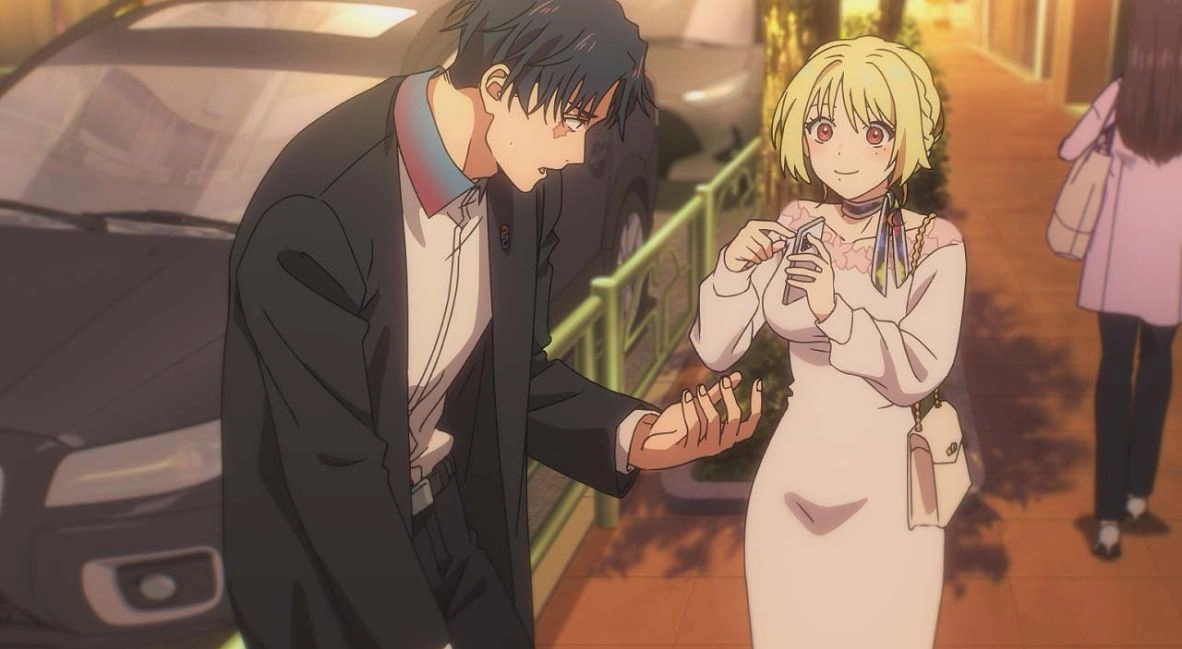
His use of chemical agents in battle helps the action stand apart. A fighter who can cut a moving vehicle in half with a spray of corrosive liquid has a strong visual identity, yet the series also treats those attacks as part of a broader discipline. There is method in the violence. Gero is not improvising his way through combat. He is deploying training that has been bred into him and drilled into him by clan expectations.
Shizuku Ushio’s arrival widens the series in a useful way. As the Master of Water, she introduces another bloodline ability and another attitude toward the assassin trade. Her conflict with Gero works because the difference between them is ethical as much as tactical.
Ushio treats killing as business and moves through assignments with cold efficiency. She is willing to hurt innocent people, including a girl caught in a corrupt collector’s orbit. Gero still works within a violent profession, yet the show keeps drawing a line around his conscience. He refuses jobs that leave him unable to rest. That principle gives their clash weight beyond spectacle.
The fight itself benefits from the structure of the power system. Chemistry and biology matter here. The series wants combat to feel like an exchange of methods and temperaments, not a blur of glowing effects. That lends the world some texture.
The apps, the dark web transactions, and the hiring of rival masters create a mercenary society where every skill can be purchased. It is a cold system, and the show uses it well. Gero’s search for a wife keeps colliding with professional rivalries, which prevents the romance plot from floating free of the series’ harsher material.
Those encounters also let the show fill in Gero’s past. His childhood in a large, empty house, eating dinner alone, explains plenty without dragging the pace to a halt. Isolation shaped him long before he ever entered the dating world. The modified bloodlines grant power, though they also lock people into inherited roles that leave little room for ordinary living. The series returns to that tension often, and it remains one of its steadier ideas.
The Sensory Identity of Studio Bones
The production work gives the series much of its momentum. Studio Bones handles motion with confidence, and Gero’s speed carries real impact in the action scenes. When he clears a moving car, the composition sells both force and velocity. Ground-level perspective shots place the viewer inside the action and give the combat a quick, immediate feel. The visual design builds a city of neon, artificial light, and shadowed criminal spaces, which suits a story that keeps moving between underworld violence and awkward social comedy.
That contrast in setting is part of the show’s appeal. The mafia scenes carry darkness and menace, while the dating material is washed in brighter, more artificial textures. The switch helps define Gero’s split existence. He looks completely natural in one world and painfully misplaced in the other. The series does not need long speeches to make that point. The design is already doing the work.
Music is central to tone here. The blend of city pop and hyper-pop gives the series a pulse that shifts with Gero’s emotional state. Action scenes get a charged, propulsive energy. Quiet moments pull toward melancholy. Those transitions are handled cleanly, and they support the balance between absurdity and sincerity that the script is always trying to maintain.
The voice acting strengthens that balance. Haruki Ishiya captures the gap between Gero’s confidence in battle and his stumbling hesitation in social settings. That split has to feel believable for the character to hold together, and it does. Shion Wakayama gives Kinosaki a voice that can move from teasing to earnest support without strain. That flexibility matters because Kinosaki has to function as comic partner, emotional guide, and tactical ally.
The art direction stays consistent across all of this. Character designs carry a strong fashion sense that helps each figure read clearly against the backgrounds. Gero’s sharp suit fits the disciplined killer he has been trained to become, while his discomfort in casual situations often reads visually before he says a word.
Kinosaki’s elaborate outfits draw the eye and express his flair. The special ability animation is also handled with care. Ushio’s water effects have real weight and flow, which helps keep that battle memorable. The series stays watchable because the production can support both its louder action and its smaller character moments.
Ideals Versus Profit on the Open Sea
The first major arc gives the series a solid test case for its formula. Kyoko Himekawa, a thief who returns stolen art to its original owners, arrives as a possible partner for Gero and a clear moral counterpoint to the corrupt collector hunting her. Her Robin Hood image makes her an easy fit for Gero’s search, though the writing does a better job with the mission mechanics than with her interior life. The rescue places Gero in his new role as protector and forces him to juggle romantic ambition with immediate danger.
Himekawa’s motivations receive some humanizing detail through flashbacks, though the collector is written in broad strokes and mainly exists to set the conflict in motion. That leaves the real dramatic weight with Gero and Ushio. Their confrontation gives the arc its energy. Gero is fighting for the possibility of happiness and a future that feels chosen. Ushio is fighting for money. That difference gives the action a clean thematic line without slowing it down with heavy explanation.
Gero’s victory matters because it reframes his skill set. He remains a poison master, trained in killing, yet this mission shows he can use those abilities in service of protection. It also validates Kinosaki’s reading of him. Gero’s appeal comes from courage, discipline, and a genuine urge to save people.
The series needs that point established early, and this arc handles it well. It sets the pattern for everything that follows and makes a persuasive case for the strange machine the show has built: a romance structure powered by rescue missions, family pressure, and a killer trying to learn how to be seen.
The Marriagetoxin television series premiered on April 7, 2026. International viewers can stream the episodes on Crunchyroll. Japanese audiences can watch the broadcast on Fuji TV and Kansai TV. Bones Film produced the animation for this adaptation of the popular manga. The story follows a professional assassin seeking a romantic partner to protect his sister from a forced family union. The show combines fast-paced combat with comedic social situations.
Where to Watch Marriagetoxin Online





Full Credits
Title: Marriagetoxin
Distributor: Fuji TV, Kansai TV, Crunchyroll, Muse Communication
Release date: April 7, 2026
Rating: TV-14
Running time: 24 minutes
Director: Motonobu Hori
Writers: Kimiko Ueno
Producers and Executive Producers: MARRIAGETOXIN Project, Bones Film, Bones
Cast: Haruki Ishiya, Shion Wakayama, Anna Nagase, Asaki Yuikawa, Hinano Shirahama, Mariya Ise, Soma Saito, Shimba Tsuchiya, Haruka Shiraishi, Isamu Yusen
Director of Photography (Cinematographer): Go Kanbayashi
Editors: Kumiko Sakamoto
Composer: Taisei Iwasaki, Yuma Yamaguchi
The Review
Marriagetoxin
Marriagetoxin succeeds by anchoring its absurd premise in sincere character growth. The series avoids common pitfalls by focusing on the functional partnership between Gero and Kinosaki. The rapid pacing leaves some secondary characters feeling underdeveloped, but the technical execution remains sharp. It is a creative exploration of social isolation and the search for connection. The show provides a refreshing perspective on the typical battle shonen formula.
PROS
- Strong lead chemistry.
- Creative power mechanics.
- High technical quality.
CONS
- Fast pacing.
- Simple villains.







