




























Mei begins Lost and Found Co. as an ancient goddess of war facing a very modern identity problem. Her shrines are marked for demolition, her divine strength is almost exhausted, and the public has largely stopped believing in her. Her solution is wonderfully practical: she starts a business.
She turns an ordinary duck into a human intern named Ducky and enters the lost and found industry, turning the basic act of searching into the company’s main service. The player helps citizens recover lost relics and personal belongings, with each successful request rebuilding faith in Mei.
That setup gives the hidden object structure a clear narrative function. You are searching because Mei’s survival depends on public attention, client satisfaction, and a steady flow of likes. Those likes become the game’s playful version of worship, a modern currency for a forgotten deity trying to stay visible. The story uses an anime-inspired style for a light corporate comedy involving the aggressive OK Corp and the sly fox Kitt.
The result feels cozy, focused, and gently satirical. The game takes the busywork of locating keys, missing cats, and misplaced objects, then ties it to the strange business of keeping a goddess from fading away. Compared with typical war stories, the stakes stay soft and playful, with branding, competition, and small acts of help driving the tone.
Maximalist Environments and Hand-Drawn Chaos
The art direction in Lost and Found Co. is built around dense, hand-drawn scenes that pack detail into nearly every visible space. Bit Egg Inc. gives each location a sense of planned clutter. The aesthetic fits the Asian cute style, with soft colors and character designs associated with Japanese and Korean animation.
The environments often start modestly, then grow into surprisingly large spaces as the story progresses. A small room can soon give way to shopping malls, harbors, and cafes, each filled with tiny people and animals moving through their routines.
The game’s visual appeal comes from illustration, object variety, and readable composition. It does its work through density rather than technical spectacle. Each scene invites careful inspection, with small figures, background details, and hidden containers placed across the frame. That makes the screen feel busy without losing clarity. The visual language stays readable, which matters because the game regularly asks players to pick out small items from a crowded field.
Interactivity gives these environments their best texture. Clicking on items often triggers brief animations. A cat might meow, or a mechanical toy might spin after a tap. Some objects are hidden inside other objects, so you need to open dumpsters, cabinets, and boxes to locate the target. Certain puzzles ask you to alter the environment itself, such as turning up a thermostat to melt ice and free a trapped worker.
These details make the levels feel like lived-in places. Every piece of clutter appears to belong somewhere, and the game often encourages you to study a layout before starting the actual hunt. The result is controlled chaos, arranged with enough care to support the search loop.
The Ritual of the Search and the Juju System
Searching in Lost and Found Co. is slow, deliberate, and based on close observation. Each mission places a list of required objects at the bottom of the screen. Selecting an object name provides a text clue, usually giving a broad hint about where to look. These clues guide the player without handing over the answer immediately, which keeps the process grounded in attention and memory.

The Juju system helps when those clues are too vague. Small pale spirits called Juju are hidden across the world, and collecting them lets you buy stronger hints that point directly to a missing item’s location. This creates a useful secondary layer in the mechanics. You are always searching for the mission objects, while also keeping an eye out for resources that can rescue you later. The system keeps frustration under control without removing the need to observe carefully.
The difficulty curve builds at a steady pace. Early stages are simple, then the game introduces multi-story buildings, wide streets, and many shops that can be entered. There is no penalty for selecting the wrong object, which keeps the experience relaxed and encourages playful clicking. That choice fits the game’s tone. It supports exploration, experimentation, and the small pleasure of discovering how different objects react.
Side missions add extra goals outside the main story path. You may need to find every toy mouse in a level or locate a character such as John Lemon for a photo. These objectives do not come with hints, so they demand patience and a sharper eye.
Finishing them earns extra likes for the business, rewarding players who examine each scene past the basic checklist. A full playthrough takes roughly five to ten hours, while finding every secret can extend that time significantly. The rhythm starts to feel meditative. You settle into the hunt, scanning corners, opening objects, and letting the search become its own quiet routine.
Office Life and the Logic of Decoration
Between missions, the game returns to the company office, where Ducky has a personal room. This space works as the hub for meta-progression and gives the player a break from the heavier visual demands of the main levels. Completing client requests leads to mail rewards, with packages containing furniture, trinkets, and new companions. These items gradually turn the office from an empty workspace into a personalized record of completed jobs.
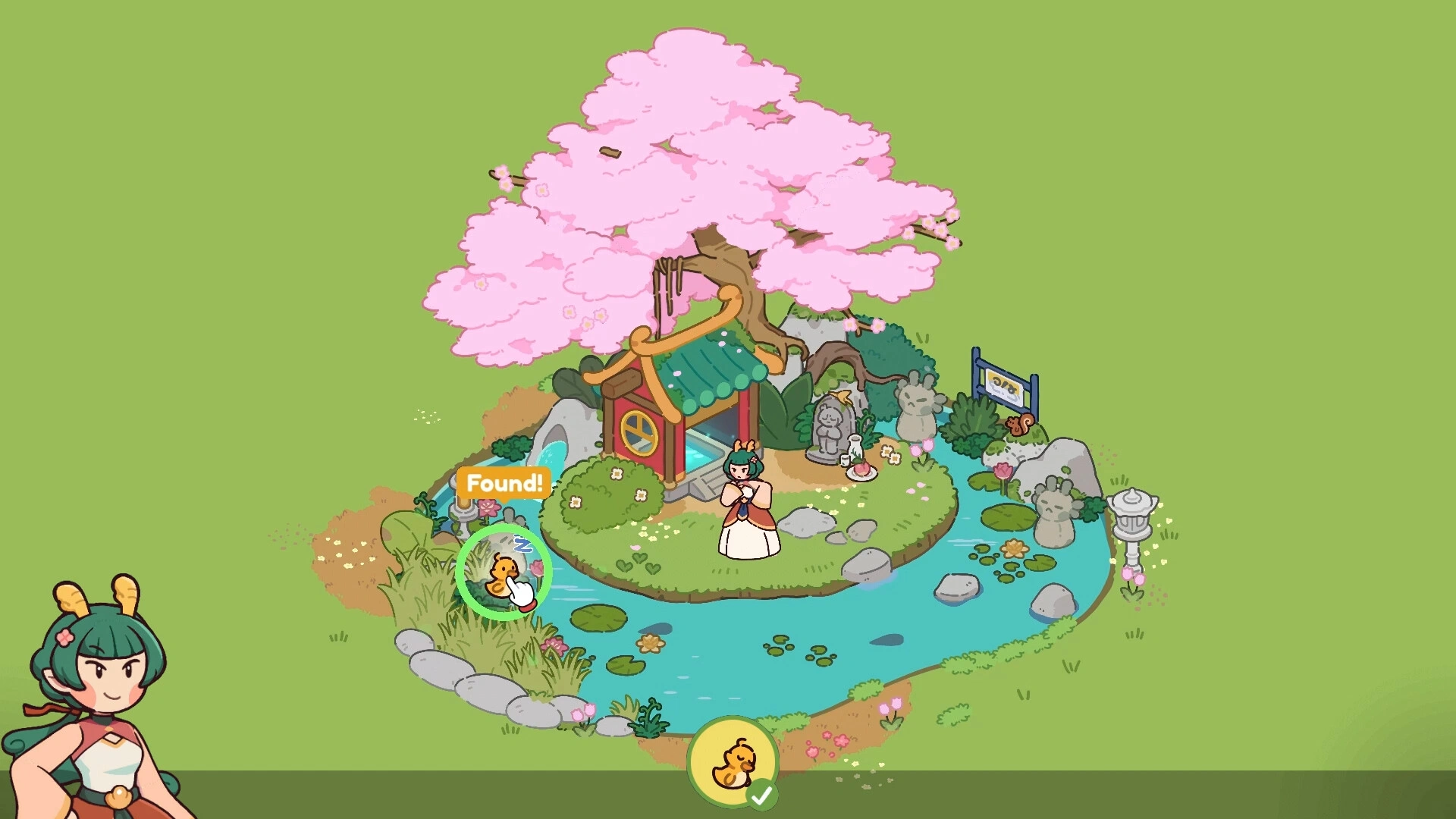
The decoration system has surprising depth for a hidden object game. Every item can be rotated and resized freely, giving players a high level of control over layout. Objects can be layered on top of each other, which allows for complex dioramas. Some furniture includes interactive interiors. You can place a cat inside a cabinet and have it peek out when the door opens. Kitt’s shop expands the system with extra items purchased using money earned from jobs.
This customization creates a useful change in pacing. After long stretches of careful searching, the office gives players a lower-pressure space to arrange objects, test combinations, and build something personal. The progression still connects directly to the core loop. Likes from successful missions represent the public’s renewed faith in Mei, and certain like milestones unlock the next chapter of the story. Each found object, side task, and completed request feeds into the business’s growth.
The office overworld changes over time to reflect success, giving the player a stronger sense of ownership. Watching the room fill with furniture, companions, and small memories from past jobs makes the effort feel meaningful. The game frames each checklist as part of a larger construction project: a home, a company, and a strange new life for a fading goddess and her duck intern.
The Review
Lost and Found Co.
Lost and Found Co. succeeds as a revitalizing take on the search and find genre. Its strength lies in the marriage of a delightful story and dense, interactive environments. While the hint system can falter, the charm of Mei and Ducky keeps the experience delightful. It is a polished, cozy adventure that rewards every moment of observation.
PROS
- Beautiful hand-drawn art.
- Interactive and lively environments.
- Deep and flexible room decoration.
- Relaxing pace with no time limits.
CONS
- Occasional vague hints.
- Some story sections require extra side tasks to progress.