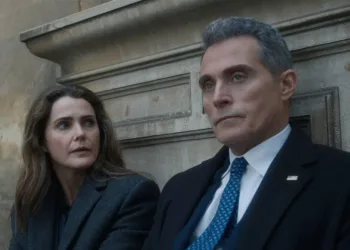















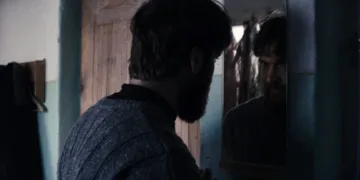











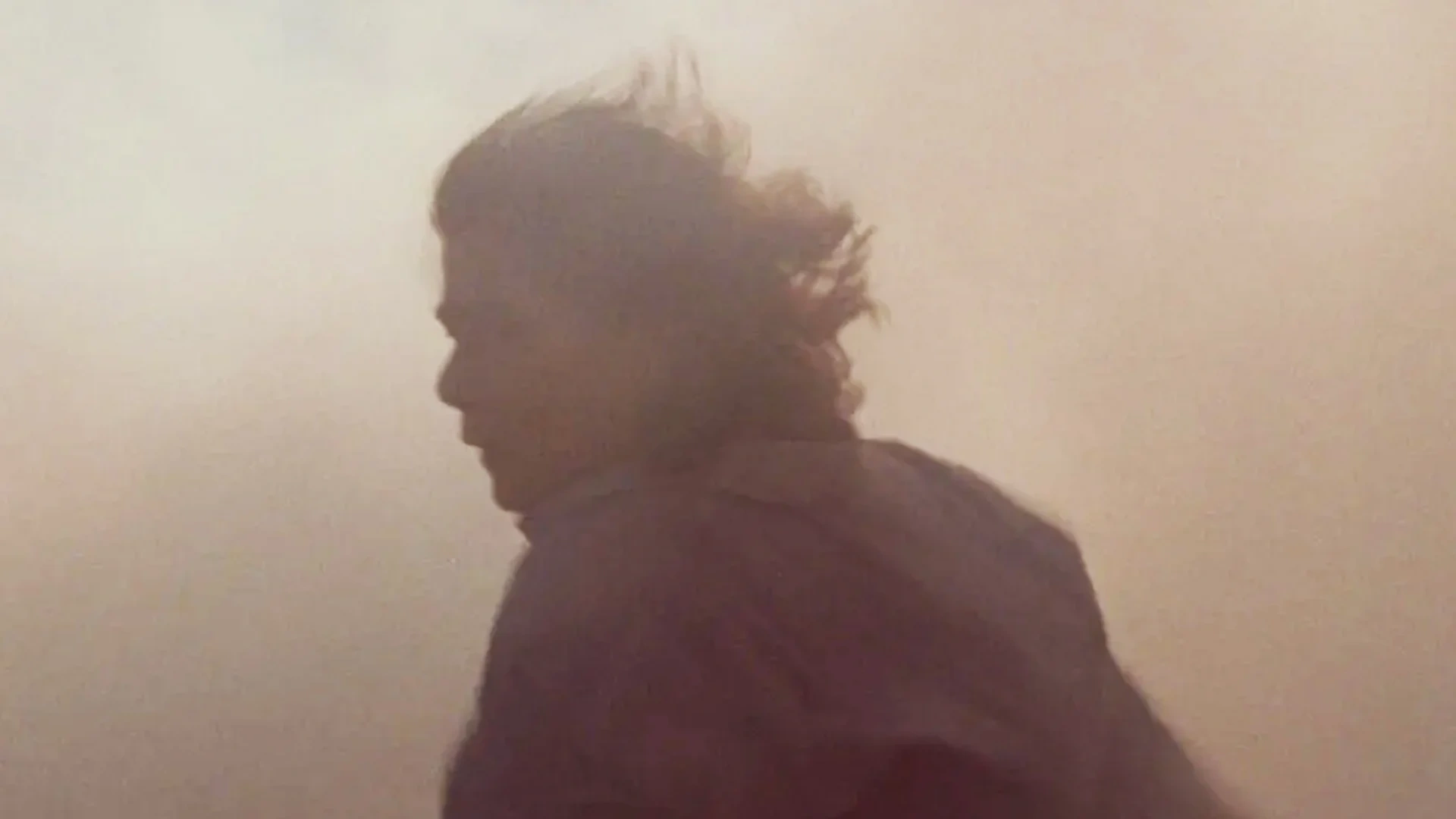

The feature directorial debut of American filmmaker Reed Van Dyk arrives with Atonement, a sober drama grounded in devastating real-world history. Van Dyk builds the narrative from Dexter Filkins’ 2012 New Yorker article “Atonement After Iraq,” a report that carefully records the collateral damage of geopolitical intervention.
The premise returns to the 2003 invasion of Iraq, where a chaotic misunderstanding at a Baghdad intersection leads a U.S. Marine squad to fire on a civilian car, instantly killing three members of the Khachaturian family. From that moment, the film creates a dual timeline.
It opens in the dust, panic, and terror of the wartime ambush, then jumps over a decade to California. That leap lets the camera follow the parallel psychological damage carried by the surviving Iraqi matriarch, Mariam, and the haunted ex-Marine, Lou D’Alessandro. The film places its focus on civilian trauma, veteran guilt, and the uneven terrain of human forgiveness, giving Atonement the shape of a war story built around aftermath.
Dissecting the Three-Part Structural Balance
Van Dyk splits his screenplay into a clean three-part chapter format, setting aside large blocks of time for the major movements of this tragedy. The first segment stays locked inside the terrifying reality of the initial Baghdad shooting, building the immediate sensory details of the fatal error.
The script then shifts into a middle chapter shaped around Lou’s post-war isolation, his declining mental state in San Diego, and his desperate search for meaning after an other-than-honorable discharge. The final chapter moves the narrative into the domestic space of Glendale, California, placing these two opposing sides inside the same room.
That structural decision raises a necessary debate about storytelling priorities and narrative balance. The first two-thirds of the runtime draw mainly from American perspectives, a choice that threatens the film’s emotional equilibrium. It taps into a familiar pattern in Western media and mainstream cinema, where the psychological rehabilitation of the Western soldier frequently receives the clearest dramatic path, leaving international civilian victims pushed toward the margins.
The script tries to bridge that deep ideological divide through journalist Michael Reid, played with atypically measured sensitivity by Kenneth Branagh. Reid becomes the connective tissue between these two worlds, first listening to the Khachaturian family’s testimony for The New York Times in a Baghdad hospital, then mediating the tense cross-cultural reunion years later as a staff writer for the New Yorker.
The structure carries real formal intelligence, yet the script hits a few minor weaknesses that interrupt its naturalism. A handful of veteran support group lines feel overtly rhetorical, as if they are explaining trauma in blunt terms with too little room for silence.
A scene where Lou’s girlfriend Anna says a bullet moves both ways when a gun is fired lands as an overly obvious thematic metaphor. These heavy-handed flashes show the director pressing too firmly on his own material. The patient chapter design still keeps the story from sliding into standard Hollywood sentimentality.
The Sensory Contrast of Combat and Domestic Aftermath
From a technical angle, the visual and auditory identity of Atonement works as a sharp commentary on the lingering nature of trauma. Cinematographer Jon Peter captures the physical texture of early-occupation Baghdad with remarkable care, using Jordan as an exceptionally convincing stand-in.
The camera first absorbs the daily rhythms of civilian life through saturated color, taking in color-rich fruit markets, local graffiti, and children moving casually through the streets. These warm domestic images carry a heavy atmospheric anxiety, broken by sudden utility blackouts and the distant low rumble of American airstrikes.
Van Dyk sets this unembellished realist style against the kinetic, terrifying clarity of the intersection ambush. Once the firefight erupts, the visual language changes violently. The lens fills with blinding dust clouds, shattered windscreens, and rapid viewpoint changes that replicate the disorienting confusion of active combat. I appreciate the way the framing gives priority to the raw panic on the faces of the Khachaturian family, catching the split-second decisions of the Marines on the rooftop and the civilians trapped below.
That technical care moves directly into the auditory design. Zak Engel’s melancholy woodwind score is exceptionally disciplined. The music avoids cheap melodramatic triggers and manipulative swells, keeping the film under a persistent, somber atmosphere. I find the sonic transitions between the two eras especially fascinating. The first third of the film depends on the concussive loudness of active warfare, filled with screaming, metal tearing, and high-frequency ringing.
The contemporary California timeline draws its power from heavy, stilted silences and empty ambient noise. That auditory void mirrors the internal states of the characters with impressive precision, proving that the quiet rooms of Glendale carry a haunting force equal to the loud streets of Baghdad. Sound design becomes the film’s most elegant way of mapping a psychological prison.
The High Stakes of Restraint and Absolution
The emotional anchor of Atonement rests on the distinct performance styles of its two lead actors, both asked to explore the complicated, messy reality of human accountability. Hiam Abbass delivers a majestic, beautifully restrained performance as the matriarch Mariam Khachaturian. Abbass communicates decades of historical displacement, profound grief, and quiet authority through minimal dialogue, relying on fierce, expressive stillness that takes command of the screen.
Watching Mariam repeat her quiet domestic routines in California reveals a spirit tested across years of suffering and still intact. That work builds toward the film’s strongest sequence, a cold, devastatingly precise offering of forgiveness that plays like a master class in acting restraint.
Boyd Holbrook portrays ex-Marine Lou D’Alessandro as a highly volatile bundle of exposed nerves. Through physical tremors, explosive panic attacks, and severe self-hatred, Holbrook channels a raw, exhausting desperation for absolution.
The film correctly highlights the selfishness inside Lou’s pursuit. His frantic desire for a meeting stems largely from an attempt to cure his own psychological collapse, an unsettling nuance that Holbrook plays with complete honesty. He never softens Lou’s responsibility for the historical violence.
The supporting cast gives this emotional terrain exceptional depth. Branagh offers a beautifully understated turn as the honorable journalist, suggesting a man carrying his own emotional battle scars. Jordanian actor Majd Eid brings prickly, protective vividness to Nora’s husband, Asaad, creating a necessary counterweight to Lou’s presence.
In the final scene, Holbrook’s trembling, weeping vulnerability collides with Abbass’s frozen composure. Their interaction refuses easy Hollywood closure and unearned redemption, leaving the audience inside the uncomfortable space of a shared, unresolved human tragedy.
The American wartime drama Atonement made its highly anticipated world premiere at the 79th Cannes Film Festival on May 15, 2026, where it screened to critical acclaim within the prestigious Directors’ Fortnight section. Following its international festival launch, the film is set for a wider theatrical and premium streaming rollout handled globally by international sales agent and distributor The Veterans. Viewers can track regional distribution availability on major digital ticketing networks and tracking applications as local streaming platforms finalize their home-entertainment release windows following its festival circuit run.
Where to Watch Atonement (2026) Online
Full Credits
Title: Atonement
Distributor: The Veterans
Release date: May 15, 2026
Rating: R
Running time: 118 minutes
Director: Reed Van Dyk
Writers: Reed Van Dyk
Producers and Executive Producers: Reed Van Dyk, Tim White, Trevor White, Steven Demmler, David Wulf
Cast: Boyd Holbrook, Hiam Abbass, Kenneth Branagh, Gheed, Majd Eid, Tahseen Dais, Yara Bakri, Gratiela Brancusi, Ali Elian, Khris Davis, Nareman Abdelkareem, Yahya Firas, Alhakam Alheeti, Jake Weary, Matthew Leone, Kalama Epstein, Dino Kelly
Director of Photography (Cinematographer): Jon Peter
Editors: Chelsi Johnston
Composer: Zak Engel
The Review
Atonement
Atonement is a deeply felt, technically disciplined debut that bravely confronts the harrowing, long-term costs of military violence. While the screenplay leans heavily on the American perspective during its first two acts, the sheer emotional weight of the final segment rescues the narrative from conventionality. Reed Van Dyk crafts a quiet, devastatingly honest space that replaces cheap cinematic closure with a complex exploration of shared human trauma.
PROS
- A masterfully restrained performance by Hiam Abbass that anchors the emotional stakes.
- Kinetic, terrifyingly clear cinematography during the Baghdad intersection ambush.
- A disciplined, evocative sound design that beautifully translates internal psychological states.
- A refreshing refusal to offer tidy, unearned Hollywood closure or easy redemption.
CONS
- An uneven narrative distribution that prioritizes Western perspectives over the civilian victims for two-thirds of the runtime.
- Occasional heavy-handed thematic dialogue and overly rhetorical metaphors.