









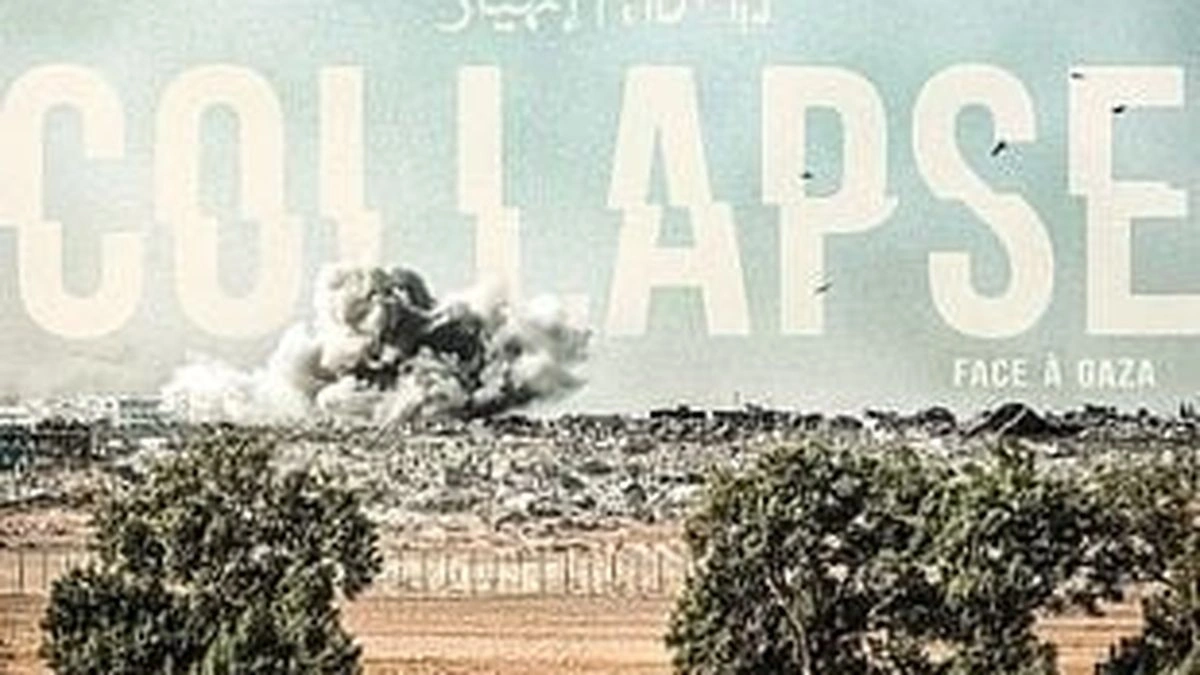

Anat Even returns to the skeletal remains of Nir Oz, the kibbutz that held her childhood and now gives back ruin. The film begins after the violence of October 2023 and follows two years of military retaliation. Even moves away from standard documentary grammar and works through the cinematic essay, where observation, memory, and argument share an unstable frame. The opening quotation from Imre Kertész, aimed at the danger of indifference, sets the philosophical pressure point. What happens to conscience when catastrophe becomes scenery?
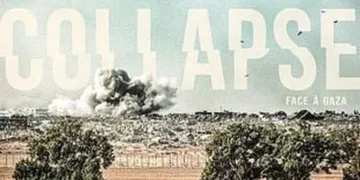
The landscape is caught in transition. A quiet community has become a site of permanent loss. Even’s camera tracks the fence between Israel and the Gaza Strip, allowing past and present to collide inside the image. Her personal stake sharpens the gaze, since she films a place tied to her own history as it is being erased.
This is a grim homecoming. She studies devastation like an archive with open wounds. Rubble catches the light at a slant, turning daylight into something close to a noir hallucination. Each composition carries memory as physical weight. The air feels dense. History is still moving. The camera proceeds with deliberate, haunted rhythm.
Visual Dissonance and the Borderlands
The cinematography is built on visual collision. Heavy tanks rest near fields of carrots, placing agricultural routine beside military machinery in a single brutal geometry. Conflict becomes part of the background. Violence becomes ordinary through repetition. Tourists gather at observation points and watch smoke rise in Gaza. Tourism, apparently, has a strong stomach. Nearby, farmers continue their harvest. These images form a strange equilibrium.
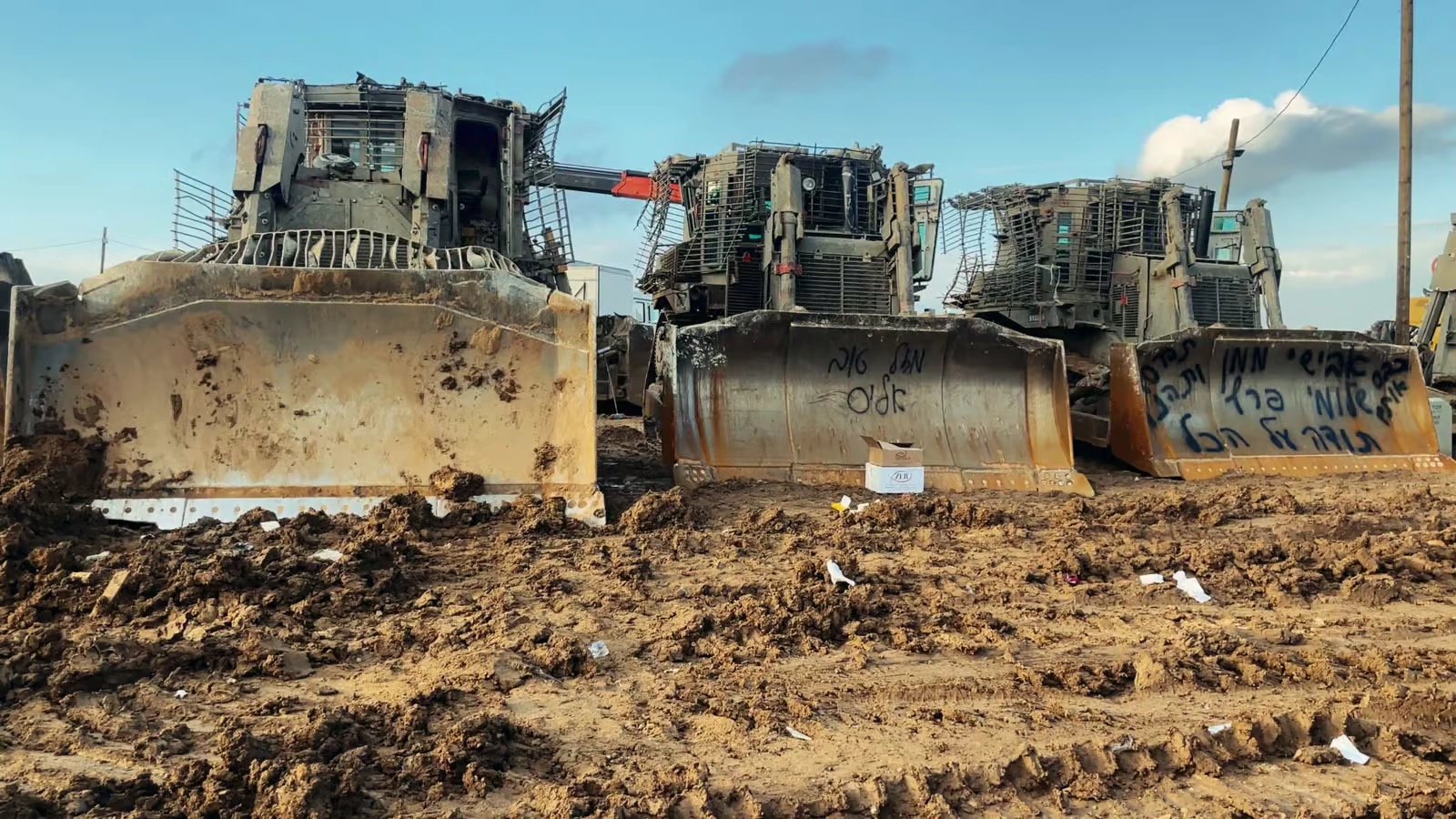
Even often holds a detached vantage point, and that distance changes the meaning of the destruction. The ruin appears permanent, partly visible, partly absorbed into the scenery. The images carry an expressionistic charge. Natural light deepens the dread. Shadow and grit shape the frame with a noir severity that recalls chiaroscuro. Specific visual signs take over the work usually assigned to dialogue. Mailboxes in the kibbutz bear the label “murdered.” The word sits there, attached to metal, attached to absence.
The Negev desert becomes a stage for eerie survival. A peacock wanders through the chaos. Deer and dogs move amid wreckage. These animals are survivors in a broken ecosystem, silent witnesses whose presence makes human disorder feel even stranger.
The visual language is exact. Even uses light and darkness to catch the textures of dust, concrete, and abandonment. Every frame documents a borderland in crisis. The gaze is clinical. The implications are existential. This is a world that has forgotten the habits of peace. A landscape of ghosts remains.
Disparate Voices and Failed Correspondence
Sound and silence compete for authority. Even uses voiceover reflections, recorded emails, and letters to chart a collapse in human connection. The correspondence with Ariel Cypel, her friend in Paris, begins as a living thread and then breaks. A political rift silences the relationship. Dr. Ezzideen Shehab’s perspective adds moral gravity from Gaza City, where he describes civilian suffering. These voices place identity under pressure, and each role grows unstable under the stress of war.
The sound design becomes a character, a grimly industrious one. A constant hum of military activity fills the speakers. Distant bombardments land as rhythmic anxiety, giving the film a pulse it never asked for. Avichai offers internal criticism and questions the military strategy, adding another register to the ideological fracture. The voices refuse consensus. They expose a society split across politics, grief, fear, and moral exhaustion.
Tension gathers through accumulation. The audience feels war as vibration before it becomes argument. Even’s pacing is deliberate and severe. She refuses haste. The film makes the viewer sit with the noise, the pauses, the failed attempts at contact. Human voices become fragile transmissions crossing a widening void. The correspondence turns spectral, a remnant of a shared past that can still be heard after the bond has been severed.
Political Realities and the Cost of Indifference
Political encounters punctuate the ruins. Prime Minister Netanyahu visits the remains of Nir Oz, and protesters meet his official presence by calling him a destroyer. The public square appears fractured. A rally held by the Oz Chaim settler group points toward a harsher path. Their slogans are blunt: “Occupy, Expel, Settle.” They call to “Judaize” the territory. Even records these extremist elements as part of the darkening landscape.
The motif of indifference returns with increasing force. People continue daily routines as disaster unfolds nearby. The ethical question is tied to action, delay, and refusal: how much agency remains once violence has been normalized? Even also finds small pockets of resistance. Peace protesters stand at roundabouts. They are a minority, and the image carries the loneliness of dissent. The film presents itself as a historical record, a document made during an ongoing conflict.
Even honors those killed in the kibbutz, people who taught her about the meeting point between history and cinema. That tribute gives the film its moral axis. The work holds the sensation of a disaster with no visible endpoint. Its gaze is weary, disciplined, and wounded. The cost of apathy is high. The credits roll while bombs continue. The narrative offers no clean exit. It becomes a chronicle of recurrence, a witness to the dead, and a record of a reality that refuses to close.
The film premiered at the Berlin International Film Festival on February 14, 2026. This cinematic essay records Anat Even as she returns to the ruins of her childhood home in the Nir Oz kibbutz. The footage documents two years of military escalation and personal grief along the fence separating Israel from the Gaza Strip. Audiences can currently view this work at international cinema festivals like CPH:DOX and Millennium Docs Against Gravity. Specialized arthouse distribution and select theatrical engagements in Europe will occur during the summer of 2026.
Full Credits
Title: Collapse
Distributor: Caractères Productions
Release date: February 14, 2026
Running time: 78 minutes
Director: Anat Even
Writers: Ariel Cypel, Oron Adar, Anat Even
Producers and Executive Producers: Etienne de Ricaud
Cast: Anat Even, Ariel Cypel, Dr. Ezzideen Shehab, Avichai
Director of Photography (Cinematographer): Anat Even
Editors: Oron Adar
Composer: Eli Shargo
The Review
Collapse
Anat Even captures a geography of ruin. The film transforms the Negev into an expressionistic stage. Indifference acts as the primary antagonist. The imagery of tanks among carrot fields reveals a chilling normalization. Correspondence fails. Human links sever. This cinematic essay documents a disaster without a visible end. It is a vital record of a fracturing culture. The gaze is clinical. The implications are heavy. It is a haunting study of historical erasure.
PROS
- Precise and observational cinematography.
- Philosophical depth concerning the peril of apathy.
- Unsettling and rhythmic sound design.
- Effective use of archival and field footage.
CONS
- Absence of a traditional narrative resolution.
- Unrelenting grimness might leave some viewers gasping for air.
- The experimental structure demands a high level of patience.