























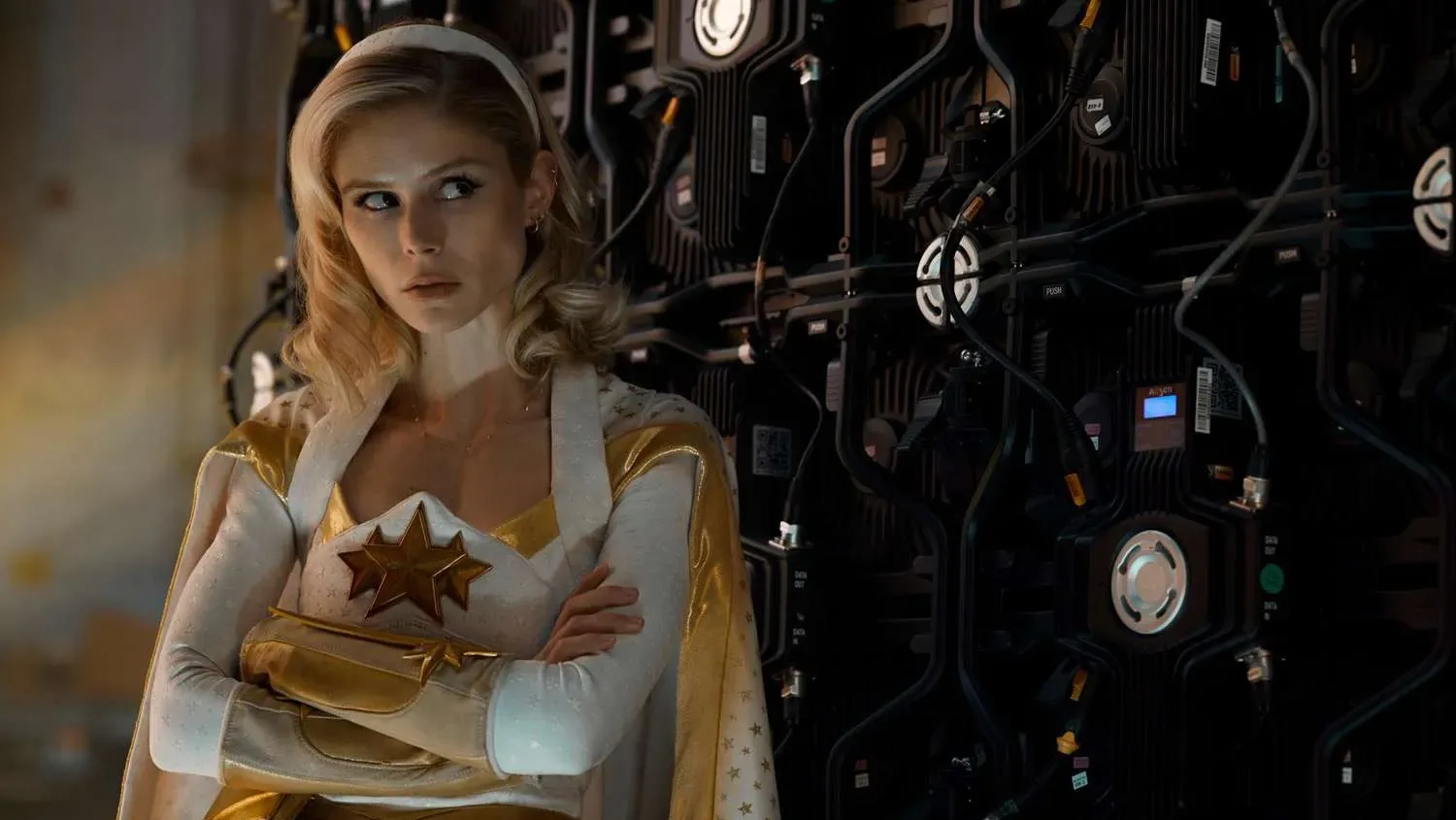

Erin Moriarty spent the final season of The Boys not just playing a superhero — she was quietly terrified she might not survive long enough to finish filming it.
The 31-year-old actress, who concluded her seven-year run as Starlight when the Prime Video series aired its finale on May 20, published a deeply personal essay in Time detailing how an undiagnosed autoimmune disease dismantled her physically and psychologically while cameras were still rolling.
“By that point, I was preparing myself for the possibility that I was dying,” she wrote, recalling the period before she received a diagnosis. “I was in so much discomfort that the idea of death felt like a potential relief. Death felt less terrifying than living in that state indefinitely.”
Her symptoms first surfaced seriously in September 2023 and grew steadily worse over the following two years. Her short-term memory deteriorated so severely that she struggled to learn her lines. On weekends, she slept 19 hours or more at a stretch. The symptoms included intense mood swings, weakness in her hands and feet, heart palpitations, and what she described as cognitive decline — which she called the most frightening symptom of all.
She said she spent at least two years “physically present but mentally unreachable,” and that when her physical health eventually improved after treatment, the emotional aftermath was its own crisis: “I realized how absent from myself I had been. I had been hormonally dysregulated, cognitively impaired, and psychologically untethered for so long that recovery didn’t bring me peace. It brought me clarity. And for me, clarity arrived carrying grief.”
She was diagnosed with Graves’ disease — an autoimmune disorder that causes the thyroid to overproduce hormones — in May 2025. She was then hospitalized on August 1, 2025 following a severe mental health crisis.
Performing through the illness publicly added its own layer of pain. “I was going through the physical hell of chronic illness on a public stage,” she wrote. “Doing it in private is emotionally damaging enough, but to have my physical symptoms be speculated about, trivialized, and dismissed was devastating.” She pointedly noted: “I found out the heartbreaking way that a medically confused woman is rarely considered credible.”
Moriarty said she hoped her transparency “can help even one person catch their illness earlier than I caught mine.”