
























![Kingdom Hearts Collection [I-III] Review](https://gazettely.com/wp-content/uploads/2026/10/Kingdom-Hearts-Collection-I-III-1-360x180.webp "Kingdom Hearts Collection [I-III] Review: KHII Holds Steady as Newer Entries Fluctuate 37")





Promoting The Devil Wears Prada 2 alongside co-stars Anne Hathaway and Emily Blunt on the Hits Radio Breakfast Show, the three-time Oscar winner delivered a pointed critique of the superhero genre’s grip on Hollywood, coining a verb in the process. “I think we tend to Marvel-ize the movies now. We got the villains and we got the good guys, and it’s so boring,” she said, arguing that the most arresting stories come from characters who refuse clean moral classification.
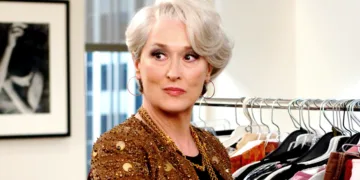
Streep pushed the point further, noting that the real texture of human experience lies in its contradictions. “What’s really interesting about life is that some of the heroes are flawed and some of the villains are human and interesting and have their own strengths,” she said. The film she’s selling is a case study in exactly that kind of ambiguity. Her Miranda Priestly — the imperious editor-in-chief of fictional fashion bible Runway — has never fit comfortably into either camp, and the sequel leans into that tension.
The new installment returns to Anne Hathaway’s Andy Sachs, now navigating the pressures of rigorous journalism while once again chasing Miranda’s elusive approval, as the magazine world contracts around them both. The ensemble reunites Emily Blunt, Stanley Tucci, Tracie Thoms, and Tibor Feldman from the original, with a substantial new cast — including Kenneth Branagh, Lucy Liu, Simone Ashley, and Lady Gaga — added to the mix.
The remarks went viral quickly, reigniting a long-running debate about character depth in franchise filmmaking. The timing sharpened the irony: Streep’s comments landed as The Devil Wears Prada 2 was opening against the tail end of a summer already shaped by superhero and franchise sequels. The film debuted to an estimated $75–80 million domestically across 4,150 theaters in its opening weekend, with worldwide totals already clearing $115 million.
The press tour produced other memorable moments beyond the Marvel swipe. In a separate appearance on the Today show, Streep revealed she had initially turned down the original 2006 film before the studio doubled her asking salary. “I said, ‘No, not going to do it,'” she recalled. “They went right away and said, ‘Sure.’ It took me this long to understand that I could do that!”
The cast also fielded questions about artificial intelligence — a theme woven into the sequel — with Streep dismissing the idea that Miranda Priestly would ever adopt it, reasoning that her character already has human assistants for such things. Hathaway, meanwhile, shared a personal experience of receiving identical AI-generated thank-you notes from job applicants.
Critical reception has been measured. Variety’s Guy Lodge wrote that the film’s pleasures come from watching skilled professionals work together, their chemistry “easily resumed,” though he questioned whether audiences would return to it with the same devotion they brought to the original. Audience scores have been warmer, suggesting the film found its intended crowd even where critics held back.







