














The Florida Everglades function here as a humid graveyard for native life, a place where nature seems to have been pushed into a slow metaphysical fever. In the early 1990s, a hurricane broke open a warehouse and released 900 Burmese pythons into a wilderness that had never prepared itself for such guests. Today, the population exists inside a haze of human approximation.
Estimates move from 50,000 to half a million, a numerical mist that makes the crisis feel both measurable and unknowable. Beneath that uncertainty sits a brutal fact: predation has erased 90% of indigenous fauna. Deer and alligators disappear into the coils of an apex predator that passes through the muck without leaving a readable signature.
The 2023 Florida Python Challenge enters this landscape as civic ritual and sanctioned blood sport. It offers a $10,000 bounty across ten nights of approved killing, framing the swamp as a site where cash reward and ecological repair share the same damp air. The atmosphere feels swollen with stagnant water, bureaucratic purpose, and approaching violence.
This reptilian plague has come to define the modern ‘glades, a silent pressure moving under the grass. The state asks the public to intervene in a disaster shaped by human negligence. Across the River of Grass, hunters wait in darkness for the brief revelation of scales.
A Menagerie of Grief and Existential Boredom
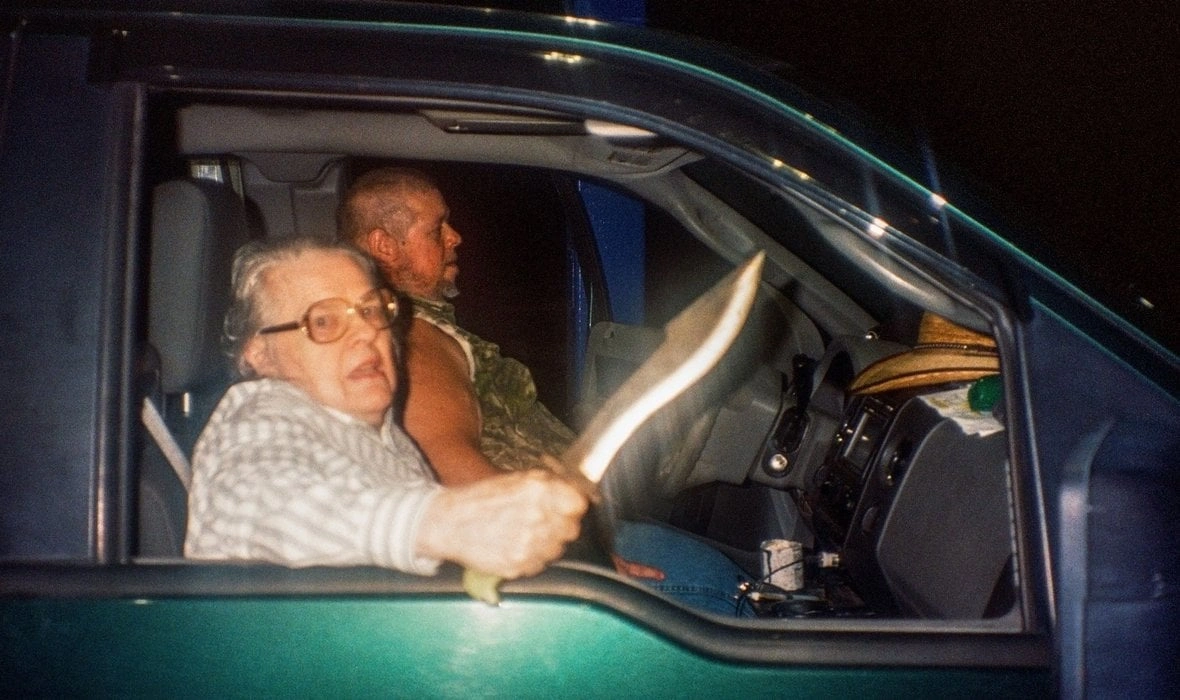
The swamp draws a fractured assembly of human motives. Anne Stratton Hilts offers one of the film’s bleakest portraits of grief in motion. A recent widow, she seeks the intimate violence of pithing, the act of driving steel through a serpent’s skull to scramble its gray matter. Her desire feels like mourning converted into muscle, loss seeking a body it can pierce.
She moves beside Toby Benoit, a local writer and self-described eighth-generation Florida cracker. Benoit speaks with a kind of homespun lyricism, guiding the viewer through the sawgrass with language that feels weathered by place. His presence lends a rough poetic grain to the grim business of the hunt.
Richard Pereny arrives from San Francisco with a stranger energy. A schoolteacher with a horseshoe mustache, he hunts under the influence of ecstasy, looking like a man displaced from some older, stranger American dream. His participation suggests a search for rupture, a way out of a hollow urban life through mud, danger, and reptile eyes.
Madison Oliveira brings colder intent. A former Marine, she approaches the hunt with military discipline. She targets hatchlings, grasping the arithmetic of eradication better than those chasing spectacle. Jimbo McCartney lingers along the frame’s margins. Once a government contractor and now banned from the official hunt, he supplies the film with corrosive skepticism. He watches the amateurs with a tired, knowing gaze, as if he has already seen the punchline and found no comfort in it.
These people meet inside the humidity with motives as knotted as mangrove roots. Money pulls some forward. Others seem to be hunting for a self that appears, briefly, in blood, mud, and exhaustion.
Neon Rot and the Hypnosis of the Hunt
Director Xander Robin builds the film through a formal language suited to ecological decay. Cinematographers David Bolen and Matt Clegg use a visual style described as Neon Rot, filling the screen with sickly greens and bruised purples. The palette resists the clean distance of traditional nature documentaries. It feels infected, fevered, almost chemical.
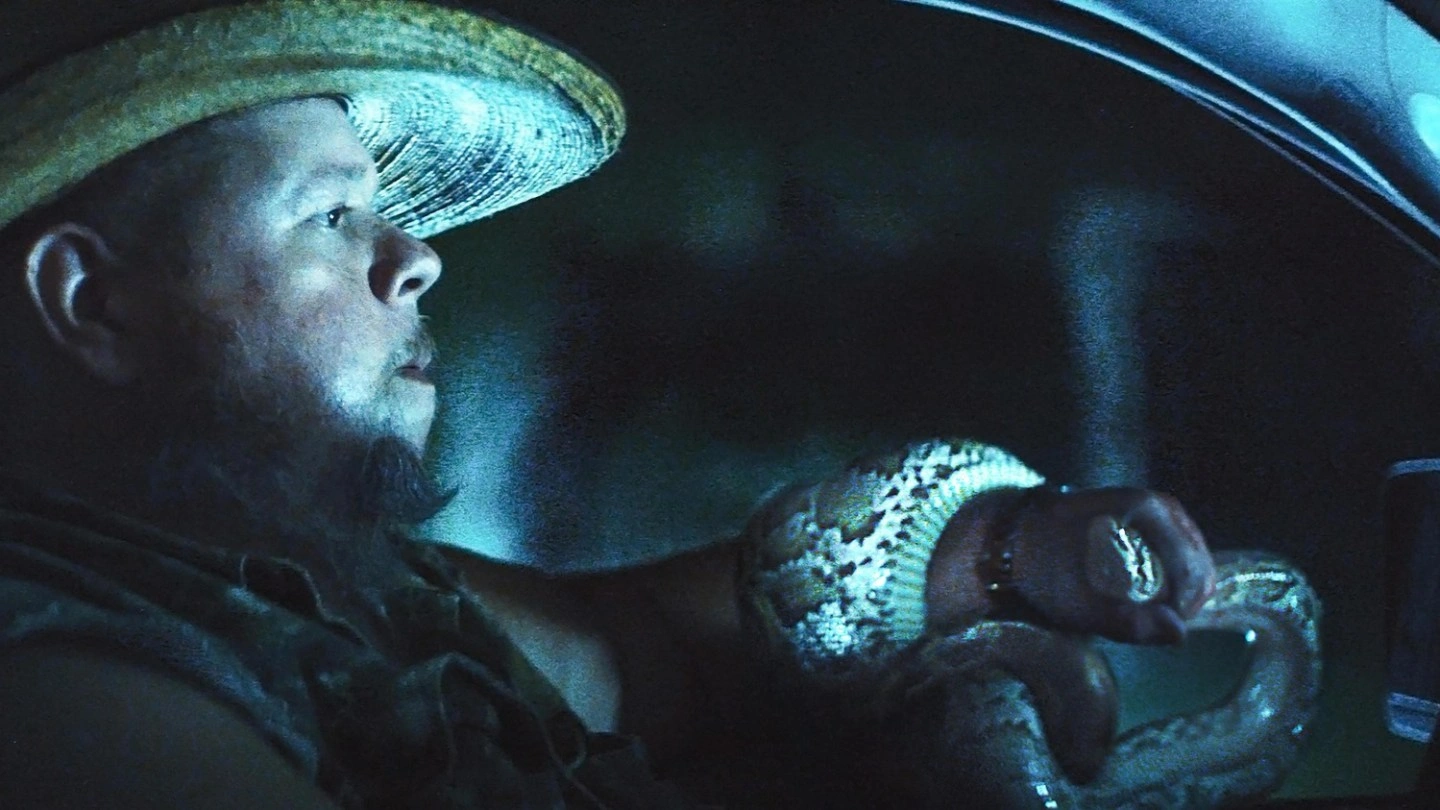
The camera favors suffocating close-ups. It studies skin and scale until the separation between human and reptile begins to dissolve. Frame-rate shifts create temporal unease. During moments of tension, the world slows, and the humid air gains a thick, gelatinous presence. Max Allman’s editing wrestles with the repetitive structure of the search, capturing hours of driving through darkness until monotony becomes a form of dread.
Nick León’s sound design and atmospheric synth score deepen that sensation. The music hums like an angry insect near the ear, breaking the Everglades’ silence with low-frequency vibrations. The documentary examines the phenomenon of snake eyes, a hypnotic fixation that overtakes the hunters. They become absorbed by patterns in the grass. Their vision contracts until the target seems to consume the whole visible world.
Through this aesthetic strategy, the hunt becomes a fever dream of attention and appetite. The technical execution pulls the viewer into the same narrow obsession that governs the subjects, where watching becomes its own small form of possession.
The Architecture of a Performative Eradication
The hunt exposes a darker structure beneath its public purpose. Jimbo McCartney claims the python serves as a convenient scapegoat. He points to rising water toxicity as the real architect of the Everglades’ decline. In his view, the state-sanctioned competition operates as theater, directing attention away from ecological damage linked to human industry and real estate interests.
The film sharpens this idea through structural contrast. The official awards ceremony appears sterile and business-like. The Gator Hole Bar’s python festival erupts with raw hedonism. There, participants skin snakes and crush unhatched eggs with primal delight. The government event wears civic manners. The bar reveals the appetite beneath the manners.
This contrast gives the film its cruel irony. People serve as arsonist and firefighter at once. We damage a habitat, then congratulate ourselves for killing the consequences that crawl out of the wreckage. The predominance of white participants hints at a specific cultural sickness, a malaise seeking relief through sanctioned violence. The hunt becomes treatment for existential boredom, though the treatment looks suspiciously like another symptom.
The numbers make the futility plain. The count reached 209 captured pythons, an almost absurdly small figure against a turnout of 1,000 hunters and population estimates that stretch into the hundreds of thousands. The hunters leave with little evidence that their bloodlust has changed the swamp’s fate. The Everglades remain a dying kingdom, ruled by monsters we helped invite inside.
The Python Hunt is a documentary feature that premiered at the SXSW Film Festival on March 10, 2025, where it received a Special Jury Award. Directed by Florida native Xander Robin, the film explores the bizarre and high-stakes world of the Florida Python Challenge, an annual state-sponsored competition where amateur hunters compete for cash prizes to remove invasive Burmese pythons from the Everglades. Following its successful festival run throughout 2025, the film was released in select theaters by Oscilloscope Laboratories on May 8, 2026. Viewers can currently watch the documentary in limited theatrical release, with digital and physical media distribution expected to follow through Oscilloscope’s platform.
Where to Watch The Python Hunt (2026) Online





Full Credits
Title: The Python Hunt
Distributor: Oscilloscope Laboratories, Artists Equity
Release date: March 10, 2025 (SXSW), May 8, 2026 (Limited Theatrical)
Running time: 91 minutes
Director: Xander Robin
Writers: Xander Robin
Producers and Executive Producers: Lauren Cioffi, Lance Oppenheim, Melissa Oppenheim, Xander Robin, Matt Damon, Ben Affleck
Cast: Toby Benoit, Jimbo McCartney, Shannon McCartney, Madison Oliveira, Richard Pereny, Anne Stratton, Joe Wasilewski
Director of Photography (Cinematographer): David Bolen, Matt Clegg
Editors: Max Allman
Composer: Nick León
The Review
The Python Hunt
Xander Robin delivers a cinematic autopsy of the American spirit. The film captures the futility of human intervention in an ecosystem poisoned by our presence. It transforms a simple snake hunt into a meditation on existential boredom and the violent catharsis of grief. While its aesthetic flourishes occasionally feel heavy, the documentary remains a potent reminder of our role as both architects and victims of ecological collapse. It offers no easy answers, only the cold, scaled reality of a disappearing world.
PROS
- Striking visual identity through the "Neon Rot" aesthetic.
- Diverse cast provides a deep psychological study of the participants.
- Sonic landscape heightens the sense of nighttime dread.
CONS
- Aggressive editing techniques occasionally distract from the narrative.
- Slow pacing during long stretches of searching the swamp.
- Aesthetic choices sometimes border on being overbearing.